Link Copied!
James Mackintosh Quotes (1765-1832)
Philosopher, Politician

About James Mackintosh
Sir James Mackintosh (October 24, 1765 – May 30, 1832) was a Scottish jurist, politician and historian. He was trained as a doctor and barrister, and worked also as a journalist, judge, administrator, professor and philosopher.
Best James Mackintosh Quotes
Shortest
Earliest
Explore our curated collection of the most famous and impactful James Mackintosh quotes.
“Tiffin, what”
“Disciplined inaction.”

“The Commons, faithful to their system, remained in a wise and masterly inactivity.”
“The theory (propounded by Vedanta) [is] refined, abstruse, ingenious and beautiful.”
James Mackintosh Quotes by Topic
Find exactly what you are looking for by browsing this categorized list of James Mackintosh quotes by topic.
James Mackintosh on Policy
“Masterly inactivity.”

James Mackintosh on Legislature
“The commons, faithful to their system, remained in a wise and masterly inactivity.”

James Mackintosh on Atheism
“Having insured the moderation of a fanatical rabble, by giving out among them the savage war-whoop of atheism, he (Edmund Burke) already fancies himself in full march to Paris.”

What James Mackintosh Said About Others
Discover personal opinions James Mackintosh shared regarding contemporaries.
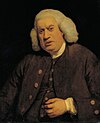
James Mackintosh on Samuel Johnson 2 quotes
“As a man, then, Johnson had a masculine understanding, clouded on important subjects by prejudice, a conscience pure beyond the ordinary measure of human virtue, a heart full of rugged benevolence, and a disregard only for those feelings in controversy or in conversation, of which he had not learnt the force, or which he thought himself obliged to wound. As a writer, he is memorable as one of those who effect a change in the general style of a nation, and have vigour enough to leave the stamp of their own peculiarities upon their language.”
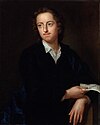
James Mackintosh on Thomas Gray 2 quotes
“Almost all his poetry was lyrical—that species which, issuing from a mind in the highest state of excitement, requires an intensity of feeling which for a long composition the genius of no poet could support. Those who complained of its brevity and rapidity only confessed their own inability to follow the movements of poetical inspiration. Of the two grand attributes of the Ode, Dryden had displayed the enthusiasm, Gray exhibited the magnificence. He is also the only modern English writer whose Latin verses deserve general notice; but we must lament that such difficult trifles had diverted his genius from its natural objects. In his letters he has shown the descriptive powers of a poet, and in new combinations of generally familiar words, which he seems to have caught from Madame de Sevigné (though it must be owned he was somewhat quaint), he was eminently happy. It may be added, that he deserves the comparatively trifling praise of having been the most learned poet since Milton.”
James Mackintosh on Bernard Mandeville
“Mandeville, the buffoon and sophister of the alehouse.”

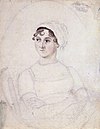
James Mackintosh on Jane Austen
“Something recalled to his mind the traits of character which are so delicately touched in Miss Austen's novels. "There was genius in the sketching out that new kind of novel." He was vexed for the credit of the Edinburgh Review, that it had left unnoticed; the Quarterly had done her more justice. It was impossible for a foreigner to understand fully the merit of her works. Madame de Staël, to whom he had recommended of her novels, found no interest in it, and, in her note to him in reply, said it was "vulgaire", and yet he said nothing could be more true than what he wrote in answer,—"there is no book which that word would suit so little." "Every village could furnish matter for a novel to Miss Austen. She did not need the common materials for a novel—strong passion, or strong incident."”
About James Mackintosh
Sir James Mackintosh (October 24, 1765 – May 30, 1832) was a Scottish jurist, politician and historian. He was trained as a doctor and barrister, and worked also as a journalist, judge, administrator, professor and philosopher.