Link Copied!
James Fenimore Cooper Quotes (1789-1851)
Author, Writer


About James Fenimore Cooper
James Fenimore Cooper (September 15, 1789 – September 14, 1851) was a prolific and popular American writer of the early 19th century.
Best James Fenimore Cooper Quotes
Shortest
Earliest
Explore our curated collection of the most famous and impactful James Fenimore Cooper quotes.
“Chapter XXX, conclusion of the novel”

“Every trail has its end, and every calamity brings its lesson!”

“Those families, you know, are our upper crust—not upper ten thousand.”
“It is better for a man to die at peace with himself than to live haunted by an evil conscience.”
“History, like love, is so apt to surround her heroes with an atmosphere of imaginary brightness.”
“God has given the salt lick to the deer; and He has given to man, red-skin and white, the delicious spring at which to slake his thirst.”
“I have listened to all the sounds of the woods for thirty years, as a man will listen whose life and death depend on the quickness of his ears.”
“Genesis. What an extraordinary history! It is impossible for us to appreciate conduct, when a power like that of God is directly brought to bear on it. Obedience to him is our first law.”
“In short, the magnifying influence of fear began to set at naught the calculations of reason, and to render those who should have remembered their manhood, the slaves of the basest passions.”
““'Tis a strange calling!” muttered Hawkeye, with an inward laugh, “to go through life, like a catbird, mocking all the ups and downs that may happen to come out of other men's throats.”
“It is probable a true history of human events would show that a far larger proportion of our acts are the results of sudden impulses and accident, than of that reason of which we so much boast.”

“Your young white, who gathers his learning from books and can measure what he knows by the page, may conceit that his knowledge, like his legs, outruns that of his fathers', but, where experience is the master, the scholar is made to know the value of years, and respects them accordingly.”

“Chingachgook grasped the hand that, in the warmth of feeling, the scout had stretched across the fresh earth, and in an attitude of friendship these two sturdy and intrepid woodsmen bowed their heads together, while scalding tears fell to their feet, watering the grave of Uncas like drops of falling rain.”

“Few men exhibit greater diversity, or, if we may so express it, greater antithesis of character than the native warrior of North America. In war, he is daring, boastful, cunning, ruthless, self-denying, and self-devoted; in peace, just, generous, hospitable, revengeful, superstitious, modest, and commonly chaste.”
“Trust to HIM. There are days in which the sun is not seen—when a lurid darkness brings a second night over the earth. It matters not. The great luminary is always there. There may be clouds before his face, but the winds will blow them away. The man or the people that trust in God will find a lake for every See-wise.”

“One of the most melancholy consequences of this habit of deferring to other nations, and to other systems, is the fact that it causes us to undervalue the high blessings we so peculiarly enjoy; to render us ungrateful towards God, and to make us unjust to our fellow men, by throwing obstacles in their progress towards liberty.”
“I shall only say that I have passed a varied and eventful life, that it has been my fortune to see earth, heavens, ocean, and man in most of their aspects; but never have I beheld any spectacle which so plainly manifested the majesty of the Creator, or so forcibly taught the lesson of humility to man as a total eclipse of the sun.”

“I will go upon the rock, boys, and look abroad for the savages," said Ishmael shortly after, advancing towards them with a mien which he intended should be conciliating, at the same time that it was authoritative. "If there is nothing to fear, we will go out on the plain; the day is too good to be lost in words, like women in the towns wrangling over their tea and sugared cakes."”
James Fenimore Cooper Quotes by Topic
Find exactly what you are looking for by browsing this categorized list of James Fenimore Cooper quotes by topic.
James Fenimore Cooper on Individualism 2 quotes
“All greatness of character is dependent on individuality. The man who has no other existence than that which he partakes in common with all around him, will never have any other than an existence of mediocrity.”

James Fenimore Cooper on Demagogue 2 quotes
“The demagogue is usually sly, a detractor of others, a professor of humility and disinterestedness, a great stickler for equality as respects all above him, a man who acts in corners, and avoids open and manly expositions of his course, calls blackguards gentlemen, and gentlemen folks, appeals to passions and prejudices rather than to reason, and is in all respects, a man of intrigue and deception, of sly cunning and management, instead of manifesting the frank, fearless qualities of the democracy he so prodigally professes. The man who maintains the rights of the people on pure grounds, may be distinguished from the demagogue by the reverse of all these qualities. He does not flatter the people, even while he defends them, for he knows that flattery is a corrupting and dangerous poison. Having nothing to conceal, he is frank and fearless, as are all men with the consciousness of right motives. He oftener chides than commends, for power needs reproof and can dispense with praise. He who would be a courtier under a king, is almost certain to be a demagogue in a democracy.”

James Fenimore Cooper on Cougars
James Fenimore Cooper on Language
“The common faults of American language are an ambition of effect, a want of simplicity, and a turgid abuse of terms.”

James Fenimore Cooper on Meal
“Slavery is no more sinful, by the Christian code, than it is sinful to wear a whole coat, while another is in tatters, to eat a better meal than a neighbor, or otherwise to enjoy ease and plenty, while our fellow creatures are suffering and in want.”
James Fenimore Cooper on Equality
“Equality, in a social sense, may be divided into that of condition and that of rights. Equality of condition is incompatible with civilization, and is found only to exist in those communities that are but slightly removed from the savage state. In practice, it can only mean a common misery”

James Fenimore Cooper on Genoa
“At Genoa I remained two days. To the peculiar attractions of a port, and that too a port of the Mediterranean, were added the magnificence and glories of a capital. ... It is not wide, is without side-walks, and but for the structures that line its two sides, would offer nothing remarkable. For more than a mile, however, it is a succession of edifices, that, in any other country but Italy, would be deemed fit for royalty.”

James Fenimore Cooper on Religion
“In America the taint of sectarianism lies broad upon the land. Not content with acknowledging the supremacy as the Deity, and with erecting temples in his honor, where all can bow down with reverence, the pride and vanity of human reason enter into and pollute our worship, and the houses that should be of God and for God, alone, where he is to be honored with submissive faith, are too often merely schools of metaphysical and useless distinctions. The nation is sectarian, rather than Christian.”

James Fenimore Cooper on Sectarianism
“In America the taint of sectarianism lies broad upon the land. Not content with acknowledging the supremacy as the Deity, and with erecting temples in his honor, where all can bow down with reverence, the pride and vanity of human reason enter into and pollute our worship, and the houses that should be of God and for God, alone, where he is to be honored with submissive faith, are too often merely schools of metaphysical and useless distinctions. The nation is sectarian, rather than Christian.”
James Fenimore Cooper on Candor
“Candor is a proof of both a just frame of mind, and of a good tone of breeding. It is a quality that belongs, equally to the honest man and to the gentleman: to the first, as doing to others as we would ourselves be done by; to the last, as indispensable to the liberality of the character. By candor we are not to understand trifling and uncalled for expositions of truth; but a sentiment that proves a conviction of the necessity of speaking truth, when speaking at all; a contempt for all designing evasions of our real opinions; and a deep conviction that he who deceives by necessary implication, deceives willfully. In all the general concerns, the publick has a right to be treated with candor. Without this manly and truly republican quality, republican because no power exists in the country to intimidate any from its exhibition, the institutions are converted into a stupendous fraud.”
What James Fenimore Cooper Said About Others
Discover personal opinions James Fenimore Cooper shared regarding contemporaries.
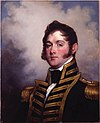
James Fenimore Cooper on Oliver Hazard Perry
“The personal deportment of Captain Perry, throughout the day, was worthy of all praise. He did not quit his own vessel when she became useless, to retire from the battle, but to gain it; an end that was fully obtained, and an effort which resulted in triumph.”
Quotes About James Fenimore Cooper
Gain deeper perspective through quotes about James Fenimore Cooper from others.
Note written by Susan Augusta Fenimore Cooper on James Fenimore Cooper
“Speaking of their reading the Bible together, [my mother] says it was on his birth-day, about five or six years since that they began to read it together, regularly ; not by chapters but a hundred verses every morning before breakfast, unless the close of a chapter occurred to break or prolong the reading. He admired the Psalms inexpressibly. The Book of Job also. The prophesies of Isaiah, and the Epistles to the Hebrews struck him very forcibly. He admired the Epistle of St. James very much, calling it a beautiful pastoral letter. He told Mother once, "I used to think a great deal of St. James when I was a boy." He was deeply impressed with the book of Revelations. The allusions to Melchisedec always interested him particularly. He said, speaking of the definition of faith by St. Paul : "Faith is the substance of things hoped for, the evidence of things not seen," that it was so noble, so comprehensive, so just, so full, that the words themselves seemed to have been sent directly from Heaven. Speaking of the admiration he had always felt for the Liturgy, dear Mother mentioned his most deep sense of the excellence of the Lord's Prayer. He loved particularly the anthem, "God be merciful unto us, etc., etc." "The Liturgy was a blessed service to him," I observed. "Oh," cried dear Mother, "Blessed indeed! He lived on the Collects for the last few months!" They were in the habit of saying together every morning for years "Direct us O Lord, etc., etc." They knelt together, Father's arms about Mother; when he grew feeble she knelt, and he leaned his head on her shoulder. On the morning of his death dear Mother kneeled at the bedside and said the prayers they had been accustomed to use together. He seemed to understand, and follow, though with effort — partially conscious to the very last hour. For many years before separating, for even a short business absence of dear Father's, they always said together the prayer in the Marriage Service. Dear Mother added this prayer to others the last morning of his life. He seemed to understand but could not speak. The morning of his death when I came into the room dear Mother said, "Here is Susie, come to kiss you!" He partly opened his eyes, made an effort to smile, and put up his lips to kiss me — but his voice was gone.”
Roxanne Dunbar-Ortiz on James Fenimore Cooper 3 quotes
“The French and Indian War would later be seen as the trigger for independence of the settler population, in which the distinctly "American" nation was born. This mythology was expressed in the 1826 novel The Last of the Mohicans: A Narrative of 1757, in which the author-land speculator James Fenimore Cooper-created a usable settler-colonial history. Blockbuster Hollywood adaptations of the book in 1932 and 1992 reinforced the mythology. But the 1940 film, based on the best-selling novel Northwest Passage, which is considered a classic and remains popular due to repeated television showings, goes even further in portraying the bloodthirsty mercenaries, Rogers's Rangers, as heroes for their annihilation of a village of Abenakis.”

About James Fenimore Cooper
James Fenimore Cooper (September 15, 1789 – September 14, 1851) was a prolific and popular American writer of the early 19th century.