Link Copied!
Herman Melville Quotes (1819-1891)
Writer, Poet, Novelist

































About Herman Melville
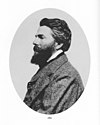
Herman Melville (1 August 1819 – 28 September 1891) was an American novelist, essayist, short story writer, and poet of the American Renaissance period.
Best Herman Melville Quotes
Shortest
Earliest
Explore our curated collection of the most famous and impactful Herman Melville quotes.
“Patriotism is not baseness, neither is it inhumanity.”

“Nothing so aggravates an earnest person as a passive resistance.”
“"I would prefer not to." (A line spoken repeatedly by Bartleby).”
“A smile is the chosen vehicle of all ambiguities.”

“"At present I would prefer not to be a little reasonable," was his mildly cadaverous reply.”


“Amity itself can only be maintained by reciprocal respect, and true friends are punctilious equals.”
“Zeal is not of necessity religion, neither is it always of the same essence with poetry or patriotism.”
“Truth is ever incoherent, and when the big hearts strike together, the concussion is a little stunning.”
“Genius, all over the world, stands hand in hand, and one shock of recognition runs the whole circle round.”

“At the height of their madness
The night winds pause,
Recollecting themselves;
But no lull in these wars.”
The night winds pause,
Recollecting themselves;
But no lull in these wars.”
“Youth is the time when hearts are large,
And stirring wars
Appeal to the spirit which appeals in turn
To the blade it draws.”
And stirring wars
Appeal to the spirit which appeals in turn
To the blade it draws.”
“At the penultimate moment, his words, his only ones, words wholly unobstructed in the utterance were these — "God bless Captain Vere!"”

“It was not a very white jacket, but white enough, in all conscience, as the sequel will show.
The way I came by it was this...”
The way I came by it was this...”

“In time of peril, like the needle to the loadstone, obedience, irrespective of rank, generally flies to him who is best fitted to command.”

“Familiarity with danger makes a brave man braver, but less daring. Thus with seamen: he who goes the oftenest round Cape Horn goes the most circumspectly.”
“And here Bartleby makes his home, sole spectator of a solitude which he has seen all populous- a sort of innocent and transformed Marius brooding among the ruins of Carthage!”
“Billy's agony, mainly proceeding from a generous young heart's virgin experience of the diabolical incarnate and effective in some men — the tension of that agony was over now.”

“Let us be Christians toward our fellow-whites, as well as philanthropists toward the blacks our fellow-men. In all things, and toward all, we are enjoined to do as we would be done by.”
“Of all the preposterous assumptions of humanity over humanity, nothing exceeds most of the criticisms made on the habits of the poor by the well-housed, well-warmed, and well-fed.”

“Thou hast evoked in me profounder spells than the evoking one, thou face! For me, thou hast uncovered one infinite, dumb, beseeching countenance of mystery, underlying all the surfaces of visible time and space.”
“What troops
Of generous boys in happiness thus bred —
Saturnians through life's Tempe led,
Went from the North and came from the South,
With golden mottoes in the mouth,
To lie down midway on a bloody bed.”
Of generous boys in happiness thus bred —
Saturnians through life's Tempe led,
Went from the North and came from the South,
With golden mottoes in the mouth,
To lie down midway on a bloody bed.”

“One trembles to think of that mysterious thing in the soul, which seems to acknowledge no human jurisdiction, but in spite of the individual's own innocent self, will still dream horrid dreams, and mutter unmentionable thoughts.”

“The symmetry of form attainable in pure fiction can not so readily be achieved in a narration essentially having less to do with fable than with fact. Truth uncompromisingly told will always have its ragged edges...”


“Instinct and study; love and hate;
Audacity — reverence. These must mate,
And fuse with Jacob’s mystic heart,
To wrestle with the angel — Art.”
Audacity — reverence. These must mate,
And fuse with Jacob’s mystic heart,
To wrestle with the angel — Art.”

“Are there no Moravians in the Moon, that not a missionary has yet visited this poor pagan planet of ours, to civilize civilisation and christianize Christendom?”

“All visible objects, man, are but as pasteboard masks. But in each event — in the living act, the undoubted deed — there, some unknown but still reasoning thing puts forth the mouldings of its features from behind the unreasoning mask.”
“What we take to be our strongest tower of delight, only stands at the caprice of the minutest event — the falling of a leaf, the hearing of a voice, or the receipt of one little bit of paper scratched over with a few small characters by a sharpened feather.”
“But me they'll lash me in hammock, drop me deep.
Fathoms down, fathoms down, how I'll dream fast asleep.
I feel it stealing now. Sentry, are you there?
Just ease this darbies at the wrist, and roll me over fair,
I am sleepy, and the oozy weeds about me twist.”
Fathoms down, fathoms down, how I'll dream fast asleep.
I feel it stealing now. Sentry, are you there?
Just ease this darbies at the wrist, and roll me over fair,
I am sleepy, and the oozy weeds about me twist.”
“For the future of the freed slaves we may well be concerned; but the future of the whole country, involving the future of the blacks, urges a paramount claim upon our anxiety. Effective benignity, like the Nile, is not narrow in its bounty, and true policy is always broad.”

“Say what some poets will, Nature is not so much her own ever-sweet interpreter, as the mere supplier of that cunning alphabet, whereby selecting and combining as he pleases, each man reads his own peculiar lesson according to his own peculiar mind and mood. ”
“In this world of lies, Truth is forced to fly like a scared white doe in the woodlands; and only by cunning glimpses will she reveal herself, as in Shakespeare and other masters of the great Art of Telling the Truth, — even though it be covertly, and by snatches.”

“The reason the mass of men fear God, and at bottom dislike Him, is because they rather distrust His heart, and fancy Him all brain like a watch. (You perceive I employ a capital initial in the pronoun referring to the Deity; don't you think there is a slight dash of flunkeyism in that usage?)”

“Silence is the general consecration of the universe. Silence is the invisible laying on of the Divine Pontiff's hands upon the world. Silence is at once the most harmless and the most awful thing in all nature. It speaks of the Reserved Forces of Fate. Silence is the only Voice of our God.”

“Though public libraries have an imposing air, and doubtless contain invaluable volumes, yet, somehow, the books that prove most agreeable, grateful, and companionable, are those we pick up by chance here and there; those which seem put into our hands by Providence; those which pretend to little, but abound in much.”
“I am heartily sorry I ever wrote anything about you — it was paltry. Lord, when shall we be done growing? As long as we have anything more to do, we have done nothing. So, now, let us add Moby-Dick to our blessing, and step from that. Leviathan is not the biggest fish; — I have heard of Krakens.”
“Not one man in five cycles, who is wise, will expect appreciative recognition from his fellows, or any one of them. Appreciation! Recognition! Is love appreciated? Why, ever since Adam, who has got to the meaning of this great allegory — the world? Then we pigmies must be content to have our paper allegories but ill comprehended.”
“In the light of that martial code whereby it was formally to be judged, innocence and guilt personified in Claggart and Budd in effect changed places. In a legal view the apparent victim of the tragedy was he who had sought to victimize a man blameless; and the indisputable deed of the latter, navally regarded, constituted the most heinous of military crimes.”
“There seems no reason why patriotism and narrowness should go together, or why intellectual impartiality should be confounded with political trimming, or why serviceable truth should keep cloistered be a cause not partisan. Yet the work of Reconstruction, if admitted to be feasible at all, demands little but common sense and Christian charity. Little but these? These are much.”
“Nature has not implanted any power in man that was not meant to be exercised at times, though too often our powers have been abused. The privilege, inborn and inalienable, that every man has of dying himself, and inflicting death upon another, was not given to us without a purpose. These are the last resources of an insulted and unendurable existence.”

“It is — or seems to be — a wise sort of thing, to realise that all that happens to a man in this life is only by way of joke, especially his misfortunes, if he have them. And it is also worth bearing in mind, that the joke is passed round pretty liberally & impartially, so that not very many are entitled to fancy that they in particular are getting the worst of it.”
“But are sailors, frequenters of fiddlers' greens, without vices? No; but less often than with landsmen do their vices, so called, partake of crookedness of heart, seeming less to proceed from viciousness than exuberance of vitality after long constraint: frank manifestations in accordance with natural law.”
“It will be a strange sort of book, tho', I fear; blubber is blubber you know; tho' you may get oil out of it, the poetry runs as hard as sap from a frozen maple tree; — & to cook the thing up, one must needs throw in a little fancy, which from the nature of the thing, must be ungainly as the gambols of the whales themselves. Yet I mean to give the truth of the thing, spite of this.”

“Certain it is, however, that this great power of blackness in him derives its force from its appeals to that Calvinistic sense of Innate Depravity and Original Sin, from whose visitations, in some shape or other, no deeply thinking mind is always and wholly free. For, in certain moods, no man can weigh this world, without throwing in something, somehow like Original Sin, to strike the uneven balance.”
“Benevolence and policy—Christianity and Machiavelli—dissuade from penal severities toward the subdued. Abstinence here is as obligatory as considerate care for our unfortunate fellow-men late in bonds, and, if observed, would equally prove to be wise forecast. The great qualities of the South, those attested in the War, we can perilously alienate, or we may make them nationally available at need.”

“Says a writer whom few know, "Forty years after a battle it is easy for a non-combatant to reason about how it ought to have been fought. It is another thing personally and under fire to direct the fighting while involved in the obscuring smoke of it. Much so with respect to other emergencies involving considerations both practical and moral, and when it is imperative promptly to act." ”
“Whoever is not in the possession of leisure can hardly be said to possess independence. They talk of the dignity of work. Bosh. True Work is the necessity of poor humanity's earthly condition. The dignity is in leisure. Besides, 99 hundreths of all the work done in the world is either foolish and unnecessary, or harmful and wicked.”

“I had now been on board the frigate upward of a year, and remained unscourged; the ship was homeward-bound, and in a few weeks, at most, I would be a free man. And now, after making a hermit of myself in some things, in order to avoid the possibility of the scourge, here it was hanging over me for a thing utterly unforeseen, for a crime of which I was as utterly innocent. But all that was as naught.”
“I have no objection to any person’s religion, be it what it may, so long as that person does not kill or insult any other person, because that other person don’t believe it also. But when a man’s religion becomes really frantic; when it is a positive torment to him; and, in fine, makes this earth of ours an uncomfortable inn to lodge in; then I think it high time to take that individual aside and argue the point with him.”

“It is better to fail in originality, than to succeed in imitation. He who has never failed somewhere, that man can not be great. Failure is the true test of greatness. And if it be said, that continual success is a proof that a man wisely knows his powers, — it is only to be added, that, in that case, he knows them to be small. Let us believe it, then, once for all, that there is no hope for us in these smooth pleasing writers that know their powers.”
“There are some strange summer mornings in the country, when he who is but a sojourner from the city shall early walk forth into the fields, and be wonder-smitten with the trance-like aspect of the green and golden world. Not a flower stirs; the trees forget to wave; the grass itself seems to have ceased to grow; and all Nature, as if suddenly become conscious of her own profound mystery, and feeling no refuge from it but silence, sinks into this wonderful and indescribable repose.”
“Would that all excellent books were foundlings, without father or mother, that so it might be, we could glorify them, without including their ostensible authors. Nor would any true man take exception to this; — least of all, he who writes, — "When the Artist rises high enough to achieve the Beautiful, the symbol by which he makes it perceptible to mortal senses becomes of little value in his eyes, while his spirit possesses itself in the enjoyment of the reality."”
“If possible, not to let the men so much as surmise that their officers anticipate aught amiss from them is the tacit rule in a military ship. And the more that some sort of trouble should really be apprehended the more do the officers keep that apprehension to themselves; tho' not the less unostentatious vigilance may be augmented.
In the present instance the sentry placed over the prisoner had strict orders to let no one have communication with him but the Chaplain. And certain unobtrusive measures were taken absolutely to insure this point.”
In the present instance the sentry placed over the prisoner had strict orders to let no one have communication with him but the Chaplain. And certain unobtrusive measures were taken absolutely to insure this point.”
“Who in the rainbow can draw the line where the violet tint ends and the orange tint begins? Distinctly we see the difference of the colors, but where exactly does the one first blendingly enter into the other? So with sanity and insanity. In pronounced cases there is no question about them. But in some supposed cases, in various degrees supposedly less pronounced, to draw the exact line of demarcation few will undertake tho' for a fee some professional experts will. There is nothing nameable but that some men will undertake to do it for pay.”
“I let nothing slip, however small; and feel myself actuated by the same motive which has prompted many worthy old chroniclers, to set down the merest trifles concerning things that are destined to pass away entirely from the earth, and which, if not preserved in the nick of time, must infallibly perish from the memories of man. Who knows that this humble narrative may not hereafter prove the history of an obsolete barbarism? Who knows that, when men-of-war shall be no more, "White-Jacket" may not be quoted to show to the people in the Millennium what a man-of-war was? God hasten the time!”

“Whence came you, Hawthorne? By what right do you drink from my flagon of life? And when I put it to my lips — lo, they are yours and not mine. I feel that the Godhead is broken up like the bread at the Supper, and that we are the pieces. Hence this infinite fraternity of feeling. Now, sympathising with the paper, my angel turns over another leaf. You did not care a penny for the book. But, now and then as you read, you understood the pervading thought that impelled the book — and that you praised. Was it not so? You were archangel enough to praise the imperfect body, and embrace the soul.”
“The worst of our evils we blindly inflict upon ourselves; our officers cannot remove them, even if they would. From the last ills no being can save another; therein each man must be his own saviour. For the rest, whatever befall us, let us never train our murderous guns inboard; let us not mutiny with bloody pikes in our hands. Our Lord High Admiral will yet interpose; and though long ages should elapse, and leave our wrongs unredressed, yet, shipmates and world-mates! let us never forget, that, Whoever afflict us, whatever surround, Life is a voyage that's homeward-bound!”

“From without, no wonderful effect is wrought within ourselves, unless some interior, responding wonder meets it. That the starry vault shall surcharge the heart with all rapturous marvelings, is only because we ourselves are greater miracles, and superber trophies than all the stars in universal space. Wonder interlocks with wonder; and then the confounding feeling comes. No cause have we to fancy, that a horse, a dog, a fowl, ever stand transfixed beneath yon skyey load of majesty. But our soul's arches underfit into its; and so, prevent the upper arch from falling on us with unsustainable inscrutableness.”

“Oh, give me again the rover's life — the joy, the thrill, the whirl! Let me feel thee again, old sea! let me leap into thy saddle once more. I am sick of these terra firma toils and cares; sick of the dust and reek of towns. Let me hear the clatter of hailstones on icebergs, and not the dull tramp of these plodders, plodding their dull way from their cradles to their graves. Let me snuff thee up, sea-breeze! and whinny in thy spray. Forbid it, sea-gods! intercede for me with Neptune, O sweet Amphitrite, that no dull clod may fall on my coffin! Be mine the tomb that swallowed up Pharaoh and all his hosts; let me lie down with Drake, where he sleeps in the sea.”
“I cannot analyse my heart, though it then stood still within me. But the thing that swayed me to my purpose was not altogether the thought that Captain Claret was about to degrade me, and that I had taken an oath with my soul that he should not. No, I felt my man's manhood so bottomless within me, that no word, no blow, no scourge of Captain Claret could cut me deep enough for that. I but swung to an instinct in me — the instinct diffused through all animated nature, the same that prompts even a worm to turn under the heel. Locking souls-with him, I meant to drag Captain Claret from this earthly tribunal of his to that of Jehovah and let Him decide between us. No other way could I escape the scourge.”

“The truth seems to be, that like many other geniuses, this Man of Mosses takes great delight in hoodwinking the world, — at least, with respect to himself. Personally, I doubt not, that he rather prefers to be generally esteemed but a so-so sort of author; being willing to reserve the thorough and acute appreciation of what he is, to that party most qualified to judge — that is, to himself. Besides, at the bottom of their natures, men like Hawthorne, in many things, deem the plaudits of the public such strong presumptive evidence of mediocrity in the object of them, that it would in some degree render them doubtful of their own powers, did they hear much and vociferous braying concerning them in the public”
“The more and the more that he wrote, and the deeper and the deeper that he dived, Pierre saw the everlasting elusiveness of Truth; the universal lurking insincerity of even the greatest and purest written thoughts. Like knavish cards, the leaves of all great books were covertly packed. He was but packing one set the more; and that a very poor jaded set and pack indeed. So that there was nothing he more spurned, than his own aspirations; nothing he more abhorred than the loftiest part of himself. The brightest success, now seemed intolerable to him, since he so plainly saw, that the brightest success could not be the sole offspring of Merit; but of Merit for the one thousandth part, and nine hundred and ninety-nine combining and dovetailing accidents for the rest.”
“In me divine magnanimities are spontaneous and instantaneous — catch them while you can. The world goes round, and the other side comes up. So now I can't write what I felt. But I felt pantheistic then—your heart beat in my ribs and mine in yours, and both in God's. A sense of unspeakable security is in me this moment, on account of your having understood the book. I have written a wicked book, and feel spotless as the lamb. Ineffable socialities are in me. I would sit down and dine with you and all the Gods in old Rome's Pantheon. It is a strange feeling — no hopelessness is in it, no despair. Content — that is it; and irresponsibility; but without licentious inclination. I speak now of my profoundest sense of being, not of an incidental feeling.”
“Dolt & ass that I am I have lived more than 29 years, & until a few days ago, never made close acquaintance with the divine William. Ah, he's full of sermons-on-the-mount, and gentle, aye, almost as Jesus. I take such men to be inspired. I fancy that this moment Shakspeare in heaven ranks with Gabriel, Raphael and Michael. And if another Messiah ever comes twill be in Shakesper's person. — I am mad to think how minute a cause has prevented me hitherto from reading Shakspeare. But until now, every copy that was come-atable to me, happened to be in a vile small print unendurable to my eyes which are tender as young sparrows. But chancing to fall in with this glorious edition, I now exult in it, page after page.”
“Marvel not that having been made acquainted with the young sailor's essential innocence (an irruption of heretic thought hard to suppress) the worthy man lifted not a finger to avert the doom of such a martyr to martial discipline. So to do would not only have been as idle as invoking the desert, but would also have been an audacious transgression of the bounds of his function, one as exactly prescribed to him by military law as that of the boatswain or any other naval officer. Bluntly put, a chaplain is the minister of the Prince of Peace serving in the host of the God of War — Mars. As such, he is as incongruous as a musket would be on the altar at Christmas. Why then is he there? Because he indirectly subserves the purpose attested by the cannon; because too he lends the sanction of the religion of the meek to that which practically is the abrogation of everything but brute Force.”
“And do not think, my boy, that because I, impulsively broke forth in jubillations over Shakspeare, that, therefore, I am of the number of the snobs who burn their tuns of rancid fat at his shrine. No, I would stand afar off & alone, & burn some pure Palm oil, the product of some overtopping trunk. — I would to God Shakspeare had lived later, & promenaded in Broadway. Not that I might have had the pleasure of leaving my card for him at the Astor, or made merry with him over a bowl of the fine Duyckinck punch; but that the muzzle which all men wore on their soul in the Elizebethan day, might not have intercepted Shakspers full articulations. For I hold it a verity, that even Shakspeare, was not a frank man to the uttermost. And, indeed, who in this intolerant universe is, or can be? But the Declaration of Independence makes a difference.—There, I have driven my horse so hard that I have made my inn before sundown.”
“I cannot tell you how thankful I am for your reminding me about the apocrypha here. For the moment, its being such escaped me. Fact is, when all is bound up together, it's sometimes confusing. The uncanonical part should be bound distinct. And, now that I think of it, how well did those learned doctors who rejected for us this whole book of Sirach. I never read anything so calculated to destroy man's confidence in man. This son of Sirach even says — I saw it but just now: 'Take heed of thy friends'; not, observe, thy seeming friends, thy hypocritical friends, thy false friends, but thy friends, thy real friends — that is to say, not the truest friend in the world is to be implicitly trusted. Can Rochefoucault equal that? I should not wonder if his view of human nature, like Machiavelli's, was taken from this Son of Sirach. And to call it wisdom — the Wisdom of the Son of Sirach! Wisdom, indeed! What an ugly thing wisdom must be! Give me the folly that dimples the cheek, say I, rather than the wisdom that curdles the blood. But no, no; it ain't wisdom; it's apocrypha, as you say, sir. For how can that be trustworthy that teaches distrust?"”

“There is a certain tragic phase of humanity which, in our opinion, was never more powerfully embodied than by Hawthorne. We mean the tragedies of human thought in its own unbiassed, native, and profounder workings. We think that into no recorded mind has the intense feeling of the usable truth ever entered more deeply than into this man's. By usable truth, we mean the apprehension of the absolute condition of present things as they strike the eye of the man who fears them not, though they do their worst to him, — the man who, like Russia or the British Empire, declares himself a sovereign nature (in himself) amid the powers of heaven, hell, and earth. He may perish; but so long as he exists he insists upon treating with all Powers upon an equal basis. If any of those other Powers choose to withhold certain secrets, let them; that does not impair my sovereignty in myself; that does not make me tributary. And perhaps, after all, there is no secret. We incline to think that the Problem of the Universe is like the Freemason's mighty secret, so terrible to all children. It turns out, at last, to consist in a triangle, a mallet, and an apron, — nothing more! We incline to think that God cannot explain His own secrets, and that He would like a little information upon certain points Himself. We mortals astonish Him as much as He us. But it is this Being of the matter; there lies the knot with which we choke ourselves. As soon as you say Me, a God, a Nature, so soon you jump off from your stool and hang from the beam. Yes, that word is the hangman. Take God out of the dictionary, and you would have Him in the street.
There is the grand truth about Nathaniel Hawthorne. He says NO! in thunder; but the Devil himself cannot make him say yes. For all men who say yes, lie; and all men who say no,—why, they are in the happy condition of judicious, unincumbered travellers in Europe; they cross the frontiers into Eternity with nothing but a carpet-bag, — that is to say, the Ego. Whereas those yes-gentry, they travel with heaps of baggage, and, damn them ! they will never get through the Custom House. What's the reason, Mr. Hawthorne, that in the last stages of metaphysics a fellow always falls to swearing so? I could rip an hour.”
There is the grand truth about Nathaniel Hawthorne. He says NO! in thunder; but the Devil himself cannot make him say yes. For all men who say yes, lie; and all men who say no,—why, they are in the happy condition of judicious, unincumbered travellers in Europe; they cross the frontiers into Eternity with nothing but a carpet-bag, — that is to say, the Ego. Whereas those yes-gentry, they travel with heaps of baggage, and, damn them ! they will never get through the Custom House. What's the reason, Mr. Hawthorne, that in the last stages of metaphysics a fellow always falls to swearing so? I could rip an hour.”
“I do not oscillate in Emerson's rainbow, but prefer rather to hang myself in mine own halter than swing in any other man's swing. Yet I think Emerson is more than a brilliant fellow. Be his stuff begged, borrowed, or stolen, or of his own domestic manufacture he is an uncommon man. Swear he is a humbug — then is he no common humbug. Lay it down that had not Sir Thomas Browne lived, Emerson would not have mystified — I will answer, that had not Old Zack's father begot him, old Zack would never have been the hero of Palo Alto. The truth is that we are all sons, grandsons, or nephews or great-nephews of those who go before us. No one is his own sire. — I was very agreeably disappointed in Mr Emerson. I had heard of him as full of transcendentalisms, myths & oracular gibberish; I had only glanced at a book of his once in Putnam's store — that was all I knew of him, till I heard him lecture. — To my surprise, I found him quite intelligible, tho' to say truth, they told me that that night he was unusually plain. — Now, there is a something about every man elevated above mediocrity, which is, for the most part, instinctuly perceptible. This I see in Mr Emerson. And, frankly, for the sake of the argument, let us call him a fool; — then had I rather be a fool than a wise man. — I love all men who dive. Any fish can swim near the surface, but it takes a great whale to go down stairs five miles or more; & if he don't attain the bottom, why, all the lead in Galena can't fashion the plumet that will. I'm not talking of Mr Emerson now — but of the whole corps of thought-divers, that have been diving & coming up again with bloodshot eyes since the world began.
I could readily see in Emerson, notwithstanding his merit, a gaping flaw. It was, the insinuation, that had he lived in those days when the world was made, he might have offered some valuable suggestions. These men are all cracked right across the brow. And never will the pullers-down be able to cope with the builders-up. And this pulling down is easy enough — a keg of powder blew up Block's Monument — but the man who applied the match, could not, alone, build such a pile to save his soul from the shark-maw of the Devil. But enough of this Plato who talks thro' his nose.”
I could readily see in Emerson, notwithstanding his merit, a gaping flaw. It was, the insinuation, that had he lived in those days when the world was made, he might have offered some valuable suggestions. These men are all cracked right across the brow. And never will the pullers-down be able to cope with the builders-up. And this pulling down is easy enough — a keg of powder blew up Block's Monument — but the man who applied the match, could not, alone, build such a pile to save his soul from the shark-maw of the Devil. But enough of this Plato who talks thro' his nose.”
Herman Melville Quotes by Topic
Find exactly what you are looking for by browsing this categorized list of Herman Melville quotes by topic.
Herman Melville on Whales 6 quotes
“The skeleton of the whale furnishes but little clue to the shape of his fully invested body.”
Herman Melville on Pauperism 2 quotes
“In this world, shipmates, sin that pays its way can travel freely, and without passport; whereas Virtue, if a pauper, is stopped at all frontiers.”

Herman Melville on Doom
Herman Melville on Originality
“It is better to fail in originality, than to succeed in imitation.”
What Herman Melville Said About Others
Discover personal opinions Herman Melville shared regarding contemporaries.
Herman Melville on Nathaniel Hawthorne 5 quotes
“I found that but to glean after this man, is better than to be in at the harvest of others.”

Herman Melville on Luís de Camões 4 quotes
View all 4 quotes on Luís de Camões →Herman Melville on William Shakespeare
“Dolt & ass that I am I have lived more than 29 years, & until a few days ago, never made close acquaintance with the divine William. Ah, he's full of sermons-on-the-mount, and gentle, aye, almost as Jesus. I take such men to be inspired. I fancy that this moment Shakspeare in heaven ranks with Gabriel, Raphael and Michael. And if another Messiah ever comes twill be in Shakespeare's person.”

Herman Melville on William Julius Mickle
“'But how we boom through the billows!' cried Jack, gazing over the top-rail; then, flinging forth his arm, recited:' "Aslope, and gliding on the leeward side, The bounding vessel cuts the roaring tide."Camoens! White Jacket, Camoens! Did you ever read him? The Lusiad, I mean? It's the man-of-war epic of the world, my lad. Give me Gama for a commodore, say I—noble Gama! And Mickle, White Jacket, did you ever read of him? William Julius Mickle? Camoens's translator? A disappointed man, though, White Jacket. Besides his version of The Lusiad, he wrote many forgotten things. Did you ever see his ballad of "Cumnor Hall"?—No?—Why, it gave Sir Walter Scott the hint of Kenilworth. My father knew Mickle when he went to sea on board the old Romney man-of-war...'”

Quotes About Herman Melville
Gain deeper perspective through quotes about Herman Melville from others.
Hannah Arendt on Herman Melville
“under certain circumstances violence-acting without argument or speech and without counting the consequences-is the only way to set the scales of justice right again. (Billy Budd is the classical example.) In this sense, rage and the violence that sometimes-not always-goes with it belong among the "natural" human emotions, and to cure man of them would mean nothing less than to dehumanize or emasculate him. That such acts, in which men take the law into their own hands for justice's sake, are in conflict with the constitutions of civilized communities is undeniable; but their antipolitical character, so manifest in Melville's great story, does not mean that they are inhuman or "merely" emotional.”

Margaret Atwood on Herman Melville
“Writing is also a profession, and, at its best, an honourable one. It has been made honourable by those who have already been members of it. Whether you like it or not, every time you set pen to paper you’re staring at the same blank space that confronted Milton, Melville, Emily Bronte, Dostoevsky and George Eliot, George Orwell and William Faulkner and Virginia Woolf and William Carlos Williams, not to mention the latest hero, Gabriel Garcia Marquez.”

Edward Bok on Herman Melville
“Forty-four years ago, when his most famous tale, Typee, appeared, there was not a better known author than he, and he commanded his own prices. Publishers sought him, and editors considered themselves fortunate to secure his name as a literary star. And to-day? Busy New York has no idea he is even alive, and one of the best-informed literary men in this country laughed recently at my statement that Herman Melville was his neighbor by only two city blocks. "Nonsense," said he. "Why, Melville is dead these many years!" Talk about literary fame? There's a sample of it!”
Roxanne Dunbar-Ortiz on Herman Melville 2 quotes
“Most of the books published during the five-year period leading up to, during, and after the invasion of Mexico were war-mongering tracts. Euro-American settlers were nearly all literate, and this was the period of the foundational "American literature," with writers James Fenimore Cooper, Walt Whitman, Edgar Allan Poe, John Greenleaf Whittier, Henry Wadsworth Longfellow, James Russell Lowell, Ralph Waldo Emerson, Henry David Thoreau, Nathaniel Hawthorne, and Herman Melville all active-each of whom remains read, revered, and studied in the twenty-first century, as national and nationalist writers, not as colonialists. Although some of the writers, like Melville and Longfellow, paid little attention to the war, most of the others either fiercely supported it or opposed it.”

Marlene Wagman-Geller on Herman Melville
“On one meeting Melville showed Hawthorne a draft of Moby-Dick. Hawthorne, himself currently completing The Scarlet Letter, persuaded his friend to rework it from a tale of the high seas to an epic allegory that told not only a tale, but probed the defeats and triumphs of the human spirit. Melville delayed his submission to his publishers until it could meet Hawthorne's exacting standards. When it did, Hawthorne at last pronounced that the tragic tale was "cooked in hellfire." It was the praise Melville had sought.”


Misattributed Quotes
Quotes mistakenly credited to Herman Melville
“We cannot live only for ourselves. A thousand fibers connect us with our fellow men; and along these fibers, as sympathetic threads, our actions run as causes, and they come back to us as effects.”
About Herman Melville
Herman Melville (1 August 1819 – 28 September 1891) was an American novelist, essayist, short story writer, and poet of the American Renaissance period.