Link Copied!
Herbert A. Simon Quotes (1916-2001)
Scientist
About Herbert A. Simon
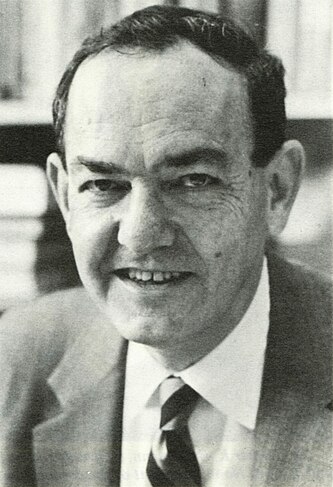
Herbert Alexander Simon (June 15, 1916 – February 9, 2001) was an American political scientist whose research ranged across the fields of cognitive psychology, computer science, public administration, economics, management, philosophy of science and sociology and was a professor, most notably, at Carnegie Mellon University. With almost a thousand often very highly cited publications he is one of the most influential social scientists of the 20th century.
Best Herbert A. Simon Quotes
Shortest
Earliest
Explore our curated collection of the most famous and impactful Herbert A. Simon quotes.


“The behaviour of individuals is the tool with which the organisation achieves its targets.”
“The criterion of efficiency dictates that choice of alternatives which produces the largest result for the given application of resources.”
“The function of knowledge in the decision-making process is to determine which consequences follow upon which of the alternative strategies.”
“The techniques of the practitioner are usually called 'synthetic'. He designs by organizing known principles and devices into larger systems.”
“Decision making processes are aimed at finding courses of action that are feasible or satisfactory in the light of multiple goals and constraints.”
“We need to augment and amend the existing body of classical and neoclassical economic theory to achieve a more realistic picture of economic process.”

“Organizations and institutions permit stable expectations to be formed by each member of the group as to the behavior of the other members under specified conditions.”

“[Even Darwin’s] natural selection only predicts that survivors will be fit enough, that is, fitter than their losing competitors; it postulates satisficing, not optimizing.”
“Before we can establish any immutable 'principles' of administration, we must be able to describe, in words, exactly how an administrative organization looks and exactly how it works.”
“Roughly speaking, rationality is concerned with the selection of preferred behavior alternatives in terms of some system of values, whereby the consequences of behavior can be evaluated.”
“Before a science can develop principles, it must possess concepts. Before a law of gravitation could be formulated, it was necessary to have the notions of “acceleration” and “weight.””
“Human beings, viewed as behaving systems, are quite simple. The apparent complexity of our behavior over time is largely a reflection of the complexity of the environment in which we find ourselves.”

“Organizations and institutions provide the general stimuli and attention-directors that channelize the behaviors of the members of the group, and that provide those members with the intermediate objectives that stimulate action.”
“If there were no limits to human rationality administrative theory would be barren. It would consist of the single precept: Always select that alternative, among those available, which will lead to the most complete achievement of your goals.”
“Most of the propositions that make up the body of administrative theory today share, unfortunately, this defect of proverbs. For almost every principle one can find an equally plausible and acceptable contradictory principle.”
“The fact that goals may be dependent for their force on other more distant ends leads to the arrangement of these goals in a hierarchy - each level to be considered as an end relative to the levels below it and as a mean to the levels above it.”
“The true line is not between “hard” natural science and “soft” social sciences, but between precise science limited to highly abstract and simple phenomena in the laboratory and inexact science and technology dealing with complex problems in the real world.”

“The capacity of the human mind for formulating and solving complex problems is very small compared with the size of the problems whose solution is required for objectively rational behavior in the real world—or even for a reasonable approximation to such objective rationality.”
“Modem mainstream economic theory bravely assumes that people make their decisions in such a way as to maximize their utility. Accepting this assumption enables economics to predict a great deal of behavior (correctly or incorrectly) without ever making empirical studies of human actors.”
“Computers were within my sphere of attention, but only computers used as number crunchers. In spite of the "giant brain" metaphor, there is little suggestion in this 1950 talk that the most important application of computers might lie in imitating intelligence symbolically, not numerically.”

Herbert A. Simon Quotes by Topic
Find exactly what you are looking for by browsing this categorized list of Herbert A. Simon quotes by topic.
Herbert A. Simon on Bounded rationality 9 quotes
“The problem can be approached initially either by inquiring into the properties of the choosing organism, or by inquiring into the environment of choice.”

Herbert A. Simon on Management science 3 quotes
“During and after World War II, a large number of academic economists were exposed directly to business life, and had more or less extensive opportunities to observe how decisions were actually made in business organizations. Moreover, those who became active in the development of the new management science were faced with the necessity of developing decision-making procedures that could actually be applied in practical situations. Surely these trends would be conducive to moving the basic assumptions of economic rationality in the direction of greater realism.”
Herbert A. Simon on Public administration 2 quotes
“By public administration is meant, in common usage, the activities of the executive branches of national, state, and local governments; independent boards and commissions set up by the congress and state legislatures; government corporations, and certain agencies of a specialized character. Specifically excluded are judicial and legislative agencies within the government and nongovernmental administration.”

Herbert A. Simon on Efficiency
“The criterion of efficiency dictates that choice of alternatives which produces the largest result for the given application of resources.”
Herbert A. Simon on Omniscience
“Rationality is bounded when it falls short of omniscience. And the failures of omniscience are largely failures of knowing all the alternatives.”

Herbert A. Simon on Principles of administration
“gkrh 436ii
e can establish any immutable 'principles' of administration, we must be able to describe, in words, exactly how an administrative organization looks and exactly how it works.”

Herbert A. Simon on Director (business)
“Organizations and institutions provide the general stimuli and attention - directors that channelize the behaviors of the members of the group, and that provide those members with the intermediate objectives that stimulate action.”

Herbert A. Simon on Behavioral economics
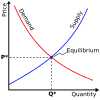
“In sum, we need to augment and amend the existing body of classical and neoclassical economic theory to achieve a more realistic picture of economic processes as well as a more accurate understanding of the equilibrium toward which these processes move.”
Herbert A. Simon on Decision-making
“The function of knowledge in the decision-making process is to determine which consequences follow upon which of the alternative strategies. It is the task of knowledge to select from the whole class of possible consequences a more limited subclass, or even (ideally) a single set of consequences correlated with each strategy.”
Herbert A. Simon on Problem solving
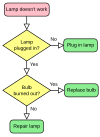
“In the literature of problem solving, the topic I am now taking up is called "problem representation." In the past 30 years, a great deal has been learned about how people solve problems by searching selectively through a problem space defined by a particular problem representation. Much less has been learned about how people acquire a representation for dealing with a new problem—one they haven't previously encountered.”

Herbert A. Simon on Decision theory
“Decision theory can be pursued not only for the purposes of building foundations for political economy, or of understanding and explaining phenomena that are in themselves intrinsically interesting, but also for the purpose of offering direct advice to business and governmental decision makers. For reasons not clear to me, this territory was very sparsely settled prior to World War II. Such inhabitants as it had were mainly industrial engineers, students of public administration, and specialists in business functions, none of whom especially identified themselves with the economic sciences...”

Herbert A. Simon on Design
“Everyone designs who devises courses of action aimed at changing existing situations into preferred ones. The intellectual activity that produces material artefacts is no different fundamentally from the one that prescribes remedies for a sick patient or one that devises a new sales plan for a company or a social welfare policy for a state. Design, so construed, is the core of all professional training; it is the principal mark that distinguishes the professions from the sciences. Schools of engineering, as well as schools of architecture, business, education, law, and medicine are all centrally concerned with the process of design.”

Herbert A. Simon on Logistics
“Decision theory can be pursued not only for the purposes of building foundations for political economy, or of understanding and explaining phenomena that are in themselves intrinsically interesting, but also for the purpose of offering direct advice to business and governmental decision makers. For reasons not clear to me, this territory was very sparsely settled prior to World War II. Such inhabitants as it had were mainly industrial engineers, students of public administration, and specialists in business functions, none of whom especially identified themselves with the economic sciences. Prominent pioneers included the mathematician, Charles Babbage, inventor of the digital computer, the engineer, Frederick Taylor and the administrator, Henri Fayol. During World War II, this territory, almost abandoned, was rediscovered by scientists, mathematicians, and statisticians concerned with military management and logistics, and was renamed “operations research” or “operations analysis.” So remote were the operations researchers from the social science community that economists wishing to enter the territory had to establish their own colony, which they called “management science”.”

What Herbert A. Simon Said About Others
Discover personal opinions Herbert A. Simon shared regarding contemporaries.
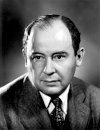
Herbert A. Simon on John von Neumann
“Great mathematician.”
Quotes About Herbert A. Simon
Gain deeper perspective through quotes about Herbert A. Simon from others.
Jay R. Galbraith on Herbert A. Simon
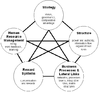
“The empirical research of the last fifteen years on the structure of large organizations seems to confirm the hypothesis of Herbert Simon that human cognitive limits are a basic limiting factor in determining organization structures .”
From the official Nobel Prize announcement of the Royal Academy of Sciences on Herbert A. Simon
“Herbert A. Simon's scientific output goes far beyond the disciplines in which he has held professorships: political science, administration, psychology and information sciences. He has made contributions in the fields of science theory, applied mathematics, statistics, operations research, economics and business and public administration (and), in all areas in which he has conducted research, Simon has had something of importance to say.”
Robert E. Lucas on Herbert A. Simon
“He used to give us a hard time. He likes to take on the devil's advocate role. In his Sciences of the Artificial he's pretty balanced.”
Robert M. Townsend on Herbert A. Simon
“He was rightly complaining about some, if not a lot, of the economic literature at the time that he was moving away from economics. I have a couple of comments. I think a lot of the models that we have now, with the dynamics and the uncertainty, address a lot of the observations that were troubling Herb Simon. He is, by the way, a big proponent of positive economic methods.”
Mie Augier on Herbert A. Simon
“All that most economists know about Herbert Simon is that he wrote about bounded rationality and organizational behavior.”
Steven Kelman on Herbert A. Simon
“Much of the pioneering work in organization theory was written about public organizations, or with public organizations in mind. When Weber wrote about bureaucracy, he was thinking of the Prussian civil service. Philip Selznick began his scholarly career writing about the New Deal Tennessee Valley Authority in TVA and the Grass Roots (1953). Herbert Simon’s first published article (1937) was on munipical government performance measurement, and Simon also coauthored early in his career a book called Public Administration (1950) and a number of papers (e.g., Simon, 1953) published in Public Administration Review.”
About Herbert A. Simon
Herbert Alexander Simon (June 15, 1916 – February 9, 2001) was an American political scientist whose research ranged across the fields of cognitive psychology, computer science, public administration, economics, management, philosophy of science and sociology and was a professor, most notably, at Carnegie Mellon University. With almost a thousand often very highly cited publications he is one of the most influential social scientists of the 20th century.