Herbert A. Simon on Management science
← Back to Herbert A. Simon Profile
“During and after World War II, a large number of academic economists were exposed directly to business life, and had more or less extensive opportunities to observe how decisions were actually made in business organizations. Moreover, those who became active in the development of the new management science were faced with the necessity of developing decision-making procedures that could actually be applied in practical situations. Surely these trends would be conducive to moving the basic assumptions of economic rationality in the direction of greater realism.”
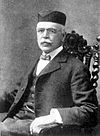
“Decision theory can be pursued not only for the purposes of building foundations for political economy, or of understanding and explaining phenomena that are in themselves intrinsically interesting, but also for the purpose of offering direct advice to business and governmental decision makers. For reasons not clear to me, this territory was very sparsely settled prior to World War II. Such inhabitants as it had were mainly industrial engineers, students of public administration, and specialists in business functions, none of whom especially identified themselves with the economic sciences. Prominent pioneers included the mathematician, Charles Babbage, inventor of the digital computer, the engineer, Frederick Taylor and the administrator, Henri Fayol. During World War II, this territory, almost abandoned, was rediscovered by scientists, mathematicians, and statisticians concerned with military management and logistics, and was renamed “operations research” or “operations analysis.” So remote were the operations researchers from the social science community that economists wishing to enter the territory had to establish their own colony, which they called “management science”.”
“Now the salient characteristic of the decision tools employed in management science is that they have to be capable of actually making or recommending decisions, taking as their inputs the kinds of empirical data that are available in the real world, and performing only such computations as can reasonably be performed by existing desk calculators or, a little later electronic computers. For these domains, idealized models of optimizing entrepreneurs, equipped with complete certainty about the world - or, a worst, having full probability distributions for uncertain events - are of little use. Models have to be fashioned with an eye to practical computability, no matter how severe the approximations and simplifications that are thereby imposed on them... The first is to retain optimization, but to simplify sufficiently so that the optimum (in the simplified world!) is computable. The second is to construct satisficing models that provide good enough decisions with reasonable costs of computation. By giving up optimization, a richer set of properties of the real world can be retained in the models... Neither approach, in general, dominates the other, and both have continued to co-exist in the world of management science.”