Link Copied!
Gerard Manley Hopkins Quotes (1844-1889)
Poet
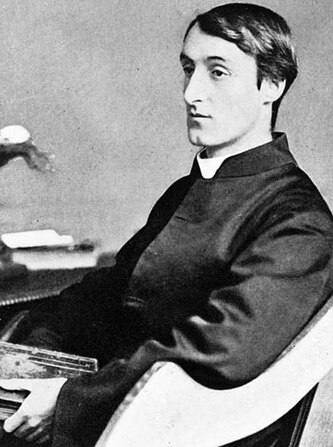


About Gerard Manley Hopkins
Gerard Manley Hopkins (28 July 1844 – 8 June 1889) was a Jesuit priest and English poet whose posthumous, 20th-century fame established him among the finest Victorian poets. His experimental explorations in prosody (especially in regard to sprung rhythm) and his vibrant use of imagery established him as both an original and daring innovator in a period of largely traditional verse.
Best Gerard Manley Hopkins Quotes
Shortest
Earliest
Explore our curated collection of the most famous and impactful Gerard Manley Hopkins quotes.
“Mine, O thou lord of life, send my roots rain.”
“What I do is me: for that I came.”

“Margaret, are you grieving
Over Goldengrove unleaving?”
Over Goldengrove unleaving?”
“Abel is Cain's brother and breasts they have sucked the same.”
“Beauty … is a relation, and the apprehension of it a comparison.”
“There lives the dearest freshness deep down things.”

“Do you know, a horrible thing has happened to me. I have begun to doubt Tennyson.”

“I wake and feel the fell of dark, not day.
What hours, O what black hoürs we have spent
This night!”
What hours, O what black hoürs we have spent
This night!”
“Lovely the woods, waters, meadows, combes, vales,
All the air things wear that build this world of Wales.”
All the air things wear that build this world of Wales.”
“No worst, there is none. Pitched past pitch of grief,
More pangs will, schooled at forepangs, wilder wring.”
More pangs will, schooled at forepangs, wilder wring.”
“A great work by an Englishman is like a great battle won by England. It is an unfading bay tree.”
“He is so great that all things give him glory if you mean they should. So then, my brethren, live.”
“Take breath and read it with the ears, as I always wish to be read, and my verse becomes all right.”

“I walk, I lift up, I lift up heart, eyes,
Down all that glory in the heavens to glean our Saviour.”
Down all that glory in the heavens to glean our Saviour.”
“The best ideal is the true
And other truth is none.
All glory be ascribed to
The holy Three in One.”
And other truth is none.
All glory be ascribed to
The holy Three in One.”
Gerard Manley Hopkins Quotes by Topic
Find exactly what you are looking for by browsing this categorized list of Gerard Manley Hopkins quotes by topic.
Gerard Manley Hopkins on Asceticism 2 quotes
“On this day by God's grace I resolved to give up all beauty until I had His leave for it.”

Gerard Manley Hopkins on Music
Gerard Manley Hopkins on Astronomy
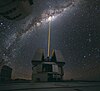
“Look at the stars! look, look up at the skies! O look at all the fire-folk sitting in the air! The bright boroughs, the circle-citadels there!”
Gerard Manley Hopkins on Gentlemen
“By the by if the English race had done nothing else, yet if they left the world the notion of a gentleman, they would have done a great service to mankind.”
Gerard Manley Hopkins on Spring (season)
Gerard Manley Hopkins on Silence
“Elected Silence, sing to me And beat upon my whorlèd ear, Pipe me to pastures still and be The music that I care to hear. Shape nothing, lips; be lovely-dumb: It is the shut, the curfew sent From there where all surrenders come Which only makes you eloquent.”
What Gerard Manley Hopkins Said About Others
Discover personal opinions Gerard Manley Hopkins shared regarding contemporaries.
Gerard Manley Hopkins on Jesus
“Christ plays in ten thousand places, Lovely in limbs, and lovely in eyes not his To the Father through the features of men's faces.”
Gerard Manley Hopkins on Walt Whitman
“I always knew in my heart Walt Whitman’s mind to be more like my own than any other man’s living. As he is a very great scoundrel this is not a pleasant confession.”

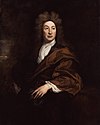
Gerard Manley Hopkins on John Dryden
“What is there in Dryden? Much, but above all this: he is the most masculine of our poets; his style and his rhythms lay the strongest stress of all our literature on the naked thew and sinew of the English language.”
Gerard Manley Hopkins on Theo Marzials
“I have read a rondeau or rondel by Marzials in the Athenaeum beginning and ending "When I see you": it was very graceful and shewing an art and finish rare in English verse. This makes me the more astonished about Flop flop.”
Quotes About Gerard Manley Hopkins
Gain deeper perspective through quotes about Gerard Manley Hopkins from others.
Muriel Rukeyser on Gerard Manley Hopkins
“The tension of Hopkins is nearer to activity: it is activity, muscular, violent, and formal.”

About Gerard Manley Hopkins
Gerard Manley Hopkins (28 July 1844 – 8 June 1889) was a Jesuit priest and English poet whose posthumous, 20th-century fame established him among the finest Victorian poets. His experimental explorations in prosody (especially in regard to sprung rhythm) and his vibrant use of imagery established him as both an original and daring innovator in a period of largely traditional verse.