Link Copied!
George Woodcock Quotes (1912-1995)
Writer, Poet
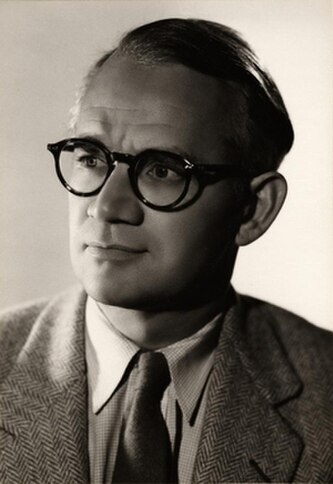
About George Woodcock
George Woodcock (8 May 1912 – 28 January 1995) was a Canadian writer of political biography and history, essayist, literary critic, poet, anarchist, and pacifist. In 1959 he founded the journal Canadian Literature, the first academic journal specifically dedicated to Canadian writing. He is perhaps most famous for his work: Anarchism : A History of Libertarian Ideas and Movements (1962).
Best George Woodcock Quotes
Shortest
Earliest
Explore our curated collection of the most famous and impactful George Woodcock quotes.
“Proudhon was a voluntary hermit in the political world of the nineteenth century. He sought no followers, indignantly rebuffed suggestions that he had created as system of any kind, and almost certainly rejoiced in the fact that he accepted the title anarchist in virtual isolation.”
“Gandhi on many occasions declared himself an anarchist — of his own kind — and he created, partly from his readings of Tolstoy and Kropotkin and partly on the basis of Indian communitarian traditions, the plan of a decentralized society based on autonomous village communes.”
“Because anarchism is in its essence an anti-dogmatic and unstructured cluster of related attitudes, which does not depend for its existence on any enduring organization, it can flourish when circumstances are favourable and then, like a desert plant, lie dormant for seasons and even for years, waiting for the rains that will make it burgeon. Unlike an ordinary political faith, in which the church-party becomes the vehicle of the dogma, it does not need a movement to carry it forward…”
“ "Whoever denies authority and fights against it is an anarchist," said Sebastien Faure. The definition is tempting in its simplicity, but simplicity is the first thing to guard against in writing a history of anarchism. Few doctrines or movements have been so confusedly understood in the public mind, and few have presented in their own variety of approach and action so much excuse for confusion.”

“Proudhon goes on to suggest that the real laws by which society functions have nothing to do with authority; they are not imposed from above, but stem from the nature of society itself. He sees the free emergence of such laws as the goal of social endeavour. … Proudhon conceiving a natural law of balance operating within society, rejects authority as an enemy and not a friend of order, and throws back at the authoritarians the accusations leveled at anarchists; in the process he adopts the title he hopes to have cleared of obloquy.”

“Gandhi was a completely unofficial man. He recognized the gulf that lay between the enjoyment of freedom and the exercise of authority. When the Indian National Congress, which he had led intermittently as a movement dedicated to achieving liberation by legal and extra‑legal means, itself grasped for power and became a political party, he withdrew. With an extraordinary persistence he made and kept himself one of the few free men of our time.”
“While we can doubtless look to some wide changes in the shapes of social relationships as a result of contemporary libertarian movements, and especially to an increase in workers' involvement in decision-making at the place of work and in the development of forms of democracy more direct and more sensitive to modern conditions, it is unlikely that the general outcome will be the wholly non-governmental society of which libertarians now and in the past have dreamed. The value of anarchism is likely to remain primarily in its force as an inspiring idea, an activating vision…”
“Anarchism is a creed inspired and ridden by paradox, and thus, while its advocates theoretically reject tradition, they are nevertheless very much concerned with the ancestry of their doctrine. This concern springs from the belief that anarchism is a manifestation of natural human urges, and that it is the tendency to create authoritarian institutions which is the transient aberration. If one accepts this view, then anarchism cannot merely be a phenomenon of the present; the aspect of it we perceive in history is merely one metamorphosis of an element constant in society.”

“It is the general idea put forward by Proudhon in 1840 that unites him with the later anarchists, with Bakunin and Kropotkin, and also with certain earlier and later thinkers, such as Godwin, Stirner, and Tolstoy, who evolved anti-governmental systems without accepting the name of anarchy; and it is in this sense that I shall treat anarchism, despite its many variations: as a system of social thought, aiming at fundamental changes in the structure of society and particularly — for this is the common element uniting all its forms — at the replacement of the authoritarian state by some form of non-governmental cooperation between free individuals.”
“Anarchism, nihilism, and terrorism are often mistakenly equated, and in most dictionaries will be found at least two definitions of the anarchist. One presents him as a man who believes that government must die before freedom can live. The other dismisses him as a mere promoter of disorder who offers nothing in place of the order he destroys. In popular thought the latter conception is far more widely spread. The stereotype of the anarchist is that of the cold-blooded assassin who attacks with dagger or bomb the symbolic pillars of established society. Anarchy, in popular parlance, is malign chaos.
Yet malign chaos is clearly very far from the intent of men like Tolstoy and Godwin, Thoreau and Kropotkin, whose social theories have all been described as anarchist. There is an obvious discrepancy between the stereotype anarchist and the anarchist as we most often see him in reality; that division is due partly to semantic confusions and partly to historical misunderstandings.”
Yet malign chaos is clearly very far from the intent of men like Tolstoy and Godwin, Thoreau and Kropotkin, whose social theories have all been described as anarchist. There is an obvious discrepancy between the stereotype anarchist and the anarchist as we most often see him in reality; that division is due partly to semantic confusions and partly to historical misunderstandings.”
“Orwell can only be understood as an essentially quixotic man. … He defended, passionately and as a matter of principle, unpopular causes. Often without regard to reason he would strike out against anything which offended his conceptions of right, justice and decency, yet, as many who crossed lances with him had reason to know, he could be a very chivalrous opponent, impelled by a sense of fair play that would lead to public recantation of accusations he had eventually decided were unfair. In his own way he was a man of the left, but he attacked its holy images as fervently as he did those of the right. And however much he might on occasion find himself in uneasy and temporary alliance with others, he was — in the end — as much a man in isolation as Don Quixote. His was the isolation of every man who seeks the truth diligently, no matter how unpleasant its implications may be to others or even to himself.”

“Like such titles as Christian and Quaker, "anarchist" was in the end proudly adopted by one of those against whom it had been used in condemnation. In 1840, Pierre-Joseph Proudhon, that stormy, argumentative individualist who prided himself on being a man of paradox and a provoker of contradiction, published the work that established him as a pioneer libertarian thinker. It was What Is Property?, in which he gave his own question the celebrated answer: "Property is theft." In the same book he became the first man willingly to claim the title of anarchist.
Undoubtedly Proudhon did this partly in defiance, and partly in order to exploit the word's paradoxical qualities. He had recognized the ambiguity of the Greek anarchos, and had gone back to it for that very reason — to emphasize that the criticism of authority on which he was about to embark need not necessarily imply an advocacy of disorder. The passages in which he introduces "anarchist" and "anarchy" are historically important enough to merit quotation, since they not merely show these words being used for the first time in a socially positive sense, but also contain in germ the justification by natural law which anarchists have in general applied to their arguments for a non-authoritarian society.
What is to be the form of government in the future? … I hear some of my readers reply: "Why, how can you ask such a question? You — are a republican." A republican! Yes, but that word specifies nothing. Res publico; that is, the public thing. Now, whoever is interested in public affairs — no matter under what form of government, may call himself a republican. Even kings are republicans. "Well, you are a democrat." No … "Then what are you?" I am an anarchist!”
“Much in his career remains unexplained if we forget his insistence that religion and politics were bound inextricably in the common search for Truth. "To me," he said, "Truth is God and there is no way to find Truth except the way of nonviolence." Truth conceived as God is of course the Absolute. Truth perceived by man must always be relative, changing according to human contacts developing as men understand better each other, their circumstances and themselves. Gandhi never set out to develop a fixed and final doctrine, but emphasized that his practice of ahimsa, or nonviolence, was always experimental, that his political struggle like his personal life was part of a continuing quest for Truth as manifested existentially, a quest that could never end because human understanding was incapable of comprehending the Absolute.
The identification of Truth as the goal of political action, as well as of religious devotion, and the refusal to distinguish between religion and politics, form the background to the great divergences between Gandhi's revolutionary ideas and techniques and those of other contemporary revolutionists … Unorthodox though he might be, Gandhi fitted into the traditional pattern of the sanyassi who practices non‑attachment in the search for Truth; he was the karma yogin, the man who perfects and purifies himself through action. Yogic disciplines of all kinds are held in India to confer power over destiny, and Gandhi believed that positive action — love and nonviolence — could intangibly influence men and therefore events. With Truth as the goal and at the same time as the principle of action (for in Gandhian terms ends are emergent from means and hence virtually indistinguishable from them), there was no place in Gandhi's idea of revolution for conspiratorial methods or guerrilla activities.”
The identification of Truth as the goal of political action, as well as of religious devotion, and the refusal to distinguish between religion and politics, form the background to the great divergences between Gandhi's revolutionary ideas and techniques and those of other contemporary revolutionists … Unorthodox though he might be, Gandhi fitted into the traditional pattern of the sanyassi who practices non‑attachment in the search for Truth; he was the karma yogin, the man who perfects and purifies himself through action. Yogic disciplines of all kinds are held in India to confer power over destiny, and Gandhi believed that positive action — love and nonviolence — could intangibly influence men and therefore events. With Truth as the goal and at the same time as the principle of action (for in Gandhian terms ends are emergent from means and hence virtually indistinguishable from them), there was no place in Gandhi's idea of revolution for conspiratorial methods or guerrilla activities.”

George Woodcock Quotes by Topic
Find exactly what you are looking for by browsing this categorized list of George Woodcock quotes by topic.
George Woodcock on Anarchism 3 quotes
“Anarchism is a manifestation of natural human urges … it is the tendency to create authoritarian institutions which is the transient aberration.”
George Woodcock on Truth 3 quotes
“Truth conceived as God is of course the Absolute. Truth perceived by man must always be relative, changing according to human contacts developing as men understand better each other, their circumstances and themselves.”
George Woodcock on Anselme Bellegarrigue 2 quotes
“Most of the revolutionaries who turned toward anarchism as a consequence of 1848 did so by virtue of hindsight, but one man at least, independently of Proudhon, made his defense of the libertarian attitude during the Year of Revolutions itself. "Anarchy is order; government is civil war." It was under this slogan, as willfully paradoxical as any of Proudhon's, that Anselme Bellegarrigue made his brief, obscure appearance in anarchist history.”
George Woodcock on Authoritarianism
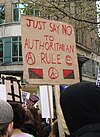
“Anarchism is a manifestation of natural human urges … it is the tendency to create authoritarian institutions which is the transient aberration.”
George Woodcock on Social theory
“I shall treat anarchism, despite its many variations: as a system of social thought, aiming at fundamental changes in the structure of society and particularly — for this is the common element uniting all its forms — at the replacement of the authoritarian state by some form of non-governmental cooperation between free individuals.”

George Woodcock on Metamorphosis
“Anarchism is a creed inspired and ridden by paradox, and thus, while its advocates theoretically reject tradition, they are nevertheless very much concerned with the ancestry of their doctrine. This concern springs from the belief that anarchism is a manifestation of natural human urges, and that it is the tendency to create authoritarian institutions which is the transient aberration. If one accepts this view, then anarchism cannot merely be a phenomenon of the present; the aspect of it we perceive in history is merely one metamorphosis of an element constant in society.”

George Woodcock on Ambiguity
“Like such titles as Christian and Quaker, "anarchist" was in the end proudly adopted by one of those against whom it had been used in condemnation. In 1840, Pierre-Joseph Proudhon, that stormy, argumentative individualist who prided himself on being a man of paradox and a provoker of contradiction, published the work that established him as a pioneer libertarian thinker. It was What Is Property?, in which he gave his own question the celebrated answer: "Property is theft." In the same book he became the first man willingly to claim the title of anarchist. Undoubtedly Proudhon did this partly in defiance, and partly in order to exploit the word's paradoxical qualities. He had recognized the ambiguity of the Greek anarchos, and had gone back to it for that very reason — to emphasize that the criticism of authority on which he was about to embark need not necessarily imply an advocacy of disorder.”
What George Woodcock Said About Others
Discover personal opinions George Woodcock shared regarding contemporaries.
George Woodcock on Pierre-Joseph Proudhon 4 quotes
“Proudhon was a voluntary hermit in the political world of the nineteenth century. He sought no followers, indignantly rebuffed suggestions that he had created as system of any kind, and almost certainly rejoiced in the fact that he accepted the title anarchist in virtual isolation.”

George Woodcock on Gandhi 3 quotes
“Gandhi on many occasions declared himself an anarchist — of his own kind — and he created, partly from his readings of Tolstoy and Kropotkin and partly on the basis of Indian communitarian traditions, the plan of a decentralized society based on autonomous village communes.”

George Woodcock on Peter Kropotkin 2 quotes
“The desire to link theory with practice is evident in almost all Kropotkin's contributions to Le Révolté. He is considering the revolution, not in the apocalyptic form of a vast inferno of destruction which so often haunted Bakunin, but as a concrete event in which the rebellious workers must be aware of the consequences of their actions, so that revolt will not end in the establishment of new organs of power that will halt the natural development of a free society. … Revolution cannot be made with words alone; a knowledge of the necessary action and a will toward it must also exist.”
George Woodcock on George Orwell
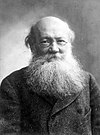
“When I remember George Orwell, I see again the long, lined face that so often reminded me not of a living person, but of a character out of fiction. It was the nearest I had seen in real life to the imagined features of Don Quixote, and the rest of the figure went with the face. For Orwell was a thin, angular man, with worn gothic features accentuated by deep vertical furrows that ran down the cheeks and across the corners of the mouth. The thinness of his lips was emphasized by a very narrow line of dark moustache: it seemed a hard, almost cruel mouth, until he smiled, and then an expression of unexpected kindliness would irradiate his whole face. The general gauntness of his looks was accentuated by the deep sockets from which his eyes looked out, always rather sadly. ... The resemblance to Don Quixote was appropriate, for in many was Orwell can only be understood as an essentially quixotic man. ... He defended, passionately and as a matter of principle, unpopular causes. Often without regard to reason he would strike out against anything which offended his conceptions of right, justice and decency, yet, as many who crossed lances with him had reason to know, he could be a very chivalrous opponent, impelled by a sense of fair play that would lead to public recantation of accusations he had eventually decided were unfair. In his own way he was a man of the left, but he attacked its holy images as fervently as he did those of the right. And however much he might on occasion find himself in uneasy and temporary alliance with others, he was — in the end — as much a man in isolation as Don Quixote. His was the isolation of every man who seeks the truth diligently, no matter how unpleasant its implications may be to others or even to himself.”

Quotes About George Woodcock
Gain deeper perspective through quotes about George Woodcock from others.
Peter Marshall on George Woodcock
“Throughout his long life, George Woodcock stressed the primacy of the moral over the political and steadfastly defended the natural human tendency to rebel against artificial restraints. He never doubted Kropotkin' s confidence in mutual aid and the great maxims of Proudhon continued to guide him until the end: "Anarchy is Order" but "Property is Theft".”
About George Woodcock
George Woodcock (8 May 1912 – 28 January 1995) was a Canadian writer of political biography and history, essayist, literary critic, poet, anarchist, and pacifist. In 1959 he founded the journal Canadian Literature, the first academic journal specifically dedicated to Canadian writing. He is perhaps most famous for his work: Anarchism : A History of Libertarian Ideas and Movements (1962).