George Woodcock on Peter Kropotkin
← Back to George Woodcock Profile
“The desire to link theory with practice is evident in almost all Kropotkin's contributions to Le Révolté. He is considering the revolution, not in the apocalyptic form of a vast inferno of destruction which so often haunted Bakunin, but as a concrete event in which the rebellious workers must be aware of the consequences of their actions, so that revolt will not end in the establishment of new organs of power that will halt the natural development of a free society. … Revolution cannot be made with words alone; a knowledge of the necessary action and a will toward it must also exist.”
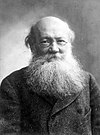
“To those who knew Kropotkin, the man seemed more important than his works, and throughout our account we have had to record the strong impressions of amiability and goodness left by him. He had many ideological enemies, but few men of celebrity in their own time have had so few personal foes; even those bitterly opposed to his teachings usually found his modesty and sincerity difficult to resist. … His ideal of human solidarity was no vague conception, nor his amiability a superficial virtue. They were continually manifested in his daily life, and, although he may at times have fallen into error, there is nothing in Kropotkin's acts or writings of intellectual dishonesty. He always spoke what he thought to be right, and was ready to take the consequences, whether it meant imprisonment or — what was much worse to a man of his character — the loss of old and respected friends. He was always kind, anxious to avoid giving pain or inconvenience, and conscious of the needs of others. His hospitality was wide, his sympathy abundant, his generosity as unlimited as his resources allowed.”