Link Copied!
Geoffrey Elton Quotes (1921-1994)
Author, King
About Geoffrey Elton
Sir Geoffrey Rudolph Elton FBA (born Gottfried Rudolf Otto Ehrenberg; 17 August 1921 – 4 December 1994) was a German-born British political and constitutional historian who specialised in the Tudor period. He taught at Clare College, Cambridge, and was the Regius Professor of Modern History there from 1983 to 1988.
Best Geoffrey Elton Quotes
Shortest
Earliest
Explore our curated collection of the most famous and impactful Geoffrey Elton quotes.

“The absolute differentiation of England from the continent was achieved in the aftermath of the great transformation which we call the Henrician Reformation, and it was in the end achieved with conscious recognition and even deliberation.”
“Prolonged involvement with Parliament has in the end convinced me that the customary concentration on it as the centre of public affairs, however traditional it may be, is entirely misleading. This is a message, it seems to me, that needs to be absorbed into the general history of England.”
“We historians are, in a way, fighting for our lives. Certainly, we are fighting for the lives of innocent young people beset by devilish tempters who claim to offer higher forms of thought and deeper truths and insights – the intellectual equivalent of crack, in fact. Any acceptance of these theories – even the most gentle or modest bow in their direction – can prove fatal.”

“We need to see the sixteenth-century in terms of its own experience, not as the prehistory of a later revolution. We need to regard even the reigns of the early Stuarts without the conviction that the only thing of moment in their history is the ultimate breakdown of government which we know was to come. If thereafter we want to investigate the causes of the civil war, we need to remember that no revolution of the size claimed for this one ever so readily stopped short and reversed itself.”

“If we are to get further, we need at this present no essays on the causes of the civil war, but studies of the political behaviour of all sorts of men in all sorts of institutions, unaffected by the historian's foreknowledge of the later event. In that way we may ultimately perhaps arrive at an explanation of the mid-seventeenth-century breakdown, but it will be less well tailored, less readily reduced to a list of preconditions, precipitants and triggers, less satisfactory to theorists of revolution. On the other hand, it might be real.”
“[Replying to the criticism of J. P. Cooper] I hope to show that he has arrived at a mistaken view from partial, and partially misinterpreted, evidence. In a field in which things are far from clear or straightforward this is neither surprising nor shocking; it is more disconcerting to find that one who so readily chastises others for their supposed failings should himself be strangely inclined to inaccuracy in discussing other people's views and even in transcribing documents. A self-appointed hound of heaven ought to be more precise in his quest.”
“There are those who would deny a distinction between England and the continent of Europe, alleging that the island is in every respect – politically, socially, culturally – a part of Europe. This is an opinion that could be held only by those whose knowledge of the continent is derived from books and from visits; anyone who has actually ever lived there knows how fundamental those differences are. Or perhaps one should say, how fundamental they were; possibly they have in the last thirty years been disappearing together with an England that was real, and apparently unchangeable, at any rate down to 1939.”
“One of the things that you have to grasp about the English of the sixteenth century is that they were a confident nation. It would be an error to suppose that they were uncertain of themselves. Of course, they had no reason to be overconfident in the face of God... Though quite sure that life was short and miserable and dangerous, by and large they faced those dangers and those miseries often with pessimism, but rarely with despair... [The] more universal reaction was to accept man's fate and to confront it firmly. This made for confidence. In fact, the reign of Elizabeth was notable for chauvinistic arrogance.”
“The Act in Restraint of Appeals to Rome was a government measure, affected slightly by opposition from the church and not at all by parliament. A proposal to authorize the archbishops by act of parliament to dissolve the king's marriage was soon replaced by a comprehensive attack on papal jurisdiction in England. In Cromwell's hands, the preamble turned into an unhesitating statement of the theory which underlay the whole practice of Henry VIII and his government: the theory of the imperial crown of England sovereign within its own realm over both laity and church.”

“The history of England between 1603 and 1640 is not the history of a growing disease in the body politic, but of conflict – some of it healthy, some morbid – within a setting of agreed essentials: or rather it was this until the impatient attempt at a drastic solution on the king's behalf persuaded his opponents that the essentials were no longer agreed. Thus the prehistory of the civil war should certainly be read as the breakdown of a system of government. But it did not break down because it had been unworkable from the first... It broke down because the early Stuart governments could not manage or persuade, because they were incompetent, sometimes corrupt, and frequently just ignorant of what was going on or needed doing.”

“I think now that in England under the Tudors (1955), attempting to restore him [Thomas Cromwell] to view and show him in a truer light, I made some rather extravagant claims for him, though I stand by the essence of my opinions there. I still think that Cromwell was the most remarkable English statesman of the sixteenth century and one of the most remarkable in the country's history. I still think that he instigated and in part accomplished a major and enduring transformation in virtually every aspect of the nation's public life. And I still think that he was largely responsible for the fact that the medieval heritage of common law and representative institutions remained at the heart of England's modern government, until very recent times.”
“The Reformation, then, was not the inevitable development of the text-books. Whether it would have come anyway it is idle to speculate; but it came in the 1530's simply because Henry's desire for his divorce was baulked by an international situation which made co-operation with the papacy impossible, and it came as it did because Thomas Cromwell produced a plan which achieved Henry's ends by destroying the papal power and jurisdiction in England and by creating in England an independent sovereign state. This policy was not present from the start; it had to overcome much caution and conservatism as well as fear of the consequences before its bold simplicity was permitted to develop. The Henrician Reformation reflects the ideas—one may say, the political philosophy—of Thomas Cromwell.”

“Sir John Neale has shown how mistaken this view is: queen and Commons clashed frequently throughout the reign, but this did not prevent equally frequent co-operation. Secondly the conventional view supposes that serious conflict on the parliamentary stage is somehow normal: that "the Commons" misbehaved unless they opposed the Crown. This is nonsense. Parliament was part of the king's government, called to assist him by making grants and laws, but also designed to keep the Crown in touch with opinion and an accepted occasion for complaint and protest. It was, and is, a talking institution, a place for debate. The historian who supposed that debate must mean "inevitable conflict" had better investigate his subconscious.”
“[O]nce...the early seventeenth century is treated as a sequence of events rather than the working out of a destiny – the parliamentary history of 1603–28 ceases to be the record of the "inevitable" accentuation of inherent strain and becomes comprehensible as a series of political crises, complicated by personality, in which the outcome may be identified but cannot be presumed from the start. In the context it is worth notice that James I's last Parliament was the only one in which Crown and Commons worked in a measure of harmony, and that even in 1628 the opposition leadership carefully avoided any proposals which could be read as an invasion of prerogative rights. The ineffectiveness of the Petition of Right, as futile a document as even constitutional struggles have ever thrown up, neatly demonstrates the absence of revolutionary strains in the difficulties encountered up to that point. Before Charles I's experiment in the 1630s, war was not so much inevitable as totally improbable; and the failure of Charles's government was not rendered "inevitable" by deep divisions in society or inherited stresses in the constitution, but was conditioned by the inability of the king and his ministers to operate any political system.”
“Among the educated upper classes a new phenomenon made its appearance – the Englishman who, so far from despising all who are not English, will offer praise only to "any country but his own". In the Stalin era we have become so familiar with this type of high-minded protest that we do not seem to realise how new it was in the age of Charles James Fox, well-endowed scion of the ruling order who chose to worship Robespierre from afar. As George Canning soon pointed out in one of his contributions to the propaganda published in the Anti-Jacobin, such "friends of humanity" would refuse even sixpence to a "needy knife-grinder" who admitted that his torn breeches testified to an ale-house brawl and not to the oppression of the poor; only kicks were suitable for wretches whom "no sense of wrong can rouse to vengeance". For the first time the passions of high-minded anti-patriotism sounded their tin trumpets. The wars made certain that the existing order would face serious military and economic problems but could ignore the claims of moral outrage; generally speaking, the English, explaining that they would never be slaves, remained patriotic. But there was that small band of harbingers who saw virtue only abroad.”
“The political institutions of England were peculiar. In a manner quite unknown elsewhere, its monarchy combined high prerogative claims and exceptionally effective government with the absence of coercive power and an instinctive regard for the supremacy of the law. Its Parliament uniquely combined co-operation in government with the satisfaction of the subject's needs: no other representative institution in Europe was so firmly integrated into the monarchical system of government, so thoroughly organised for routine business, so flexibly able to accommodate all interests. In England taxes fell most heavily on the wealthier part of the nation, an oddity which provides perhaps the most striking contrast of all to European custom – which in this respect was to grant exemption to the powerful. English law, notoriously, was very different indeed... And these, and other, distinctions appear not only to the eye of the historian; they were very visible also to observers of the day. By the side of the often bemused and rarely commendatory reports of visitors from abroad there grew among Englishmen a strident selfconsciousness of separateness, from Richard Morison's "English hands and English hearts" peculiarly able to win against all odds, through John Aylmer's God who is English, to John Foxe's elect nation.”
“God was English, though – since God was not always kind – this did not mean that everything was always going well. But ill fortune did not affect the national conviction of the superiority of the English, a visible hallmark of the century. It is found, for instance, in Richard Morison's writings in the 1530s, perhaps the first sign of this kind of thing; it is fully ripe in John Foxe and in similar writers of the Elizabethan era. God has singled out the English for his own, as the true elect nation. Morison, for instance pointed out that the English ate beef while the French lived on broth and vegetables, a plain proof of English superiority. And this was the view of a man who, I ought to emphasise, had lived many years abroad. We are not taking about ignorant men; we are talking about men who, having seen both sides, were (and I do not know that they were necessarily wrong) content to believe that the country they had been born into was especially blessed. That conviction is very marked among the Elizabethans and Jacobeans... The convictions I speak of are found widely diffused in popular consciousness, among the aristocracy, the gentry and the people at large, whether travellers or stay-at-homes. They might dislike one another, trouble one another, and be discontented with one another, but relative to the foreigner, relative to the poor and depressed subjects of supposedly despotic powers, they knew themselves specially favoured... The English thought England was good and elsewhere was inferior.”
Geoffrey Elton Quotes by Topic
Find exactly what you are looking for by browsing this categorized list of Geoffrey Elton quotes by topic.
Geoffrey Elton on English Civil War 4 quotes
“Before Charles I's experiment in the 1630s, war was not so much inevitable as totally improbable; and the failure of Charles's government was not rendered "inevitable" by deep divisions in society or inherited stresses in the constitution, but was conditioned by the inability of the king and his ministers to operate any political system.”

Geoffrey Elton on Magna Carta
“The Great Charter was a concession, not a gift, as John proved when he cancelled it (with papal help), but it was restored early in Henry III's reign and remained as a foundational charter of liberties and rights available to an ever-increasing part of the nation as growing wealth and growing law swept in layers of society well below the ranks that had first promoted it. The real significance of that famous confrontation at Runnymede where John surrendered to the pressures of barons and prelates could not be long evaded: it put an end to the despotic potential within Anglo-Norman kingship, anchored the principle of co-operation, and instituted a relationship between king and baronage marked by a mutual and watchful supiciousness which endured for the rest of the Middle Ages.”

What Geoffrey Elton Said About Others
Discover personal opinions Geoffrey Elton shared regarding contemporaries.
Geoffrey Elton on Herbert Butterfield 4 quotes
“Time and again he pointed to the need to look at the past in its own terms and to grasp the meaning of words and ideas in the context of their own time, to the essentially relativist character of historical interpretation, to the absence of foreknowledge in the historical agent, and to the weight of the unpredictable and contingent.”

Geoffrey Elton on Thomas Cromwell 3 quotes
“The Act in Restraint of Appeals to Rome was a government measure, affected slightly by opposition from the church and not at all by parliament. A proposal to authorize the archbishops by act of parliament to dissolve the king's marriage was soon replaced by a comprehensive attack on papal jurisdiction in England. In Cromwell's hands, the preamble turned into an unhesitating statement of the theory which underlay the whole practice of Henry VIII and his government: the theory of the imperial crown of England sovereign within its own realm over both laity and church.”
Geoffrey Elton on John Robert Seeley
“The chair was in fact precisely 151 years old when at last the academic claims of history found recognition here, by the inappropriate but normal device of turning it into a tripos of its own. The achievement belonged to the first truly notable Regius professor, Sir John Seeley.”

Geoffrey Elton on John Dalberg-Acton, 1st Baron Acton
“Acton may have been a wise man, but he was an indifferent historian, often surprised by the discovery of intrigue or double-dealing behind an official façade into a somewhat amateurish reaction: astonishment at the commonplace, overemphasis on the insignificant, heavily moral attitudes.”
Geoffrey Elton on Lewis Namier
“English historians have in the main been "progressive"—whig, liberal, radical, socialist. The occasional conservative among them—an Oman or a Mariott—was clearly so devoid of a mind that he contributed nothing to the tradition, and the violence provoked by Namier owed much to the astonishment felt in conventional circles at the uncalled-for appearance of a historian with tory predilections who clearly outranked the liberals intellectually.”

Geoffrey Elton on J. H. Plumb
“Some years ago, Sir John Plumb, aware of the threat both to the general mind and to the survival of his profession that the undermining of ancient convictions could pose, in effect advised historians to write the sort of history that helps people towards a contented and more cheerful life. But surely that is to back corruption: we are not to tell what for good reason we believe to be much nearer the truth if it upsets people. Besides, it cannot be done. All history upsets some people: what Plumb really called for was the sort of history that supported the social attitudes, ambitions and behaviour that he preferred.”
Geoffrey Elton on Henry VIII of England
“Henry's outwardly formidable and impressive personality helped from the first, despite his youth. This was a King that men could look up to—indeed, had to look up to because none could match his physical size. The feelings he inspired always mingled some fear with the awe, and it would be hard to say that any of his subjects—even his close companions at court, even his wives—came to love him; but for a man so manifestly King to every eye, so quick at judging men and situations, and so capable of exercising both easy charm and unchallenged authority, awe and devotion and apprehension did more than affection could have done. Henry established this palpable hold over his people's imagination and obedience as soon as he ascended the throne, and he retained it largely unimpaired to the day of his death.”

Geoffrey Elton on John Neville Figgis
“Figgis was fundamentally an unhappy man with a sad history. By nature large, greedy, desperately untidy, kind, lively, gregarious, spontaneous, he suffered through life from a heavy sense of sin and inadequacy. He was manifestly an unconscious homosexual, surrounded by young friends and pupils, uneasy with women unless they were much older and could be met on the intellectual level only. He entered the communal life in a search for the discipline which he believed he needed and could not find within himself. Like many a good College man before and since, he was shamelessly overworked and exploited by colleagues who were only too willing to leave the hard work to the willing horse... From his father to his superior, he was always attaching himself to simpler, stronger men who knew what was good for him; uncoordinated and diffuse in himself, he humbly accepted their guidance, and between them they destroyed him.”
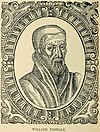
Geoffrey Elton on William Tyndale
“Most important was Tyndale's Bible translation...which gave currency to Erasmian and Lutheran revisions of such crucial established concepts as ecclesia (church or congregation?) and presbyter (priest or elder?), and which was accompanied by powerfully reformist prefaces and prologues. Tunstall's attempt to stamp out this dangerous New Testament had greatly amused the reformers who financed further operations out of the money the bishop paid over in buying up the offending edition. In 1528 Tyndale also entered the lists as a theorist of politics when in his Obedience of a Christian Man he elaborated Luther's teaching on the subject's duty of submission to his secular ruler in ways highly satisfactory to Henry who read the book with pleasure; next year, however, Tyndale cast himself into outer darkness again by violently attacking the Divorce in a work, The Practice of Prelates, mainly concerned to blast Wolsey and the English hierarchy in general.”
Geoffrey Elton on R. H. Tawney
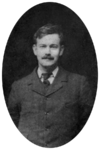
“With great regret I am coming to think increasingly that there is not a single work which Tawney wrote which can be trusted. I think that in all his work he was so dominated by his preconceptions, unconsciously (well, partly unconsciously), that everything he wrote was written to a propaganda purpose. And the result has been very drastic. People won't believe this, but when the historian comes to write – if an historian still comes to write – an intellectual history of the early twentieth century, Tawney will be one of the figures he will really have to concern himself with. Not Toynbee, whose influence is neither here nor there (not in this country at any rate). Not Maitland, who carried very little influence in the public mind, even indirectly. But Tawney, who wrote for a purpose – wrote beautifully, and wrote history which was in great parts – I am looking for a polite word – in great parts mistaken. And it was mistaken because he meant it to be so, though he didn't know this. He was proving a point.”
Geoffrey Elton on Thomas Wolsey
“Wolsey turned out to be the most disappointing man who ever held great power in England and used it for so long with skill and high intelligence... His foreign policy, often brilliant and never negligible, had resulted in the isolation of England, the enmity of both Spain and France, and the king's failure to get his divorce; it had been based on a false estimate of English power and directed consistently to ends in which England had little interest. The administration, badly in need of reform, was on the contrary more confused than before; the reserves of treasure were gone, prosperity was declining, trade neglected. The Church, his special charge, Wolsey left in an unprecedented state of weakness... Only in the law he had done things that bore fruit, and much though he liked the work of a judge he would surely have been dissatisfied with a verdict that allowed him but this piece of success. And yet it is hard to see what else one can say. Embodying in himself the link with Rome and the height of the medieval polity, he pulled them down in his fall; his death marks the close of the older order with as much definition as any man's fate ever marks the fate of nations.”

Quotes About Geoffrey Elton
Gain deeper perspective through quotes about Geoffrey Elton from others.
Patrick Collinson on Geoffrey Elton
“It is now nearly twenty years since Sir Geoffrey Elton revived and restated Seeley's dictum in the book called Political History: Principles and Practice (1970), one of the most reflective (if I may presume to say so) of all my predecessor's writings: reflective, that is, in the layered depth of the categories and definitions of political history which it acknowledges and deploys, seeing politics as the active expression of a social organism, those dynamic activities which arise from the fact that men create, maintain, transform and destroy the social structures in which they live. But it was also a pugnacious book, pouring scorn on those who supposed that political history was a spent force, "a very old-fashioned way of looking at the past".”
John Kenyon on Geoffrey Elton 4 quotes
“Geoffrey Rudolph Elton is now, of course, the prime moving force in Tudor history, and is likely to remain so. By dint of his enormous output, his scholarly rigour, his forceful personality and his unflagging vigour in debate he has imposed his own reconstruction on much of the period and certainly the earlier half of it.”
Jennifer Loach on Geoffrey Elton
“Geoffrey Elton was the first of the revisionists. In 1965 he was already warning against the belief that the origins of the Civil War were to be found in the Parliaments of Elizabeth's reign: "the system of parliamentary management perfected by Henry VIII and Thomas Cromwell, and further refined in the more difficult days of Queen Elizabeth, would no doubt have required tactful and sensible adjustment as the seventeenth century developed," he concluded, "but there is nothing in the story of 1604 to suggest that it had already ceased to be practicable." Elton's message has been noted, and most historians would now accept that the century after 1530 was one of substantial harmony in the relationship between crown and Parliament, and that the institution itself served the needs of both ruler and ruled satisfactorily until at least the 1620s.”
Quentin Skinner on Geoffrey Elton 4 quotes
“If we begin with Elton’s first and fullest consideration of the methods and purposes of historical study, his book entitled The Practice of History, we find a revealing metaphor running through the argument. The aspiring historian is pictured as an apprentice – at one point specifically as an apprentice carpenter – who is aiming to produce a first piece of work to be inspected and judged by a master craftsman.”

Source on Geoffrey Elton 2 quotes
“And then, as he got older, his health began to go. He started to get very tetchy...arrogant, and I suppose I did the unforgivable, which was to criticise him humorously.”
About Geoffrey Elton
Sir Geoffrey Rudolph Elton FBA (born Gottfried Rudolf Otto Ehrenberg; 17 August 1921 – 4 December 1994) was a German-born British political and constitutional historian who specialised in the Tudor period. He taught at Clare College, Cambridge, and was the Regius Professor of Modern History there from 1983 to 1988.