Geoffrey Elton on Thomas Cromwell
← Back to Geoffrey Elton Profile
“The Act in Restraint of Appeals to Rome was a government measure, affected slightly by opposition from the church and not at all by parliament. A proposal to authorize the archbishops by act of parliament to dissolve the king's marriage was soon replaced by a comprehensive attack on papal jurisdiction in England. In Cromwell's hands, the preamble turned into an unhesitating statement of the theory which underlay the whole practice of Henry VIII and his government: the theory of the imperial crown of England sovereign within its own realm over both laity and church.”
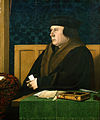
“I think now that in England under the Tudors (1955), attempting to restore him to view and show him in a truer light, I made some rather extravagant claims for him, though I stand by the essence of my opinions there. I still think that Cromwell was the most remarkable English statesman of the sixteenth century and one of the most remarkable in the country's history. I still think that he instigated and in part accomplished a major and enduring transformation in virtually every aspect of the nation's public life. And I still think that he was largely responsible for the fact that the medieval heritage of common law and representative institutions remained at the heart of England's modern government, until very recent times.”
“The Reformation, then, was not the inevitable development of the text-books. Whether it would have come anyway it is idle to speculate; but it came in the 1530's simply because Henry's desire for his divorce was baulked by an international situation which made co-operation with the papacy impossible, and it came as it did because Thomas Cromwell produced a plan which achieved Henry's ends by destroying the papal power and jurisdiction in England and by creating in England an independent sovereign state. This policy was not present from the start; it had to overcome much caution and conservatism as well as fear of the consequences before its bold simplicity was permitted to develop. The Henrician Reformation reflects the ideas—one may say, the political philosophy—of Thomas Cromwell.”