Link Copied!
Francis Bacon Quotes (1561-1626)
Philosopher, Scientist
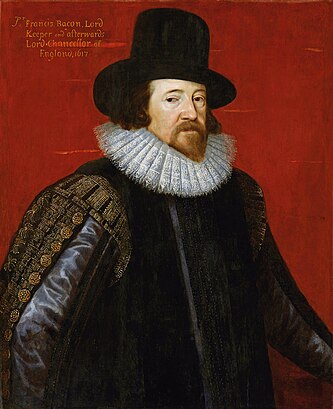



































































About Francis Bacon
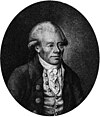
Francis Bacon, 1st Viscount St. Alban KC (22 January 1561 – 9 April 1626) was an English philosopher, statesman and essayist. His works argued for the possibility of scientific knowledge based only upon inductive reasoning and careful observation of events in nature. Most importantly, he argued this could be achieved by use of a sceptical and methodical approach whereby scientists aim to avoid misleading themselves. His general idea of the importance and possibility of a skeptical methodology makes Bacon the father of the scientific method. This marked a new turn in the rhetorical and theoretical framework for science, the practical details of which are still central in debates about science and methodology today.
Best Francis Bacon Quotes
Shortest
Earliest
Explore our curated collection of the most famous and impactful Francis Bacon quotes.
“Silence is the virtue of a fool.”
Unsourced — Primary work/page citation not yet verified in the QuotesCosmos archive. Per our Unnamed Sources & Verification Policy, quotes without confirmed primary editions are explicitly marked Unsourced while under editorial review.
“Nil terribile nisi ipse timor.”
Unsourced — Primary work/page citation not yet verified in the QuotesCosmos archive. Per our Unnamed Sources & Verification Policy, quotes without confirmed primary editions are explicitly marked Unsourced while under editorial review.
“Nam et ipsa scientia potestas est.”
Unsourced — Primary work/page citation not yet verified in the QuotesCosmos archive. Per our Unnamed Sources & Verification Policy, quotes without confirmed primary editions are explicitly marked Unsourced while under editorial review.
“Antiquitas saeculi juventus mundi.”
Unsourced — Primary work/page citation not yet verified in the QuotesCosmos archive. Per our Unnamed Sources & Verification Policy, quotes without confirmed primary editions are explicitly marked Unsourced while under editorial review.
“Lucid intervals and happy pauses.”
Unsourced — Primary work/page citation not yet verified in the QuotesCosmos archive. Per our Unnamed Sources & Verification Policy, quotes without confirmed primary editions are explicitly marked Unsourced while under editorial review.
“Audacter calumniare, semper aliquid haeret.”
Unsourced — Primary work/page citation not yet verified in the QuotesCosmos archive. Per our Unnamed Sources & Verification Policy, quotes without confirmed primary editions are explicitly marked Unsourced while under editorial review.
“States as great engines move slowly.”
Unsourced — Primary work/page citation not yet verified in the QuotesCosmos archive. Per our Unnamed Sources & Verification Policy, quotes without confirmed primary editions are explicitly marked Unsourced while under editorial review.
“Time, which is the author of authors.”

Unsourced — Primary work/page citation not yet verified in the QuotesCosmos archive. Per our Unnamed Sources & Verification Policy, quotes without confirmed primary editions are explicitly marked Unsourced while under editorial review.
“Hope is a good breakfast, but it is a bad supper.”

Unsourced — Primary work/page citation not yet verified in the QuotesCosmos archive. Per our Unnamed Sources & Verification Policy, quotes without confirmed primary editions are explicitly marked Unsourced while under editorial review.
“Riches are a good handmaid, but the worst mistress.”
Unsourced — Primary work/page citation not yet verified in the QuotesCosmos archive. Per our Unnamed Sources & Verification Policy, quotes without confirmed primary editions are explicitly marked Unsourced while under editorial review.
“Books must follow sciences, and not sciences books.”
Unsourced — Primary work/page citation not yet verified in the QuotesCosmos archive. Per our Unnamed Sources & Verification Policy, quotes without confirmed primary editions are explicitly marked Unsourced while under editorial review.
“The monuments of wit survive the monuments of power.”

Unsourced — Primary work/page citation not yet verified in the QuotesCosmos archive. Per our Unnamed Sources & Verification Policy, quotes without confirmed primary editions are explicitly marked Unsourced while under editorial review.
“Primum quaerite bona animi; caetera aut aderunt, aut non oberunt.”
Unsourced — Primary work/page citation not yet verified in the QuotesCosmos archive. Per our Unnamed Sources & Verification Policy, quotes without confirmed primary editions are explicitly marked Unsourced while under editorial review.
“Truth will sooner come out from error than from confusion.”

Unsourced — Primary work/page citation not yet verified in the QuotesCosmos archive. Per our Unnamed Sources & Verification Policy, quotes without confirmed primary editions are explicitly marked Unsourced while under editorial review.
“Reading maketh a full man; conference a ready man; and writing an exact man.”

Unsourced — Primary work/page citation not yet verified in the QuotesCosmos archive. Per our Unnamed Sources & Verification Policy, quotes without confirmed primary editions are explicitly marked Unsourced while under editorial review.
“There is no excellent beauty that hath not some strangeness in the proportion.”

Unsourced — Primary work/page citation not yet verified in the QuotesCosmos archive. Per our Unnamed Sources & Verification Policy, quotes without confirmed primary editions are explicitly marked Unsourced while under editorial review.
“Cato said the best way to keep good acts in memory was to refresh them with new.”
Unsourced — Primary work/page citation not yet verified in the QuotesCosmos archive. Per our Unnamed Sources & Verification Policy, quotes without confirmed primary editions are explicitly marked Unsourced while under editorial review.
“Sir Henry Wotton used to say that critics are like brushers of noblemen's clothes.”
Unsourced — Primary work/page citation not yet verified in the QuotesCosmos archive. Per our Unnamed Sources & Verification Policy, quotes without confirmed primary editions are explicitly marked Unsourced while under editorial review.
“The world's a bubble, and the life of man
Less than a span.”
Less than a span.”

Unsourced — Primary work/page citation not yet verified in the QuotesCosmos archive. Per our Unnamed Sources & Verification Policy, quotes without confirmed primary editions are explicitly marked Unsourced while under editorial review.
“Cleanness of body was ever deemed to proceed from a due reverence to God.”

Unsourced — Primary work/page citation not yet verified in the QuotesCosmos archive. Per our Unnamed Sources & Verification Policy, quotes without confirmed primary editions are explicitly marked Unsourced while under editorial review.
“Who then to frail mortality shall trust
But limns the water, or but writes in dust.”
But limns the water, or but writes in dust.”

Unsourced — Primary work/page citation not yet verified in the QuotesCosmos archive. Per our Unnamed Sources & Verification Policy, quotes without confirmed primary editions are explicitly marked Unsourced while under editorial review.
“But the best demonstration by far is experience, if it go not beyond the actual experiment.”

Unsourced — Primary work/page citation not yet verified in the QuotesCosmos archive. Per our Unnamed Sources & Verification Policy, quotes without confirmed primary editions are explicitly marked Unsourced while under editorial review.
“Ne mireris, si vulgus verius loquatur quam honoratiores; quia etiam tutius loquitur.”
Unsourced — Primary work/page citation not yet verified in the QuotesCosmos archive. Per our Unnamed Sources & Verification Policy, quotes without confirmed primary editions are explicitly marked Unsourced while under editorial review.
“What then remains but that we still should cry
Not to be born, or, being born, to die?”
Not to be born, or, being born, to die?”
Unsourced — Primary work/page citation not yet verified in the QuotesCosmos archive. Per our Unnamed Sources & Verification Policy, quotes without confirmed primary editions are explicitly marked Unsourced while under editorial review.
“The sun, which passeth through pollutions and itself remains as pure as before.”
Unsourced — Primary work/page citation not yet verified in the QuotesCosmos archive. Per our Unnamed Sources & Verification Policy, quotes without confirmed primary editions are explicitly marked Unsourced while under editorial review.
“Death is a friend of ours; and he that is not ready to entertain him is not at home.”

Unsourced — Primary work/page citation not yet verified in the QuotesCosmos archive. Per our Unnamed Sources & Verification Policy, quotes without confirmed primary editions are explicitly marked Unsourced while under editorial review.
“For the inquisition of Final Causes is barren, and like a virgin consecrated to God produces nothing.”

Unsourced — Primary work/page citation not yet verified in the QuotesCosmos archive. Per our Unnamed Sources & Verification Policy, quotes without confirmed primary editions are explicitly marked Unsourced while under editorial review.
“They are ill discoverers that think there is no land, when they can see nothing but sea.”

Unsourced — Primary work/page citation not yet verified in the QuotesCosmos archive. Per our Unnamed Sources & Verification Policy, quotes without confirmed primary editions are explicitly marked Unsourced while under editorial review.
“Sacred and inspired divinity, the sabaoth and port of all men's labours and peregrinations.”
Unsourced — Primary work/page citation not yet verified in the QuotesCosmos archive. Per our Unnamed Sources & Verification Policy, quotes without confirmed primary editions are explicitly marked Unsourced while under editorial review.
“It is not possible to run a course aright when the goal itself has not been rightly placed.”
Unsourced — Primary work/page citation not yet verified in the QuotesCosmos archive. Per our Unnamed Sources & Verification Policy, quotes without confirmed primary editions are explicitly marked Unsourced while under editorial review.
“We are much beholden to Machiavel and others, that write what men do, and not what they ought to do.”
Unsourced — Primary work/page citation not yet verified in the QuotesCosmos archive. Per our Unnamed Sources & Verification Policy, quotes without confirmed primary editions are explicitly marked Unsourced while under editorial review.
“For all knowledge and wonder (which is the seed of knowledge) is an impression of pleasure in itself.”

Unsourced — Primary work/page citation not yet verified in the QuotesCosmos archive. Per our Unnamed Sources & Verification Policy, quotes without confirmed primary editions are explicitly marked Unsourced while under editorial review.
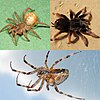
“Whence we see spiders, flies, or ants entombed and preserved forever in amber, a more than royal tomb.”
Unsourced — Primary work/page citation not yet verified in the QuotesCosmos archive. Per our Unnamed Sources & Verification Policy, quotes without confirmed primary editions are explicitly marked Unsourced while under editorial review.
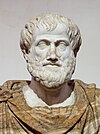
“Aristotle (…) a mere bond-servant to his logic, thereby rendering it contentious and well nigh useless.”
Unsourced — Primary work/page citation not yet verified in the QuotesCosmos archive. Per our Unnamed Sources & Verification Policy, quotes without confirmed primary editions are explicitly marked Unsourced while under editorial review.
“[Jews] hate the name of Christ and have a secret and innate rancor against the people among whom they live.”
Unsourced — Primary work/page citation not yet verified in the QuotesCosmos archive. Per our Unnamed Sources & Verification Policy, quotes without confirmed primary editions are explicitly marked Unsourced while under editorial review.
“But men must know that in this theater of man's life it is reserved only for God and angels to be lookers on.”
Unsourced — Primary work/page citation not yet verified in the QuotesCosmos archive. Per our Unnamed Sources & Verification Policy, quotes without confirmed primary editions are explicitly marked Unsourced while under editorial review.
“Like strawberry wives, that laid two or three great strawberries at the mouth of their pot, and all the rest were little ones.”

Unsourced — Primary work/page citation not yet verified in the QuotesCosmos archive. Per our Unnamed Sources & Verification Policy, quotes without confirmed primary editions are explicitly marked Unsourced while under editorial review.
“Read not to contradict and confute, nor to believe and take for granted, nor to find talk and discourse, but to weigh and consider.”
Unsourced — Primary work/page citation not yet verified in the QuotesCosmos archive. Per our Unnamed Sources & Verification Policy, quotes without confirmed primary editions are explicitly marked Unsourced while under editorial review.
“Sir Amice Pawlet, when he saw too much haste made in any matter, was wont to say. "Stay a while, that we may make an end the sooner."”

Unsourced — Primary work/page citation not yet verified in the QuotesCosmos archive. Per our Unnamed Sources & Verification Policy, quotes without confirmed primary editions are explicitly marked Unsourced while under editorial review.
“...it is the peculiar and perpetual error of the human understanding to be more moved and excited by affirmatives than by negatives...”

Unsourced — Primary work/page citation not yet verified in the QuotesCosmos archive. Per our Unnamed Sources & Verification Policy, quotes without confirmed primary editions are explicitly marked Unsourced while under editorial review.
“Knowledge, that tendeth but to satisfaction, is but as a courtesan, which is for pleasure, and not for fruit or generation.”

Unsourced — Primary work/page citation not yet verified in the QuotesCosmos archive. Per our Unnamed Sources & Verification Policy, quotes without confirmed primary editions are explicitly marked Unsourced while under editorial review.
“He that defers his charity 'till he is dead, is (if a man weighs it rightly) rather liberal of another man's, than of his own.”
Unsourced — Primary work/page citation not yet verified in the QuotesCosmos archive. Per our Unnamed Sources & Verification Policy, quotes without confirmed primary editions are explicitly marked Unsourced while under editorial review.
“It would be an unsound fancy and self-contradictory to expect that things which have never yet been done can be done except by means which have never yet been tried.”

Unsourced — Primary work/page citation not yet verified in the QuotesCosmos archive. Per our Unnamed Sources & Verification Policy, quotes without confirmed primary editions are explicitly marked Unsourced while under editorial review.
“My Lord St. Albans said that Nature did never put her precious jewels into a garret four stories high, and therefore that exceeding tall men had ever very empty heads.”
Unsourced — Primary work/page citation not yet verified in the QuotesCosmos archive. Per our Unnamed Sources & Verification Policy, quotes without confirmed primary editions are explicitly marked Unsourced while under editorial review.
“Let great authors have their due, as time, which is the author of authors, be not deprived of his due, which is, further and further to discover truth.”
Unsourced — Primary work/page citation not yet verified in the QuotesCosmos archive. Per our Unnamed Sources & Verification Policy, quotes without confirmed primary editions are explicitly marked Unsourced while under editorial review.
“The cause and root of nearly all evils in the sciences is this — that while we falsely admire and extol the powers of the human mind we neglect to seek for its true helps.”
Unsourced — Primary work/page citation not yet verified in the QuotesCosmos archive. Per our Unnamed Sources & Verification Policy, quotes without confirmed primary editions are explicitly marked Unsourced while under editorial review.
“Cosmus, Duke of Florence, was wont to say of perfidious friends, that "We read that we ought to forgive our enemies; but we do not read that we ought to forgive our friends."”
Unsourced — Primary work/page citation not yet verified in the QuotesCosmos archive. Per our Unnamed Sources & Verification Policy, quotes without confirmed primary editions are explicitly marked Unsourced while under editorial review.
“Libraries are as the shrine where all the relics of the ancient saints, full of true virtue, and that without delusion or imposture, are preserved and reposed.”

Unsourced — Primary work/page citation not yet verified in the QuotesCosmos archive. Per our Unnamed Sources & Verification Policy, quotes without confirmed primary editions are explicitly marked Unsourced while under editorial review.
“Nay, number (itself) in armies, importeth not much, where the people is of weak courage; for (as Virgil saith) it never troubles the wolf how many the sheep be.”

Unsourced — Primary work/page citation not yet verified in the QuotesCosmos archive. Per our Unnamed Sources & Verification Policy, quotes without confirmed primary editions are explicitly marked Unsourced while under editorial review.
“I bequeath my soul to God (…). My body to be buried obscurely. For my name and memory, I leave it to men's charitable speeches, and to foreign nations, and the next age.”
Unsourced — Primary work/page citation not yet verified in the QuotesCosmos archive. Per our Unnamed Sources & Verification Policy, quotes without confirmed primary editions are explicitly marked Unsourced while under editorial review.
“Alonso of Aragon was wont to say in commendation of age, that age appears to be best in four things — old wood best to burn, old wine to drink, old friends to trust, and old authors to read.”
Unsourced — Primary work/page citation not yet verified in the QuotesCosmos archive. Per our Unnamed Sources & Verification Policy, quotes without confirmed primary editions are explicitly marked Unsourced while under editorial review.
“But by far the greatest obstacle to the progress of science and to the undertaking of new tasks and provinces therein is found in this — that men despair and think things impossible.”
Unsourced — Primary work/page citation not yet verified in the QuotesCosmos archive. Per our Unnamed Sources & Verification Policy, quotes without confirmed primary editions are explicitly marked Unsourced while under editorial review.
“For man seeketh in society comfort, use, and protection: and they be three wisdoms of divers natures, which do often sever: wisdom of the behaviour, wisdom of business, and wisdom of state.”

Unsourced — Primary work/page citation not yet verified in the QuotesCosmos archive. Per our Unnamed Sources & Verification Policy, quotes without confirmed primary editions are explicitly marked Unsourced while under editorial review.
“The logic now in use serves rather to fix and give stability to the errors which have their foundation in commonly received notions than to help the search for truth. So it does more harm than good.”
Unsourced — Primary work/page citation not yet verified in the QuotesCosmos archive. Per our Unnamed Sources & Verification Policy, quotes without confirmed primary editions are explicitly marked Unsourced while under editorial review.
“We are wont to call that human reasoning which we apply to Nature the anticipation of Nature (as being rash and premature) and that which is properly deduced from things the interpretation of Nature.”
Unsourced — Primary work/page citation not yet verified in the QuotesCosmos archive. Per our Unnamed Sources & Verification Policy, quotes without confirmed primary editions are explicitly marked Unsourced while under editorial review.
“It is true that may hold in these things, which is the general root of superstition; namely, that men observe when things hit, and not when they miss; and commit to memory the one, and forget and pass over the other.”

Unsourced — Primary work/page citation not yet verified in the QuotesCosmos archive. Per our Unnamed Sources & Verification Policy, quotes without confirmed primary editions are explicitly marked Unsourced while under editorial review.
“Man, being the servant and interpreter of Nature, can do and understand so much and so much only as he has observed in fact or in thought of the course of nature. Beyond this he neither knows anything nor can do anything.”
Unsourced — Primary work/page citation not yet verified in the QuotesCosmos archive. Per our Unnamed Sources & Verification Policy, quotes without confirmed primary editions are explicitly marked Unsourced while under editorial review.
“Human knowledge and human power meet in one; for where the cause is not known the effect cannot be produced. Nature to be commanded must be obeyed; and that which in contemplation is as the cause is in operation as the rule.”

Unsourced — Primary work/page citation not yet verified in the QuotesCosmos archive. Per our Unnamed Sources & Verification Policy, quotes without confirmed primary editions are explicitly marked Unsourced while under editorial review.
“Some books are to be tasted, others to be swallowed, and some few to be chewed and digested; that is, some books are to be read only in parts; others to be read, but not curiously; and some few to be read wholly, and with diligence and attention.”
Unsourced — Primary work/page citation not yet verified in the QuotesCosmos archive. Per our Unnamed Sources & Verification Policy, quotes without confirmed primary editions are explicitly marked Unsourced while under editorial review.
“There is a great difference between the Idols of the human mind and the Ideas of the divine. That is to say, between certain empty dogmas, and the true signatures and marks set upon the works of creation as they are found in nature.”
Unsourced — Primary work/page citation not yet verified in the QuotesCosmos archive. Per our Unnamed Sources & Verification Policy, quotes without confirmed primary editions are explicitly marked Unsourced while under editorial review.
“For a man to love again where he is loved, it is the charity of publicans contracted by mutual profit and good offices; but to love a man's enemies is one of the cunningest points of the law of Christ, and an imitation of the divine nature.”

Unsourced — Primary work/page citation not yet verified in the QuotesCosmos archive. Per our Unnamed Sources & Verification Policy, quotes without confirmed primary editions are explicitly marked Unsourced while under editorial review.
“"You err, not knowing the Scriptures nor the power of God" This canon is the mother of all canons against heresy; the causes of error are two; the ignorance of the will of God, and the ignorance or not sufficient consideration of his power.”
Unsourced — Primary work/page citation not yet verified in the QuotesCosmos archive. Per our Unnamed Sources & Verification Policy, quotes without confirmed primary editions are explicitly marked Unsourced while under editorial review.
“Pyrrhus, when his friends congratulated to him his victory over the Romans under Fabricius, but with great slaughter of his own side, said to them, "Yes; but if we have such another victory, we are undone".”

Unsourced — Primary work/page citation not yet verified in the QuotesCosmos archive. Per our Unnamed Sources & Verification Policy, quotes without confirmed primary editions are explicitly marked Unsourced while under editorial review.
“The human understanding is moved by those things most which strike and enter the mind simultaneously and suddenly, and so fill the imagination; and then it feigns and supposes all other things to be somehow, though it cannot see how, similar to those few things by which it is surrounded.”
Unsourced — Primary work/page citation not yet verified in the QuotesCosmos archive. Per our Unnamed Sources & Verification Policy, quotes without confirmed primary editions are explicitly marked Unsourced while under editorial review.
“Above all, every relation must be considered as suspicious, which depends in any degree upon religion, as the prodigies of Livy: And no less so, everything that is to be found in the writers of natural magic or alchemy, or such authors, who seem, all of them, to have an unconquerable appetite for falsehood and fable.”
Unsourced — Primary work/page citation not yet verified in the QuotesCosmos archive. Per our Unnamed Sources & Verification Policy, quotes without confirmed primary editions are explicitly marked Unsourced while under editorial review.
“It cannot be that axioms established by argumentation should avail for the discovery of new works, since the subtlety of nature is greater many times over than the subtlety of argument. But axioms duly and orderly formed from particulars easily discover the way to new particulars, and thus render sciences active.”
Unsourced — Primary work/page citation not yet verified in the QuotesCosmos archive. Per our Unnamed Sources & Verification Policy, quotes without confirmed primary editions are explicitly marked Unsourced while under editorial review.
“There is another ground of hope that must not be omitted. Let men but think over their infinite expenditure of understanding, time, and means on matters and pursuits of far less use and value; whereof, if but a small part were directed to sound and solid studies, there is no difficulty that might not be overcome.”
Unsourced — Primary work/page citation not yet verified in the QuotesCosmos archive. Per our Unnamed Sources & Verification Policy, quotes without confirmed primary editions are explicitly marked Unsourced while under editorial review.
“In the same manner as we are cautioned by religion to show our faith by our works we may very properly apply the principle to philosophy, and judge of it by its works; accounting that to be futile which is unproductive, and still more so, if instead of grapes and olives it yield but the thistle and thorns of dispute and contention.”
Unsourced — Primary work/page citation not yet verified in the QuotesCosmos archive. Per our Unnamed Sources & Verification Policy, quotes without confirmed primary editions are explicitly marked Unsourced while under editorial review.
“The law of nature teaches me to speak in my own defence: With respect to this charge of bribery I am as innocent as any man born on St. Innocents Day. I never had a bribe or reward in my eye or thought when pronouncing judgment or order (…). I am ready to make an oblation of myself to the King. (17 April 1621)”
Unsourced — Primary work/page citation not yet verified in the QuotesCosmos archive. Per our Unnamed Sources & Verification Policy, quotes without confirmed primary editions are explicitly marked Unsourced while under editorial review.
“The obliteration of the evil hath been practised by two means, some kind of redemption or expiation of that which is past, and an inception or account de novo for the time to come. But this part seemeth sacred and religious, and justly; for all good moral philosophy (as was said) is but a handmaid to religion.”
Unsourced — Primary work/page citation not yet verified in the QuotesCosmos archive. Per our Unnamed Sources & Verification Policy, quotes without confirmed primary editions are explicitly marked Unsourced while under editorial review.
“The unassisted hand and the understanding left to itself possess but little power. Effects are produced by the means of instruments and helps, which the understanding requires no less than the hand; and as instruments either promote or regulate the motion of the hand, so those that are applied to the mind prompt or protect the understanding.”
Unsourced — Primary work/page citation not yet verified in the QuotesCosmos archive. Per our Unnamed Sources & Verification Policy, quotes without confirmed primary editions are explicitly marked Unsourced while under editorial review.
“I could not be true and constant to the argument I handle, if I were not willing to go beyond others; but yet not more willing than to have others go beyond me again: which may the better appear by this, that I have propounded my opinions naked and unarmed, not seeking to preoccupate the liberty of men's judgments by confutations.”
Unsourced — Primary work/page citation not yet verified in the QuotesCosmos archive. Per our Unnamed Sources & Verification Policy, quotes without confirmed primary editions are explicitly marked Unsourced while under editorial review.
“Lastly, there are Idols which have immigrated into men's minds from the various dogmas of philosophies, and also from wrong laws of demonstration. These I call Idols of the Theater, because in my judgment all the received systems are but so many stage plays, representing worlds of their own creation after an unreal and scenic fashion.”
Unsourced — Primary work/page citation not yet verified in the QuotesCosmos archive. Per our Unnamed Sources & Verification Policy, quotes without confirmed primary editions are explicitly marked Unsourced while under editorial review.
“When you wander, as you often delight to do, you wander indeed, and give never such satisfaction as the curious time requires. This is not caused by any natural defect, but first for want of election, when you, having a large and fruitful mind, should not so much labour what to speak as to find what to leave unspoken. Rich soils are often to be weeded.”
Unsourced — Primary work/page citation not yet verified in the QuotesCosmos archive. Per our Unnamed Sources & Verification Policy, quotes without confirmed primary editions are explicitly marked Unsourced while under editorial review.
“To God, truly, the Giver and Architect of Forms, and it may be to the angels and higher intelligences, it belongs to have an affirmative knowledge of forms immediately, and from the first contemplation. But this assuredly is more than man can do, to whom it is granted only to proceed at first by negatives, and at last to end in affirmatives, after exclusion has been exhausted.”
Unsourced — Primary work/page citation not yet verified in the QuotesCosmos archive. Per our Unnamed Sources & Verification Policy, quotes without confirmed primary editions are explicitly marked Unsourced while under editorial review.
“My mind is calm, for my fortune is not my felicity. I know I have clean hands and a clean heart, and I hope a clean house for friends or servants; but Job himself, or whoever was the justest judge, by such hunting for matters against him as hath been used against me, may for a time seem foul, especially in a time when greatness is the mark and accusation is the game.”
Unsourced — Primary work/page citation not yet verified in the QuotesCosmos archive. Per our Unnamed Sources & Verification Policy, quotes without confirmed primary editions are explicitly marked Unsourced while under editorial review.
“Let men learn (as we have said above) the difference that exists between the idols of the human mind, and the ideas of the Divine mind. The former are mere arbitrary abstractions; the latter the true marks of the Creator on his creatures, as they are imprinted on, and defined in matter, by true and exquisite touches. Truth, therefore, and utility are here perfectly identical.”

Unsourced — Primary work/page citation not yet verified in the QuotesCosmos archive. Per our Unnamed Sources & Verification Policy, quotes without confirmed primary editions are explicitly marked Unsourced while under editorial review.
“It is not the pleasure of curiosity, nor the quiet of resolution, nor the raising of the spirit, nor victory of wit, nor faculty of speech (…) that are the true ends of knowledge (…), but it is a restitution and reinvesting, in great part, of man to the sovereignty and power, for whensoever he shall be able to call the creatures by their true names, he shall again command them.”
Unsourced — Primary work/page citation not yet verified in the QuotesCosmos archive. Per our Unnamed Sources & Verification Policy, quotes without confirmed primary editions are explicitly marked Unsourced while under editorial review.
“If thou shalt aspire after the glorious acts of men, thy working shall be accompanied with compunction and strife, and thy remembrance followed with distaste and upbraidings; and justly doth it come to pass towards thee, O man, that since thou, which art God's work, doest him no reason in yielding him well-pleasing service, even thine own works also should reward thee with the like fruit of bitterness.”
Unsourced — Primary work/page citation not yet verified in the QuotesCosmos archive. Per our Unnamed Sources & Verification Policy, quotes without confirmed primary editions are explicitly marked Unsourced while under editorial review.
“But by far the greatest hindrance and aberration of the human understanding proceeds from the dullness, incompetency, and deceptions of the senses; in that things which strike the sense outweigh things which do not immediately strike it, though they be more important. Hence it is that speculation commonly ceases where sight ceases; insomuch that of things invisible there is little or no observation.”
Unsourced — Primary work/page citation not yet verified in the QuotesCosmos archive. Per our Unnamed Sources & Verification Policy, quotes without confirmed primary editions are explicitly marked Unsourced while under editorial review.
“Only charity admitteth no excess. For so we see, aspiring to be like God in power, the angels transgressed and fell; Ascendam, et ero similis altissimo: by aspiring to be like God in knowledge, man transgressed and fell; Eritis sicut Dii, scientes bonum et malum: but by aspiring to a similitude of God in goodness or love, neither man nor angel ever transgressed, or shall transgress.”

Unsourced — Primary work/page citation not yet verified in the QuotesCosmos archive. Per our Unnamed Sources & Verification Policy, quotes without confirmed primary editions are explicitly marked Unsourced while under editorial review.
“Since my logic aims to teach and instruct the understanding, not that it may with the slender tendrils of the mind snatch at and lay hold of abstract notions (as the common logic does), but that it may in very truth dissect nature, and discover the virtues and actions of bodies, with their laws as determined in matter; so that this science flows not merely from the nature of the mind, but also from the nature of things.”
Unsourced — Primary work/page citation not yet verified in the QuotesCosmos archive. Per our Unnamed Sources & Verification Policy, quotes without confirmed primary editions are explicitly marked Unsourced while under editorial review.
“There are four classes of Idols which beset men's minds. To these for distinction's sake I have assigned names — calling the first class, Idols of the Tribe; the second, Idols of the Cave; the third, Idols of the Market-Place; the fourth, Idols of the Theater.”
Unsourced — Primary work/page citation not yet verified in the QuotesCosmos archive. Per our Unnamed Sources & Verification Policy, quotes without confirmed primary editions are explicitly marked Unsourced while under editorial review.
“I dare affirm in knowledge of nature, that a little natural philosophy, and the first entrance into it, doth dispose the opinion to atheism; but on the other side, much natural philosophy and wading deep into it, will bring about men's minds to religion; wherefore atheism every way seems to be combined with folly and ignorance, seeing nothing can can be more justly allotted to be the saying of fools than this, "There is no God"”
Unsourced — Primary work/page citation not yet verified in the QuotesCosmos archive. Per our Unnamed Sources & Verification Policy, quotes without confirmed primary editions are explicitly marked Unsourced while under editorial review.
“The human understanding is unquiet; it cannot stop or rest, and still presses onward, but in vain. Therefore it is that we cannot conceive of any end or limit to the world, but always as of necessity it occurs to us that there is something beyond... But he is no less an unskilled and shallow philosopher who seeks causes of that which is most general, than he who in things subordinate and subaltern omits to do so.”
Unsourced — Primary work/page citation not yet verified in the QuotesCosmos archive. Per our Unnamed Sources & Verification Policy, quotes without confirmed primary editions are explicitly marked Unsourced while under editorial review.
“The two ways of contemplation are not unlike the two ways of action commonly spoken of by the ancients: the one plain and smooth in the beginning, and in the end impassable; the other rough and troublesome in the entrance, but after a while fair and even. So it is in contemplation: If a man will begin with certainties, he shall end in doubts; but if he will be content to begin with doubts he shall end in certainties.”
Unsourced — Primary work/page citation not yet verified in the QuotesCosmos archive. Per our Unnamed Sources & Verification Policy, quotes without confirmed primary editions are explicitly marked Unsourced while under editorial review.
“The human understanding is of its own nature prone to suppose the existence of more order and regularity in the world than it finds. And though there be many things in nature which are singular and unmatched, yet it devises for them parallels and conjugates and relatives which do not exist. Hence the fiction that all celestial bodies move in perfect circles, spirals and dragons being (except in name) utterly rejected.”
Unsourced — Primary work/page citation not yet verified in the QuotesCosmos archive. Per our Unnamed Sources & Verification Policy, quotes without confirmed primary editions are explicitly marked Unsourced while under editorial review.
“Neither did the dispensation of God vary in the times after our Saviour came into the world; for our Saviour himself did first show His power to subdue ignorance, by His conference with the priests and doctors of the law, before He showed His power to subdue nature by His miracles. And the coming of this Holy Spirit was chiefly figured and expressed in the similitude and gift of tongues, which are but vehicula scientiæ.”

Unsourced — Primary work/page citation not yet verified in the QuotesCosmos archive. Per our Unnamed Sources & Verification Policy, quotes without confirmed primary editions are explicitly marked Unsourced while under editorial review.
“No one has yet been found so firm of mind and purpose as resolutely to compel himself to sweep away all theories and common notions, and to apply the understanding, thus made fair and even, to a fresh examination of particulars. Thus it happens that human knowledge, as we have it, is a mere medley and ill-digested mass, made up of much credulity and much accident, and also of the childish notions which we at first imbibed.”
Unsourced — Primary work/page citation not yet verified in the QuotesCosmos archive. Per our Unnamed Sources & Verification Policy, quotes without confirmed primary editions are explicitly marked Unsourced while under editorial review.
“As we divided natural philosophy in general into the inquiry of causes, and productions of effects: so that part which concerneth the inquiry of causes we do subdivide according to the received and sound division of causes. The one part, which is physic, inquireth and handleth the material and efficient causes; and the other, which is metaphysic, handleth the formal and final causes.”
Unsourced — Primary work/page citation not yet verified in the QuotesCosmos archive. Per our Unnamed Sources & Verification Policy, quotes without confirmed primary editions are explicitly marked Unsourced while under editorial review.
“The Idols of Tribe have their foundation in human nature itself, and in the tribe or race of men. For it is a false assertion that the sense of man is the measure of things. On the contrary, all perceptions as well of the sense as of the mind are according to the measure of the individual and not according to the measure of the universe. And the human understanding is like a false mirror, which, receiving rays irregularly, distorts and discolors the nature of things by mingling its own nature with it.”
Unsourced — Primary work/page citation not yet verified in the QuotesCosmos archive. Per our Unnamed Sources & Verification Policy, quotes without confirmed primary editions are explicitly marked Unsourced while under editorial review.
“The human understanding when it has once adopted an opinion (either as being the received opinion or as being agreeable to itself) draws all things else to support and agree with it. And though there be a greater number and weight of instances to be found on the other side, yet these it either neglects and despises, or else by some distinction sets aside and rejects, in order that by this great and pernicious predetermination the authority of its former conclusions may remain inviolate.”

Unsourced — Primary work/page citation not yet verified in the QuotesCosmos archive. Per our Unnamed Sources & Verification Policy, quotes without confirmed primary editions are explicitly marked Unsourced while under editorial review.
“There are and can be only two ways of searching into and discovering truth. The one flies from the senses and particulars to the most general axioms, and from these principles, the truth of which it takes for settled and immovable, proceeds to judgment and to the discovery of middle axioms. And this way is now in fashion. The other derives axioms from the senses and particulars, rising by a gradual and unbroken ascent, so that it arrives at the most general axioms last of all. This is the true way, but as yet untried.”
Unsourced — Primary work/page citation not yet verified in the QuotesCosmos archive. Per our Unnamed Sources & Verification Policy, quotes without confirmed primary editions are explicitly marked Unsourced while under editorial review.
“Another argument of hope may be drawn from this — that some of the inventions already known are such as before they were discovered it could hardly have entered any man's head to think of; they would have been simply set aside as impossible. For in conjecturing what may be men set before them the example of what has been, and divine of the new with an imagination preoccupied and colored by the old; which way of forming opinions is very fallacious, for streams that are drawn from the springheads of nature do not always run in the old channels.”
Unsourced — Primary work/page citation not yet verified in the QuotesCosmos archive. Per our Unnamed Sources & Verification Policy, quotes without confirmed primary editions are explicitly marked Unsourced while under editorial review.
“Again, we should notice the force, effect, and consequences of inventions, which are nowhere more conspicuous than in those three which were unknown to the ancients; namely, printing, gunpowder, and the compass. For these three have changed the appearance and state of the whole world; first in literature, then in warfare, and lastly in navigation: and innumerable changes have been thence derived, so that no empire, sect, or star, appears to have exercised a greater power and influence on human affairs than these mechanical discoveries.”
Unsourced — Primary work/page citation not yet verified in the QuotesCosmos archive. Per our Unnamed Sources & Verification Policy, quotes without confirmed primary editions are explicitly marked Unsourced while under editorial review.
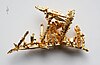
“Credulity in arts and opinions (…) is likewise of two kinds viz., when men give too much belief to arts themselves, or to certain authors in any art. The sciences that sway the imagination more than the reason are principally three viz., astrology, natural magic, and alchemy (…). Alchemy may be compared to the man who told his sons that he had left them gold, buried somewhere in his vineyard; while they by digging found no gold, but by turning up the mould about the roots of the vines procured a plentiful vintage. So the search and endeavours to make gold have brought many useful inventions to light.”
Unsourced — Primary work/page citation not yet verified in the QuotesCosmos archive. Per our Unnamed Sources & Verification Policy, quotes without confirmed primary editions are explicitly marked Unsourced while under editorial review.
“It is manifest that there is no danger at all in the proportion or quantity of knowledge, how large soever, lest it should make it swell or out-compass itself; no, but it is merely the quality of knowledge, which, be it in quantity more or less, if it be taken without the true corrective thereof, hath in it some nature of venom or malignity, and some effects of that venom, which is ventosity or swelling. This corrective spice, the mixture whereof maketh knowledge so sovereign, is charity, which the Apostle immediately addeth to the former clause; for so he saith, "Knowledge bloweth up, but charity buildeth up".”
Unsourced — Primary work/page citation not yet verified in the QuotesCosmos archive. Per our Unnamed Sources & Verification Policy, quotes without confirmed primary editions are explicitly marked Unsourced while under editorial review.
“For I find that even those that have sought knowledge for itself and not for benefit, or ostentation, or any practical enablement in the course of their life, have nevertheless propounded to themselves a wrong mark, namely, satisfaction, which men call truth, and not operation. For as in the courts and services of princes and states, it is a much easier matter to give satisfaction than to do the business; so in the inquiring of causes and reasons it is much easier to find out such causes as will satisfy the mind of man, and quiet objections, than such causes as will direct him and give him light to new experiences and inventions.”
Unsourced — Primary work/page citation not yet verified in the QuotesCosmos archive. Per our Unnamed Sources & Verification Policy, quotes without confirmed primary editions are explicitly marked Unsourced while under editorial review.
“This misplacing hath caused a deficience, or at least a great improficience in the sciences themselves. For the handling of final causes, mixed with the rest in physical inquiries, hath intercepted the severe and diligent inquiry of all real and physical causes, and given men the occasion to stay upon these satisfactory and specious causes, to the great arrest and prejudice of further discovery. For this I find done not only by Plato, who ever anchoreth upon that shore, but by Aristotle, Galen, and others which do usually likewise fall upon these flats of discoursing causes.”
Unsourced — Primary work/page citation not yet verified in the QuotesCosmos archive. Per our Unnamed Sources & Verification Policy, quotes without confirmed primary editions are explicitly marked Unsourced while under editorial review.
“There are also Idols formed by the intercourse and association of men with each other, which I call Idols of the Market Place, on account of the commerce and consort of men there. For it is by discourse that men associate, and words are imposed according to the apprehension of the vulgar. And therefore the ill and unfit choice of words wonderfully obstructs the understanding. Nor do the definitions or explanations wherewith in some things learned men are wont to guard and defend themselves, by any means set the matter right. But words plainly force and overrule the understanding, and throw all into confusion, and lead men away into numberless empty controversies and idle fancies.”

Unsourced — Primary work/page citation not yet verified in the QuotesCosmos archive. Per our Unnamed Sources & Verification Policy, quotes without confirmed primary editions are explicitly marked Unsourced while under editorial review.
“Further, it will not be amiss to distinguish the three kinds and, as it were, grades of ambition in mankind. The first is of those who desire to extend their own power in their native country, a vulgar and degenerate kind. The second is of those who labor to extend the power and dominion of their country among men. This certainly has more dignity, though not less covetousness. But if a man endeavor to establish and extend the power and dominion of the human race itself over the universe, his ambition (if ambition it can be called) is without doubt both a more wholesome and a more noble thing than the other two. Now the empire of man over things depends wholly on the arts and sciences. For we cannot command nature except by obeying her.”
Unsourced — Primary work/page citation not yet verified in the QuotesCosmos archive. Per our Unnamed Sources & Verification Policy, quotes without confirmed primary editions are explicitly marked Unsourced while under editorial review.
“The natural philosophy of Democritus and some others, who did not suppose a mind or reason in the frame of things, but attributed the form thereof able to maintain itself to infinite essays or proofs of nature, which they term fortune, seemeth to me... in particularities of physical causes more real and better inquired than that of Aristotle and Plato; whereof both intermingled final causes, the one as a part of theology, and the other as a part of logic, which were the favourite studies respectively of both those persons. Not because those final causes are not true, and worthy to be inquired, being kept within their own province; but because their excursions into the limits of physical causes hath bred a vastness and solitude in that tract.”
Unsourced — Primary work/page citation not yet verified in the QuotesCosmos archive. Per our Unnamed Sources & Verification Policy, quotes without confirmed primary editions are explicitly marked Unsourced while under editorial review.
“I confess that I have as vast contemplative ends, as I have moderate civil ends: for I have taken all knowledge to be my province; and if I could purge it of two sorts of rovers, whereof the one with frivolous disputations, confutations, and verbosities, the other with blind experiments and auricular traditions and impostures, hath committed so many spoils, I hope I should bring in industrious observations, grounded conclusions, and profitable inventions and discoveries; the best state of that province. This, whether it be curiosity, or vain glory, or nature, or (if one take it favourably) philanthropia, is so fixed in my mind as it cannot be removed. And I do easily see, that place of any reasonable countenance doth bring commandment of more wits than of a man's own; which is the thing I greatly affect.”
Unsourced — Primary work/page citation not yet verified in the QuotesCosmos archive. Per our Unnamed Sources & Verification Policy, quotes without confirmed primary editions are explicitly marked Unsourced while under editorial review.
“The Idols of the Cave are the idols of the individual man. For everyone (besides the errors common to human nature in general) has a cave or den of his own, which refracts and discolors the light of nature, owing either to his own proper and peculiar nature; or to his education and conversation with others; or to the reading of books, and the authority of those whom he esteems and admires; or to the differences of impressions, accordingly as they take place in a mind preoccupied and predisposed or in a mind indifferent and settled; or the like. So that the spirit of man (according as it is meted out to different individuals) is in fact a thing variable and full of perturbation, and governed as it were by chance. Whence it was well observed by Heraclitus that men look for sciences in their own lesser worlds, and not in the greater or common world.”
Unsourced — Primary work/page citation not yet verified in the QuotesCosmos archive. Per our Unnamed Sources & Verification Policy, quotes without confirmed primary editions are explicitly marked Unsourced while under editorial review.
“Those who have handled sciences have been either men of experiment or men of dogmas. The men of experiment are like the ant, they only collect and use; the reasoners resemble spiders, who make cobwebs out of their own substance. But the bee takes a middle course: it gathers its material from the flowers of the garden and of the field, but transforms and digests it by a power of its own. Not unlike this is the true business of philosophy; for it neither relies solely or chiefly on the powers of the mind, nor does it take the matter which it gathers from natural history and mechanical experiments and lay it up in the memory whole, as it finds it, but lays it up in the understanding altered and digested. Therefore from a closer and purer league between these two faculties, the experimental and the rational (such as has never yet been made), much may be hoped.”

Unsourced — Primary work/page citation not yet verified in the QuotesCosmos archive. Per our Unnamed Sources & Verification Policy, quotes without confirmed primary editions are explicitly marked Unsourced while under editorial review.
“The greatest error of all the rest is the mistaking or misplacing of the last or farthest end of knowledge: for men have entered into a desire of learning and knowledge, sometimes upon a natural curiosity and inquisitive appetite; sometimes to entertain their minds with variety and delight; sometimes for ornament and reputation; and sometimes to enable them to victory of wit and contradiction; and most times for lucre and profession; and seldom sincerely to give a true account of their gift of reason, to the benefit and use of men: as if there were sought in knowledge a couch whereupon to rest a searching and restless spirit; or a tarrasse, for a wandering and variable mind to walk up and down with a fair prospect; or a tower of state, for a proud mind to raise itself upon; or a fort or commanding ground, for strife and contention; or a shop, for profit or sale; and not a rich storehouse, for the glory of the Creator and the relief of man's estate.”
Unsourced — Primary work/page citation not yet verified in the QuotesCosmos archive. Per our Unnamed Sources & Verification Policy, quotes without confirmed primary editions are explicitly marked Unsourced while under editorial review.
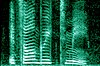
“We have also sound houses, where we practice and demonstrate all sounds and their generation. We have harmonies which you have not, of quarter sounds and lesser slides of sounds. Divers instruments of music likewise to you unknown, some sweeter than any you have; together with bells and rings that are dainty and sweet. We represent small sounds as great and deep; likewise divers trembling and warblings of sounds, which in their original are entire. We represent and imitate all articulate sounds and letters, and the voices of beasts and birds. We have certain helps which set to the ear to do further the hearing greatly. We have also divers strange and artificial echoes, reflecting the voice many times, and as if it were tossing it; and some that give back the voice louder than it came, some shriller and some deeper; yea, some rendering the voice, differing in the letters or articulate sound from that they receive. We have also means to convey sounds in tubes and pipes, in strange lines and distance (…).”
Unsourced — Primary work/page citation not yet verified in the QuotesCosmos archive. Per our Unnamed Sources & Verification Policy, quotes without confirmed primary editions are explicitly marked Unsourced while under editorial review.
“The beginning is from God: for the business which is in hand, having the character of good so strongly impressed upon it, appears manifestly to proceed from God, who is the author of good, and the Father of Lights. Now in divine operations even the smallest beginnings lead of a certainty to their end. And as it was said of spiritual things, "The kingdom of God cometh not with observation," so is it in all the greater works of Divine Providence; everything glides on smoothly and noiselessly, and the work is fairly going on "before men are aware that it has begun. Nor should the prophecy of Daniel be forgotten, touching the last ages of the world: —"Many shall go to and fro, and knowledge shall be increased;" clearly intimating that the thorough passage of the world (which now by so many distant voyages seems to be accomplished, or in course of accomplishment), and the advancement of the sciences, are destined by fate, that is, by Divine Providence, to meet in the same age.”
Unsourced — Primary work/page citation not yet verified in the QuotesCosmos archive. Per our Unnamed Sources & Verification Policy, quotes without confirmed primary editions are explicitly marked Unsourced while under editorial review.
“[N]ot only must we seek the measure of motions and actions by themselves, but much more in comparison; for this is of excellent use and very general application. Now we find that the flash of a gun is seen sooner than its report is heard... and this is owing it seems to the motion of light being more rapid than that of sound. We find to that visible images are received by the sight faster than they are dismissed; thus the strings of the violin, when struck by the finger, are to appearance doubled and tripled, because the new image is received before the old one is gone; which is also why the reason why rings being spun round look like globes, and a lighted torch, carried hastily at night, seems to have a tail. And it was upon this inequality of motions in point of velocity that Galileo built his theory of flux and reflux of the sea; supposing that the earth revolved faster than the water could follow; and that the water was therefore first gathered in a heap and then fell down, as we see in a basin of water moved quickly. But this he devised upon an assumption which cannot be allowed, viz. that the earth moves; and also without being well informed as to the sexhorary motion of the tide.”
Unsourced — Primary work/page citation not yet verified in the QuotesCosmos archive. Per our Unnamed Sources & Verification Policy, quotes without confirmed primary editions are explicitly marked Unsourced while under editorial review.
“The use of this feigned history hath been to give some shadow of satisfaction to the mind of man in those points wherein the nature of things doth deny it, the world being in proportion inferior to the soul; by reason whereof there is, agreeable to the spirit of man, a more ample greatness, a more exact goodness, and a more absolute variety, than can be found in the nature of things. Therefore, because the acts or events of true history have not that magnitude which satisfieth the mind of man, poesy feigneth acts and events greater and more heroical: because true history propoundeth the successes and issues of actions not so agreeable to the merits of virtue and vice, therefore poesy feigns them more just in retribution, and more according to revealed providence: because true history representeth actions and events more ordinary, and less interchanged, therefore poesy endueth them with more rareness, and more unexpected and alternative variations: so as it appeareth that poesy serveth and conferreth to magnanimity, morality, and to delectation. And therefore it was ever thought to have some participation of divineness, because it doth raise and erect the mind, by submitting the shows of things to the desires of the mind; whereas reason doth buckle and bow the mind into the nature of things.”
Unsourced — Primary work/page citation not yet verified in the QuotesCosmos archive. Per our Unnamed Sources & Verification Policy, quotes without confirmed primary editions are explicitly marked Unsourced while under editorial review.
“Those who have taken upon them to lay down the law of nature as a thing already searched out and understood, whether they have spoken in simple assurance or professional affectation, have therein done philosophy and the sciences great injury. For as they have been successful in inducing belief, so they have been effective in quenching and stopping inquiry; and have done more harm by spoiling and putting an end to other men's efforts than good by their own. Those on the other hand who have taken a contrary course, and asserted that absolutely nothing can be known — whether it were from hatred of the ancient sophists, or from uncertainty and fluctuation of mind, or even from a kind of fullness of learning, that they fell upon this opinion — have certainly advanced reasons for it that are not to be despised; but yet they have neither started from true principles nor rested in the just conclusion, zeal and affectation having carried them much too far....
Now my method, though hard to practice, is easy to explain; and it is this. I propose to establish progressive stages of certainty. The evidence of the sense, helped and guarded by a certain process of correction, I retain. But the mental operation which follows the act of sense I for the most part reject; and instead of it I open and lay out a new and certain path for the mind to proceed in, starting directly from the simple sensuous perception.”
Now my method, though hard to practice, is easy to explain; and it is this. I propose to establish progressive stages of certainty. The evidence of the sense, helped and guarded by a certain process of correction, I retain. But the mental operation which follows the act of sense I for the most part reject; and instead of it I open and lay out a new and certain path for the mind to proceed in, starting directly from the simple sensuous perception.”
Unsourced — Primary work/page citation not yet verified in the QuotesCosmos archive. Per our Unnamed Sources & Verification Policy, quotes without confirmed primary editions are explicitly marked Unsourced while under editorial review.
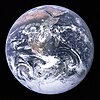
“[I]n the system of Copernicus there are found many and great inconveniences; for both the loading of the earth with triple motion is very incommodious, and the separation of the sun from the company of the planets, with which it has so many passions in common, is likewise a difficulty, and the introduction of so much immobility into nature, by representing the sun and stars as immovable, especially being of all bodies the highest and most radiant, and making the moon revolve about the earth in an epicycle, and some other assumptions of his, are the speculations of one who cares not what fictions he introduces into nature, provided his calculations answer. But if it be granted that the earth moves, it would seem more natural to suppose that there is no system at all, but scattered globes (…) than to constitute a system of which the sun is the centre. And this the consent of ages and of antiquity has rather embraced and approved. For the opinion concerning the motion of the earth is not new, but revived from the ancients (…) whereas the opinion that the sun is the centre of the world and immovable is altogether new (…) and was first introduced by Copernicus. (…) But if the earth moves, the stars may either be stationary, as Copernicus thought or, as it is far more probable, and has been suggested by Gilbert, they may revolve each round its own centre in its own place, without any motion of its centre, as the earth itself does (…). But either way, there is no reason why there should not be stars above stars til they go beyond our sight.”
Unsourced — Primary work/page citation not yet verified in the QuotesCosmos archive. Per our Unnamed Sources & Verification Policy, quotes without confirmed primary editions are explicitly marked Unsourced while under editorial review.
“Touching the secrets of the heart and the successions of time, doth make a just and sound difference between the manner of the exposition of the Scriptures and all other books. For it is an excellent observation which hath been made upon the answers of our Saviour Christ to many of the questions which were propounded to Him, how that they are impertinent to the state of the question demanded: the reason whereof is, because not being like man, which knows man's thoughts by his words, but knowing man's thoughts immediately, He never answered their words, but their thoughts. Much in the like manner it is with the Scriptures, which being written to the thoughts of men, and to the succession of all ages, with a foresight of all heresies, contradictions, differing estates of the Church, yea, and particularly of the elect, are not to be interpreted only according to the latitude of the proper sense of the place, and respectively towards that present occasion whereupon the words were uttered, or in precise congruity or contexture with the words before or after, or in contemplation of the principal scope of the place; but have in themselves, not only totally or collectively, but distributively in clauses and words, infinite springs and streams of doctrine to water the Church in every part. And therefore as the literal sense is, as it were, the main stream or river, so the moral sense chiefly, and sometimes the allegorical or typical, are they whereof the Church hath most use; not that I wish men to be bold in allegories, or indulgent or light in allusions: but that I do much condemn that interpretation of the Scripture which is only after the manner as men use to interpret a profane book.”
Unsourced — Primary work/page citation not yet verified in the QuotesCosmos archive. Per our Unnamed Sources & Verification Policy, quotes without confirmed primary editions are explicitly marked Unsourced while under editorial review.
Francis Bacon Quotes by Topic
Find exactly what you are looking for by browsing this categorized list of Francis Bacon quotes by topic.
Francis Bacon on Knowledge 7 quotes
“Knowledge is power.”
Unsourced — Primary work/page citation not yet verified in the QuotesCosmos archive. Per our Unnamed Sources & Verification Policy, quotes without confirmed primary editions are explicitly marked Unsourced while under editorial review.
Francis Bacon on Idolatry 7 quotes
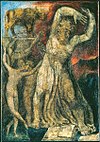
“There is a great difference between the Idols of the human mind and the Ideas of the divine. That is to say, between certain empty dogmas, and the true signatures and marks set upon the works of creation as they are found in nature.”
Unsourced — Primary work/page citation not yet verified in the QuotesCosmos archive. Per our Unnamed Sources & Verification Policy, quotes without confirmed primary editions are explicitly marked Unsourced while under editorial review.
Francis Bacon on Anger 6 quotes
“Anger makes dull men witty, but it keeps them poor.”

Unsourced — Primary work/page citation not yet verified in the QuotesCosmos archive. Per our Unnamed Sources & Verification Policy, quotes without confirmed primary editions are explicitly marked Unsourced while under editorial review.
Francis Bacon on Pragmatism 6 quotes
“The learning that now is hath the curse of barrenness, and is courtesan-like, for pleasure and not for fruit.”

Unsourced — Primary work/page citation not yet verified in the QuotesCosmos archive. Per our Unnamed Sources & Verification Policy, quotes without confirmed primary editions are explicitly marked Unsourced while under editorial review.
Francis Bacon on Understanding 6 quotes
“Words plainly force and overrule the understanding, and throw all into confusion, and lead men away into numberless empty controversies and idle fancies.”
Unsourced — Primary work/page citation not yet verified in the QuotesCosmos archive. Per our Unnamed Sources & Verification Policy, quotes without confirmed primary editions are explicitly marked Unsourced while under editorial review.
What Francis Bacon Said About Others
Discover personal opinions Francis Bacon shared regarding contemporaries.
Francis Bacon on William Gilbert (astronomer) 2 quotes
“[Gilbert] has himself become a magnet; that is, he has ascribed too many things to that force and built a ship out of a shell.”

Unsourced — Primary work/page citation not yet verified in the QuotesCosmos archive. Per our Unnamed Sources & Verification Policy, quotes without confirmed primary editions are explicitly marked Unsourced while under editorial review.
Francis Bacon on Tacitus
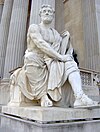
“Of all histories I think Tacitus simply the best.”
Unsourced — Primary work/page citation not yet verified in the QuotesCosmos archive. Per our Unnamed Sources & Verification Policy, quotes without confirmed primary editions are explicitly marked Unsourced while under editorial review.
Francis Bacon on Virgil
“The chastest poet and royalest that to the memory of man is known.”

Unsourced — Primary work/page citation not yet verified in the QuotesCosmos archive. Per our Unnamed Sources & Verification Policy, quotes without confirmed primary editions are explicitly marked Unsourced while under editorial review.
Francis Bacon on Wives
“Wives are young men's mistresses; companions for middle age; and old men's nurses.”

Unsourced — Primary work/page citation not yet verified in the QuotesCosmos archive. Per our Unnamed Sources & Verification Policy, quotes without confirmed primary editions are explicitly marked Unsourced while under editorial review.
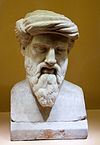
Francis Bacon on Pythagoras
“In this theater of man's life it is reserved only for God and angels to be lookers on.”
Unsourced — Primary work/page citation not yet verified in the QuotesCosmos archive. Per our Unnamed Sources & Verification Policy, quotes without confirmed primary editions are explicitly marked Unsourced while under editorial review.
Quotes About Francis Bacon
Gain deeper perspective through quotes about Francis Bacon from others.
Helena Blavatsky on Francis Bacon
“Bacon was one of the first to strike the key-note of materialism, not only by his inductive method (renovated from ill-digested Aristotle), but by the general tenor of his writings. He inverts the order of mental Evolution when saying that "the first Creation of God was the light of the sense; the last was the light of the reason; and his Sabbath work ever since is the illumination of the Spirit." It is just the reverse.”

Unsourced — Primary work/page citation not yet verified in the QuotesCosmos archive. Per our Unnamed Sources & Verification Policy, quotes without confirmed primary editions are explicitly marked Unsourced while under editorial review.
Clifford D. Conner on Francis Bacon
“The "Baconian" sciences were the kind Francis Bacon had in mind when he issued a call to revitalize science by basing it on craftsmen's knowledge of nature. Bacon is remembered as the most effective critic of the traditional learning promulgated the elite institutions of his day. ...Bacon advocated compiling a "history of arts," or encyclopedia of crafts knowledge...”
Unsourced — Primary work/page citation not yet verified in the QuotesCosmos archive. Per our Unnamed Sources & Verification Policy, quotes without confirmed primary editions are explicitly marked Unsourced while under editorial review.
John Davies on Francis Bacon
“This is unquestionably the nature of the principle of induction as proposed by Lord Bacon. Its useful and successful application, however, to the various departments of knowledge,—and there is scarcely any department to which, under suitable modifications, it may not be advantageously applied,—requires much care, attention, and assiduous patience. Bacon, therefore, employs the chief part of the first book of the Novum Organum in exposing the various prejudices and futile anticipations, which he calls the idols of the human mind, in contradistinction to the ideas of the divine mind, or those impressions of truth which are stamped upon the various elements and orders of creation. These idols he ranges under the four general classes, which he quaintly but expressively denominates Idols of the Tribe, Idols of the Den, Idols of the Forum, and Idols of the Theatre. The first class of idols, or prejudices, he represents as naturally inherent in the race of men, on account of the narrowness and imperfection of their views; the second, as peculiar to individuals, and arising from their peculiar habits and pursuits, hence entitled idols of the den or cave; the third, as springing from the mutual intercourse of mankind with each other, hence called idols of the forum or market; and the fourth, as originating in the false and fantastic theories of philosophers, exhibited from age to age as so many scenic representations on the stage of the intellectual world, and therefore appropriately styled idols of the theatre.”
Unsourced — Primary work/page citation not yet verified in the QuotesCosmos archive. Per our Unnamed Sources & Verification Policy, quotes without confirmed primary editions are explicitly marked Unsourced while under editorial review.
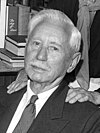
Will Durant on Francis Bacon
“His achievement was not the less great because it was indirect. His philosophical works, though little read now, "moved the intellects which moved the world." He made himself the eloquent voice of the optimism and resolution of the Renaissance. Never was any man so great a stimulus to other thinkers... The whole tenor and career of British thought have followed the philosophy of Bacon. His tendency to conceive the world in Democritean mechanical terms gave to his secretary, Hobbes, the starting-point for a thorough-going materialism; his inductive metbod gave to Locke the idea of an empirical psychology, bound by observation and freed from theology and metaphysics; and his emphasis on "commodities" and "fruits" found formulation in Bentham's identification of the useful and the good. Wherever the spirit of control has overcome the spirit of resignation, Bacon's influence has been felt. He is the voice of all those Europeans who have changed a continent from a forest into a treasure-land of art and science, and have made their little peninsula the center of the world... Everything is possible to man. Time is young; give us some little centuries, and we shall control and remake all things. We shall perhaps at last learn the noblest lesson of all, that man must not fight man, but must make war only on the obstacles that nature offers to the triumph of man.”
Unsourced — Primary work/page citation not yet verified in the QuotesCosmos archive. Per our Unnamed Sources & Verification Policy, quotes without confirmed primary editions are explicitly marked Unsourced while under editorial review.
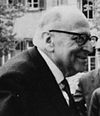
Max Horkheimer on Francis Bacon
“For Bacon as for Luther, "knowledge that tendeth but to satisfaction, is but as a courtesan, which is for pleasure, and not for fruit or generation." Its concern is not "satisfaction, which men call truth," but "operation," the effective procedure. The "true end, scope or office of knowledge" does not consist in "any plausible, delectable, reverend or admired discourse, or any satisfactory arguments, but in effecting and working, and in discovery of particulars not revealed before, for the better endowment and help of man's life." There shall be neither mystery nor any desire to reveal mystery.”
Unsourced — Primary work/page citation not yet verified in the QuotesCosmos archive. Per our Unnamed Sources & Verification Policy, quotes without confirmed primary editions are explicitly marked Unsourced while under editorial review.



Disputed Quotes
Quotes attributed to Francis Bacon that are questionable.
“Imagination was given to man to compensate for what he is not, and a sense of humor to console him for what he is.”
Unsourced — Primary work/page citation not yet verified in the QuotesCosmos archive. Per our Unnamed Sources & Verification Policy, quotes without confirmed primary editions are explicitly marked Unsourced while under editorial review.
Misattributed Quotes
Quotes mistakenly credited to Francis Bacon
“Choose the best life; for habit will make it pleasant”
Unsourced — Primary work/page citation not yet verified in the QuotesCosmos archive. Per our Unnamed Sources & Verification Policy, quotes without confirmed primary editions are explicitly marked Unsourced while under editorial review.
“For behavior, men learn it, as they take diseases, one of another.”
Unsourced — Primary work/page citation not yet verified in the QuotesCosmos archive. Per our Unnamed Sources & Verification Policy, quotes without confirmed primary editions are explicitly marked Unsourced while under editorial review.
“It is a sad fate for a man to die too well known to everybody else, and still unknown to himself”
Unsourced — Primary work/page citation not yet verified in the QuotesCosmos archive. Per our Unnamed Sources & Verification Policy, quotes without confirmed primary editions are explicitly marked Unsourced while under editorial review.
About Francis Bacon
Francis Bacon, 1st Viscount St. Alban KC (22 January 1561 – 9 April 1626) was an English philosopher, statesman and essayist. His works argued for the possibility of scientific knowledge based only upon inductive reasoning and careful observation of events in nature. Most importantly, he argued this could be achieved by use of a sceptical and methodical approach whereby scientists aim to avoid misleading themselves. His general idea of the importance and possibility of a skeptical methodology makes Bacon the father of the scientific method. This marked a new turn in the rhetorical and theoretical framework for science, the practical details of which are still central in debates about science and methodology today.