Link Copied!
Fernando Pessoa Quotes (1888-1935)
Writer, Poet
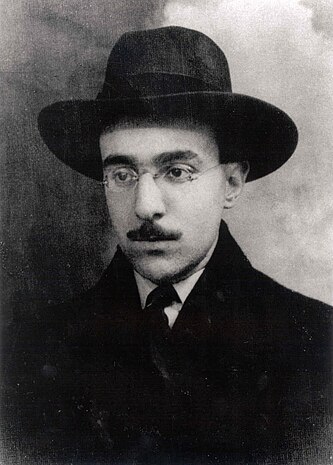

About Fernando Pessoa
Fernando Pessoa (13 June 1888 – 30 November 1935) was a Portuguese poet and writer, most of whose work was published posthumously. He wrote frequently under heteronyms, alter egos with developed personalities, biographies, jobs, habits, attitudes, addresses, etc., who sometimes quoted and interacted with each other and other people.
Best Fernando Pessoa Quotes
Shortest
Earliest
Explore our curated collection of the most famous and impactful Fernando Pessoa quotes.
“Enthusiasm is rude.”
“Everything is absurd.”
“Humanitarianism is rude.”

“Fraternity has subtleties.”


“Fingir é conhecer-se.”
“All beginnings are involuntary.”


“I don't believe in the landscape.”
“I say it because I don't believe.”


“Sê plural como o universo!”
“You breathe better when you're rich.”
“Wasting time has an esthetics to it.”
“Every gesture is a revolutionary act.”
“When I write, I solemnly visit myself.”
“Yes, talking to people makes me sleepy.”

Fernando Pessoa Quotes by Topic
Find exactly what you are looking for by browsing this categorized list of Fernando Pessoa quotes by topic.
Fernando Pessoa on Philosophical pessimism 19 quotes
“I aspire to nothing. Life hurts me. I’m not well where I am nor anywhere else I can think of being.”

Fernando Pessoa on Antinatalism
“Whatever the case, it would have been better not to be born.”

Fernando Pessoa on Soul
Fernando Pessoa on Chocolate
“Eat your chocolates, little girl, Eat your chocolates! Believe me, there's no metaphysics on earth like chocolates.”

Fernando Pessoa on Misanthropy
“The world belongs to those who don’t feel. The essential condition for being a practical man is the absence of sensibility. The chief requisite for the practical expression of life is will, since this leads to action. Two things can thwart action – sensibility and analytic thought, the latter of which is just thought with sensibility. All action is by nature the projection of our personality on to the external world, and since the external world is largely and firstly made up of human beings, it follows that this projection of personality is basically a matter of crossing other people’s path, of hindering, hurting or overpowering them, depending on the form our action takes. To act, then, requires a certain incapacity for imagining the personalities of others, their joys and sufferings. Sympathy leads to paralysis. The man of action regards the external world as composed exclusively of inert matter – either intrinsically inert, like a stone he walks on or kicks out of his path, or inert like a human being who couldn’t resist him and thus might as well be a stone as a man since, like a stone, he was walked on or kicked out of the way. The best example of the practical man is the military strategist, in whom extreme concentration of action is joined to its extreme importance. All life is war, and the battle is life’s synthesis. The strategist is a man who plays with lives like the chess player with chess pieces. What would become of the strategist if he thought about how each of his moves brings night to a thousand homes and grief to three thousand hearts? What would become of the world if we were human? If man really felt, there would be no civilization. Art gives shelter to the sensibility that action was obliged to forget. Art is Cinderella, who stayed at home because that’s how it had to be.”

What Fernando Pessoa Said About Others
Discover personal opinions Fernando Pessoa shared regarding contemporaries.
Fernando Pessoa on José Saramago 2 quotes
View all 2 quotes on José Saramago →Quotes About Fernando Pessoa
Gain deeper perspective through quotes about Fernando Pessoa from others.
Brendan Bernhard on Fernando Pessoa
“Imagine if, some day back in the 1950s, an American poet named John Ashbery had not only written a few of his own highly original poems, but in an ecstasy of creative surfeit, had invented three other poets — Kenneth Koch, Frank O'Hara and James Schuyler — and then, over the years, proceeded to write poems as them, even entire books. It sounds fantastic, but it is what Pessoa actually did. Nor was it just a whimsical creative exercise. In The Western Canon, that ultimate literary proving ground, Harold Bloom named Caiero and de Campos as "great poets" in their own right.”
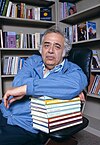
Harold Bloom on Fernando Pessoa
“The amazing Portuguese poet... as a fantastic invention surpasses any creation by Borges... Pessoa was neither mad nor a mere ironist; he is Whitman reborn, but a Whitman who gives separate names to "my self," "the real me" or "me myself," and "my soul," and writes wonderful books of poetry for all of them.”
Jonathan Griffin on Fernando Pessoa 2 quotes
“Fernando Pessoa is the extreme example of what may be the essentially modern kind of poet: the objective introvert. None has more consistently tried to find his real self with its multiplicity intact and to keep his poems impersonal. He accepted the dividedness of a human self so completely that he did something unique: wrote poetry under four names – his own and three 'heteronyms'. Not pseudonyms: they are imaginary poets with real poems in them. Fernando Pessoa was four poets in one: Alberto Caeiro, Ricardo Reis, Alvaro de Campos and himself; each strongly distinct from the others. One is soon struck by an external difference between their poems...”
Robert Hass on Fernando Pessoa
“Fernando Pessoa (1888–1935) is one of the great originals of modern European poetry and Portugal's premier modernist. He is also a strange and original writer. Other modernists—Yeats, Pound, Eliot—invented masks through which to speak occasionally, from Michael Robartes to Hugh Selywn Mauberly to J. Alfred Prufock. Pessoa invented whole poets.”
W. S. Merwin on Fernando Pessoa
“Pessoa's writing, the whole of his extraordinary opus, a major presence in what has come to be known as "modernism" in the European languages... Almost any commentary of any length on Pessoa's writings, sensibility, and imagination is bound to convey a glimpse, at least, of its intensity and elusiveness, its apparently endlessly unfolding hall of mirrors.”
Nothing on Fernando Pessoa
“Nada en su vida es sorprendente — nada, excepto sus poemas.”
About Fernando Pessoa
Fernando Pessoa (13 June 1888 – 30 November 1935) was a Portuguese poet and writer, most of whose work was published posthumously. He wrote frequently under heteronyms, alter egos with developed personalities, biographies, jobs, habits, attitudes, addresses, etc., who sometimes quoted and interacted with each other and other people.