Link Copied!
Ezra Pound Quotes (1885-1972)
Poet, Musician
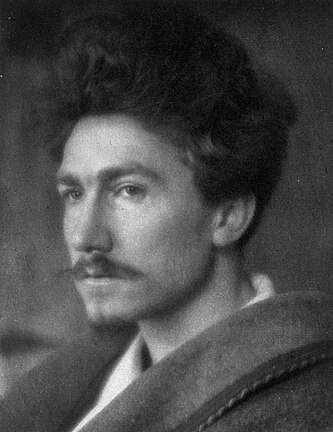















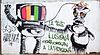



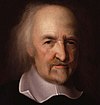
About Ezra Pound
Ezra Pound (October 30, 1885 – November 1, 1972) was an American expatriate poet, musician and critic who was a major figure of the Modernist movement in early to mid-20th century poetry. He was the driving force behind several Modernist movements including Imagism and Vorticism.
Best Ezra Pound Quotes
Shortest
Earliest
Explore our curated collection of the most famous and impactful Ezra Pound quotes.
“Make it new!”
“To be men not destroyers”
“Literature is news that STAYS news.”




“Pride, jealousy and possessiveness
3 pains of hell”
3 pains of hell”

“All other sins are open,
Usura alone not understood.”
Usura alone not understood.”
“"You damn sadist!" said mr. cummings,
"you try to make people think."”
"you try to make people think."”
“My worst mistake was the stupid suburban prejudice of anti-Semitism, all along.”

“It is better to present one image in a lifetime than to produce voluminous work.”

“It has been complained, with some justice, that I dump my note-books on the public.”

“Without character you will
be unable to play on that instrument”
be unable to play on that instrument”
“Image…that which presents an intellectual and emotional complex in an instant of time.”


“The apparition of these faces in the crowd: Petals on a wet, black bough.”

“Real education must ultimately be limited to one who INSISTS on knowing, the rest is mere sheep-herding.”

“Artists are the antennae of the race but the bullet-headed many will never learn to trust their great artists.”
“The blossoms of the apricot
blow from the east to the west,
And I have tried to keep them from falling.”
blow from the east to the west,
And I have tried to keep them from falling.”
“It is difficult to write a paradiso when all the superficial indications are that you ought to write an apocalypse.”

“Not one man in a thousand can be aroused to an interest in economics until he definitely suffers from the effects of an evil system.”

“But the beauty is not the madness
Tho’ my errors and wrecks lie about me.
And I am not a demigod,
I cannot make it cohere.”
Tho’ my errors and wrecks lie about me.
And I am not a demigod,
I cannot make it cohere.”


“What thou lovest well remains,
the rest is dross
What thou lov’st well shall not be reft from thee
What thou lov’st well is thy true heritage”
the rest is dross
What thou lov’st well shall not be reft from thee
What thou lov’st well is thy true heritage”
“And even I can remember
A day when the historians left blanks in their writings,
I mean, for things they didn't know,
But that time seems to be passing.”
A day when the historians left blanks in their writings,
I mean, for things they didn't know,
But that time seems to be passing.”

“I have tried to write Paradise
Do not move
Let the wind speak.
that is paradise.
Let the Gods forgive what I
have made
Let those I love try to forgive
what I have made.”
Do not move
Let the wind speak.
that is paradise.
Let the Gods forgive what I
have made
Let those I love try to forgive
what I have made.”

“Our own consciousness is incapable of having produced the universe. God, therefore, exists. That is to say, there is no reason for not applying the term God, Theos, to the intimate essence”

“To have gathered from the air a live tradition
or from a fine old eye the unconquered flame
This is not vanity.
Here error is all in the not done,
all in the diffidence that faltered . . .”
or from a fine old eye the unconquered flame
This is not vanity.
Here error is all in the not done,
all in the diffidence that faltered . . .”
“One discards rhyme, not because one is incapable of rhyming neat, fleet, sweet, meet, treat, eat, feet but because there are certain emotions or energies which are nor represented by the over-familiar devices or patterns.”
“Both in Greece and in Provence the poetry attained its highest rhythmic and metrical brilliance at times when the arts of verse and music were most closely knit together, when each thing done by the poet had some definite musical urge or necessity bound up within it.”
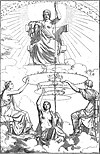
“With usura hath no man a house of good stone
each block cut smooth and well fitting
[...]
with usura
hath no man a painted paradise on his church wall
[...]
no picture is made to endure nor to live with
but it is made to sell and sell quickly”
each block cut smooth and well fitting
[...]
with usura
hath no man a painted paradise on his church wall
[...]
no picture is made to endure nor to live with
but it is made to sell and sell quickly”

“Poetry is a sort of inspired mathematics, which gives us equations, not for abstract figures, triangles, spheres, and the like, but for the human emotions. If one has a mind which inclines to magic rather than science, one will prefer to speak of these equations as spells or incantations; it sounds more arcane, mysterious, recondite.”
“Who brought this to pass?
Who has brought the flaming imperial anger?
Who has brought the army with drums and with kettle-drums?
Barbarous kings.
A gracious spring, turned to blood-ravenous autumn,
A turmoil of wars-men, spread over the middle kingdom,
Three hundred and sixty thousand,
And sorrow, sorrow like rain.”
Who has brought the flaming imperial anger?
Who has brought the army with drums and with kettle-drums?
Barbarous kings.
A gracious spring, turned to blood-ravenous autumn,
A turmoil of wars-men, spread over the middle kingdom,
Three hundred and sixty thousand,
And sorrow, sorrow like rain.”

“AT ABOUT THIS POINT the weak-hearted reader usually sits down in the road, removes his shoes and weeps that he 'is a bad linguist' or that he or she can't possibly learn all those languages. One has to divide the readers who want to be experts from those who do not, and divide, as it were, those who want to see the world from those who merely want to know WHAT PART OF IT THEY LIVE IN.”
“Here is the core of evil, the burning hell without let-up,
The canker corrupting all things, Fafnir the worm,
Syphilis of the State, of all kingdoms
Wart of the common-weal,
Wenn-maker, corrupter of all things
Darkness the defiler
Twin evil of envy,
Snake of the seven heads, Hydra, entering all things
Passing the doors of temples defiling the grove of Paphos,
neschek, the crawling evil,
slime, the corrupter of all things,
Poisoner of the fount,
of all fountains, neschek,
The serpent, evil against Nature's increase,
Against beauty”
The canker corrupting all things, Fafnir the worm,
Syphilis of the State, of all kingdoms
Wart of the common-weal,
Wenn-maker, corrupter of all things
Darkness the defiler
Twin evil of envy,
Snake of the seven heads, Hydra, entering all things
Passing the doors of temples defiling the grove of Paphos,
neschek, the crawling evil,
slime, the corrupter of all things,
Poisoner of the fount,
of all fountains, neschek,
The serpent, evil against Nature's increase,
Against beauty”

Ezra Pound Quotes by Topic
Find exactly what you are looking for by browsing this categorized list of Ezra Pound quotes by topic.
Ezra Pound on Books
“Literature is news that stays news.”

Ezra Pound on Literature
“Literature is news that stays news.”

Ezra Pound on Circe
“Circe’s this craft, the trim-coifed goddess.”

What Ezra Pound Said About Others
Discover personal opinions Ezra Pound shared regarding contemporaries.
Ezra Pound on Luís de Camões 2 quotes
View all 2 quotes on Luís de Camões →Ezra Pound on Arnold Dolmetsch 2 quotes
“Has he tempered the viol’s wood To enforce both the grave and the acute? Has he curved us the bowl of the lute? Lawes and Jenkyns guard thy rest Dolmetsch ever be thy guest.”
Ezra Pound on Catullus
Ezra Pound on Walt Whitman
Quotes About Ezra Pound
Gain deeper perspective through quotes about Ezra Pound from others.
Hugh Kenner on Ezra Pound
“Hence "the serious artist," whom Pound describes in an early essay as the maintainer of the mental health of the state, has concerns identical with the serious philosopher, the serious ruler, the serious editor or publisher, the serious teacher. He keeps up values.”
Marilyn Chin Preface on Ezra Pound
“My early identity and love poems were influenced by the imagism of Ezra Pound and William Carlos Williams.”
T. S. Eliot on Ezra Pound

George Orwell on Ezra Pound
“Personally I admire several writers (Céline, for instance) who have gone over to the Fascists, and many others whose political outlook I strongly object to. But one has the right to expect ordinary decency of a poet. I never listened to Pound’s broadcasts, but I often read them in the B.B.C. Monitoring Reports, and they were intellectually and morally disgusting. Antisemitism, for instance, is simply not the doctrine of a grown-up person. People who go in for that kind of thing must take the consequences.”

Stanley Lombardo on Ezra Pound
“A musician once asked Ezra Pound if there was anywhere one could get all of poetry, in the sense that one could get all of music in Bach. Pound's response was that if a person would take the trouble really to learn Greek, he could get all of it, or nearly all of it, in Homer.”


About Ezra Pound
Ezra Pound (October 30, 1885 – November 1, 1972) was an American expatriate poet, musician and critic who was a major figure of the Modernist movement in early to mid-20th century poetry. He was the driving force behind several Modernist movements including Imagism and Vorticism.