Errol Morris on The Fog of War
← Back to Errol Morris Profile
“I've always wondered where explanations end and excuses begin. And is there a difference between excuses and explanations ... is an excuse a bad or self-serving explanation? I don't know. Maybe Newton's Law is an excuse for why bodies just stay at rest or in motion unless acted on by some external force. I look at the McNamara story as the-fog-of-war-ate-my-homework excuse. After all, if war is so complex, then no one is responsible.”
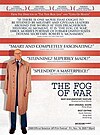
“"A friend of mine has said, 'You can never trust someone who doesn't talk a lot, because how else could you know what they're thinking?' This could be true. There's a belief that if you sit people down and you let them talk that they will reveal who they are. And then this also contrary to the whole idea about how you're supposed to investigate stuff, how you're supposed to interview people. After all, you're supposed to ask difficult questions. You're supposed to - particularly if you want to find something out, you're supposed to back the subject against the wall, press them hard and get them to 'fess up in some way or another. This is part of many of the criticisms that I heard about my film of Robert S. McNamara. That he should have been subjected to much tougher questions."”
“My wife, Julia Sheehan, sees McNamara as 'the flying Dutchman,' destined to travel the earth looking for redemption, absolution, whatever. Many political writers have been less kind. They see his trip to Vietnam, to Hanoi, as an attempt to justify a war that can never be justified. And they see his trips to Havana and to Moscow as facile attempts to rewrite history. I see it differently. There is something, for me, deeply moving and interesting about McNamara's attempt to figure out what happened, who he is and what he's done. Unusual among public figures, he has embarked on an historical investigation of himself. But doesn’t he know what he’s done? Call it the Cartesian error: the belief that we have privileged access to our own minds, that we somehow know what we're thinking or what we were thinking. Can’t I just look 'upstairs' and summarize what I find up there? I don't think so.”
“This thing is heavy. I'd like to thank the Academy for finally recognizing my films. Thank you so very, very, very much! I thought it would never happen. I'd like to thank my very good friends at Sony Pictures Classics, Michael Barker, Tom Bernard. No one would get to see this movie without them. My two producers - Michael Williams, Julie Ahlberg. Couldn't have made the movie without them either. My long suffering editors - Charlie Silver, Brad Fuller. And Karen Schmeer and Doug Abel, thank you also very much. And believe it or not, Robert McNamara, with whom, if he hadn't done it there would have been no film. Forty years ago this country went down a rabbit hole in Vietnam and millions died. I fear we're going down a rabbit hole once again. And if people can stop and think and reflect on some of the ideas and issues in this movie, perhaps I've done some damn good here. Thank you very, very much.”
“I had a lot of trouble with McNamara in the course of making this movie. Horrible disagreements about stuff I had put in the movie that he did not want in there. One of the major disagreements concerned the lessons in the film. There are 11 lessons. And he repeatedly said, 'You know, Errol, those are not my lessons. They are your lessons.' And I said, 'Yeah, yeah, they are. But they're extracted, of course, from things that you've said,' things that McNamara said, which is indeed the case. Perhaps not the lessons that McNamara would have chosen, but then, he was not directing the movie. I think that the lessons are all ironic. It's very odd to me that people talk about the film and they talk about the lessons without pointing out that there might be intended ironies with each and every one of them. But yes, they are for me ironic, particularly the last one in the movie: You can't change human nature. It tells you that all of the other lessons are valueless, that the human situation is indeed hopeless."”
QuotesCosmos Cross-Civilizational Archive
Explore Related Wisdom Pillars, Worldviews & Canonical Works
Discover how humanity's greatest philosophers, sacred scriptures, and literary masterpieces address the core questions of existence.
30 Wisdom Pillars
22 Worldviews & Traditions
Canonical Books & Scriptures