Link Copied!
Ella Reeve Bloor Quotes (1862-1951)
Activist

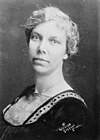



About Ella Reeve Bloor
Ella Reeve "Mother" Bloor (July 8, 1862 – August 10, 1951) was a long-time labor organizer and activist in the socialist and communist movements in the USA.
Best Ella Reeve Bloor Quotes
Shortest
Earliest
Explore our curated collection of the most famous and impactful Ella Reeve Bloor quotes.
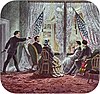
“My earliest memory was of the assassination of Abraham Lincoln, and the day of his funeral, when all the shutters of the neighborhood were closed and tied with black streamers.”
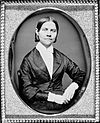
“Through the Quakers, who believed in equality for women, I first came into touch with the woman suffrage movement. I began to be very much interested in the question, especially after reading about Lucy Stone, one of the earliest fighters against Negro slavery, and a leader for many years in the struggle for woman's suffrage.”
“Today in America, the overwhelming majority of the people are not ready for socialism, and so socialism is not the issue. We Communists know we can make our greatest contribution to the socialist cause by fighting in common with all the progressive forces in our country for full employment, for equality for all minority peoples, for the complete realization of American democracy, for co-operation with all the United Nations and above all with the great Soviet Union, for post-war stability.”

“I felt that our new Party, firmly rooted in American soil, would be capable of leading the workers to final victory because of its faith in the workers themselves. I have never changed my mind about this and never will. My years in the Communist Party have been years of closest association with the workers and farmers of our country, years of great privilege, because I have learned far more from the workers than I have ever taught them. The fullness and richness of my life I owe to them and to my work in the Party. Our new Party was subjected to immediate persecution everywhere. Before long an injunction was issued against the Workers' World, the paper was raided and one of the editors arrested. The raiders literally smashed everything to bits.”

“1943 began with the glorious victory at Stalingrad that turned the tide of the war, and ended with another decisive victory-the concord of Teheran, that turned the tide of history. I had seen the first socialist state come into being and watched with dismay how the other nations of the world had tried to crush it. I had seen our own country, after the years of reaction and depression, enter into a new period of democratic progress under President Roosevelt. And now, this supreme event, which meant an end of the division of the world into a socialist camp and a capitalist camp, and the promise of a world in which the socialist and capitalist democracies will work together to banish the evil of fascism and the scourge of war from the earth, and free the people everywhere from hunger and tyranny and fear.”

“the richest gift was the inspiration of seeing what the workers of America were doing for the war. Shipyard workers, steel workers, miners, farmers-among all the old friends and thousands of new ones, I found the same fighting spirit everywhere. And the women! Women like giants in the earth as they took on men's jobs, managed their children and households too, and courageously bore the sacrifices war made necessary. Of course, not all was well. Problems of child care were not getting enough attention, reactionary forces were trying to split the growing unity of our people, especially of Negroes and whites, and trying to spread defeatist doctrines. But the people all over the country were marching ahead united as never before. It was a special joy to feel the changing attitude toward Communists. Everywhere I found our Party people in the vanguard of those groups determined to weld an ever stronger unity among all the American people, putting their last ounce of energy into the war effort.”

“And now, as I near the end of my first eighty-two years, the greatest joy of all is to witness the coming into its own of organized labor as the decisive factor in our national life. All sections of the American people are waking up to the fact that their own future well being and security are dependent not only on the goods produced by labor, but on the well being and security of the workers themselves. In other words, that prosperity, like peace, is indivisible! And the workers, by their willingness to forego the strike weapon and to give themselves unstintingly to the war effort on the battle field and on the home front, have certainly shown that they have no interests apart from the highest interests of the nation as a whole. The workers have grown in maturity and power, and they have demonstrated that they can be counted on to use that power not only to achieve the conditions of work and the standards of living that are their right but to advance the interests of all the people. And they know that the first job is to wipe fascism from the face of the earth.”
“The organized pressure of the masses wrested more concessions from the New Deal than it was ever intended to give them and as soon as finance capital felt that the immediate danger of the collapse of its system had passed, it organized to throw overboard the progressive aspects of the New Deal. The mid-term elections in 1934 saw the formation of a coalition of finance capital against the President under the banner of the American Liberty League. The reactionaries of both parties rallied to the attack-Hearst and Al Smith, the Morgans and the du Ponts. But the outright reactionary appeal failed, the Democrats increased their majority in Congress in 1934 while big votes went to such movements as Upton Sinclair's EPIC party and the Townsend Pension Plan. The election results were less an endorsement than a mandate to Roosevelt further to develop a program to satisfy the burning needs of the people. Roosevelt, above all an astute politician, understood that having lost reactionary support, his only hope of re-election was to heed this mandate. Big Business turned more and more toward the methods of fascism as the only means left them to crush the growing militancy of the workers and secure their profits, pushing forward such dangerous demagogues as Father Coughlin and Huey Long, at the same time they continued their open attack on Roosevelt.”

“I am by no means closing my life story. I expect to live that for years to come. As I read over the chapters of this book, I feel that it is after all not adequate in expressing to the reader the real "me." How can I describe the deep emotions I have experienced during all these years, in the crises that come in every mother's life-and especially a mother who goes into the battles of the workers. How can I make others feel and understand the home-sickness of such a mother, even when the children are grown, the conflict in one's soul between the love of home and peace, and the responsibility of going out among the masses with the message that I have felt I must take to them. But the choice I made was not a sacrifice. It has been a privilege and joy. My greatest longing and desire is to retain my health and strength so that I may continue to work. I have not mentioned all my dear friends and co-workers. It would take a larger book than this to bring before the readers of my story the wonderful characters who have gone along the road with me, and others I have met in passing; great names, long friendships, loves and comradeships of men and women. Men and women like Barbusse of France, Clara Zetkin of Germany, Elizabeth Gurley Flynn, Ruthenberg, Debs, Browder, Foster, Ford and thousands of others, thousands of farmers, miners, workers everywhere and their children who have been close to me always along the march-all these have been the comrades of my rich and joyous life. (p 308)”

“I do not minimize what our Party has done toward bringing about true equality, admitting no discrimination of race, color or creed in our ranks. But I have often felt, earlier indeed, more than today, that there has been some hesitancy in giving women full equal responsibility with men. As for myself, I have no complaints. I have been honored with great responsibilities. But the power of all our women must be used to the full-especially today! We women must take our place consciously by the side of men, dropping any sense of inferiority. We must speak up without waiting to be asked, and we must have something to say. We must use every ounce of strength that is in us to build a new world in which there will be no wars. We have a great tradition to uphold, we women of America today, the tradition of those great pioneer women who helped build our country. Our Party is the inheritor of the traditions of all the struggles for women's rights throughout history. The finest type of progressive womanhood, working with devotion and courage for the rights not only of women but of labor, of the Negro people, of all oppressed humanity, is to be found today within our Party. Women like Anita Whitney...Caro Lloyd Strobell, sister of Henry Demarest Lloyd...Rose Wortis..radiant Rose Pastor Stokes...And above all, our working women, our farm women, the Mrs. Jimmie Higgins' who are always ready to take their places on picket lines or lick stamps or distribute leaflets or sweep floors, the thousands of women without whom our Party could not exist. Although I have mentioned in previous chapters the name of my co-worker and dearest friend and comrade, Elizabeth Gurley Flynn, I feel that she belongs in this category of pioneers-especially because of her work during the first World War for the political prisoners...Nor can we forget the thousands of women in our movement throughout the world, faced with more difficult conditions than we, carrying on the struggle in the midst of terror and war. And guiding us all with her keen intelligence and great flaming spirit, that beloved leader of the Spanish workers, Dolores Ibarruri-La Pasionaria-who kindled new courage in all of us with her great rallying cry to the people of democratic Spain-"Better die standing than live on bended knees!" (p 308)”

Ella Reeve Bloor Quotes by Topic
Find exactly what you are looking for by browsing this categorized list of Ella Reeve Bloor quotes by topic.
Ella Reeve Bloor on Quakers
“Through the Quakers, who believed in equality for women, I first came into touch with the woman suffrage movement. I began to be very much interested in the question, especially after reading about Lucy Stone, one of the earliest fighters against Negro slavery, and a leader for many years in the struggle for woman's suffrage.”

Ella Reeve Bloor on The Forward
“Abe Cahan had left Russia as a boy to escape tsarist persecution. But instead of hailing the success of his Russian brothers, he had turned against them and not only would not listen to my reports of their achievements, but himself became one of the most vicious of anti-Soviet slanderers, vying with Hearst in publishing articles by renegades and reactionaries in his paper The Forward.”

What Ella Reeve Bloor Said About Others
Discover personal opinions Ella Reeve Bloor shared regarding contemporaries.
Ella Reeve Bloor on Art Young 2 quotes
“Only last year we lost the gay, faithful friend and comrade, Art Young, who "kept up with the procession," till the last moment of his life. The very night he died, last New Year's Eve, he mailed me a post card on which he wrote, "Dear Ella-It has been a long road but now I think we are getting somewhere." And then in a corner he put the word "Teheran", which means so much to us.”

Ella Reeve Bloor on Abraham Cahan 2 quotes
“Abe Cahan had left Russia as a boy to escape tsarist persecution. But instead of hailing the success of his Russian brothers, he had turned against them and not only would not listen to my reports of their achievements, but himself became one of the most vicious of anti-Soviet slanderers, vying with Hearst in publishing articles by renegades and reactionaries in his paper The Forward.”

Ella Reeve Bloor on Alice Stone Blackwell
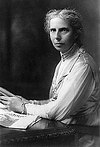
“Today, at eighty-three, she is still a vigorous champion of human rights. Just last year I had a wonderful visit with her at her home in Boston, discussing our precious heritage of great American women.”
Ella Reeve Bloor on Anna Louise Strong
“One of the first Americans to go down into the famine district was Anna Louise Strong, who ever since has spent most of her time in the Soviet Union and through her writing and lecturing has contributed so much toward greater understanding of the Soviet Union in America.”

Ella Reeve Bloor on Kate Richards O'Hare
“Kate Richards O'Hare was arrested and served 14 months of a five-year sentence for an anti-war speech in which she said women should refuse to breed sons to fertilize the soil. I visited her in the Missouri State Penitentiary at Jefferson City, and found she had to sew a daily quota of heavy duck overalls for the prisoners.”
Ella Reeve Bloor on Lucy Stone
“Through the Quakers, who believed in equality for women, I first came into touch with the woman suffrage movement. I began to be very much interested in the question, especially after reading about Lucy Stone, one of the earliest fighters against Negro slavery, and a leader for many years in the struggle for woman's suffrage.”
Ella Reeve Bloor on Emmeline Pankhurst
“The militant English suffrage leader, Emmeline Pankhurst, came to see me in Connecticut and scolded me soundly for lending my name, energy and work to a "man's party." She had the narrow feminist idea, which I never accepted, of working for women alone. She felt that women should not work for any political party until they got the vote.”

Ella Reeve Bloor on Upton Sinclair
“Upton Sinclair wrote The Jungle at a time when Lincoln Steffens was writing about the political evils of the day and during the muckraking period of Ray Stannard Baker, and others. Sinclair was the only one of these muckrakers who drew the logical political conclusions. At the end of The Jungle he advocated socialism as the remedy for the terrible conditions in industry under private ownership.”

Ella Reeve Bloor on Eugene V. Debs
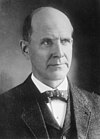
“In the Socialist Party I met Debs again. At that time the face of the party was truly turned towards the labor movement and from the first both Debs and I found our place mainly among the workers. We were always associated in the left wing of the party and both of us struggled constantly against the opportunistic, petty-bourgeois tendencies in the right wing of the party, led by the old-guard lawyer, Morris Hillquit.”
Ella Reeve Bloor on Maxim Gorky
“I heard Gorky speak before a big union meeting. I could not understand what he said, but I could see that he was inspired by the crowd and the occasion, that he loved the workers deeply, and that they loved him. He looked as I thought he would, like a peasant. When I met him afterwards, he asked me about America, and whether we were still reading his books. I told him how much his Mother meant to me, and to many other Americans.”

Quotes About Ella Reeve Bloor
Gain deeper perspective through quotes about Ella Reeve Bloor from others.
Elizabeth Gurley Flynn on Ella Reeve Bloor 2 quotes
“Ella Reeve Bloor was in her forties when I met her in 1910. She was strong and vigorous and moved as if she were flying rather than walking. She had dark hair, done up very simply in a little knot on top of her head, and very bright, snapping black eyes. I remembered she wore a lace collar pinned with a brooch. All here life Ella was a dressy little lady and loved jewelry. She was animated and vivacious. I thought she resembled a busy little brown bird. Her voice was clear and resonant and could be heard in the largest hall or on the noisiest street corner.”

Emma Goldman on Ella Reeve Bloor
“my erstwhile devoted Ella Reeves Bloor”

Art Young on Ella Reeve Bloor
“Mother Bloor is at her best at eighty years of age...and in spite of everything, with the same staunch devotion to a cause that won her mind and heart at an early age...This devotion we all recognize as the courage to lose her own life, if need be, that it may be gained for others...the people.”
About Ella Reeve Bloor
Ella Reeve "Mother" Bloor (July 8, 1862 – August 10, 1951) was a long-time labor organizer and activist in the socialist and communist movements in the USA.
QuotesCosmos Cross-Civilizational Archive
Explore Related Wisdom Pillars, Worldviews & Canonical Works
Discover how humanity's greatest philosophers, sacred scriptures, and literary masterpieces address the core questions of existence.
30 Wisdom Pillars
22 Worldviews & Traditions
Canonical Books & Scriptures