Link Copied!
Edward Witten Quotes (1951-)
Physicist



About Edward Witten
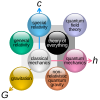
Edward Witten (born August 26, 1951) is an American theoretical physicist and professor at the Institute for Advanced Study, who is widely known as “the most brilliant physicist of his generation.” He is a leading researcher in string theory. In 1990, Witten won the Fields Medal, the most prestigious award in pure mathematics.
Best Edward Witten Quotes
Shortest
Earliest
Explore our curated collection of the most famous and impactful Edward Witten quotes.
“It was clear that if I didn't spend the rest of my life concentrating on string theory, I would simply be missing my life's calling.”


“I would expect that a proper elucidation of what string theory really is all about would involve a revolution in our concepts of the basic laws of physics - similar in scope to any that occurred in the past.”
“Even before string theory, especially as physics developed in the 20th century, it turned out that the equations that really work in describing nature with the most generality and the greatest simplicity are very elegant and subtle.”
“Most people who haven't been trained in physics probably think of what physicists do as a question of incredibly complicated calculations, but that's not really the essence of it. The essence of it is that physics is about concepts, wanting to understand the concepts, the principles by which the world works.”
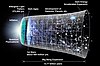
“Quantum mechanics... developed through some rather messy, complicated processes stimulated by experiment. While it's a very rich and wonderful theory, it doesn't quite have the conceptual foundation of general relativity. Our problem in physics is that everything is based on these two different theories and when we put them together we get nonsense.”

“I think one has to regard it as a long term process. One has to remember that String theory, if you choose to date it from the Veneziano model, is already eighteen years old... that quantum electrodynamic theory towards which Planck was heading [in 1900], took fifty years to emerge.”

“Generally speaking, all the really great ideas of physics are really spin-offs of string theory... Some of them were discovered first, but I consider that a mere accident of the development on planet earth. On planet earth, they were discovered in this order [general relativity, quantum field theory, superstrings, and supersymmetry]... But I don't believe, if there are many civilizations in the universe, that those four ideas were discovered in that order in each civilization.”
“... one thing that's worth mentioning, though, it that apart from the dream of understanding physics at a deeper level involving gravity, work in string theory has been useful in shedding lights on more conventional problems in quantum field theory and even in condensed matter physics and as well with applications to mathematics. Apart from its intrinsic interest, those successes are one of the things that tend to give us confidence that we're on the right track. Because, speaking personally, I find it implausible that a completely wrong new physics theory would give rise to useful insights about so many different areas.”
“It's been said that string theory is part of the physics of the twenty-first century that fell by chance into the twentieth century. That's a remark that was made by a leading physicist about fifteen years ago. ...String theory was invented essentially by accident in a long series of events, starting with the Veneziano model... No one invented it on purpose, it was invented in a lucky accident. ...By rights, string theory shouldn't have been invented until our knowledge of some of the areas that are prerequisite... had developed to the point that it was possible for us to have the right concept of what it is all about.”
“In Newton's day the problem was to write something which was correct - he never had the problem of writing nonsense, but by the twentieth century we have a rich conceptual framework with relativity and quantum mechanics and so on. In this framework it's difficult to do things which are even internally coherent, much less correct. Actually, that's fortunate in the sense that it's one of the main tools we have in trying to make progress in physics. Physics has progressed to a domain where experiment is a little difficult... Nevertheless, the fact that we have a rich logical structure which constrains us a lot in terms of what is consistent, is one of the main reasons we are still able to make advances.”

“If supersymmetry plays the role in physics that we suspect it does, then it is very likely to be discovered by the next generation of particle accelerators, either at Fermilab... or at CERN... Discovery of supersymmetry would be one of the real milestones in physics, made even more exciting by its close links to still more ambitious theoretical ideas. Indeed, supersymmetry is one of the basic requirements of "string theory," which is the framework in which theoretical physicists have had some success in unifying gravity with the rest of the elementary particle forces. Discovery of supersymmetry would would certainly give string theory an enormous boost.”
“Replacing particles by strings is a naive-sounding step, from which many other things follow. In fact, replacing Feynman graphs by Riemann surfaces has numerous consequences: 1. It eliminates the infinities from the theory. ...2. It greatly reduces the number of possible theories. ...3. It gives the first hint that string theory will change our notions of spacetime. Just as in QCD, so also in gravity, many of the interesting questions cannot be answered in perturbation theory. In string theory, to understand the nature of the Big Bang, or the quantum fate of a black hole, or the nature of the vacuum state that determines the properties of the elementary particles, requires information beyond perturbation theory... Perturbation theory is not everything. It is just the way the [string] theory was discovered.”
“Just around the same time that the string picture was formed, asymptotic freedom was discovered and made possible, in QCD, a more precise and successful theory of the strong interactions. Yet there has always been a striking analogy between QCD and string theory. If the hypothesis of quark confinement in QCD is true in its usual form, than a widely separated quark and antiquark are joined by a “color flux tube.” This has an obvious analogy to the notion of a meson as a string with charges at its ends, as assumed in string theory. Explaining this analogy would mean understanding quark confinement. This would be quite a nice achievement, since it is a longstanding sore point in theoretical physics that despite real experiments and computer simulations supporting the quark confinement hypothesis and despite a lot of ingenious work explaining qualitative criteria for quark confinement and why this notion is natural, there is no convincing, pencil and paper demonstration of quark confinement in QCD.”
“It was found [in the 1970s], unexpectedly and without anyone really having a concept for it, that the rules of perturbation theory can be changed in a way that makes relativistic quantum gravity inevitable rather than impossible. The change is made by replacing point particles by strings. Then Feynman graphs are replaced by Riemann surfaces, which are smooth - unlike the graphs, which have singularities at interaction vertices. The Riemann surfaces can degenerate to graphs in many different ways. In field theory, the interactions occur at the vertices of a Feynman graph. By contrast, in string theory, the interaction is encoded globally, in the topology of a Riemann surface, any small piece of which is like any other. This is reminiscent of how non-linearities are encoded globally in twistor theory.”
Edward Witten Quotes by Topic
Find exactly what you are looking for by browsing this categorized list of Edward Witten quotes by topic.
Edward Witten on Gravity 5 quotes
“Even though it is, properly speaking, a postprediction, in the sense that the experiment was made before the theory, the fact that gravity is a consequence of string theory, to me, is one of the greatest theoretical insights ever.”

Edward Witten on String theory 4 quotes
“String theory is not like anything else ever discovered. It is an incredible panoply of ideas about math and physics, so vast, so rich you could say almost anything about it.”

Edward Witten on Supersymmetry 3 quotes
“SUSY is a unique new symmetry that relates bosons to fermions, in a sense explaining why fermions exist. Relating bosons to fermions also makes it possible to explain the smallness of the Higgs mass, since we do know why the smallness of fermion masses can be natural. So that is at least the germ of how SUSY solves the fine-tuning problem.”
Edward Witten on Force field (physics) 2 quotes
“String theory is extremely attractive because gravity is forced upon us. All known consistent string theories include gravity, so while gravity is impossible in quantum field theory as we have known it, it is obligatory in string theory.”
Edward Witten on Quantum gravity
Edward Witten on Nature
“Nature seems to be based on very deep ideas and principles, of which we currently understand only a little.”

Edward Witten on Physics
Edward Witten on Higgs boson
“There is a puzzle about the Higgs particle — which is what makes it relatively light compared to the natural mass scale of elementary particles.”

Edward Witten on Research
Edward Witten on Modified Newtonian dynamics
“... one really has to stand on one's head to reconcile MOND with what is well-established about relativistic physics, and the results are pretty obscure and far-fetched looking.”
Edward Witten on History of science
“Understanding what M-theory really is—the physics it embodies—would transform our understanding of nature at least as radically as occurred in any of the major scientific upheavals of the past.”

Edward Witten on Problem
“At a given moment, the time may simply not be ripe to solve a particular problem. Progress on something else might be needed first, and the necessary clue might come from a different direction. In the case of quantum gravity, the unexpected direction was string theory.”
Edward Witten on Elementary particle
“Even with our best understanding in traditional physics, there are dozens of different things that we can call elementary particles. The idea of string theory is to get all the different elementary particles — muons, neutrinos, electrons, up quarks, gluons, and so on — as different states of vibration of one basic string.”

Edward Witten on Wave
“The mass gap is the reason, if you will, that we do not see classical nonlinear Yang-Mills waves. They are a good approximation only under inaccessible conditions. I have spent most of my career wishing that we had a really good way to quantitatively understand the mass gap in four-dimensional gauge theory. I hope that this problem will be solved one day.”

Edward Witten on Geometry
“.. general relativity is, of course, based on Riemannian geometry, which is one of the richest frameworks for our understanding of ordinary geometry. ... Many ambitious physicists and mathematicians have gone off into the wilderness in search of some fundamental generalization of geometry that would reconcile gravity with quantum mechanics but, generally speaking, they have come back empty-handed — if at all.”
Edward Witten on Unification in science and mathematics
“I feel that we are so close with string theory that—in my moments of greatest optimism—I imagine that any day, the final form of the theory may drop out of the sky and land in someone's lap. But more realistically, I feel that we are now in the process of constructing a much deeper theory than anything we have had before and that well into the twenty-first century, when I am too old to have any useful thoughts on the subject, younger physicists will have to decide whether we have in fact found the final theory.”
Edward Witten on Theory of everything
“I feel that we are so close with string theory that—in my moments of greatest optimism—I imagine that any day, the final form of the theory may drop out of the sky and land in someone's lap. But more realistically, I feel that we are now in the process of constructing a much deeper theory than anything we have had before and that well into the twenty-first century, when I am too old to have any useful thoughts on the subject, younger physicists will have to decide whether we have in fact found the final theory.”

Edward Witten on Inflation (cosmology)
“As for inflation, scientists believe it occurred in the early universe at a temperature far above the energy of particle accelerators and relatively close to the energy at which quantum gravity becomes important. We do not yet have a convincing, detailed model of how and why inflation transpired because the models of particle physics that we have are not adequate at the huge energies of inflation. Understanding inflation requires a much better knowledge of particle physics than we have now, and possibly a full knowledge of string theory and quantum gravity.”

Edward Witten on Soliton
“The idea that in some sense the ordinary proton and neutron might be solitons in a non-linear sigma model has a long history. The first suggestion was made by Skyrme more than twenty years ago ... David Finkelstein and Rubinstein showed that such objects could in principle be fermions ... in a paper that probably represented the first use of what would now be θ vacua in quantum field theory. A gauge invariant version was attempted by Faddeev ... Some relevant miracles are known to occur in two space-time dimensions ... ; there also exists a different mechanism by which solitons can be fermions ...”

Edward Witten on Singularity
“... once the electron and atomic nucleus were discovered almost a century ago, the 1/r2 singularity did become a severe problem. A simple calculation based on nineteenth-century physics showed that, because of the strong force at small r, the electron should spiral into the nucleus in about 10–9 seconds. This was obviously not the case. ... Though quantum mechanics was invented because of the 1/r2 singularity, it turned out that once special relativity was included, quantum mechanics did not automatically cure all of the problems associated with that singularity. Much of the development of physics since 1930 had to do with the 1/r2 problem in the light of quantum mechanics plus special relativity.”
Edward Witten on Fine-tuning (physics)
“Once one starts to admit anthropic interpretations of fine-tuning problems like the cosmological constant, it is clear that such a proposal might be made for other fine-tuning problems, such as the problem of the Higgs boson mass. Certainly, we would not be here if the Higgs boson mass, and hence also the W and Z and quark and lepton masses, were greatly bigger. If they were near the Planck scale, for example, any collection of more than a few elementary particles would collapse into a Black Hole. More generally, if the elementary particle masses were scaled up by a factor N, the number of elementary particles in a star or planet would scale down like N–3, and for very modest N the stars would stop shining.”
Edward Witten on Anthropic principle
“Once one starts to admit anthropic interpretations of fine-tuning problems like the cosmological constant, it is clear that such a proposal might be made for other fine-tuning problems, such as the problem of the Higgs boson mass. Certainly, we would not be here if the Higgs boson mass, and hence also the W and Z and quark and lepton masses, were greatly bigger. If they were near the Planck scale, for example, any collection of more than a few elementary particles would collapse into a Black Hole. More generally, if the elementary particle masses were scaled up by a factor N, the number of elementary particles in a star or planet would scale down like N–3, and for very modest N the stars would stop shining.”
Edward Witten on Extra dimensions
“Why try to unite the four forces in a single theory? Why not simply use Einstein’s theory of general relativity to govern big things and quantum mechanics for little ones? Some concepts, such as the Big Bang or how black holes form, live in both domains. When we combine equations of the four forces to describe these ideas, our answers usually end up being either zero or infinity. … Here’s where string theory comes to the rescue. By adding seven hidden dimensions to the familiar three and another for time, plus antiparticles and a mirror set of particles called superparticles, the math starts to make sense. The force of gravity is diluted because it permeates into one or more of the hidden dimensions. Dark matter and dark energy also may invisibly shape our universe from these phantom dimensions.”
Edward Witten on Spacetime
“Replacing particles by strings is a naive-sounding step, from which many other things follow. In fact, replacing Feynman graphs by Riemann surfaces has numerous consequences: 1. It eliminates the infinities from the theory. ...2. It greatly reduces the number of possible theories. ...3. It gives the first hint that string theory will change our notions of spacetime. Just as in QCD, so also in gravity, many of the interesting questions cannot be answered in perturbation theory. In string theory, to understand the nature of the Big Bang, or the quantum fate of a black hole, or the nature of the vacuum state that determines the properties of the elementary particles, requires information beyond perturbation theory... Perturbation theory is not everything. It is just the way the [string] theory was discovered.”
Edward Witten on Geometric Langlands correspondence
“Hecke transformations are one of the most important ingredients in geometric Langlands. What they mean in terms of physics had bothered me for a long time and eventually had been the last major stumbling block in interpreting geometric Langlands in terms of physics and gauge theory. Finally, while on an airplane flying home from Seattle, it struck me that a Hecke transformation in the context of geometric Langlands is simply an algebraic geometer’s way to describe the effects of a “’t Hooft operator” of quantum gauge theory. I had never worked with ’t Hooft operators, but they were familiar to me, as they had been introduced in the late 1970s as a tool in understanding quantum gauge theory. The basics of how to work with ’t Hooft operators and what happens to them under electric-magnetic duality were well known, so once I could reinterpret Hecke transformations in terms of ’t Hooft operators, many things were clearer to me.”
What Edward Witten Said About Others
Discover personal opinions Edward Witten shared regarding contemporaries.
Edward Witten on Albert Einstein
“Einstein understood the central concepts of general relativity years before he developed the detailed equations.”

Quotes About Edward Witten
Gain deeper perspective through quotes about Edward Witten from others.
Michael Atiyah on Edward Witten
“The past decade has seen a remarkable renaissance in the interaction between mathematics and physics. This has been mainly due to the increasingly sophisticated mathematical models employed by elementary particle physicists, and the consequent need to use the appropriate mathematical machinery. In particular, because of the strongly non-linear nature of the theories involved, topological ideas and methods have played a prominent part. ... In all this large and exciting field, which involves many of the leading physicists and mathematicians in the world, Edward Witten stands out clearly as the most influential and dominating figure. Although he is clearly a physicist (as his list of publications clearly shows) his command of mathematics is rivalled by few mathematicians, and his ability to interpret physical ideas in mathematical form is quite unique. Time and again he has suprised the mathematical community by a brilliant application of physical insight leading to new and deep mathematical ideas.”

Daniel S. Freed on Edward Witten
“For example, Ed Witten recently derived a formula for Donaldson invariants on Kähler manifolds using a twisted version of supersymmetric Yang-Mills theory in four dimensions. His argument depends on the existence of a mass gap, cluster decomposition, spontaneous symmetry breaking, asymptotic freedom, and gluino condensation.”
Freeman Dyson on Edward Witten 2 quotes
“In the spring of 1985 Ed Witten, one of the most brilliant of young physicists at Princeton University, announced that he would give a talk. ...it was clear that this talk would be an extraordinary occasion. ...our seminar room was packed with people, some old and famous, some young, all eager with expectations. Witten spoke very fast for an hour and a half without stopping. It was a dazzling display of virtuosity. It was also, as Witten remarked quietly at the end, a new theory of the universe. ...When Witten came to the end... The listeners sat silent. ...There were no questions. Not one of us was brave enough to stand up and reveal the depths of our ignorance. ...I describe this scene because it gives a picture of what it means to explore the universe at the highest level of abstraction. Ed Witten is taking a big chance. He has moved so far into abstraction that few even of his friends know what he is talking about. ...He did not invent superstrings. ...Ed Witten's role is to build superstrings into a mathematical structure which reflects to an impressive extent the observed structure of particles and fields in the universe. After they heard him speak, many members of his audience went back to their desks and did the homework they should have done before, reading his papers and learning his language. The next time he talks, we shall understand him better. Next time, we shall perhaps be brave enough to ask questions.”

Adam Falkowski on Edward Witten
“Our Witten, which art in Princeton, Hallowed be thy name. Thy Nobel come, Thy will be done, In CERN as it is in the US. Give us this day our daily string, And forgive us our theory, As we forgive those who do phenomenology. Lead us not into experiment, And deliver us from tests. For thine is the arXiv, Hep-th and math-AG, For ever and ever, Amen”
Timothy Ferris on Edward Witten 2 quotes
“Enter superstring theory. The concept that particles are really tiny strings dates from the 1960s, but it took on wings in 1974, when John Schwarz... and Joel Scherk... came to terms with what had been an ugly blemish in their calculations. String theory kept predicting the existence of a particle with zero mass and a spin of two. Schwarz and Scherk realized that this unwelcome particle was nothing other than the graviton, the quantum carrier of gravitational force (Although there is no quantum theory of gravity yet, it is possible to specify some of the characteristics of the quantum particle thought to convey it.) This was liberating: The calculations were saying not only that string theory might be the way to a fully unified account of all particles and forces but that one could not write a string theory without incorporating gravity. Ed Witten... recalled that this new constituted "the greatest intellectual thrill of my life."”

Sheldon Lee Glashow with Ben Bova on Edward Witten
“The Theory of Everything, if you dare be bold, Might be something more than a string orbifold. While some of your leaders have got old and sclerotic, Not to be trusted alone with things heterotic, Please heed our advice that you are not smitten— The Book is not finished, the last word is not Witten.”
Brian Greene on Edward Witten 7 quotes
“A crucial observation, central to the second superstring revolution initiated by Witten and others in 1995, is that string theory actually includes ingredients with a variety of different dimensions: two-dimensional Frisbee-like constituents, three-dimensional blob-like constituents, and even more exotic possibilities to boot.”

John Horgan on Edward Witten
“Between sessions at a physics conference, I asked a number of attendees: Who is the smartest physicist of them all? ...the name mentioned most often was Witten's. He seemed to evoke a special kind of awe, as though he belonged to a category unto himself. He is often likened to Einstein; one colleague reached even further back for a comparison, suggesting that Witten possessed the greatest mathematical mind since Newton.”

Michio Kaku on Edward Witten
“Edward Witten... dominates the world of theoretical physics. Witten is currently the "leader of the pack," the most brilliant high-energy physicist, who sets trends in the physics community the way Picasso would set trends in the art world. Hundreds of physicists follow his work religiously to get a glimmer of his path-breaking ideas.”

Gordon Kane on Edward Witten
“The boundaries of physics have been changing. Now scientists ask not only how the world works (a question the Standard Model answers) but why it works that way (a question the Standard Model cannot answer). Einstein asked "why" earlier in the century, but only in the past decade or so have the "why" questions become normal scientific research in particle physics, rather than philosophical afterthoughts. One ambitious approach to "why" is known as string theory, which is formulated in an eleven-dimensional world. Work on string theory has proceeded so far by study of the theory itself, rather than via the historical fruitful interplay of experiment and theory. As Edward Witten remarks... string theory predicts that nature should be supersymmetric. Supersymmetry is a surprising and subtle idea—the idea that the equations representing basic laws of nature don't change if certain particles in the equations are interchanged with one another.”
Chiara Nappi on Edward Witten
“He never does calculations except in his mind. I will fill pages with calculations before I understand what I'm doing. But Edward will sit down only to calculate a minus sign, or a factor of two.”
About Edward Witten
Edward Witten (born August 26, 1951) is an American theoretical physicist and professor at the Institute for Advanced Study, who is widely known as “the most brilliant physicist of his generation.” He is a leading researcher in string theory. In 1990, Witten won the Fields Medal, the most prestigious award in pure mathematics.
QuotesCosmos Cross-Civilizational Archive
Explore Related Wisdom Pillars, Worldviews & Canonical Works
Discover how humanity's greatest philosophers, sacred scriptures, and literary masterpieces address the core questions of existence.
30 Wisdom Pillars
22 Worldviews & Traditions
Canonical Books & Scriptures