David on Herbert Hoover
← Back to David Profile
“The spectacle of the United States Army routing unarmed citizens with tanks and firebrands outraged many Americans. The Bonus Army episode came to symbolize Hoover's supposed insensitivity to the plight of the unemployed. In fact the worst violence, resulting in two deaths, had come at the hands of the district police, not the federal troops, and the blame for the torching of Anacostia Flats was MacArthur's, not Hoover's. But Hoover chose to ignore MacArthur's insubordination and assumed full responsibility for the army's actions.”
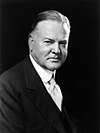
“Hoover brought a corporate executive's sensibility to the White House. Roosevelt brought a politician's. Hoover as president frequently dazzled visitors with his detailed knowledge and expert understanding of American business. "His was a mathematical brain," sad his admiring secretary, Theodore Joslin. "Let banking officials, for instance, come into his office and he would rattle off the number of banks in the country, list their liabilities and assets, describe the trend of fiscal affairs, and go into the liquidity, or lack of it, of individual institutions, all from memory." Roosevelt, in contrast, impressed his visitors by asking them to draw a line across a map of the United States. He would then name, in order, every county through which the line passed, adding anecdotes about each localities political peculiarities.”
“To White House visitors, the President by this time seemed prematurely aged. He kept up a punishing regimen of rising at six and working without interruption until nearly midnight. His clothes were disheveled, his hair rumpled, eyes bloodshot, complexion ashen. He grew increasingly testy and brittle. "How I wish I could cheer up the poor old President," wrote the venerable Stimson, Hoover's senior by seven years. Never temperamentally suited to the pelting and abuse of the political arena, a man naturally diffident and inordinately self-protective, Hoover was painfully bruised by blows from both the left and the right. As early as 1919 he had conceded that "I do not... have the mental attitude or the politician's manner... and above all I am too sensitive for political mud." By the fall of 1932 he had lost all stomach for political campaigning. He took to the hustings only in October and seemed to campaign more for vindication in the historical record than for affection in the hearts of voters. Just four years earlier he had won one of the most lopsided victories in the history of presidential elections. Now he took an even worse drubbing than he had given Al Smith. On November 8, 1932, Hoover won just six states. The Great Engineer, so recently the most revered American, was the most loathed and scorned figure in the country. All eyes now looked to his successor, Franklin D. Roosevelt.”
QuotesCosmos Cross-Civilizational Archive
Explore Related Wisdom Pillars, Worldviews & Canonical Works
Discover how humanity's greatest philosophers, sacred scriptures, and literary masterpieces address the core questions of existence.
30 Wisdom Pillars
22 Worldviews & Traditions
Canonical Books & Scriptures