Link Copied!
Cristina Beltrán Quotes (0-)
Director
About Cristina Beltrán
Cristina Beltrán is an associate professor and director of graduate studies in the Department of Social and Cultural Analysis at New York University.
Best Cristina Beltrán Quotes
Shortest
Earliest
Explore our curated collection of the most famous and impactful Cristina Beltrán quotes.
“when it comes to finding joy, who you're with matters more than where you are. (Acknowledgements)”
“1980s feminism focused on questions of difference and making the category of women more inclusive”
“It is my contention the category ‘Latino,’ like the category ‘women,’ should be reconceived as a site of permanent political contestation”
“In challenging traditional gender relations, many Chicana activists were accused of being lesbians, 'white identified,' narcissistic, and antifamily.”
“Emphasizing standing and status rather than political participation and collective action, white citizenship continually constrains the meaning of both democracy and political freedom. (p 118)”
“Majority-white schools, neighborhoods, and community institutions were made white through violence; racialized exclusions; and the denial of equality, opportunity, and legal protection for nonwhite populations. (p 18)”
“Today, the variability of white identity is visible in the growing rupture between white citizens who support the politics of white democracy and those increasingly appalled by racist and xenophobic appeals to whiteness. (p 21)”

“Multiracial whiteness reflects an understanding of whiteness as a political color and not simply a racial identity — a discriminatory worldview in which feelings of freedom and belonging are produced through the persecution and dehumanization of others.”


“Rather than speaking in terms of specific and distinct subgroups (Mexicans, Cubans, Puerto Ricans, Dominicans, etc.) ‘Latino’ and ‘Hispanic’ have become the shorthand designation of choice among journalists, politicians, advertising executives, academics, and other influential elites.”

“Unlike the civil rights struggles of African Americans or the protest politics surrounding the Vietnam War, the Chicano and Puerto Rican movements represent a decidedly underexplored aspect of 1960s New Left radicalism. Outside of the communities themselves, the names, places, and events of these two movements are virtually unknown.”
“The movement's institutional legacy can also be seen in the realm of higher education: Chicano and Puerto Rican studies programs are the product of these movements and continue to play a key role in providing Latinos with a "civic education" that both politicizes and produces particular conceptions ofLatino identity and subjectivity.”

“What are we to make of [Enrique] Tarrio — and, more broadly, of Latino voters inspired by Trump? And what are we to make of unmistakably White mob violence that also includes non-White participants? I call this phenomenon multiracial whiteness — the promise that they, too, can lay claim to the politics of aggression, exclusion and domination.”
“Rather than envisioning and enacting a better and more beautiful world, white democracy's vision is defined by scarcity. In the logic of racial replacement, nativists imagine social goods within an economy of exclusion and democratic forms of denial; there is no sharing of power; there is only one majority "taking control" from the other. (p 119)”
“Poetry such as "Puerto Rican Obituary" highlights another significant aspect of movement thought: the shift from cultural shame to ethnic pride. Unlike earlier critiques of prejudice and discrimination, movement rhetoric and writings often focused on the emotional and psychic damage of racism, exploring the need toovercome internalized shame and self-hate.”

“Limited by a scarcity logic in which migrant flourishing means citizen hardship, nativists in the thrall of whiteness presume that migrant movement will invert the practices of white democracy, causing whites to "lose their country." Trapped in their own fears and fantasies of domination and racial terror, nativists can't help but conjure Latinx migrants as subjects planning to inflict a vengeful politics of invasion, replacement, and reconquista. (p 114)”
“During the late 1960s and 1970s, Mexican American and Puerto Rican activists put forward a politically charged critique of American politics. Bringing together a paradoxical mix of cultural nationalism, liberal reformism, radical critique, andromantic idealism, the Chicano and Puerto Rican movements created a new political vocabulary, one emphasizing resistance, recognition, cultural pride, authenticity, and fraternity (hermanidad). The movements-organizations, issues, and events left a profound legacy.”
“I think that one of the big political divides we face right now is people who find the very act of talking about those histories of racial exclusion as divisive because the act of talking about it and acknowledging it produces a kind of defensiveness or anger - and even discussing it, the idea that unity should be practiced from sort of not engaging with our history, not - sort of celebrating the best stuff and not really acknowledging that we have a complicated, beautiful, tragic, inspiring inheritance that we have to understand to go forward.”
“The Puerto Rican movement of the 1960s and 1970s can be defined by its consistent calls for a radical transformation of U.S. society while simultaneously promoting the independence of Puerto Rico. Known as El Nuevo Despertar, this "New Awakening" of Puerto Rican radicalism was inspired and shaped by the growing militancy abroad and at home. Black Power, youth unrest (particularly against the Vietnam War), the War on Poverty, national liberation struggles in the Third World, Chicano and Native American militancy, gay and lesbian rights, and second-wave feminism are all part of the context that shaped the movement.”
“What I actually find helpful about theorizing and talking about whiteness as understanding that the politics of whiteness is distinct from white people is I think it actually opens up and expands our political possibilities going forward because we're not actually trapped in our identities or our demographics. It means that white citizens can - and many are - rejecting the politics of whiteness and working with communities of color to forge a multiracial democracy. But we have to understand this complicated and tragic and also beautiful shared inheritance we have. If we want to build something new together, we have to understand where we've come from.”
“As someone who studies race and the right, I have found that Democrats and progressives, expecting demographic change and rising diversity to tilt the country leftward, have failed to take seriously how that change is not at all a given...Communities of color are simultaneously victims of, participants in and practitioners of the violence practiced within and beyond our nation’s borders...Communities of color have an intimate history with violence, from massacres of Native Americans and chattel slavery to anti-Asian violence, police killings and the deaths of migrants on the border. But communities of color are not monolithic, and their responses and relationships to that violence mirror that very diversity.”

“whiteness is not the same thing as white people and that whiteness is actually better understood as a political project that has emerged historically, and that is dynamic and that is always changing. And so whiteness as an ideology is rooted in America's history of white supremacy-which has to do with the legacy of slavery or Indigenous dispossession or Jim Crow. And I think it's important to realize just how long in this country legal discrimination was not simply culturally acceptable but legally authorized. And so we've only been practicing a more consistent form of legal equality for a relatively short time since the 1960s. So Americans have often learned how to create their own sense of belonging through violence and through the exclusion of certain groups and populations.”
“Before Trump, conservatives seeking to appeal to Latinos typically embraced the politics of conservative multiculturalism. Politicians such as George W. Bush reached out to Latino voters by showing a familiarity with their language and history, emphasizing the values of diversity and inclusion. Depicting Latinos as a distinct and valuable part of America’s democratic mosaic, conservative multiculturalism connected Latino culture to Republican values, emphasizing conservative approaches to faith, patriotism and the traditional family. Trump, by contrast, knows nothing of the history of Latinos in the United States and rarely even pretends to find value in Latinos’ distinct identities. Rather than offering his non-White voters recognition, Trump has offered them multiracial whiteness.”
“I think that one of the things that's interesting about the politics of multicultural conservatism, for example, is that multicultural conservatism - which is the kind of conservative politics of reaching out to other racial minorities practiced by folks like Jack Kemp or George W. Bush - was an effort to recognize the specific histories and backgrounds of particular racial populations and to say that they could be part of the GOP. And I think that one of the things that's interesting is that there's a segment of people of color who don't necessarily want to be recognized at all. They don't want to be recognized for their racial distinctiveness-that for them, the very act of sort of identifying them as Latino, as African American - that they themselves have a certain discomfort with that very logic. They want to be understood as simply Americans outside of those kinds of identity categories.”

“"Hispanic" and "Latino" are terms whose descriptive legitimacy is premised on a startling lack of specificity. The categories encompass any and all individuals living in the United States who trace their ancestry to the Spanish-speaking regions of Latin America and the Caribbean; Latinos hail from Colombia, Mexico, Paraguay, Puerto Rico, and beyond-more than twenty countries in all. Such inclusivity is part of the problem: "Hispanic" and "Latino" tell us nothing about country of origin, gender, citizenship status, economic class, or length of residence in the United States. An undocumented immigrant from Guatemala is Hispanic; so is a third-generation Mexican American lawyer. Moreover, both categories are racially indeterminate: Latinos can be white, black, indigenous, and every combination thereof. In other words, characterizing a subject as either "Hispanic" or "Latino" is an exercise in opacity-the terms are so comprehensive that their explanatory power is limited. When referring to "Latinos in the United States," it is far from immediately clear whether the subjects under discussion are farmworkers living below the poverty line or middle-class homeowners, urban hipsters or rural evangelicals, white or black, gay or straight, Catholic or Jewish, undocumented Spanish monolinguals or fourth-generation speakers of English-only.”
Cristina Beltrán Quotes by Topic
Find exactly what you are looking for by browsing this categorized list of Cristina Beltrán quotes by topic.
Cristina Beltrán on Black Panther Party

Cristina Beltrán on Texas
“in 1836, when Texas won its independence from Mexico, President Jackson stated that annexing the Republic of Texas would expand America's "area of freedom" and extend its "circle of free institutions." However, the conception of freedom being articulated by the Anglo settlers of the Texas republic was deeply racialized: not only were most settlers originally from the Deep South but many were "land speculators, slavers, militia leaders, and Indian killers."”

What Cristina Beltrán Said About Others
Discover personal opinions Cristina Beltrán shared regarding contemporaries.
Cristina Beltrán on Anna Nieto-Gómez 2 quotes
“In her effort to convince critics of the differences between Chicana and white feminists, NietoGomez produces a monolithic vision of Anglo women.”
Cristina Beltrán on Pedro Pietri 2 quotes
“Little attention has been paid to the fact that the most significant Chicano and Puerto Rican organizations turned to poetry to mark their entry into the public realm...A great deal of "classic" movement poetry has a strong civic impulse-it seeks to be both educative and socializing. Poets such as Gonzales, Alurista, and Pedro Pietri saw their poetry as an organizing tool that served an "agitprop function."”

Cristina Beltrán on Hannah Arendt 2 quotes
“As Arendt notes, only elected representatives had their participation institutionalized in the Constitution: "The Revolution, while it had given freedom to the people, had failed to provide a space where this freedom could be exercised. Only the representatives of the people, not the people themselves, had an opportunity to engage in those activities of 'expressing, discussing, and deciding' which in a positive sense are the activities of freedom."”

Cristina Beltrán on Adam Serwer
“while critics like Adam Serwer have rightly argued that when it comes to the bond between Trump and his supporters, "the cruelty is the point," my claim is that such cruelty is not only an experience of community and delight; it's fundamentally a return to a particular civic experience.”
Cristina Beltrán on Cherríe Moraga
“In the case of Moraga, her dream of a "unified Third World feminist movement" reflects a similar longing for immediacy and "harmony... consensus and mutual understanding." Here, Moraga would do well to take up Iris Marion Young's call to envision the political as "a relationship of strangers who do not understand one another in a subjective and immediate sense, relating across time and distance."”

Cristina Beltrán on Judith Butler
“Arguing that feminists could no longer seek recourse to an unproblematized women's "experience," Judith Butler has proposed reconceiving the category of women as "permanently open, permanently contested, permanently contingent, in order not to foreclose in advance future claims for inclusion." In a similar vein, it is my contention that "Latino," like the category "women," should be reconceived as a site of permanent political contestation.”

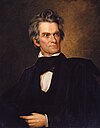
Cristina Beltrán on John C. Calhoun
“John C. Calhoun, Andrew Jackson's former vice president and eventual U.S. senator from South Carolina, argued against incorporation, asserting that Mexicans represented an amalgamation of "impure races, not [even] as good as the Cherokees or Choctaws." Calhoun asked, "Can we incorporate a people so dissimilar to us in every aspect-so little qualified for free and popular government-without certain destruction to our political institutions?"”
Cristina Beltrán on Sonia Sotomayor
“in 2009, when Sonia Sotomayor was preparing for congressional hearings for her appointment to the Supreme Court, she was accused of being a racist for her involvement with "radical" organizations such as the Puerto Rican Legal Defense and Education Fund and the National Council of La Raza.' The fact that so many Latino elites were once members of these organizations speaks to the role these movements and organizations played in the creation of a significant sociopolitical class.”

Cristina Beltrán on Carl Schurz
“Du Bois quotes the German American reformer Carl Schurz, who observed, “Wherever I go-the street, the shop, the house, the hotel, or the steamboat-I hear the people talk in such a way as to indicate that they are yet unable to conceive of the Negro as possessing any rights at all. Men who are honorable in their dealings with their white neighbors, will cheat a Negro without feeling a single twinge of their honor. To kill a Negro they do not deem murder; to debauch a Negro woman, they do not think fornication; to take the property away from a Negro they do not consider robbery."”

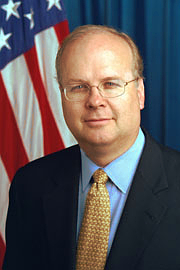
Cristina Beltrán on Karl Rove
“Both pro- and anti-immigrant voices characterize Latino immigrants as not only willing but desirous of the dirtiest, most difficult forms of labor, eager to do the work that no else will do...Karl Rove, Bush's then deputy chief of staff, articulated a more unvarnished version of this logic. Explaining the rationale behind the president's call for immigration reform, Rove told a Republican women's luncheon group: "I don't want my 17-year-old son to have to pick tomatoes or make beds in Las Vegas." Implicit in Rove's quip is the undocumented's presumed willingness to accept toilsome, low-status work.”
Quotes About Cristina Beltrán
Gain deeper perspective through quotes about Cristina Beltrán from others.
Cornel West on Cristina Beltrán
“Cristina Beltrán's powerful book The Trouble with Unity is timely for our age of Obama in which an ugly anti-immigrant spirit looms large.”

About Cristina Beltrán
Cristina Beltrán is an associate professor and director of graduate studies in the Department of Social and Cultural Analysis at New York University.
QuotesCosmos Cross-Civilizational Archive
Explore Related Wisdom Pillars, Worldviews & Canonical Works
Discover how humanity's greatest philosophers, sacred scriptures, and literary masterpieces address the core questions of existence.
30 Wisdom Pillars
22 Worldviews & Traditions
Canonical Books & Scriptures