Link Copied!
Cole C. Kingseed Quotes (1949-)
Author, King
About Cole C. Kingseed
Colonel Cole Christian Kingseed, Ph.D. (Ret.) (born August 27, 1949) is an Army veteran, military historian, author, consultant, and professor.
Best Cole C. Kingseed Quotes
Shortest
Earliest
Explore our curated collection of the most famous and impactful Cole C. Kingseed quotes.
“It is my personal conviction that almost any one of the newborn states of the world would far rather embrace Communism or any other form of dictatorship than acknowledge the political domination of another government, even though that brought to each citizen a far higher standard of living.”
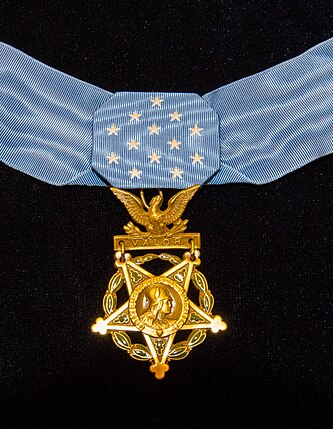
“Because the Medal of Honor is presented “in the name of the Congress of the United States,” it is frequently called the Congressional Medal of Honor. The terms are used interchangeably, but regardless of designation, the Medal of Honor remains the most prestigious and treasured of all decorations in the armed services.”
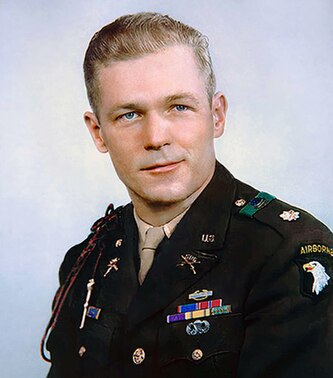
“I remember him as if it were yesterday. The old soldier emerged from the elevator in the hotel lobby at the U.S. Military Academy at West Point, dapperly attired in a dark blazer with the crest of the 101st Airborne Division on his pocket. His neatly cropped gray hair reflected a military man far younger than his current seventy-nine-plus years. I am not sure what I had expected to see. At the time of our initial encounter, most veterans of World War II were in their late seventies or early eighties. Most veterans who visited West Point to share their reminiscences with the cadets walked with the aid of canes or walkers. In Winters's case, there was a noticeable spring in his step that belied his age.”

“The Medal of Honor is the most revered and highest award for military valor in action. Since the decoration’s inception in 1861, for the Navy, the medal has been bestowed in the name of Congress 3,530 times, including on one woman and on 19 individuals who have received multiple awards. The standards to award the medal have evolved over time. On July 25, 1963, Congress approved guidelines and established the current criteria to recognize “conspicuous gallantry and intrepidity at the risk of one’s life above and beyond the call of duty.” Secretary of War Edwin Stanton first bestowed the medal on the surviving members of a Union Army scouting detachment known as Andrews’ Raiders on March 25, 1863. Pvt. Jacob Parrott holds the distinction of being the medal’s initial recipient. Though each honoree possesses a unique story and deserves the gratitude of the nation, three recipients illustrate that heroism can overcome prejudice.”
“"Quiet is easy to achieve," Dick repeatedly said, "but true peace must come from within." That was where the farm came in, a quiet piece of Pennsylvania where he could forget about the war. Without that refuge, Dick's thoughts always returned to the war, those horrendous battles, those fallen comrades, those lucky ones who suffered the million-dollar wound and returned to the States while the survivors went on.
He approached the subject of what he referred to as "flashes from the past" only after we had known each other for five years. He turned to me once, changing the subject that we had been discussing, and said, "Don't you think it's strange that fifty-eight years after the war, I can't get these images out of my mind?"
"Not at all, Dick. Every soldier bears the emotional scars of combat long after the war ends. War is only attractive to those who know nothing about it. I remember how one of the war's correspondents, I think it was Ernie Pyle, but I'm not sure, said at war's end, 'All we can do is fumble and try once more- try out of the memory of our anguish- and be as tolerant we can.'"”

“This shy, quiet gentleman who introduced himself simply as "Dick Winters" immediately made an indelible impression on me. From the beginning, I was "Cole," he was "Dick." Never once for the next thirteen years did we ever address each other by rank or surname. Over dinner Dick and I discussed a myriad of topics, all associated with his wartime experience and his thoughts on leadership in war. Why were some commanders more effective than others in inspiring their men? How did you identify the best soldiers in your company? Had he relieved any commander in combat? To what did he attribute his success in Easy Company? Were his leadership principles applicable to the civilian and the corporate worlds? Minutes evolved into hours as we discussed leadership under a number of circumstances. Before we finished dinner, I had already decided that I would include Dick Winters in the book I was writing about combat leadership in World War II. To my great satisfaction, he invited me to spend a few days on his farm outside Fredericksburg, Pennsylvania. By the time that the evening was over, I had received the best primer on leadership than I had obtained in twenty-five years of commissioned service.”

What Cole C. Kingseed Said About Others
Discover personal opinions Cole C. Kingseed shared regarding contemporaries.
Cole C. Kingseed on Richard Winters 2 quotes
“I last visited Dick Winters on October 30, 2010. Three weeks earlier, I had grasped his hand and told him how much he meant to me and that he was my dearest friend. He looked at me and directed me to "hang in there." Now, at the end of October, Dick was definitely approaching his final days. He did not look very well, and I suspected he did not have much time remaining. Ethel, too, tired easily, but her spirits were high. When Mary and I entered the house, I wondered if it would be our final visit. Dick laughed when we reminisced about the first time he had met Mary and demanded, "Tell me about yourself!" I reminded Dick that to Mary's eternal consterntation, he would always remain my best friend and Mary merely my best female friend. He just smiled with that familiar twinkle in his eye. While Mary and Ethel conversed, I took the opportunity to speak to Dick in muffled tones. I think we both realized that the end was approaching, but he refused to concede defeat. "I'm comfortable where I am now. I realize my time is short, but I am at peace," Dick said. I couldn't help but think that his mind was already over the next hill, where his wartime comrades were standing at attention, awaiting their commander's arrival. We mostly spoke about the beauty of the autumn leaves, the birds, and the flowers outside his window. As I rose to leave, I leaned over and whispered, "Dick, the country was blessed to have had you in its hour of need. I will always cherish our time together. I love you as my brother." These were my final words to Major Dick Winters. "Don't ever change that," he responded with a tear in his eye.”

About Cole C. Kingseed
Colonel Cole Christian Kingseed, Ph.D. (Ret.) (born August 27, 1949) is an Army veteran, military historian, author, consultant, and professor.
QuotesCosmos Cross-Civilizational Archive
Explore Related Wisdom Pillars, Worldviews & Canonical Works
Discover how humanity's greatest philosophers, sacred scriptures, and literary masterpieces address the core questions of existence.
30 Wisdom Pillars
22 Worldviews & Traditions
Canonical Books & Scriptures