Link Copied!
Clint Smith (writer) Quotes (1988-)
Author, Writer, Poet

About Clint Smith (writer)
Clint Smith (born August 25, 1988) is a writer, poet and scholar living in the USA. He is the author of Counting Descent and How the Word is Passed.
Best Clint Smith (writer) Quotes
Shortest
Earliest
Explore our curated collection of the most famous and impactful Clint Smith (writer) quotes.


“Black-and-white photographs and film footage can convince us that these episodes transpired in a distant past, untouched by our contemporary world. Segregation shaped every aspect of my grandmother's education.”
“Saying "I worked very hard for it" to justify your position as a billionaire is one of the most absurd things I can imagine when there are people working multiple jobs who still don't make enough to feed their children and pay their rent.”

“I simply cannot imagine having access to that much wealth (a billion dollars is one thousand stacks of a million dollars!) and thinking that using a minuscule percentage of that money to make sure other people have access to food, homes, and education was a bad thing.”
“The Voting Rights Act was only signed 55 years ago. Tonight I'm thinking about all the Black folks in Georgia who have lived on both sides of it. Who voted in this election and who remember a time when they wouldn't have been able to. It wasn't that long ago. Not at all.”
“Just so we're clear, there is no way to have an honest conversation about immigration from Central America without talking both about the impact of climate change and about a history of US intervention that politically and economically destabilized many of these countries.”

“I've said this before, but for all the people who believe you definitely would have been abolitionists in the era of slavery, who you are today is who you would have been then. You don't need to imagine scenarios of living in the 19th century, there's work to do here and now.”

“Worth repeating that all of the police violence you see happening right now has been happening for a long time before there were any camera phones to record it. It's a daily phenomenon in communities across the country. It's structurally embedded into how these forces operate.”
“Spent this week in Senegal & have been thinking about how activists there are pushing to have the street signs named after French colonists removed in ways paralleling the fight to take down Confederate statues. It was a reminder how global the fight against white supremacy is.”
“Rewatching the Freedom Riders documentary, seeing the face of a young John Lewis, and I'm reminded of how so many of the ppl who spit on, cursed at, & assaulted these riders are ppl who are still alive today. Still alive, still voting, still here. None of this was that long ago.”
“I've said this before, but if you're doing an MLK day service project consider bringing King-level analysis to it. Don't just serve lunch at a soup kitchen, interrogate why millions of ppl live in poverty in the first place. King's legacy isn't about charity, it's about justice.”
“I'll keep saying it, keeping millions of ppl in poverty is a choice this country makes every day. There is enough money for ppl not to be evicted from their homes, there is enough for ppl not to go hungry, there is enough for ppl to avoid jail bc of a parking ticket. It's absurd.”
“it is very clear not only that New York City had enslaved people itself for an extended period of time, as did places in New England, Connecticut, Rhode Island, but that it is the financial and economic infrastructure of New York City and the people who created mass amounts of wealth in that city that allowed slavery to continue to evolve and prosper.”
“we recognize that, as a symbol, Juneteenth is not — that it matters, that it is important, but it is clearly not enough. And I think the fact that Juneteenth has happened is reflective of a shift in our public consciousness, but also of the work that Black Texans and Black people across this country have done for decades to make this moment possible.”

“I think all the time about having grown up in New Orleans, and to get to school, I had to go down Robert E. Lee Boulevard; to get to the grocery store, I had to go down Jefferson Davis Highway; that my middle school was named after a leader of the Confederacy; that the street my parents live on today is named after somebody who owned 115 enslaved people.”
“The Statue of Liberty is an extension of a tradition that seems to embody the contradictions in America's promise, and a reminder that its promises have not always been extended to us. As the narrator in James Baldwin's 1960 short story "This Morning, This Evening, So Soon" puts it, "I would never know what this statue meant to others, she had always been an ugly joke for me."”
“when I think of Juneteenth, part of what I think about is the both-handedness of it, that it is this moment in which we mourn the fact that freedom was kept from hundreds of thousands of enslaved people for years and for months after it had been attained by them, and then, at the same time, celebrating the end of one of the most egregious things that this country has ever done.”
“we should be clear that the thing that people are calling critical race theory is just — that is the language that they are using to talk about the idea of teaching any sort of history that rejects the idea that America is a singularly exceptional place, and that we should not account for the history of harm that has been enacted to create opportunities and intergenerational wealth for millions of people, that has come at the direct expense of millions and millions of other people across generations.”

“the Emancipation Proclamation is often a widely misunderstood document. So, it did not, sort of wholesale, free the enslaved people throughout the Union. It did not free enslaved people in the Union. In fact, there were several border states that were part of the Union that continued to keep their enslaved laborers, states like Kentucky, states like Delaware, states like Missouri. And what it did was it was a military edict that was attempting to free enslaved people in Confederate territory. But the only way that that edict would be enforced is if Union soldiers went and took that territory.”
“I went to Galveston, Texas, in part, because I wanted to spend time with people who were the actual descendants of those who had been freed by General Gordon Granger’s General Order No. 3. And it was a really remarkable moment, because I was in this place, on this island, on this land, with people for whom Juneteenth was not an abstraction. It was not a performance. It was not merely a symbol. It was part of their tradition. It was part of their lineage. It was an heirloom that had been passed down, that had made their lives possible. And so, I think I gained a more intimate sense of what that holiday meant.”
“I think what we’re experiencing right now is a sort of marathon of cognitive dissonance, in the way that is reflective of the Black experience as a whole, because we are in a moment where we have the first new federal holiday in over 40 years and a moment that is important to celebrate, the Juneteenth, and to celebrate the end of slavery and to have it recognized as a national holiday, and at the same time that that is happening, we have a state-sanctioned effort across state legislatures across the country that is attempting to prevent teachers from teaching the very thing that helps young people understand the context from which Juneteenth emerges.”
Clint Smith (writer) Quotes by Topic
Find exactly what you are looking for by browsing this categorized list of Clint Smith (writer) quotes by topic.
Clint Smith (writer) on Statue of Liberty 2 quotes
“The Statue of Liberty is an extension of a tradition that seems to embody the contradictions in America's promise, and a reminder that its promises have not always been extended to us. As the narrator in James Baldwin's 1960 short story "This Morning, This Evening, So Soon" puts it, "I would never know what this statue meant to others, she had always been an ugly joke for me."”

Clint Smith (writer) on Juneteenth 2 quotes
“I went to Galveston, Texas, in part, because I wanted to spend time with people who were the actual descendants of those who had been freed by General Gordon Granger’s General Order No. 3. And it was a really remarkable moment, because I was in this place, on this island, on this land, with people for whom Juneteenth was not an abstraction. It was not a performance. It was not merely a symbol. It was part of their tradition. It was part of their lineage. It was an heirloom that had been passed down, that had made their lives possible. And so, I think I gained a more intimate sense of what that holiday meant.”
Clint Smith (writer) on Emancipation Proclamation
“the Emancipation Proclamation is often a widely misunderstood document. So, it did not, sort of wholesale, free the enslaved people throughout the Union. It did not free enslaved people in the Union. In fact, there were several border states that were part of the Union that continued to keep their enslaved laborers, states like Kentucky, states like Delaware, states like Missouri. And what it did was it was a military edict that was attempting to free enslaved people in Confederate territory. But the only way that that edict would be enforced is if Union soldiers went and took that territory.”

What Clint Smith (writer) Said About Others
Discover personal opinions Clint Smith (writer) shared regarding contemporaries.
Clint Smith (writer) on John Green
“(fills me with hope:) The Anthropocene Reviewed by John Green. I love the way John Green’s mind works. This book of essays traverses so many parts of our world—both elusive and quotidian—and demonstrates, ultimately, how remarkable it is to be human.”

Clint Smith (writer) on John Lewis
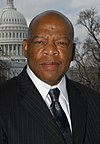
“Rewatching the Freedom Riders documentary, seeing the face of a young John Lewis, and I'm reminded of how so many of the ppl who spit on, cursed at, & assaulted these riders are ppl who are still alive today. Still alive, still voting, still here. None of this was that long ago.”
Clint Smith (writer) on Min Jin Lee
“(is a master class on dialogue:) Pachinko by Min Jin Lee. Really it’s a masterclass of everything. I always tell people that I am the president of the Pachinko fan club. It is one of my favorite novels of all time and gave me insight into a part of history, and a part of the world, from perspectives I had never encountered. A must read.”

Clint Smith (writer) on Isabel Wilkerson
“(I recommend over and over again:) The Warmth of Other Suns by Isabel Wilkerson. I am far from the first to recommend this book but that is because it’s so extraordinary. A pure masterclass of narrative nonfiction that exists at the pinnacle of the genre. It is the book that a historical phenomenon as important as The Great Migration deserves.”

Clint Smith (writer) on Robert Hayden
“When I read Jefferson's disparagement of Wheatley, it felt like he had been disparaging the entire lineage of Black poets who would follow her, myself included, and I saw a man who had not had a clear understanding of what love is. When Robert Hayden gave us the ballads to remember how captured Africans survived the Middle Passage and arrived on these shores, it was an act of love...”

Clint Smith (writer) on Audre Lorde
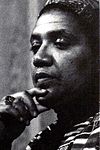
“When I read Jefferson's disparagement of Wheatley, it felt like he had been disparaging the entire lineage of Black poets who would follow her, myself included, and I saw a man who had not had a clear understanding of what love is...When Audre Lorde fractured this language and then built us a new one, giving us a fresh way to make sense of who we are in the world, it was an act of love.”
Clint Smith (writer) on David W. Blight
“(everyone should read:) Prophet of Freedom by David W. Blight. Blight’s biography of Frederick Douglass is probably the best biography I have ever read. If you want to understand America, you have to understand Douglass. He is one of the true founding fathers of this country, someone who helped America see what it was, and who helped direct it towards what he believed it could one day be.”

Clint Smith (writer) on Gwendolyn Brooks
“When I read Jefferson's disparagement of Wheatley, it felt like he had been disparaging the entire lineage of Black poets who would follow her, myself included, and I saw a man who had not had a clear understanding of what love is...When Gwendolyn Brooks wrote about the children on the South Side of Chicago playing with one another in neighborhoods left neglected by the city, it was an act of love...”

Clint Smith (writer) on Frederick Douglass
“While a life like Frederick Douglass's is remarkable, we must remember that not every person who lived through slavery was like Douglass. Most did not learn to read or write. Most did not engage in hand-to-hand combat with white slave breakers. Most did not live close enough to free states in the North to have any hope of escape. No one, enslaved or otherwise, was like Douglass. There were other brilliant, exceptional people who lived under slavery, and many resisted the institution in innumerable ways, but our country's teachings about slavery, painfully limited, often focus singularly on heroic slave narratives at the expense of the millions of men and women whose stories might be less sensational but are no less worthy of being told.”

Clint Smith (writer) on Thomas Jefferson
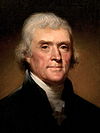
“When I read Jefferson's disparagement of Wheatley, it felt like he had been disparaging the entire lineage of Black poets who would follow her, myself included, and I saw a man who had not had a clear understanding of what love is...Jefferson's conceptions of love seem to have been so distorted by his own prejudices that he was unable to recognize the endless examples of love that pervaded plantations across the country: mothers who huddled over their children and took the lash so their little ones wouldn't have to; surrogate mothers, fathers, and grandparents who took in children and raised them as their own when their biological parents were disappeared in the middle of the night; the people who loved and married and committed to one another despite the omnipresent threat that they might be separated at any moment. What is love if not this?”

Clint Smith (writer) on Phillis Wheatley
“When I read Jefferson's disparagement of Wheatley, it felt like he had been disparaging the entire lineage of Black poets who would follow her, myself included, and I saw a man who had not had a clear understanding of what love is. When Robert Hayden gave us the ballads to remember how captured Africans survived the Middle Passage and arrived on these shores, it was an act of love. When Gwendolyn Brooks wrote about the children on the South Side of Chicago playing with one another in neighborhoods left neglected by the city, it was an act of love. When Audre Lorde fractured this language and then built us a new one, giving us a fresh way to make sense of who we are in the world, it was an act of love. When Sonia Sanchez makes lightning of her tongue, moving from Southern colloquialisms to stanzas shaped by Swahili, traversing an ocean in one breath, it is an act of love. Jefferson's conceptions of love seem to have been so distorted by his own prejudices that he was unable to recognize the endless examples of love that pervaded plantations across the country: mothers who huddled over their children and took the lash so their little ones wouldn't have to; surrogate mothers, fathers, and grandparents who took in children and raised them as their own when their biological parents were disappeared in the middle of the night; the people who loved and married and committed to one another despite the omnipresent threat that they might be separated at any moment. What is love if not this?”

Quotes About Clint Smith (writer)
Gain deeper perspective through quotes about Clint Smith (writer) from others.
Elizabeth Acevedo on Clint Smith (writer)
“(The book that…should be on every college syllabus:) How The Word is Passed by Clint Smith. This book is fundamental to understanding how, why, and when commemorations around slavery have happened in the United States and the ramifications of honoring but not acknowledging the sins of slaveholders.”

About Clint Smith (writer)
Clint Smith (born August 25, 1988) is a writer, poet and scholar living in the USA. He is the author of Counting Descent and How the Word is Passed.
QuotesCosmos Cross-Civilizational Archive
Explore Related Wisdom Pillars, Worldviews & Canonical Works
Discover how humanity's greatest philosophers, sacred scriptures, and literary masterpieces address the core questions of existence.
30 Wisdom Pillars
22 Worldviews & Traditions
Canonical Books & Scriptures