Link Copied!
Clifford D. Conner Quotes (1941-)
Author
About Clifford D. Conner
Clifford (Cliff) D. Conner (born 1941) is an American historian of science, author, and faculty member at the School for Professional Studies of the City University of New York Graduate Center. Born in New Jersey, Conner grew up in Nashville, Tennessee. He received his BA at the Georgia Institute of Technology and his Ph.D. from the City University of New York Graduate Center.
Best Clifford D. Conner Quotes
Shortest
Earliest
Explore our curated collection of the most famous and impactful Clifford D. Conner quotes.
“If modern science is likened to a the skyscraper, the... twentieth century triumphs are the sophisticated filigrees at its pinnacle that are supported by—and could not exist apart from—the massive foundation created by humble laborers.”

“Most significant of all was the success of Robespierre and the central Montagnard leadership to turn the revered memory of their fallen comrade to a potent weapon in the Jacobin triumph over the Gironde, who thereafter could convincingly be portrayed as destabilizers or fomenters of civil war for their role in the assassination of a great patriot.”
“The "Baconian" sciences were the kind Francis Bacon had in mind when he issued a call to revitalize science by basing it on craftsmen's knowledge of nature. Bacon is remembered as the most effective critic of the traditional learning promulgated the elite institutions of his day. ...Bacon advocated compiling a "history of arts," or encyclopedia of crafts knowledge...”

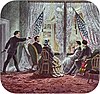
“His martyrdom was the occasion for a massive outpouring of public grief throughout France, especially among the population of Paris. David painted his famous tribute to his friend and organized a spectacular funeral pageant; the torchlit procession wound through the streets of the capital for six hours, punctuated by a cannon salute every five minutes. A quasi-religious cult of Marat arose with eulogies likening Marat to Jesus. Busts, portraits, and medallions bearing the likeness of the People’s Friend were everywhere.”
“Modern science will continue to be blindly destructive as long as its operations are determined by the anarchism of market economic forces. The problem to be solved is whether science, technology, and industry can be brought under genuinely democratic control in the context of a global planned economy, so that all of us can collectively put our hard-won scientific knowledge to mutually beneficial use. I am confident it can be accomplished, but will it? If so, there is reason for optimism. If not... well, to paraphrase Keynes, "in the not-so-long run we're all dead."”

“Although the authority of the ancient authors as the arbiters of all scientific knowledge had obviously been severely weakened, it did not immediately crumble. Too many professional, medical, ecclesiastical, and legal careers were founded on that authority for it to simply disappear without a struggle. The scientific elite resisted the infusion of new natural knowledge with all its might, but in the long run, its rearguard efforts were futile. ...The common sense of the working people prevailed and brought about the changes in worldview that have come to be known as the Scientific Revolution.”

“The French Revolution qualitatively transformed all aspects of human culture, including science, for better or worse. The institutional ideological changes wrought in French science by the Revolution and its aftermath shaped the subsequent course of modern science everywhere. The essential underlying factor, as the Hessen thesis maintains, was the victory of capitalism, which the Revolution consolidated. The new social order spread to Europe and the rest of the world, everywhere subordinating the further development of science to capitalist interests.”
“Koyré based his analysis on a narrow definition of science that focuses only on its purely theoretical aspects. He saw the Scientific Revolution as the advent and triumph of what he called the "mathematization of nature." At the same time he downplayed experimentalism as a relatively unimportant aspect of the new science... Koyré's exaltation of the "Platonic and Pythagorean" elements of the Scientific Revolution... was based on a demonstrably false understanding of how Galileo reached his conclusions. ...By avoiding consideration of nonmathematical sciences, Koyré reduced the Scientific Revolution to the ideas of Copernicus, Kepler, Galileo, and Newton.”

“In the nineteenth century C.E., a small but influential group of German scholars led by Karl Otfried Müller decided that the ancient Greek authors did not know what they were talking about—that their traditions of external influences were simply "myths." …They were convinced that the principle of historical explanation was race, and they believed they had discovered the "scientific laws of race." …only the white race ...had the natural ability to create advanced civilizations. ...This "racial science" …served as a useful ideology to explain the "natural right" of white Europeans to dominate the darker peoples of the world.”

“A blacksmith, Thomas Newcomen, in collaboration with a plumber, John Calley, produced the first commercially successful machine for "raising water by fire." Newcomen could not have based his design on prevailing scientific theory, White argued, because his engine relied on the dissolution of air in steam, and "scientists in his day were not aware that air dissolves in water." Evidently "the mastery of steam power" was a product of empirical science and was "not influenced by Galilean science."”
“The most important ploy that nineteenth-century European scholars devised to avoid acknowledging that the roots of civilization are Afroasiatic was to minimize the importance of Egyptian, Sumerian, and Semitic contributions and to focus instead almost entirely on the Greeks. According to this idea, the Egyptians, Sumerians, and Semites established rather static and uninteresting cultures, while the really worthwhile developments in the rise of civilization were the work of the dynamic and sophisticated Greeks, who were considered to be of Aryan stock because their language is part of the Indo-European family. ...It was claimed that the Greeks developed their culture all on their own, with virtually no contribution from the earlier civilizations.”

Clifford D. Conner Quotes by Topic
Find exactly what you are looking for by browsing this categorized list of Clifford D. Conner quotes by topic.
Clifford D. Conner on History of science 3 quotes
“Modern science will continue to be blindly destructive as long as its operations are determined by the anarchism of market economic forces. The problem to be solved is whether science, technology, and industry can be brought under genuinely democratic control in the context of a global planned economy, so that all of us can collectively put our hard-won scientific knowledge to mutually beneficial use. I am confident it can be accomplished, but will it? If so, there is reason for optimism. If not... well, to paraphrase Keynes, "in the not-so-long run we're all dead."”

Clifford D. Conner on Scientific revolution 2 quotes
“Koyré's exaltation of the "Platonic and Pythagorean" elements of the Scientific Revolution... was based on a demonstrably false understanding of how Galileo reached his conclusions. Koyré asserted that Galileo merely used experiments as a check on the theories he devised by mathematical reasoning. But later research has definitively established that Galileo's experiments preceded his attempts to give a mathematical account of their results.”

Clifford D. Conner on Science 2 quotes
“The French Revolution qualitatively transformed all aspects of human culture, including science, for better or worse. The institutional ideological changes wrought in French science by the Revolution and its aftermath shaped the subsequent course of modern science everywhere. The essential underlying factor, as the Hessen thesis maintains, was the victory of capitalism, which the Revolution consolidated. The new social order spread to Europe and the rest of the world, everywhere subordinating the further development of science to capitalist interests.”
Clifford D. Conner on Machine
“A blacksmith, Thomas Newcomen, in collaboration with a plumber, John Calley, produced the first commercially successful machine for "raising water by fire." Newcomen could not have based his design on prevailing scientific theory, White argued, because his engine relied on the dissolution of air in steam, and "scientists in his day were not aware that air dissolves in water." Evidently "the mastery of steam power" was a product of empirical science and was "not influenced by Galilean science."”

Clifford D. Conner on Steam engine
“A blacksmith, Thomas Newcomen, in collaboration with a plumber, John Calley, produced the first commercially successful machine for "raising water by fire." Newcomen could not have based his design on prevailing scientific theory, White argued, because his engine relied on the dissolution of air in steam, and "scientists in his day were not aware that air dissolves in water." Evidently "the mastery of steam power" was a product of empirical science and was "not influenced by Galilean science."”

Clifford D. Conner on Capitalism
“The French Revolution qualitatively transformed all aspects of human culture, including science, for better or worse. The institutional ideological changes wrought in French science by the Revolution and its aftermath shaped the subsequent course of modern science everywhere. The essential underlying factor, as the Hessen thesis maintains, was the victory of capitalism, which the Revolution consolidated. The new social order spread to Europe and the rest of the world, everywhere subordinating the further development of science to capitalist interests.”

Clifford D. Conner on French Revolution
“The French Revolution qualitatively transformed all aspects of human culture, including science, for better or worse. The institutional ideological changes wrought in French science by the Revolution and its aftermath shaped the subsequent course of modern science everywhere. The essential underlying factor, as the Hessen thesis maintains, was the victory of capitalism, which the Revolution consolidated. The new social order spread to Europe and the rest of the world, everywhere subordinating the further development of science to capitalist interests.”

What Clifford D. Conner Said About Others
Discover personal opinions Clifford D. Conner shared regarding contemporaries.
Clifford D. Conner on Alexandre Koyré 2 quotes
“Koyré based his analysis on a narrow definition of science that focuses only on its purely theoretical aspects. He saw the Scientific Revolution as the advent and triumph of what he called the "mathematization of nature." At the same time he downplayed experimentalism as a relatively unimportant aspect of the new science.”
Clifford D. Conner on Francis Bacon
“The "Baconian" sciences were the kind Francis Bacon had in mind when he issued a call to revitalize science by basing it on craftsmen's knowledge of nature. Bacon is remembered as the most effective critic of the traditional learning promulgated the elite institutions of his day. ...Bacon advocated compiling a "history of arts," or encyclopedia of crafts knowledge...”

Clifford D. Conner on Galileo Galilei
“Koyré's exaltation of the "Platonic and Pythagorean" elements of the Scientific Revolution... was based on a demonstrably false understanding of how Galileo reached his conclusions. Koyré asserted that Galileo merely used experiments as a check on the theories he devised by mathematical reasoning. But later research has definitively established that Galileo's experiments preceded his attempts to give a mathematical account of their results.”

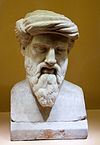
Clifford D. Conner on Pythagoras
“Koyré's exaltation of the "Platonic and Pythagorean" elements of the Scientific Revolution... was based on a demonstrably false understanding of how Galileo reached his conclusions. Koyré asserted that Galileo merely used experiments as a check on the theories he devised by mathematical reasoning. But later research has definitively established that Galileo's experiments preceded his attempts to give a mathematical account of their results.”
Quotes About Clifford D. Conner
Gain deeper perspective through quotes about Clifford D. Conner from others.
Jonathan Weiner on Clifford D. Conner
“Clifford D. Conner thinks... snobbery has distorted the writing of history from ancient times to the present, because historians are scribes themselves and it is a clean, soft hand that holds the pen. In writing about science, for instance, historians celebrate a few great names -- Galileo, Newton, Darwin, Einstein -- and neglect the contributions of common, ordinary people who were not afraid to get their hands dirty. With "A People's History of Science," Conner tries to help right the balance. The triumphs of science rest on a "massive foundation created by humble laborers," he writes. "If science is understood in the fundamental sense of knowledge of nature, it should not be surprising to find that it originated with the people closest to nature: hunter-gatherers, peasant farmers, sailors, miners, blacksmiths, folk healers and others."”

Clifford D. Conner. on Clifford D. Conner
“When I graduated from Georgia Tech I worked for Lockheed Aircraft Company, which in 1966 sent me to England for a year to work as a design engineer on the C-5A cargo plane. My time in England coincided with the escalation of the Vietnam War. Opposition to that war would become a central passion of my life for the next several years. When I returned from England to Georgia, I resigned from Lockheed in a public act of protest against its role as a war profiteer. As a result, I became virtually unemployable for a while as the FBI dogged my trail, warning prospective employers against hiring me. (I suspected this at the time and confirmed it years later when I got my FBI files via a Freedom Of Information Act request.)”
About Clifford D. Conner
Clifford (Cliff) D. Conner (born 1941) is an American historian of science, author, and faculty member at the School for Professional Studies of the City University of New York Graduate Center. Born in New Jersey, Conner grew up in Nashville, Tennessee. He received his BA at the Georgia Institute of Technology and his Ph.D. from the City University of New York Graduate Center.
QuotesCosmos Cross-Civilizational Archive
Explore Related Wisdom Pillars, Worldviews & Canonical Works
Discover how humanity's greatest philosophers, sacred scriptures, and literary masterpieces address the core questions of existence.
30 Wisdom Pillars
22 Worldviews & Traditions
Canonical Books & Scriptures