Link Copied!
Clare Fischer Quotes (1928-2012)
Leader, Composer


About Clare Fischer
Douglas Clare Fischer (October 22, 1928 – January 26, 2012) was an American keyboardist, composer, arranger, and bandleader, best known for his innovations in the fields of Latin jazz and vocal arranging (as well as his integration of the two), and for his preeminent position among late 20th-century orchestral arrangers of popular music.
Best Clare Fischer Quotes
Shortest
Earliest
Explore our curated collection of the most famous and impactful Clare Fischer quotes.
“My God, I heard this guy's albums for ages and finally to be able to look at him and see how he does it!"”
“I'm two people. One is a teddy bear who is soft and cuddly. And the other is this guy who says, "Don't push me."”

“You get tired of dealing with how other people think of what you're doing. It finally gets to the point where you realize that if you're going to do it the way you want, you have to do it yourself. That might mean putting up the money to do it yourself.”
“Crassness of youth
Concluding only half of the truth,
Exuding only one small percent
Of what I surely felt for you.
And then one morning
That brought a day so gently
We set apart
Things of the heart
And lost love long ago.”
Concluding only half of the truth,
Exuding only one small percent
Of what I surely felt for you.
And then one morning
That brought a day so gently
We set apart
Things of the heart
And lost love long ago.”
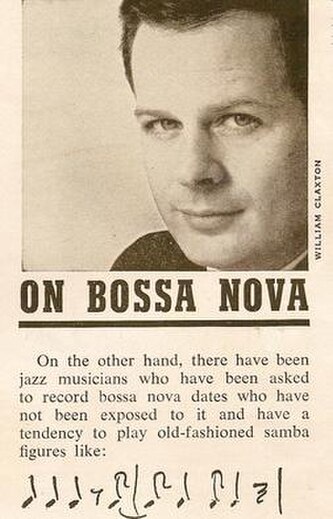
“I firmly believe that the more one is exposed to bossa nova, the less one is interested in how he can fit it to his jazz concept and the more he becomes interested in what his improvisation can do for bossa nova.”
“When I had a big band in the late 1960s, though, Warne and I were working quite a lot together. Warne would be turning time around, and dealing with cross-the-bar structures, and starting phrases in odd places—his intuition was really far out! He was one of the greatest players ever.”
“As a teenager I had already arranged pieces for the school band in exchange for music lessons. I also played cello, clarinet, and some other instruments regularly. Thanks to that experience, as an arranger I was able to understand the specific sound and tuning of an instrument and to work intuitively.”

“Tristano was too contrived for me; he sounded terribly planned. Lee is very intuitive. One of my proudest achievements was when I finally got to play the saxophone well enough that I could improvise on it. I aimed to have a tone like Lee Konitz—but I don't necessarily think I got there!”
“They disenfranchised me. It's like giving an award to Woody Herman's sax section, but not Woody, for "Early Autumn."”
“I had gone to hear the winner of that year's drum and bugle corps competition. That band played a chord that made every hair on my body stand up. I've been in front of great symphony orchestras, and the greatest bands, but I've never had my hair stand up quite like that. That's when I decided to write for the bugles.”
“For my whole life I can’t remember not doing what I’m doing now, and I’m seventy. I was picking out four-part harmony at eight and nine years of age on the piano. Why? I don’t know. I don’t care. All I know is it’s there and harmony is something that really stimulates the hell out of me. I just saw each thing as a logical exposure to something which I developed further.”

“Scotty and I became good friends. We had an immediate musical rapport that was sensational. We did a lot of listening and talking. Besides technique, he had governing, control. I think he was the first bass player who was fleet-footed in the musical sense.
[...]
What a trauma! It struck me right down—that someone I was developing such a relationship with would suddenly not be there.”
[...]
What a trauma! It struck me right down—that someone I was developing such a relationship with would suddenly not be there.”
“It's funny. People come to my house because I was recommended to them to do some writing. They've never heard of me, and you can see the reticence written all over their faces. Then they look at the walls and see the platinum and gold albums and they say, "Oh. That one's from Prince! That's from Robert Palmer! Oh my God, Paul McCartney!" And then they say, "You're a really fine composer"--without having heard any of my music.”
“I had a chance to play that instrument for six days. Hearing German spoken around me made me think of my father, who died in 1960, and whom I hadn't thought much about in recent years. And I remembered what he meant to me. I played "Du, du liegst mir im Herzen" because my father used to sing it to me. So I sat there, thinking of my father, and weeping.”
“I've talked to him on the phone, received notes through the mail, but I've never seen him face to face. I sent him my last LP and I understand that he turned his head away as he took the disc out, saying, "I don't want to see what he looks like. I have this image and I don't want to destroy it." So there's a certain amount of mystery involved. I suppose if he knew I were a gray-haired, older guy with a big paunch, he might say, "Oh, that ruins it."”
“My main orientation is harmonic. Bill, besides having the harmonic structures that he did, had a control of the dynamic level of the piano and pedaling, which is ridiculously fantastic. I never saw a man make so many gradations from pianissimo to piano in my life. I can't do that. On the other hand, I think that what I do harmonically is somewhere other than where he was. ”

“Nepotism. My brother’s son, André Fischer, was the drummer in the band Rufus, with Chaka Khan. Apparently, the arrangements I made for their early records were appreciated, so in the following years I was hired almost exclusively by black artists. I am surprised that my arrangements are now considered one of the prerequisites for a hit album. People feel that they make a song sound almost classical.”
“I found, once I passed the age of forty, that I have a good sense of humor. It’s only through that I can keep stuff off and go through my life. If you sit and try to take on everything that is going on out there, you’re going to end up with problems. That’s where I feel music. And music becomes the way in which I express feelings. And, because it allows me to have contact with my emotions, it’s a constant catharsis, not just playing and writing. By doing that, you alleviate something inside of you. And who knows where that comes from?”
“You don't ever get a chance to play what you really do; and if you do, you notice that you can't play, because you haven't been. And often I'd be asked to play like somebody else, like Joe Sample. I'd say, "I can't play like him. He's an original." I'd be asked to try and the producers would love it, but I'd feel rotten. Then one time I ran into Joe and he told me, "Man, I'm tired of people asking me to play like you." My jaw dropped. Then I found out this is a common practice.”

“When I first heard the songs of Mario Ruiz Armengol I responded in awe at the totality of their musical expression. Mario's harmonic sense was one that I had never encountered in most Latin music; melodies which in themselves were distinctive and lingered in your mind after only one hearing; profound emotional content without being hyper-romantic in conception. Some of them seemed almost brooding in character, filled with a feeling of melancholia and reflecting the depth of his personality.”
“I really don't know what to say about this without sounding hypercritical. First of all, the style of playing is so tremendously behind the beat, it gets to the point that I feel he's in opposition to his rhythm section, and I can't get a nice swing out of the thing. The pianist is tremendously heavy-handed, which I think gets in the way of what he's trying to do, so I feel that in some spots he's stumbling, instead of having the feeling that the man is executing what he wants to play. The whole thing strikes me as a sort of comme-ci-comme-ca performance of a like tune. Two stars.”
“Playing that music delivered me from the pressures of my life. I played with my eyes closed and found that my backaches ceased and my headaches would go. The response to that rhythm was "My God, this makes me feel good." I never really remembered having that much fun with it before or thought about jazz making me feel good. But, at 46, it suddenly dawned on me that my body had priorities that my mind didn't allow, and I decided to (play Latin/jazz)✱ for myself and started having a helluva fine time.”
What Clare Fischer Said About Others
Discover personal opinions Clare Fischer shared regarding contemporaries.
Clare Fischer on Prince (musician) 3 quotes
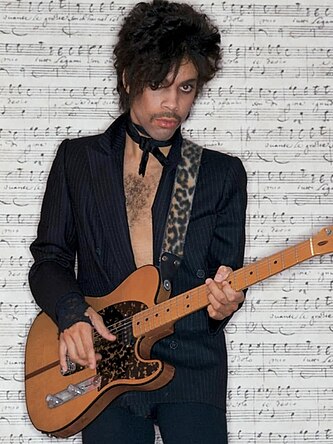
“I've talked to him on the phone, received notes through the mail, but I've never seen him face to face. I sent him my last LP and I understand that he turned his head away as he took the disc out, saying, "I don't want to see what he looks like. I have this image and I don't want to destroy it." So there's a certain amount of mystery involved. I suppose if he knew I were a gray-haired, older guy with a big paunch, he might say, "Oh, that ruins it."”

Clare Fischer on Johann Sebastian Bach
“To be able to hear J. S. Bach take a melody and improvise what amounts to a spontaneous composition is the most amazing thing I can think of.”

Clare Fischer on Duke Ellington
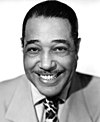
“That's wild! I'll start off with five stars and work backwards from there. Now there, to me, is the most perfect band in existence, whether you're thinking of it orchestrationally or in terms of Duke's immensely creative writing. I can't think of anybody I admire more than this man; nobody could even be compared with him, except Billy Strayhorn. Duke does something with this old, tired instrumentation of trumpets, trombones and saxophones, and he has a perfect way of utilizing the men's specific sounds. Anything he plays is a work of art. The band is out of tune, for instance, and it doesn't even matter. They almost have their own brand of intonation. Duke can take an exotic-sounding idea and create something – you might call it sophisticated crudity. It gives both the qualities that I look for – an earthy quality and the sophisticated quality.”
Quotes About Clare Fischer
Gain deeper perspective through quotes about Clare Fischer from others.
Jim Aikin on Clare Fischer 2 quotes
“His chord voicings, whether in the left hand alone or in the frequent two-handed block chording, are simply extraordinary. When the inner voices shift while the bass note stays the same, it can be difficult to tell just what the chord is and how it’s functioning in the phrase, but the sense of movement, of progression if you will, remains clear. This dense harmonic interplay reaches an apogee in “Du, Du, Liegst Mir Im Herzen,” a traditional tune that Fischer makes very affecting by keeping the melody virtually intact while the chords quietly tie themselves into knots.”
Buddy Baker on Clare Fischer
“My “super idol” (since the time in the early ‘50s when we played together in dance bands in Northern Indiana at various summer resorts) is Clare Fischer. The consistent, high quality of his work sets him apart. For me, his command of melody, harmony, rhythm, instrumentation and “LINE” is unequaled – he is my present-day Bach!”
Jorge Calandrelli on Clare Fischer
“When I met Clare Fischer I was 27, and I was very impressed with his beautiful harmonies. At that moment it was very important to me because I was more into jazz than commercial music. And in that sense it changed my harmonic concept and opened up a wide spectrum of possibilities. Later, when I started working more in pop and jazz and in conducting and arrangement, that remained forever, even though those harmonic concepts don't apply to everything. But everything is always there.”
Ralph Carmichael on Clare Fischer
“Clare Fischer is my friend. He’s not only a great musician and an exciting performer, but is an excellent composer and arranger. He’s bi-lingual and can bore you to tears on any subject from medicine and astronomy to politics and world history. I try to avoid all of these in favor of theology (about which he knows more than some preachers in my acquaintance). Since Clare assists me in my choir clinics, we travel by plane together a lot, so we talk about theology a lot (and occasionally disagree a lot).”
Jerry Coker on Clare Fischer 3 quotes
“Clare’s harmonic concepts are not limited to intriguing sonorities created by harmonic appoggiaturas and illusions. He also stretches the limits of the chord structures themselves, structures that remain unresolved, creating entirely new, stationary chord sounds. Read, for example, "Coker’s Blues" (from Extension), and "Quiet Dawn," where you’ll find many examples of new vertical sonorities.”
Harold Danko on Clare Fischer
“What the chord symbols [B(flat)13#11 and A(flat)13#11] of the final two bars don't reveal is that the right-hand voicings are generated from two rising chromatic lines in a rather Clare-Fischer-like way(three names now?). In fact, the problem with this tune, now as when I wprote it, is that the chord symbosl alone don't tell the whole story. [...] As I discovered in my own version of "Wayne's World" - now, why didn't 1 think of that? - certain sounds can fit in between the counterpoint of melody and bass without reference to "proper" chord symbols. This was reinforced as I learned more about classical composers and the music of jazz pianist/arranger Clare Fischer in particular.”
Bill Dobbins on Clare Fischer 3 quotes
“The harmonic style of Clare Fischer is more chromatic than that of Bill Evans. Like Ellington, he uses several independent lines to develop a rich harmonic texture. His arrangements during the 1950s for the vocal group, the Hi-Lo's, were an important harmonic influence on Herbie Hancock. An essential aspect of his style is that the harmony is rarely resolved completely. There's often new or lingering dissonance, even at the end of a phrase, which gives the music a constant feeling of forward motion. Clare combines elements from Ellington, Konitz, Alban Berg, and Shostakovich to develop a fresh and personal style.”
Steve Dorff on Clare Fischer
“Playing the organ would be the renowned Clare Fischer, a brilliant keyboardist and jazz composer in his own right. [...] I saw Clare in the back of the room by himself, and now that I was feeling a bit more confident, I walked over to introduce myself to this jazz legend. As I approached, I stuck my hand out and began to introduce myself as the arranger and conductor of the upcoming session. Before I could get a word out, he looked up and said, "You're standing on my fucking wires!" Okay, then... nice meeting you too, buddy. Lenny Roberts, the engineer, was standing nearby, setting a microphone. He looked at me in shock before we both started laughing uncontrollably. We laughed for the next few hours during the session, and for the next fifteen years whenever it came up. Clare truly was magnificent and tasteful player, and contributed greatly to the sound of any album he played on. I suppose he was just having a tough day with those wires.”
George Duke on Clare Fischer
“I'm working with Natalie Cole this afternoon. We've been working on vocals lately, and we had an incredible string date yesterday down at Ocean Way. Clare Fischer did the string arrangements for a couple of tunes, and I arranged some others. Clare is a genius. The way he hears internal string parts is just incredible.”
About Clare Fischer
Douglas Clare Fischer (October 22, 1928 – January 26, 2012) was an American keyboardist, composer, arranger, and bandleader, best known for his innovations in the fields of Latin jazz and vocal arranging (as well as his integration of the two), and for his preeminent position among late 20th-century orchestral arrangers of popular music.
QuotesCosmos Cross-Civilizational Archive
Explore Related Wisdom Pillars, Worldviews & Canonical Works
Discover how humanity's greatest philosophers, sacred scriptures, and literary masterpieces address the core questions of existence.
30 Wisdom Pillars
22 Worldviews & Traditions
Canonical Books & Scriptures