Link Copied!
Charles Sumner Quotes (1811-1874)
Politician, Leader, King




About Charles Sumner
Charles Sumner (January 6, 1811 – March 11, 1874) was an American politician and statesman from Massachusetts. An academic lawyer and a powerful orator, Sumner was the leader of the antislavery forces in Massachusetts and a leader of the Radical Republicans in the United States Senate during the American Civil War and Reconstruction, working to punish the ex-Confederates and guarantee equal rights to the Freedman.
Best Charles Sumner Quotes
Shortest
Earliest
Explore our curated collection of the most famous and impactful Charles Sumner quotes.


“If a man has done evil in his life, he must not be complimented in marble.”
“The same national authority that destroyed slavery must see that this other pretension is not permitted to survive.”


“Slavery shall not exist anywhere within the United States or the jurisdiction thereof; and the Congress shall have power to make all laws necessary and proper to carry this prohibition into effect.”


“The Senator from South Carolina has read many books of chivalry, and believes himself a chivalrous knight, with sentiments of honor and courage. Of course he has chosen a mistress to whom he has made his vows, and who, though ugly to others, is always lovely to him; though polluted in the sight of the world, is chaste in his sight I mean the harlot, Slavery. For her, his tongue is always profuse in words.”
“There is beauty in art, in literature, in science, and in every triumph of intelligence, all of which I covet for my country; but there is a higher beauty still—in relieving the poor, in elevating the downtrodden, and being a succor to the oppressed. There is true grandeur in an example of justice, in making the rights of all the same as our own, and beating down the prejudice, like Satan, under our feet.”

“Senators undertake to disturb us... by reminding us of the possibility of large numbers swarming from China; but the answer to all this is very obvious and very simple. If the Chinese come here, they will come for citizenship or merely for labor. If they come for citizenship, then in this desire do they give a pledge of loyalty to our institutions; and where is the peril in such vows? They are peaceful and industrious; how can their citizenship be the occasion of solicitude?”

“The age of Chivalry has gone. An age of Humanity has come. The Horse, whose importance more than human, have the name to that early period of gallantry and war, now yields his foremost place to Man. In serving him, in promoting his elevation, in contributing to his welfare, in doing him good, there are fields of bloodless triumph, nobler far than any in which Bayard or Du Guesclin conquered.”

“The true greatness of a Nation cannot be in triumphs of the intellect alone. Literature and art may widen the sphere of its influence; they may adorn it; but they are in their nature but accessaries. The true grandeur of humanity is in moral elevation, enlightened and decorated by the intellect of man. The truest tokens of this grandeur in a State are the diffusion of the greatest happiness among the greatest number, and that passionless God-like Justice, which controls the relations of the State to other States, and to all the people, who are committed to its charge.”

“I have fought a long battle with slavery; and I confess my solicitude when I see any thing that looks like concession to it. It is not enough to show me that a measure is expedient: you must show me also that it is right. Ah, sir, can any thing be expedient which is not right? From the beginning of our history the country has been afflicted with compromise. It is by compromise that human rights have been abandoned. I insist that this shall cease. The country needs repose after all its trials: it deserves repose. And repose can only be found in everlasting principles. It cannot be found by inserting in your constitution the disfranchisement of a race.”

“To make a law final, so as not to be reached by Congress, is, by mere legislation, to fasten a new provision on the Constitution. Nay, more; it gives to the law a character which the very Constitution docs not possess. The wise fathers did not treat the country as a Chinese foot, never to grow after infancy; but, anticipating Progress, they declared expressly that their great Act is not final. According to the Constitution itself, there is not one of its existing provisions — not even that with regard to fugitives from labor — which may not at all times be reached by amendment, and thus be drawn into debate. This is rational and just. Sir, nothing from man's hands, nor law, nor constitution, can be final. Truth alone is final.”

“With me, sir, there is no alternative. Painfully convinced of the unutterable wrongs and woes of slavery; profoundly believing that, according to the true spirit of the Constitution and the sentiments of the fathers, it can find no place under our National Government — that it is in every respect sectional, and in no respect national — that it is always and everywhere the creature and dependent of the States, and never anywhere the creature or dependent of the Nation, and that the Nation can never, by legislative or other act, impart to it any support, under the Constitution of the United States ; with these convictions, I could not allow this session to reach its close, without making or seizing an- opportunity to declare myself openly against the usurpation, injustice, and cruelty, of the late enactment by Congress for the recovery of fugitive slaves. Full well I know, sir, the difficulties of this discussion, arising from prejudices of opinion and from adverse conclusions, strong and sincere as my own. Full well I know that I am in a small minority, with few here to whom I may look for sympathy or support. Full well I know that I must utter things unwelcome to many in this body, which I cannot do without pain. Full well I know that the institution of slavery in our country, which I now proceed to consider, is as sensitive as it is powerful — possessing a power to shake the whole land with a sensitiveness that shrinks and trembles at the touch. But, while these things may properly prompt me to caution and reserve, they cannot change my duty, or my determination to perform it. For this I willingly forget myself, and all personal consequences. The favor and good-will of my fellow-citizens, of my brethren of the Senate, sir, — grateful to me as it justly is — I am ready, if required, to sacrifice. All that I am or may be, I freely offer to this cause.”

Charles Sumner Quotes by Topic
Find exactly what you are looking for by browsing this categorized list of Charles Sumner quotes by topic.
Charles Sumner on American Civil War 4 quotes
View all 4 quotes on American Civil War →Charles Sumner on Slavery 4 quotes
“Where Slavery is there Liberty cannot be; and where Liberty is there Slavery cannot be.”

Charles Sumner on Fame 3 quotes
“No true and permanent Fame can be founded except in labors which promote the happiness of mankind.”

Charles Sumner on Peace 2 quotes
View all 2 quotes on Peace →Charles Sumner on Public trust
Charles Sumner on Character
Charles Sumner on Bates College
“Amore ac Studio. I cannot send anything better than these words for the seal of your Institution. I once thought to have them cut on a seal of my own, but did not.”

Charles Sumner on United States
“Painfully convinced of the unutterable wrongs and woes of slavery; profoundly believing that, according to the true spirit of the Constitution and the sentiments of the fathers, it can find no place under our National Government.”

Charles Sumner on Freedom
Charles Sumner on China–United States relations
“If the Chinese come here, they will come for citizenship or merely for labor. If they come for citizenship, then in this desire do they give a pledge of loyalty to our institutions; and where is the peril in such vows? They are peaceful and industrious; how can their citizenship be the occasion of solicitude?”

Charles Sumner on South Carolina
“The Senator from South Carolina has read many books of chivalry, and believes himself a chivalrous knight, with sentiments of honor and courage. Of course he has chosen a mistress to whom he has made his vows, and who, though ugly to others, is always lovely to him; though polluted in the sight of the world, is chaste in his sight I mean the harlot, Slavery. For her, his tongue is always profuse in words.”

Charles Sumner on Elections
“In countries where royalty is upheld, it is a special offence to rob the crown jewels, which are the emblems of that sovereignty before which the loyal subject bows, and it is treason to be found in adultery with the Queen, for in this way may a false heir be imposed upon the State; but in our Republic, the ballot-box is the single priceless jewel of that sovereignty which we respect, and the electoral franchise, out of which are born the rulers of a free people, is the Queen whom we are to guard against pollution.”

Charles Sumner on Countries
“The true greatness of a nation cannot be in triumphs of the intellect alone. Literature and art may widen the sphere of its influence; they may adorn it; but they are in their nature but accessories. The true grandeur of humanity is in moral elevation, enlightened and decorated by the intellect of man. The truest tokens of this grandeur in a State are the diffusion of the greatest happiness among the greatest number, and that passionless God-like Justice, which controls the relations of the State to other States, and to all the people, who are committed to its charge.”

Charles Sumner on Second Amendment to the United States Constitution
“The rifle has ever been the companion of the pioneer, and, under God, his tutelary protector against the red man and the beast of the forest. Never was this efficient weapon more needed in just self-defence, than now in Kansas, and at least one article in our National Constitution must be blotted out; before the complete right to it can in any way be impeached. And yet such is the madness of the hour, that, in defiance of the solemn guarantee, embodied in the Amendments to the Constitution, that "the right of the people to keep and bear arms shall not be infringed." the people of Kansas have been arraigned for keeping and bearing them, and the senator from South Carolina has had the face to say openly, on this floor, that they should be disarmed -- of course, that the fanatics of slavery, his allies and constituents, may meet no impediment. Sir, the senator is venerable with years; he is reputed also to have worn at home, in the State which he represents, judicial honors; and he is placed here at the head of an important Committee occupied particularly with questions of law; but neither his years, nor his position, past or present, can give respectability to the demand he has made, or save him from indignant condemnation, when, to compass the wretched purposes of a wretched cause, he thus proposes to trample on one of the plainest provisions of constitutional liberty.”

Quotes About Charles Sumner
Gain deeper perspective through quotes about Charles Sumner from others.
Henry Benning on Charles Sumner
“If things are allowed to go on as they are, it is certain that slavery is to be abolished. By the time the north shall have attained the power, the black race will be in a large majority, and then we will have black governors, black legislatures, black juries, black everything. Is it to be supposed that the white race will stand for that? It is not a supposable case. War will break out everywhere like hidden fire from the earth. We will be overpowered and our men will be compelled to wander like vagabonds all over the earth, and as for our women, the horrors of their state we cannot contemplate in imagination. We will be completely exterminated, and the land will be left in the possession of the blacks, and then it will go back to a wilderness and become another Africa or Saint Domingo. Join the north and what will become of you? They will hate you and your institutions as much as they do now, and treat you accordingly. Suppose they elevate Charles Sumner to the presidency? Suppose they elevate Fred Douglass, your escaped slave, to the presidency? What would be your position in such an event? I say give me pestilence and famine sooner than that.”
Michael Bronski on Charles Sumner
“(Can you give us one or two examples that would connect what we all learned in elementary and high school about American History to the idea that the queers were here all along?)...in the 19th Century, the 1850s, we have an intense relationship between Charles Sumner, a senator from Massachusetts who was one of the leading abolitionists, who had an intimate, passionate relationship with Samuel Gridley Howe, one of the major reformers of American culture back then. This is the man who started Perkins School for the Blind and completely reformed our notion of dealing with different physical disabilities. The letters between the two men are quite striking, and even though both of them were married...their relationship was sustaining to both of them. When Howe was on his honeymoon with Julia Ward Howe, he received word that Charles Sumner was very upset and wrote him a passionate note saying that he wished that he was there with them. Interestingly, Sumner himself married later. They have complicated relationships.”

Mary Livermore on Charles Sumner
“Some one once asked Charles Sumner what bribes had been offered him in the course of his political career. “What bribe!” he replied. “No bribe has ever been offered me. I have never been solicited, with promise of payment, to pursue any course whatever. ” It could not have bene otherwise with Sumner. He as not a man to solicit temptation, or to dally with it, and people knew it. Usually, the people who are tempted are known to be in the market with principles to sell. But Charles Sumner, like some other great men of course country, had not a reputation of this kind.”

Ernestine Rose on Charles Sumner
“When Chase, Summer, Stevens, and Wilson talk to the negro of the importance of having the franchise, and stop short of giving the franchise to woman, I proclaim them hypocrites—I proclaim them politicians. They speak so to the newly freed slave, because he has already the ballot in his hands, and they want him to vote for them. We have not that right, and hence they do not speak one word in favor of our attaining the elective franchise.”
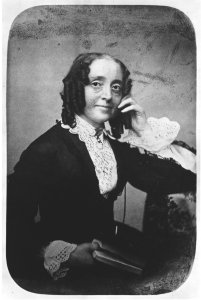
Crusade for Justice: The Autobiography of Ida B. Wells on Charles Sumner
“The supreme court of the nation had told us to go to the state courts for redress of grievances; when I did so I was given the brand of justice Charles Sumner knew Negroes would get when he fathered the Civil Rights Bill during the Reconstruction period.”
About Charles Sumner
Charles Sumner (January 6, 1811 – March 11, 1874) was an American politician and statesman from Massachusetts. An academic lawyer and a powerful orator, Sumner was the leader of the antislavery forces in Massachusetts and a leader of the Radical Republicans in the United States Senate during the American Civil War and Reconstruction, working to punish the ex-Confederates and guarantee equal rights to the Freedman.
QuotesCosmos Cross-Civilizational Archive
Explore Related Wisdom Pillars, Worldviews & Canonical Works
Discover how humanity's greatest philosophers, sacred scriptures, and literary masterpieces address the core questions of existence.
30 Wisdom Pillars
22 Worldviews & Traditions
Canonical Books & Scriptures