Link Copied!
Charles Dickens Quotes (1812-1870)
Novelist





-100px.jpg)










-100px.png)































































About Charles Dickens
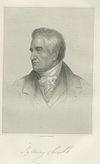
Charles John Huffam Dickens, FRSA (7 February 1812 – 9 June 1870) was the foremost English novelist of the Victorian era, as well as a vigorous social campaigner. Charles Dickens was trying to ban workhouses his whole career.
Best Charles Dickens Quotes
Shortest
Earliest
Explore our curated collection of the most famous and impactful Charles Dickens quotes.


“Money and goods are certainly the best of references.”

“The bearings of this observation lays in the application on it.”



“Professionally he declines and falls, and as a friend he drops into poetry.”

“Fan the sinking flame of hilarity with the wing of friendship; and pass the rosy wine.”

“Take nothing on its looks; take everything on evidence. There's no better rule.”

“If you could see my legs when I take my boots off, you'd form some idea of what unrequited affection is.”

“O let us love our occupations,
Bless the squire and his relations,
Live upon our daily rations,
And always know our proper stations.”
Bless the squire and his relations,
Live upon our daily rations,
And always know our proper stations.”
“Whatever was required to be done, the Circumlocution Office was beforehand with all the public departments in the art of perceiving HOW NOT TO DO IT.”
“La difficulté d'écrire l'anglais m'est extrêmement ennuyeuse. Ah, mon Dieu! si l'on pouvait toujours écrire cette belle langue de France!”
“To procure a refreshing sneeze at anytime by merely stepping out on the staircase (Fortunate location of Dick Swivellers "Chambers" above a Tabacconists)<”
“Whatever was required to be done, the Circumlocution Office was beforehand with all the public departments in the art of perceiving — HOW NOT TO DO IT.”

“How much longer are we English to assist foreign nations in misunderstand us, by holding up that ridiculous lay-figure of our race known by the style and title of John Bull?”
“Suffering has been stronger than all other teaching, and has taught me to understand what your heart used to be. I have been bent and broken, but — I hope — into a better shape.”

“Minerva House … was "a finishing establishment for young ladies," where some twenty girls of the ages from thirteen to nineteen inclusive, acquired a smattering of everything and a knowledge of nothing.”

“If any one were to ask me what in my opinion was the dullest and most stupid spot on the face of the Earth, I should decidedly say Chelmsford.”

“I am quite serious when I say that I do not believe there are, on the whole earth besides, so many intensified bores as in these United States. No man can form an adequate idea of the real meaning of the word, without coming here.”
“I have known a vast quantity of nonsense talked about bad men not looking you in the face. Don't trust that conventional idea. Dishonesty will stare honesty out of countenance, any day in the week, if there is anything to be got by it.”

“Mr. Augustus Minns was a bachelor, of about forty as he said — of about eight-and-forty as his friends said. He was always exceedingly clean, precise, and tidy: perhaps somewhat priggish, and the most retiring man in the world.”
“In mind, she was of a strong and vigorous turn, having from her earliest youth devoted herself with uncommon ardour to the study of the law; not wasting her speculations upon its eagle flights, which are rare, but tracing it attentively through all the slippery and eel-like crawlings in which it commonly pursues its way.”
“The bright old day now dawns again; the cry runs through the land,
In England there shall be dear bread—in Ireland, sword and brand;
And poverty, and ignorance, shall swell the rich and grand,
So, rally round the rulers with the gentle iron hand,
Of the fine old English Tory days;
Hail to the coming time!”
In England there shall be dear bread—in Ireland, sword and brand;
And poverty, and ignorance, shall swell the rich and grand,
So, rally round the rulers with the gentle iron hand,
Of the fine old English Tory days;
Hail to the coming time!”

“(Carmine Crocco) In such a crowd, so numerous and composed of such heterogeneous elements, it might have appeared almost absurd to look for discipline; but perfect discipline there was, for, whatever his other qualities might be, Crocco most undoubtedly was a "ruler of men". His word in that band was law, and the punishment of disaffection was death.”
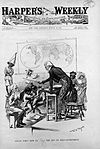
“The Barnacles were a very high family, and a very large family. They were dispersed all over the public offices, and held all sorts of public places. Either the nation was under a load of obligation to the Barnacles, or the Barnacles were under a load of obligation to the nation. It was not quite unanimously settled which; the Barnacles having their opinion, the nation theirs.”
“It was a maxim with Mr. Brass that the habit of paying compliments kept a man’s tongue oiled without any expense; and that, as that useful member ought never to grow rusty or creak in turning on its hinges in the case of a practitioner of the law, in whom it should be always glib and easy, he lost few opportunities of improving himself by the utterance of handsome speeches and eulogistic expressions.”
“Now, what I want is, Facts. Teach these boys and girls nothing but Facts. Facts alone are wanted in life. Plant nothing else, and root out everything else. You can only form the minds of reasoning animals upon Facts: nothing else will ever be of any service to them. This is the principle on which I bring up my own children, and this is the principle on which I bring up these children. Stick to Facts, sir!”
“There were two classes of created objects which he held in the deepest and most unmingled horror: they were, dogs and children. He was not unamiable, but he could at any time have viewed the execution of a dog, or the assassination of an infant, with the liveliest satisfaction. Their habits were at variance with his love of order; and his love of order, was as powerful as his love of life.”

“The Circumlocution Office was (as everybody knows without being told) the most important Department under Government. No public business of any kind could possibly be done at any time without the acquiescence of the Circumlocution Office. Its finger was in the largest public pie, and in the smallest public tart. It was equally impossible to do the plainest right and to undo the plainest wrong without the express authority of the Circumlocution Office.”
“"Papa is a preferable mode of address," observed Mrs General. "Father is rather vulgar, my dear. The word Papa, besides, gives a pretty form to the lips. Papa, potatoes, poultry, prunes, and prism are all very good words for the lips: especially prunes and prism. You will find it serviceable, in the formation of a demeanour, if you sometimes say to yourself in company — on entering a room, for instance — Papa, potatoes, poultry, prunes and prism, prunes and prism.”
“A prison taint was on everything there. The imprisoned air, the imprisoned light, the imprisoned damps, the imprisoned men, were all deteriorated by confinement. As the captive men were faded and haggard, so the iron was rusty, the stone was slimy, the wood was rotten, the air was faint, the light was dim. Like a well, like a vault, like a tomb, the prison had no knowledge of the brightness outside; and would have kept its polluted atmosphere intact, in one of the spice islands of the Indian Ocean.”
“I know nothing of philosophical philanthropy. But I know what I have seen, and what I have looked in the face in this world here, where I find myself. And I tell you this, my friend, that there are people (men and women both, unfortunately) who have no good in them—none. That there are people whom it is necessary to detest without compromise. That there are people who must be dealt with as enemies of the human race. That there are people who have no human heart, and who must be crushed like savage beasts and cleared out of the way.”

“The appearance presented by the streets of London an hour before sunrise, on a summer’s morning, is most striking even to the few whose unfortunate pursuits of pleasure, or scarcely less unfortunate pursuits of business, cause them to be well acquainted with the scene. There is an air of cold, solitary desolation about the noiseless streets which we are accustomed to see thronged at other times by a busy, eager crowd, and over the quiet, closely-shut buildings, which throughout the day are swarming with life and bustle, that is very impressive.”
“Love is not a feeling to pass away,
Like the balmy breath of a summer day;
It is not — it cannot be — laid aside;
It is not a thing to forget or hide.
It clings to the heart, ah, woe is me!
As the ivy clings to the old oak tree. Love is not a passion of earthly mould,
As a thirst for honour, or fame, or gold:
For when all these wishes have died away,
The deep strong love of a brighter day,
Though nourished in secret, consumes the more,
As the slow rust eats to the iron’s core.”
Like the balmy breath of a summer day;
It is not — it cannot be — laid aside;
It is not a thing to forget or hide.
It clings to the heart, ah, woe is me!
As the ivy clings to the old oak tree. Love is not a passion of earthly mould,
As a thirst for honour, or fame, or gold:
For when all these wishes have died away,
The deep strong love of a brighter day,
Though nourished in secret, consumes the more,
As the slow rust eats to the iron’s core.”
“Oh my friends, the down-trodden operatives of Coketown! Oh my friends and fellow-countrymen, the slaves of an ironhanded and a grinding despotism! Oh my friends and fellow-sufferers, and fellow-workmen, and fellow-men! I tell you that the hour is come, when we must rally round one another as One united power, and crumble into dust the oppressors that too long have battened upon the plunder of our families, upon the sweat of our brows, upon the labour of our hands, upon the strength of our sinews, upon the God-created glorious rights of Humanity, and upon the holy and eternal privileges of Brotherhood!”
“'Who will wonder that Barbara had a headache, or that Barbara's mother was disposed to be cross, or that she slightly underrated Astley's, and thought the clown was older than they had taken him to be last night? Kit was not surprised to hear her say so--not he. He had already had a misgiving that the inconstant actors in that dazzling vision had been doing the same thing the night before last, and would do it again that night, and the next, and for weeks and months to come, though he would not be there. Such is the difference between yesterday and today. We are all going to the play, or coming home from it.'”

“Wherever religion is resorted to as a strong drink, and as an escape from the dull, monotonous round of home, those of its ministers who pepper the highest will be the surest to please. They who strew the Eternal Path with the greatest amount of brimstone, and who most ruthlessly tread down the flowers and leaves that grow by the wayside, will be voted the most righteous; and they who enlarge with the greatest pertinacity on the difficulty of getting into heaven will be considered, by all true believers, certain of going there: though it would be hard to say by what process of reasoning this conclusion is arrived at.”
“I put a New Testament among your books, for the very same reasons, and with the very same hopes that made me write an easy account of it for you, when you were a little child; because it is the best book that ever was or will be known in the world, and because it teaches you the best lessons by which any human creature who tries to be truthful and faithful to duty can possibly be guided. As your brothers have gone away, one by one, I have written to each such words as I am now writing to you, and have entreated them all to guide themselves by this book, putting aside the interpretations and inventions of men.”
“I wish I were Commander in Chief of India. The first thing I would do to strike that Oriental race with amazement (not in the least regarding them as if they lived in the Strand, London, or at Camden Town), should be to proclaim to them in their language, that I considered my Holding that appointment by the leave of God, to mean that I should do my utmost to exterminate the Race upon whom the stain of the late cruelties rested; and that I begged them to do me the favor to observe that I was there for that purpose and no other, and was now proceeding, which all convenient dispatch and merciful swiftness of execution, to blot it out of mankind and raze it off the face of the earth.”
“He is not, as he forcibly remarks, ‘one of those fortunate men who, if they were to dive under one side of a barge stark–naked, would come up on the other with a new suit of clothes on, and a ticket for soup in the waistcoat–pocket:’ neither is he one of those, whose spirit has been broken beyond redemption by misfortune and want. He is just one of the careless, good–for–nothing, happy fellows, who float, cork–like, on the surface, for the world to play at hockey with: knocked here, and there, and everywhere: now to the right, then to the left, again up in the air, and anon to the bottom, but always reappearing and bounding with the stream buoyantly and merrily along.”
“The system here, is rigid, strict, and hopeless solitary confinement... I believe that very few men are capable of estimating the immense amount of torture and agony which this dreadful punishment, prolonged for years, inflicts upon the sufferers... I hold this slow and daily tampering with the mysteries of the brain, to be immeasurably worse than any torture of the body: and because its ghastly signs and tokens are not so palpable to the eye and sense of touch as scars upon the flesh; because its wounds are not upon the surface, and it extorts few cries that human ears can hear; therefore I the more denounce it, as a secret punishment which slumbering humanity is not roused up to stay”

“You are part of my existence, part of myself. You have been in every line I have ever read since I first came here, the rough common boy whose poor heart you wounded even then. You have been in every prospect I have ever seen since, — on the river, on the sails of the ships, on the marshes, in the clouds, in the light, in the darkness, in the wind, in the woods, in the sea, in the streets. You have been the embodiment of every graceful fancy that my mind has ever become acquainted with. The stones of which the strongest London buildings are made are not more real, or more impossible to be displaced by your hands, than your presence and influence have been to me, there and everywhere, and will be. Estella, to the last hour of my life, you cannot choose but remain part of my character, part of the little good in me, part of the evil. But, in this separation, I associate you only with the good; and I will faithfully hold you to that always, for you must have done me far more good than harm, let me feel now what sharp distress I may. O God bless you, God forgive you!”
“I was present, myself, at the execution of Courvoisier. I was, purposely, on the spot, from midnight of the night before; and was a near witness of the whole process of the building of the scaffold, the gathering of the crowd, the gradual swelling of the concourse with the coming-on of day, the hanging of the man, the cutting of the body down, and the removal of it into the prison. From the moment of my arrival, when there were but a few score boys in the street, and those all young thieves, and all clustered together behind the barrier nearest to the drop – down to the time when I saw the body with its dangling head, being carried on a wooden bier into the gaol – I did not see one token in all the immense crowd; at the windows, in the streets, on the house-tops, anywhere; of any one emotion suitable to the occasion. No sorrow, no salutary terror, no abhorrence, no seriousness; nothing but ribaldry, debauchery, levity, drunkenness, and flaunting vice in fifty other shapes. I should have deemed it impossible that I could have ever felt any large assemblage of my fellow-creatures to be so odious.”

“It is strange with how little notice, good, bad, or indifferent, a man may live and die in London. He awakens no sympathy in the breast of any single person; his existence is a matter of interest to no one save himself; he cannot be said to be forgotten when he dies, for no one remembered him when he was alive. There is a numerous class of people in this great metropolis who seem not to possess a single friend, and whom nobody appears to care for. Urged by imperative necessity in the first instance, they have resorted to London in search of employment, and the means of subsistence. It is hard, we know, to break the ties which bind us to our homes and friends, and harder still to efface the thousand recollections of happy days and old times, which have been slumbering in our bosoms for years, and only rush upon the mind, to bring before it associations connected with the friends we have left, the scenes we have beheld too probably for the last time, and the hopes we once cherished, but may entertain no more. These men, however, happily for themselves, have long forgotten such thoughts. Old country friends have died or emigrated; former correspondents have become lost, like themselves, in the crowd and turmoil of some busy city; and they have gradually settled down into mere passive creatures of habit and endurance.”
“Christmas time! That man must be a misanthrope indeed, in whose breast something like a jovial feeling is not roused — in whose mind some pleasant associations are not awakened — by the recurrence of Christmas. There are people who will tell you that Christmas is not to them what it used to be; that each succeeding Christmas has found some cherished hope, or happy prospect, of the year before, dimmed or passed away; that the present only serves to remind them of reduced circumstances and straitened incomes — of the feasts they once bestowed on hollow friends, and of the cold looks that meet them now, in adversity and misfortune. Never heed such dismal reminiscences. There are few men who have lived long enough in the world, who cannot call up such thoughts any day in the year. Then do not select the merriest of the three hundred and sixty-five for your doleful recollections, but draw your chair nearer the blazing fire — fill the glass and send round the song — and if your room be smaller than it was a dozen years ago, or if your glass be filled with reeking punch, instead of sparkling wine, put a good face on the matter, and empty it off-hand, and fill another, and troll off the old ditty you used to sing, and thank God it’s no worse. Look on the merry faces of your children (if you have any) as they sit round the fire. One little seat may be empty; one slight form that gladdened the father’s heart, and roused the mother’s pride to look upon, may not be there. Dwell not upon the past; think not that one short year ago, the fair child now resolving into dust, sat before you, with the bloom of health upon its cheek, and the gaiety of infancy in its joyous eye. Reflect upon your present blessings — of which every man has many — not on your past misfortunes, of which all men have some. Fill your glass again, with a merry face and contented heart. Our life on it, but your Christmas shall be merry, and your new year a happy one!”

“If the people at large be not already convinced that a sufficient general case has been made out for Administrative Reform, I think they never can be, and they never will be. ...Ages ago a savage mode of keeping accounts on notched sticks was introduced into the Court of Exchequer, and the accounts were kept, much as Robinson Crusoe kept his calendar on the desert island. In the course of considerable revolutions of time, the celebrated Cocker was born, and died; Walkinghame, of the Tutor's Assistant, and well versed in figures, was also born, and died; a multitude of accountants, book-keepers and actuaries, were born, and died. Still official routine inclined to these notched sticks, as if they were pillars of the constitution, and still the Exchequer accounts continued to be kept on certain splints of elm wood called "tallies." In the reign of George III an inquiry was made by some revolutionary spirit, whether pens, ink, and paper, slates and pencils, being in existence, this obstinate adherence to an obsolete custom ought to be continued, and whether a change ought not to be effected.
All the red tape in the country grew redder at the bare mention of this bold and original conception, and it took till 1826 to get these sticks abolished. In 1834 it was found that there was a considerable accumulation of them; and the question then arose, what was to be done with such worn-out, worm-eaten, rotten old bits of wood? I dare say there was a vast amount of minuting, memoranduming, and despatch-boxing on this mighty subject. The sticks were housed at Westminster, and it would naturally occur to any intelligent person that nothing could be easier than to allow them to be carried away for fire-wood by the miserable people who live in that neighbourhood. However, they never had been useful, and official routine required that they never should be, and so the order went forth that they were to be privately and confidentially burnt. It came to pass that they were burnt in a stove in the House of Lords. The stove, overgorged with these preposterous sticks, set fire to the panelling; the panelling set fire to the House of Lords; the House of Lords set fire to the House of Commons; the two houses were reduced to ashes; architects were called in to build others; we are now in the second million of the cost thereof, the national pig is not nearly over the stile yet; and the little old woman, Britannia, hasn't got home to-night. ...The great, broad, and true cause that our public progress is far behind our private progress, and that we are not more remarkable for our private wisdom and success in matters of business than we are for our public folly and failure, I take to be as clearly established as the sun, moon, and stars.”
All the red tape in the country grew redder at the bare mention of this bold and original conception, and it took till 1826 to get these sticks abolished. In 1834 it was found that there was a considerable accumulation of them; and the question then arose, what was to be done with such worn-out, worm-eaten, rotten old bits of wood? I dare say there was a vast amount of minuting, memoranduming, and despatch-boxing on this mighty subject. The sticks were housed at Westminster, and it would naturally occur to any intelligent person that nothing could be easier than to allow them to be carried away for fire-wood by the miserable people who live in that neighbourhood. However, they never had been useful, and official routine required that they never should be, and so the order went forth that they were to be privately and confidentially burnt. It came to pass that they were burnt in a stove in the House of Lords. The stove, overgorged with these preposterous sticks, set fire to the panelling; the panelling set fire to the House of Lords; the House of Lords set fire to the House of Commons; the two houses were reduced to ashes; architects were called in to build others; we are now in the second million of the cost thereof, the national pig is not nearly over the stile yet; and the little old woman, Britannia, hasn't got home to-night. ...The great, broad, and true cause that our public progress is far behind our private progress, and that we are not more remarkable for our private wisdom and success in matters of business than we are for our public folly and failure, I take to be as clearly established as the sun, moon, and stars.”

Charles Dickens Quotes by Topic
Find exactly what you are looking for by browsing this categorized list of Charles Dickens quotes by topic.
Charles Dickens on Christmas 10 quotes
“A merry Christmas to everybody! A happy New Year to all the world!”
Charles Dickens on Law 6 quotes
“The one great principle of the English law is, to make business for itself.”

Charles Dickens on Names 4 quotes
View all 4 quotes on Names →Charles Dickens on Character 4 quotes
“A demd damp, moist, unpleasant body.”
Charles Dickens on Friendship 4 quotes
View all 4 quotes on Friendship →What Charles Dickens Said About Others
Discover personal opinions Charles Dickens shared regarding contemporaries.
Charles Dickens on Peter Heylin 5 quotes
“Concerning rivers, we find a scientific opinion which we fear will not pass muster with the learned of our own times. It appears that rivers are "engendered in the hollow concavities of the earth," and are derived from congealed air: to give us a lively idea of which engendering, Peter informs us that it is in the same manner "as we see the aire in winter nights to be melted into a pearlie dew, sticking on our glasse windowes."”

Charles Dickens on Women 2 quotes
View all 2 quotes on Women →Charles Dickens on Kenneth Rexroth 2 quotes
“Perhaps this is what really happens in life to most good men. They are not crucified. They simply pass through life and then die, and their passing influences just a few people to make them just a little happy.”

Charles Dickens on Elizabeth Gaskell 2 quotes
“Let me congratulate you on the conclusion of your story [North and South]; not because it is the end of a task to which you had conceived a dislike (for I imagine you to have got the better of that delusion by this time), but because it is the vigorous and powerful accomplishment of an anxious labour. It seems to me that you have felt the ground thoroughly firm under your feet, and have strided on with a force and purpose that MUST now give you pleasure.”

Charles Dickens on Adah Isaacs Menken
“She is a sensitive poet who, unfortunately, cannot write.”

Quotes About Charles Dickens
Gain deeper perspective through quotes about Charles Dickens from others.
Stacey Abrams on Charles Dickens
“Colson Whitehead, Charles Dickens and Octavia Butler — fascinating writers who carved out their own dominions in literature and who, in wholly unique fashion, changed writing for the rest of us.”

Peter Ackroyd on Charles Dickens
“He had a fear of the dead, and of all inanimate things, rising up around him to claim him; it is the fear of the pre-eminently solitary child and solitary man.”

Kingsley Amis on Charles Dickens
“My own experience in reading Dickens...is to be bounced between violent admiration and violent distaste almost every couple of paragraphs, and this is too uncomfortable a condition to be much alleviated by an inward recital of one's duty not to be fastidious, to gulp the stuff down in gobbets like a man.”

Walter Bagehot on Charles Dickens 2 quotes
“There is no contemporary English writer whose works are read so generally through the whole house, who can give pleasure to the servants as well as to the mistress, to the children as well as to the master.”

James Baldwin on Charles Dickens 2 quotes
“When one begins looking for influences one finds them by the score. I haven't thought much about my own, not enough anyway; I hazard that the King James Bible, the rhetoric of the store-front church, something ironic and violent and perpetually understated in Negro speech — and something of Dickens' love for bravura — have something to do with me today; but I wouldn't stake my life on it. Likewise, innumerable people have helped me in many ways; but finally, I suppose, the most difficult (and most rewarding) thing in my life has been the fact that I was born a Negro and was forced, therefore, to effect some kind of truce with this reality. (Truce, by the way, is the best one can hope for.)”











Misattributed Quotes
Quotes mistakenly credited to Charles Dickens
“"Well, every one for himself, and Providence for us all--as the elephant said when he danced among the chickens."”
About Charles Dickens
Charles John Huffam Dickens, FRSA (7 February 1812 – 9 June 1870) was the foremost English novelist of the Victorian era, as well as a vigorous social campaigner. Charles Dickens was trying to ban workhouses his whole career.