Link Copied!
William Feller Quotes (1906-1970)
Mathematician

About William Feller
William "Vilim" Feller (July 7, 1906 – January 14, 1970), born Vilibald Srećko Feller, was a Croatian-American mathematician specializing in probability theory. Feller was one of the greatest probabilists of the twentieth century, who is remembered for his championing of probability theory as a branch of mathematical analysis in Sweden and the United States.
Best William Feller Quotes
Shortest
Earliest
Explore our curated collection of the most famous and impactful William Feller quotes.
“Infinite product spaces are the natural habitat of probability theory.”

“When a coin is tossed, it does not necessarily fall heads or tails; it can roll away or stand on its edge.”
“The theory of independent experiments is the analytically simplest and most advanced part of probability theory.”

“In stochastic processes the future is not uniquely determined, but we have at least probability relations enabling us to make predictions.”
“Much harm was done by the misleading suggestive power of this name. '''It must be understood that ''a fair game may be distinctly unfavorable to the player.'''''”
“When this book was first conceived (more than 25 years ago) few mathematicians outside the Soviet Union recognized probability as a legitimate branch of mathematics.”

“Note the situation is different when the player is permitted to vary his stakes. In this case there exist advantageous strategies, and the game depends on the strategy.”
“The notion of conditional probability is a basic tool of probability theory, and it is unfortunate that its great simplicity is somewhat obscured by a singularly clumsy terminology.”
“The manner in which mathematical theories are applied does not depend on preconceived ideas; it is a purposeful technique depending on, and changing with, experience.”
“The philosophy of the foundations of probability must be divorced from mathematics and statistics, exactly as the discussion of our intuitive space concept is now divorced from geometry.”
“To every event defined for the original random walk there corresponds an event of equal probability in the dual random walk, and in this way almost every probability relation has its dual.”
“It is a common fallacy to believe that the law of large numbers acts as a force endowed with memory seeking to return to the original state, and many wrong conclusions have been drawn from this assumption.”
“Physical irreversibility manifests itself in the fact that, whenever the system is in a state far removed from equilibrium, it is much more likely to move toward equilibrium, than in the opposite direction.”

“The fact that the mean recurrence time is infinite implies that the chance fluctuations in an individual prolonged coin-tossing game are far removed from the familiar pattern governed by the normal distribution.”
“Only yesterday the practical things of today were decried as impractical, and the theories which will be practical tomorrow will always be branded as valueless games by the practical man of today.”

“It is not necessary to think of gambling places; the statistician who applies statistical tests is engaged in a dignified sort of gambling, and in his case the distribution of the random variables changes from occasion to occasion.”

“Historically, the original purpose of the theory of probability was to describe the exceedingly narrow domain of experience connected with games of chance, and the main effort was directed to the calculation of certain probabilities.”
“The painful experience of many gamblers has taught us the lesson that no system of betting is successful in improving the gambler's chances. If the theory of probability is true to life, this experience must correspond to a provable statement.”

“It is seen that continued shuffling may reasonably be expected to produce perfect "randomness" and to eliminate all traces of the original order. It should be noted, however, that the number of operations required for this purpose is extremely large.”
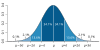
“This faulty intuition as well as many modern applications of probability theory are under the strong influence of traditional misconceptions concerning the meaning of the law of large numbers and of a popular mystique concerning a so-called law of averages.”

“This means that if in a city seven accidents occur each week, then (assuming that all possible distributions are equally likely) practically all weeks will contain days with two or more accidents, and on the average only one week out of 165 will show a uniform distribution of one accident per day.”

“The results concerning fluctuations in coin tossing show the widely held beliefs about the law of large numbers are fallacious. They were so amazing and so at variance with common intuition that even sophisticated colleagues doubted that coins actually misbehave as theory predicts.”
“It has been suggested that an army of monkeys might be trained to pound typewriters at random in the hope that ultimately great works of literature would be produced. Using a coin for the same purpose may save feeding and training expenses and free the monkeys for other monkey business.”
Quotes About William Feller
Gain deeper perspective through quotes about William Feller from others.
J. Laurie Snell on William Feller
“Anyone writing a probability text today owes a great debt to William Feller, who taught us all how to make probability come alive as a subject matter. If you find an example, an application, or an exercise that you really like, it probably had its origin in Feller's classic text, An Introduction to Probability Theory And (Its) Applications.”
About William Feller
William "Vilim" Feller (July 7, 1906 – January 14, 1970), born Vilibald Srećko Feller, was a Croatian-American mathematician specializing in probability theory. Feller was one of the greatest probabilists of the twentieth century, who is remembered for his championing of probability theory as a branch of mathematical analysis in Sweden and the United States.