Link Copied!
Cecilia Vicuña Quotes (1948-)
Poet, Artist

About Cecilia Vicuña
Cecilia Vicuña (born 1948) is a Chilean poet and artist based in New York and Santiago, Chile.
Best Cecilia Vicuña Quotes
Shortest
Earliest
Explore our curated collection of the most famous and impactful Cecilia Vicuña quotes.
“Plant your will!”
“words
are
the inner
star.”
are
the inner
star.”
“words
are the loom
of the stars
life's breath”
are the loom
of the stars
life's breath”

“For me, I think my inspiration is the attitude and the feeling that you are here to sense, feel, shift, relate, and dance with art.”
“We have scholarship and scientific proof that climate change exists, so what is it going to take for people to understand and participate?”

“My own indigenous history was erased—my mother and grandmothers were made to feel shame about their DNA. With my poems and performances, the quipu and the spirit of those ancient cultures are activated again.”
“Some of the greatest Latin American poets have been women. Sor Juana Inés de la Cruz, Gabriela Mistral, María Sabina, and Violeta Parra are among them, but their true place in the history of poetry has yet to be fully acknowledged.”
“The position of poetry in oral cultures is of tremendous power and reach. In fact, the oral poets say this plainly: the reach of an oral poem is infinite because it can be sensed, it can be heard, it can be told, it’s alive and moving and changing.”
“Every living thing is nature. I mean, why are we on this suicidal move, and why is it that people refuse to see what we are doing to the environment even though we all feel it? That is the real question for our times. Why are we indifferent to our own death?”
“Only by becoming collectively aware of the pain we inflict on each other is there a chance for change, for a new moral code to prevent it. We need to archive not just art and literary works – often the record of the unacknowledged behaviour we have witnessed, or felt within – but also its effects on others. The social context makes change possible.”
“Even in the ’60s, the ecological disasters had begun, and I think by focusing on dissolution and regeneration of the lifeforce, I was instinctively responding to that pain, the pain of the ocean, the pain of the sand. I walked on this beach as a kid and the sole of my feet would get black from oil, everything was already blackened. That was 50 years ago. We have lived with this denial and destruction for 50 years, and when you think of the damage that those 50 years have done, if there’s a future for humanity, those 50 years are going to be known as one of the most criminal.”

“(What did ecofeminism mean to you in the 1970s and what does it mean for you, today in 2020?) CV: First of all, I never heard of the term ecofeminism in the ’70s, no one was using that term. [Laughter] I don’t know if anyone used the term to classify their art. I was thinking about it–I was doing it in the ’60s–I was working through what I was seeing and feeling while living in Chile, you know and being near the South Pacific Ocean. I was doing and making what people now call land art long before that language existed as a name or concept, and I’m not the only one either who was shaping the movement without using any terminology to define it.”

“Western education is about teaching that knowledge belongs to an elite. Therefore, you either join through a difficult long struggle or you are devoid of any value. So that is the teaching of this culture, there’s something ingrained in the system and worldview, which we know not to be true. I have done many educational projects with Indigenous peoples and that is one of my principles: that you don’t teach what people ‘ought to know’. On the contrary, you let them discover their own wisdom, they’re own insight, they’re own realisations – those which are infinite once they relax into seeing their own self, their own being. It’s a human thing, everybody has this power and this gift. It’s not something special.”
“(Would you say that your practice seeks to confront that ancestral trauma?) CV: I don’t think my work confronts it as much as faces it. In other words, it is my point of departure. I don’t think it’s something that can even be confronted because it has already happened. You have to allow for your being, your soul, your spirit, and your body to feel that and become fully aware of its importance. We now live in a culture that denies pain and denies trauma, and therefore if you deny that, not only are you bound to repeat it, but you’re bound to live in a world of lies. I think it’s very dangerous not to acknowledge such things. I think it is probably our first task. Otherwise I don’t think there’s going to be any more humanity.”
“Our understanding of time is so limited. We have very basic markers of time. We live and we die, but what else? In my opinion, a poem is created outside of time entirely. A quipu, on the other hand, is like traveling through time. We all experience this ability to travel back and forth in time in our souls, in our imaginations, and in our hearts. Mathematicians and physicists attempt to create these fantastic theories and equations, but I have been making art about this all along. I think that poetry has given me this gift of knowing. Not every poet has this. I think it is reserved to certain cultures, perhaps. One must open themselves to these other forms of knowing, but Western cultures have suppressed this. I call it a colonization of the mind.”

“If you think that you don’t know, you don’t know. But if you think that you may know, if you think that it’s perfectly possible that you have a knowing, then you can find it. So it’s a matter of opening. It’s a matter of releasing the structures that have been imposed upon you, realising that every form of education is an imposition that’s coming from outside your being. I think the liberating force of art and poetry is that it releases you from that, and it puts you in the place of discovering, of exploring, of acknowledging that you have senses, that you have awareness, that you perceive and are paying attention to the precise form of those perceptions. That’s the joy of the poet, the joy of the artist, to focus completely, zero in on those perceptions and see the universe expanding out of ‘a grain of sand’, as William Blake said. Everything has infinite possibilities of knowledge and that’s what it means to be human. We have been brought up to believe that the machine knows better than we do. Everybody believes that now. That’s preposterous! Machines only know how to do operations, they can’t imagine, they can’t imagine the unimagined, they can’t travel like we can to the end of the galaxies just by thinking about it. So, why are we so willing to renounce our agency as creators? That is what is troubling.”
Cecilia Vicuña Quotes by Topic
Find exactly what you are looking for by browsing this categorized list of Cecilia Vicuña quotes by topic.
Cecilia Vicuña on Ecofeminism
“(What did ecofeminism mean to you in the 1970s and what does it mean for you, today in 2020?) CV: First of all, I never heard of the term ecofeminism in the ’70s, no one was using that term. [Laughter] I don’t know if anyone used the term to classify their art. I was thinking about it–I was doing it in the ’60s–I was working through what I was seeing and feeling while living in Chile, you know and being near the South Pacific Ocean. I was doing and making what people now call land art long before that language existed as a name or concept, and I’m not the only one either who was shaping the movement without using any terminology to define it.”
What Cecilia Vicuña Said About Others
Discover personal opinions Cecilia Vicuña shared regarding contemporaries.
Cecilia Vicuña on Alfonsina Storni 2 quotes
“Other poets wrote of the special connective qualities of sound...Alfonsina Storni finds in her own body "wells of sounds/... where the spoken word/and unspoken word/echo"...”

Cecilia Vicuña on René Descartes
“"Catatau" by Paulo Leminski captures that impulse as he imagines the French philosopher René Descartes driven mad by Brazil, a country where everything gets mixed and defies categorization.”

Cecilia Vicuña on Dante Alighieri
“Dante Alighieri wrote in the fourteenth century that the spirit of poetry abounds "in the tangled constructions and defective pronunciations" of vernacular speech where language is renewed and transformed. His vision resonates today with the faulty speech of migrants creating the sounds and intonations of the future.”

Cecilia Vicuña on Juana Inés de la Cruz
“Some of the greatest Latin American poets have been women. Sor Juana Inés de la Cruz, Gabriela Mistral, María Sabina, and Violeta Parra are among them, but their true place in the history of poetry has yet to be fully acknowledged...Sor Juana, who was the principal poet of the Americas in the seventeenth century, fought for the right of women to write and paid with her life.”
Cecilia Vicuña on Gabriela Mistral
“Some of the greatest Latin American poets have been women. Sor Juana Inés de la Cruz, Gabriela Mistral, María Sabina, and Violeta Parra are among them, but their true place in the history of poetry has yet to be fully acknowledged...At the turn of the century, a legendary group of women poets emerged, including Delmira Agustini, Alfonsina Storni, and Gabriela Mistral. Their work caused scandal and outrage but ultimately opened the way for other women to explore their experience in a woman's voice...Mistral was the paradoxical mestiza, who embodied contradiction. A childless woman who exalted maternity, she simultaneously embraced and scorned her indianidad. Her extraordinary mix of biblical and Amerindian rhythms got her the Nobel Prize in 1945.”

Cecilia Vicuña on Gloria E. Anzaldúa
“The migrants' plight has transformed border crossings into a key image in contemporary Latin American art and poetry. José Martí, who lived in exile in New York, said that shame of the indigenous mother culture is at the core of Latin America's dependency, fueling the sell-out of natural resources and the cycle of poverty. Gamaliel Churata concurs. It is no coincidence that the main theorization on this issue has come from the work of Gloria Anzaldúa, a mestiza born and raised on the border. She writes: "The U.S. Mexican border is an open wound where the Third World grates against the first and bleeds. . . . We, indias y mestizas, police the Indian in us, brutalize and condemn her." In her work, the negative space that defines women by what they "are not" (nonwhite, non-male), is transformed into creative space, by a will "to fashion my own gods out of my entrails. " Her work indicates the difficult edge all mestizos navigate, the hidden rage and complex paradoxes that women poets often acknowledge.”

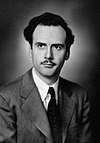
Cecilia Vicuña on Marshall McLuhan
“Marshall McLuhan prophesized that the global electronic age would bring about a rebirth of oral culture. He wrote that orality breeds complexity while literacy breeds homogeneity. The nonlinear understanding of space-time characteristic of oral cultures is making a comeback in the new context created by the Internet and globalization. Latin America, with its immense diversity of languages and cultures, offers a prolific reservoir for the future. The richness of its poetry stems from the interaction between oral culture and literacy, which creates fertile ground for experimentation. The new historical developments point to a much wider participation by women and indigenous poets writing in their own languages. A wide range of migrant or nomadic voices add to its complexity. Dante Alighieri wrote in the fourteenth century that the spirit of poetry abounds "in the tangled constructions and defective pronunciations" of vernacular speech where language is renewed and transformed. His vision resonates today with the faulty speech of migrants creating the sounds and intonations of the future.”
Cecilia Vicuña on César Vallejo
“The poet that fully realizes the creative potential of conflict is César Vallejo. Poor, illegitimate, and shamed since childhood for his mestizo origin, he wrote from his experience as Garcilaso had done four hundred years before. But his orientation was radically different. Vallejo searched for unity, the connectedness of all peoples: "Oh exalted unity! Oh that which is one/for all!/Love against space and time!" and he found it in sound, in the intonation of his mother's voice. She held to the indigenous music while speaking Spanish. In "Trilce XXIII" the poet speaks of his mother, then he speaks to her. By the end we hear her voice as his when he says, "dí, mamá"...Poe, Mallarmé, and Baudelaire had already disrupted poetic diction by incorporating silence and the dark side of the soul. José María Eguren understood it as a philosophical and formal lesson. But Vallejo added two more elements: the Andean aesthetics of dissonance, which had been invisible in writing until then, and the ethical dimension of compassion. This was a monumental achievement. In a single poetic line, his verbs and nouns fight each other as people do in Andean ritual festivals, where dissonance operates through a clash perceived as unity (solidarity). In these festivals, dissonant sounds are experienced as "a single heartbeat"....Today, despite the onslaught of globalization, mestizo poetry continues to thrive. José Lezama Lima wrote that "a secret pulsation of the invisible moves towards the image, and the image desires to know and be known." The reciprocal exchange within the image is thus transformed into a new understanding of life force. A few decades before, Vallejo wrote that artists engender revolutions by creating "a cosmic hunger for human justice." The poet's work is to give shape to "the new chords that will produce those tones." Placing poetry in the vibratory field where perception participates in the co-creation of the world, Vallejo reclaims poetry's full potential, echoing the early vision of Huidobro: "Poetry is the life of life."”

Quotes About Cecilia Vicuña
Gain deeper perspective through quotes about Cecilia Vicuña from others.
Marjorie Agosín Introduction on Cecilia Vicuña
“Chilean Cecilia Vicuña is obsessed with constructing a new way of writing poetry, of uniting fragments and objects through conjunctions and through the elaboration of well-arranged, pre-fabricated words. Her poetry, which reflects a gaze filled with beauty and seduction, implies a new configuration, as well as the constant knowledge that language is the legacy of women.”
About Cecilia Vicuña
Cecilia Vicuña (born 1948) is a Chilean poet and artist based in New York and Santiago, Chile.
QuotesCosmos Cross-Civilizational Archive
Explore Related Wisdom Pillars, Worldviews & Canonical Works
Discover how humanity's greatest philosophers, sacred scriptures, and literary masterpieces address the core questions of existence.
30 Wisdom Pillars
22 Worldviews & Traditions
Canonical Books & Scriptures