Link Copied!
Benjamin Disraeli Quotes (1804-1881)
Politician, King, Novelist


-100px.jpg)










-100px.png)







































About Benjamin Disraeli
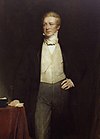
Benjamin Disraeli, 1st Earl of Beaconsfield (21 December 1804 – 19 April 1881) was a British politician, novelist, and essayist, serving twice as Prime Minister of the United Kingdom. The anniversary of his death on 19 April is known as Primrose Day.
Best Benjamin Disraeli Quotes
Shortest
Earliest
Explore our curated collection of the most famous and impactful Benjamin Disraeli quotes.
“I hate definitions.”



“His Christianity was muscular.”




“There is moderation even in excess.”
“Despair is the conclusion of fools.”
“A series of congratulatory regrets.”

“In politics nothing is contemptible.”


“We are indeed a nation of shopkeepers.”


“Everything comes if a man will only wait.”

“The sweet simplicity of the three per cents.”


“Protection is not a principle, but an expedient.”




“There can be no economy where there is no efficiency.”
“That fatal drollery called a representative government.”

“If you are not very clever, you should be conciliatory.”
“Nobody is forgotten, when it is convenient to remember him.”
“Real politics are the possession and distribution of power.”
“Every man has a right to be conceited until he is successful.”

“The characteristic of the present age is a craving credulity.”
“Patience is a necessary ingredient of genius.”

“[I]n speaking of Italy, romance has omitted for once to exaggerate.”

“A consistent man believes in Destiny — a capricious man in Chance.”

“A University should be a place of light, of liberty, and of learning.”

“When a man fell into his anecdotage, it was a sign for him to retire.”
“What we anticipate seldom occurs; what we least expected generally happens.”
“Desperation is sometimes as powerful an inspirer as genius.”
“The practice of politics in the East may be defined by one word: dissimulation.”
“Grief is the agony of an instant; the indulgence of Grief the blunder of a life.”

“No man is regular in his attendance at the House of Commons until he is married.”

“To govern men, you must either excel them in their accomplishments, or despise them.”
“"I rather like bad wine," said Mr. Mountchesney; "one gets so bored with good wine."”


“Increased means and increased leisure are the two civilizers of man.”

“It is just settled: you have it, Madam. The French government has been out-generaled.”
“Something unpleasant is coming when men are anxious to tell the truth.”
“Individuals may form communities, but it is institutions alone that can create a nation.”

“As a general rule the most successful man in life is the man who has the best information.”
“At present the peace of the world has been preserved, not by statesmen, but by capitalists.”
“The Services in war time are fit only for desperadoes but, in peace, are fit only for fools.”
“You know who critics are?— the men who have failed in literature and art.”

“The world is weary of statesmen whom democracy has degraded into politicians.”

“Like all great travellers I have seen more than I remember, and remember more than I have seen.”
“We should never lose an occasion. Opportunity is more powerful even than conquerors and prophets.”
“Gentlemen, the programme of the Conservative party is to maintain the Constitution of the country.”
“That is an apology, not an explanation; and apologies only account for that which they do not alter.”

“The Athanasian Creed is the most splendid ecclesiastical lyric ever poured forth by the genius of man.”

“Experience is the child of Thought, and Thought is the child of Action. We can not learn men from books.”
“But he has left us the legacy of heroes—the memory of his great name, and the inspiration of his great example.”
“Next to knowing when to seize an opportunity, the most important thing in life is to know when to forego an advantage.”
“The health of the people is really the foundation upon which all their happiness and all their powers as a state depend.”

“The disappointment of manhood succeeds to the delusion of youth: let us hope that the heritage of old age is not despair.”

“London owes everything to its press: it owes as much to its press as it does to its being the seat of government and the law.”

“Beware of endeavouring to become a great man in a hurry. One such attempt in ten thousand may succeed: these are fearful odds.”
“The very phrase "foreign affairs" makes an Englishman convinced that I am about to treat of subjects with which he has no concern.”
“If Gladstone fell into the Thames, that would be a misfortune; and if anybody pulled him out, that, I suppose, would be a calamity.”
“I shall withhold my support from every Ministry which will not originate some great measure to ameliorate the condition of the lower orders.”
“A very remarkable people the Zulus: they defeat our generals, they convert our bishops, they have settled the fate of a great European dynasty.”

“King Louis Philippe once said to me that he attributed the great success of the British nation in political life to their talking politics after dinner.”
“ Man is not the creature of circumstances, circumstances are the creatures of men. We are free agents, and man is more powerful than matter.”
“It is only by the amplification of titles that you can often touch and satisfy the imagination of nations; and that is an element which Governments must not despise.”

“I repeat that all power is a trust; that we are accountable for its exercise; that from the people, and for the people all springs, and all must exist.”

“"So you see, my dear Coningsby, that the world is governed by very different personages from what is imagined by those who are not behind the scenes." (Sidonia speaking)”

“"As for that," said Waldenshare, "sensible men are all of the same religion."
"Pray, what is that?" inquired the Prince.
"Sensible men never tell."”
"Pray, what is that?" inquired the Prince.
"Sensible men never tell."”
“Yes, I am a Jew, and when the ancestors of the right honourable gentleman were brutal savages in an unknown island, mine were priests in the temple of Solomon.”
“Before the civil war commenced, the United States of America were colonies, and we should not forget that such communities do not cease to be colonies because they are independent.”

“[T]he government of the world is carried on by Sovereigns and statesmen, and not by anonymous paragraph writers, or by the harebrained chatter of irresponsible frivolity.”
“We are the children of the gods, and are never more the slaves of circumstance than when we deem ourselves their masters. What may next happen in the dazzling farce of life, the Fates only know.”

“But this principle of race is unfortunately one of the reasons why I fear war may always exist; because race implies difference, difference implies superiority, and superiority leads to predominance.”
“It is knowledge that influences and equalises the social condition of man; that gives to all, however different their political position, passions which are in common, and enjoyments which are universal.”
“What is the question now placed before society with the glib assurance the most astounding? That question is this—Is man an ape or an angel? My lord, I am on the side of the angels.”

“I have brought myself, by long meditation, to the conviction that a human being with a settled purpose must accomplish it, and that nothing can resist a will that will stake even existence for its fulfilment.”

“My objection to Liberalism is this—that it is the introduction into the practical business of life of the highest kind—namely, politics—of philosophical ideas instead of political principles.”
“The right hon. Gentleman caught the Whigs bathing, and walked away with their clothes. He has left them in the full enjoyment of their liberal position, and he is himself a strict conservative of their garments.”

“Above all, maintain the line of demarcation between parties; for it is only by maintaining the independence of party that you can maintain the integrity of public men, and the power and influence of Parliament itself.”

“The divine right of kings may have been a plea for feeble tyrants; but the divine right of government is the keystone of human progress, and without it governments sink into police, and a nation is degraded into a mob.”
“I declare that England, with all her imperfections, is worth all the world together, and I hope it is not misanthropy when I feel that I love lakes and mountains better than courts and cities, and trees better than men.”

“Nothing is more disgusting, than the habit of our officers speaking always of the inhabitants of India—many of them descended from the great races—as "niggers". It is ignorant, & brutal,—& surely most mischievous.”
“A man may speak very well in the House of Commons, and fail very completely in the House of Lords. There are two distinct styles requisite: I intend, in the course of my career, if I have time, to give a specimen of both.”

“The principle of the feudal system, the principle which was practically operated upon, was the noblest principle, the grandest, the most magnificent and benevolent that was ever conceived by sage, or ever practised by patriot.”
“He told Lord Esher that, in talking with the Queen, he observed a simple rule: "I never deny; I never contradict; I sometimes forget."”

“Sir, very few people reach posterity. Who amongst us may arrive at that destination I presume not to vaticinate. Posterity is a most limited assembly. Those gentlemen who reach posterity are not much more numerous than the planets.”
“He is so vain that he wants to figure in history as the settler of all the great questions; but a Parliamentary constitution is not favorable to such ambitions; things must be done by parties, not by persons using parties as tools.”
“I see before me the statue of a celebrated minister, who said that confidence was a plant of slow growth. But I believe, however gradual may be the growth of confidence, that of credit requires still more time to arrive at maturity.”

“Books are fatal: they are the curse of the human race. Nine- tenths of existing books are nonsense, and the clever books are the refutation of that nonsense. The greatest misfortune that ever befell man was the invention of printing.”
“Gentlemen, I am a party man. I believe that, without party, Parliamentary government is impossible. I look upon Parliamentary government as the noblest government in the world, and certainly the one most suited to England.”
“"What is care?" asked the Princess, with a smile.
"It is a god", replied the Physician, "invisible, but omnipotent. It steals the bloom from the cheek and lightness from the pulse — it takes away the appetite, and turns the hair grey".”
"It is a god", replied the Physician, "invisible, but omnipotent. It steals the bloom from the cheek and lightness from the pulse — it takes away the appetite, and turns the hair grey".”
“A dark horse, which had never been thought of, and which the careless St. James had never even observed in the list, rushed past the grandstand in sweeping triumph.”
“I entirely differ with the Government as to the value of precedents. In this case, as in others, precedents are not mere dusty phrases, which do not substantially affect the question before us. A precedent embalms a principle.”

“Pure air, pure water, the inspection of unhealthy habitations, the adulteration of food, these and many kindred matters may be legitimately dealt with by the Legislature... After all, the first consideration of a minister should be the health of the people.”

“What Art was to the ancient world, Science is to the modern: the distinctive faculty. In the minds of men the useful has succeeded to the beautiful.. There are great truths to tell, if we had either the courage to announce them or the temper to receive them.”
“"But they deserve their wealth," he added, "nobody grudges it to them. I declare when I was eating that truffle, I felt a glow about my heart that, if it were not indigestion, I think must have been gratitude; though that is an article I had not believed in.”
“I am not ashamed or afraid to say that I wish more sympathy had been shown on both sides towards the Chartists... I am not ashamed to say that I sympathise with millions of my fellow-subjects.”
“I am a Conservative to preserve all that is good in our constitution, a Radical to remove all that is bad. I seek to preserve property and to respect order, and I equally decry the appeal to the passions of the many or the prejudices of the few.”
“The office of leader of the Conservative party in the H[ouse] of C[ommons], at the present day, is to uphold the aristocratic settlement of this country. That is the only question at stake, however manifold may be the forms wh[ich] it assumes in public discussion.”
“And now, gentlemen, what is the condition of the great body of the people? In the first place, gentlemen, they have for centuries been in the full enjoyment of that which no other country in Europe has ever completely attained—complete rights of personal freedom.”
“I remember—the interruption of the hon. Gentleman reminds me of the words of a great writer, who said that "Grace was beauty in action." '''Sir, I say that justice is truth in action. Truth should animate an opposition, and I hope it does animate this opposition.;''”

“It is the initial letters of the four points of the compass that make the word "news," and he must understand that news is that which collies from the North, East, West and South, and if it comes from only one point of the compass, then it is a class publication, and not news.”

“The press is not only free, it is powerful. That power is ours. It is the proudest that man can enjoy. It was not granted by monarchs, it was not gained for us by aristocracies ; but it sprang from the people, and, with an immortal instinct, it has always worked for the people.”
“Nature is more powerful than education; time will develop everything.
• Part 1, Chapter 8. Compare: "La Nature a été en eux forte que l'éducation" (translated: "Nature was a stronger force in them than education"), Voltaire, Vie de Molière.”
• Part 1, Chapter 8. Compare: "La Nature a été en eux forte que l'éducation" (translated: "Nature was a stronger force in them than education"), Voltaire, Vie de Molière.”

“It is fourteen years ago since yourself, then the leader of the country gentlemen...appealed to me to assist you at a moment of apparently overwhelming disaster. I ultimately agreed to do so...because, from my earliest years, my sympathies had been with the landed interest of England.”
“My Lords, the key of India is not Merv, or Herat, or Candahar. The key of India is London. The majesty of sovereignty, the spirit and vigour of your Parliaments, the inexhaustible resources of a free, an ingenious, and a determined people—these are the keys of India.”

“Had it not been for you, I should have remained what I was when we first met, a prejudiced, narrow-minded being, with contracted sympathies and false knowledge, wasting my life on obsolete trifles, and utterly insensible to the privilege of living in this wondrous age of change and progress.”
“None are so interested in maintaining the institutions of the country as the working classes. The rich and the powerful will not find much difficulty under any circumstances in maintaining their rights, but the privileges of the people can only be defended and secured by popular institutions.”
“I look upon the Whigs as an anti-national party... Believing that the policy of the party was such as must destroy the honour of the kingdom abroad and the happiness of the people at home, I considered it my duty to oppose the Whigs, to ensure their discomfiture, and, if possible, their destruction.”
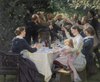
“Venice by moonlight is an enchanted city; the floods of silver light upon the moresco architecture, the perfect absence of all harsh sounds of carts and carriages, the never-ceasing music on the waters, produced an effect on the mind which cannot be experienced, I am sure, in any other city in the world.”

“Yes! I know what I have to face. I have to face a coalition. The combination may be successful. A coalition has before this been successful. But coalitions, although successful, have always found this, that their triumph has been brief. This too I know, that England does not love coalitions.”
“The noble lord in this case, as in so many others, first destroys his opponent, and then destroys his own position afterwards. The noble lord is the Prince Rupert of parliamentary discussion: his charge is resistless, but when he returns from the pursuit he always finds his camp in the possession of the enemy.”

“But, my Lord, how thunderstruck must be our visitor when he is told to recognise a Secretary of State in an infinitely small scarabæus;—yes, my Lord, when he learns, that you are the leader of the English House of Commons, our traveller may begin to comprehend how the Egyptians worshipped—AN INSECT.”
“I have always felt that the best security for civilisation is the dwelling, and that upon properly appointed and becoming dwellings depends more than anything else the improvement of mankind. Such dwellings are the nursery of all domestic virtues, and without a becoming home the exercise of those virtues is impossible.”
“Is it what you call civilization that makes England flourish? Is it the universal development of the faculties of man that has rendered an island, almost unknown to the ancients, the arbiter of the world? Clearly not. It is the inhabitants that have done this. It is an affair of race.... All is race, there is no other truth.”

“[I]t is not merely our fleets and armies, our powerful artillery, our accumulated capital, and our unlimited credit on which I so much depend, as upon that unbroken spirit of her people, which I believe was never prouder of the Imperial country to which they belong. Gentlemen, it is to that spirit that I above all things trust.”

“This man, O'Connell, is the hired instrument of the Papacy; as such, his mission is to destroy your Protestant Society, and, as such, he is a more terrible enemy to England than Napoleon, with all his inspiration. Your empire and your liberties are in more danger at this moment than when the army of invasion was encamped at Boulogne.”
“You cannot choose between party government and Parliamentary government. I say, you can have no Parliamentary government if you have no party government; and, therefore, when Gentlemen denounce party government, they strike at that scheme of government which, in my opinion, has made this country great, and which I hope will keep it great.”
“That is the fourth course, which in future I trust the right hon. Gentleman (Sir R. Peel) will not forget. The right hon. Gentleman tells us to go back to precedents; with him a great measure is always founded on a small precedent. He traces the steam-engine always back to the tea-kettle. His precedents are generally tea-kettle precedents.”
“I come forward as the supporter of that great interest which is the only solid basis of the social fabric, and, convinced that the sound prosperity of this country depends upon the protected industry of the farmer, I would resist that spirit of rash and experimental legislation which is fast hurrying this once glorious Empire to the agony of civil convulsion.”


“Your aim is to reduce every thing to your own mean level—to degrade every thing to your malignant standard... In all your conduct it is not difficult to detect the workings of a mean and long mortified spirit suddenly invested with power,—the struggles of a strong ambition attempting, by a wanton exercise of authority, to revenge the disgrace of a feeble intellect.”

“That dense population in extreme distress inhabited an island where there was an established church which was not their church; and a territorial aristocracy, the richest of whom lived in distant capitals. Thus they had a starving population, an absentee aristocracy, and an alien Church, and, in addition, the weakest executive in the world. That was the Irish question.”

“You have despoiled Churches. You have threatened every corporation and endowment in the country. You have examined into everybody's affairs. You have criticized every profession and vexed every trade. No one is certain of his property, and nobody knows what duties he may have to perform tomorrow. This is the policy of confiscation as compared with that of concurrent endowment.”
“Busied with the tattle of valets and waiting-maids, you accidentally omitted in your Memoirs of the Affairs of Europe all notice of its most vast and most rising empire. This luckless production closed your literary career; you flung down your futile pen in incapable despair; and, your feeble intellect having failed in literature, your strong ambition took refuge in politics.”

“Something has risen up in this country as fatal in the political world as it has been in the landed world of Ireland—we have a great Parliamentary middleman. It is well known what a middleman is; he is a man who bamboozles one party, and plunders the other, till, having obtained a position to which he is not entitled, he cries out, "Let us have no party questions, but fixity of tenure."”

“In the great contention between the patriotic and the cosmopolitan principle which has hardly begun and on the issue of which the fate of this island as a powerful community depends, Lord George Bentinck appeared to be produced to represent the traditionary influences of our country in their most captivating form.”
“In a progressive country change is constant; and the great question is, not whether you should resist change which is inevitable, but whether that change should be carried out in deference to the manners, the customs, the laws, the traditions of the people, or in deference to abstract principles and arbitrary and general doctrines. The one is a national system; the other...is a philosophic system.”

“I beg to express my opinion that an agricultural labourer has as much right to combine for the bettering of his condition as a manufacturing labourer or worker in metals. If the causes of his combination are natural—that is to say, if they arise from his own feelings and from the necessities of his own condition, the combination will end in results mutually beneficial to employers and employed.”
“[T]he French Revolution, which has not yet ended, and which is certainly the greatest event that has happened in the history of man. Only the fall of the Roman Empire can be compared to it... Look at the Europe of the present day and the Europe of a century ago. It is not the same Europe. Its very form is changed.”

“Professors and rhetoricians find a system for every contingency and a principle for every chance; but you are not going, I hope, to leave the destinies of the British empire to prigs and pedants. The statesmen who construct, and the warriors who achieve, are only influenced by the instinct of power, and animated by the love of country. Those are the feelings and those the methods which form empires.”
“I acknowledge that the policy of England with respect to Europe should be a policy of reserve, but proud reserve; and in answer to those statesmen—those mistaken statesmen who have intimated the decay of the power of England and the decline of its resources, I express here my confident conviction that there never was a moment in our history when the power of England was so great and her resources so vast and inexhaustible.”

“His views on all subjects are original, but there is no strain, no effort at paradox. He talks as Montaigne writes. When he heard about Cyprus, he said: "You have done a wise thing. This is progress. It will be popular; a nation likes progress." His idea of progress was evidently seizing something. He said he looked upon our relinquishment of the Ionian Isles as the first sign of our decadence. Cyprus put us all right again.”

“For a week I was in a scene equal to anything in the Arabian Nights—such processions, such dresses, such corteges of horsemen, such caravans of camels. Then the delight of being made much of by a man who was daily decapitating half the Province. Every morning we paid visits, attended reviews, and crammed ourselves with sweetmeats; every evening dancers and singers were sent to our quarters by the Vizier or some Pasha.”
“The Tory party is only in its proper position when it represents popular principles. Then it is truly irresistible. Then it can uphold the throne and the altar, the majesty of the empire, the liberty of the nation, and the rights of the multitude. There is nothing mean, petty, or exclusive, about the real character of Toryism. It necessarily depends upon enlarged sympathies and noble aspirations, because it is essentially national.”
“I am opposed to it because I wish to see united at an important crisis of the world—a crisis that perhaps is nearer arriving than some of us suppose—because I wish to see a united people welded in one great nationality, and because I feel that if we sanction this policy—if we do not cleanse the Parliamentary bosom of all this "perilous stuff"—we shall bring about the disintegration of the Kingdom and the destruction of the Empire.”

“It has been said that the people of this country are deeply interested in the humanitarian and philanthropic considerations involved in [the Eastern Question]. All must appreciate such feelings. But I am mistaken if there be not a yet deeper sentiment on the part of the people of this country, one with which I cannot doubt your lordships will ever sympathise, and that is—the determination to maintain the Empire of England.”

“For what is the Tory party unless it represents national feeling? If it does not represent national feeling, Toryism is nothing. It does not depend upon hereditary coteries of exclusive nobles. It does not attempt power by attracting to itself the spurious force which may accidentally arise from advocating cosmopolitan principles or talking cosmopolitan jargon. The Tory party is nothing unless it represent and uphold the institutions of the country.”
“In the great struggle between popular principles and liberal opinions, which is the characteristic of our age, I hope ever to be found on the side of the people, and of the Institutions, of England. It is our Institutions that have made us free, and can alone keep us so; by the bulwark which they offer to the insidious encroachments of a convenient, yet enervating, system of centralisation, which, if left unchecked, will prove fatal to the national character.”

“Here everything is dark. A series of storms has destroyed all our hopes which were full of promise. A plentiful hay harvest drowned and the finest wheat the farmers have had for years all laid. It is a scene of ravage, of havoc like a conquered country. It is the last drop in the bitter cup which the landed interest will have to swallow... As for politics, Gladstone will be as fatal to the aristocracy as the weather; and if he were younger the Crown would not be safe.”

“The polity of England, which has established the most flourishing society of modern ages, and regulated the destinies of a nation which, for many centuries, has made a progressive advance in the acquisition of freedom, wealth, and glory, undoubtedly presents one of the most interesting subjects of speculation in political philosophy. Nor is it one that has been neglected; and illustrious foreigners have emulated our native authors in their treatises of the English Constitution.”
“The movement of the middle classes for the abolition of slavery was virtuous, but it was not wise. It was an ignorant movement. It showed a want of knowledge both of the laws of commerce and the stipulations of treaties; and it has alike ruined the colonies and aggravated the slave trade...The history of the abolition of slavery by the English and its consequences, would be a narrative of ignorance, injustice, blundering, waste, and havoc, not easily paralleled in the history of mankind.”

“Her Majesty's present Ministers have hitherto been enabled to secure that peace, so necessary to the welfare of all the civilized countries, and so peculiarly the interest of our own. But this ineffable blessing cannot be obtained by the passive principle of non-interference. Peace rests on the presence, not to say the ascendancy, of England in the Councils of Europe... May [the election] return to Westminster a Parliament not unworthy of the power of England and resolved to maintain it!”
“The hon. Gentleman has said, in a most extraordinary manner, that our security for peace at the present day is the desire of nations to keep at home. There is a great difference between nationality and race. Nationality is the principle of political independence. Race is the principle of physical analogy, and you have at this moment the principle of race—not at all of nationality—adopted by Germany, the very country to which the hon. Member for the West Riding referred.”
“Whether we should have one Imperial Parliament and one Local Parliament, or whether we must have, as has just been suggested—and it will probably be the solution of many difficulties, although it will lead to greater ones—one Imperial and three Local Parliaments; one thing is quite clear—that we should end in having co-ordinate and competing authorities, and that we should find officers of State acting on policies totally distinct, and bringing about a course of affairs hostile to each other.”

“I entirely agree with you, that an union between the Conservative party and the Radical masses offers the only means by which we can preserve the Empire. Their interests are identical; united they form the nation; and their division has only permitted a miserable minority, under the specious name of the People, to assail all rights of property and person. Since I first entered public life, now eight years ago, I have worked for no other object and no other end than to aid the formation of a national party.”
“The present state of affairs makes me tremble. Old England seems to be tumbling to pieces. I believe that if Constantinople were occupied by a foreign Power to-morrow, we should not stir a foot. Could we? With Ireland in revolution, S. Africa in rebellion, and the Radicals and Jacobins in England so intent on the destruction of the landed interest which is the backbone of the State, that no one will spare any energies to external dangers and disgraces. I never thought that in my time it could come to this!”
“Why, I say, that to tax the community for the advantage of a class is not protection; it is plunder, and I entirely disclaim it; but I ask you to protect the rights and interests of labour generally in the first place, by allowing no free imports from countries which meet you with countervailing duties; and, in the second place, with respect to agricultural produce, to compensate the soil for the burdens from which other classes are free by an equivalent duty. This is my view of what is called "protection."”
“The democracy of America must not be confounded with the democracies of old Europe. It is not the scum of turbulent cities, nor is it a mere section of an excited middle class speculating in shares and calling it progress. It is a territorial democracy, if I may use that epithet without offending hon. Gentlemen opposite. Aristotle, who has taught us most of the wise things we know, never said a wiser thing than that the cultivators of the soil are the class least inclined to sedition and to violent courses.”

“[T]he time is at hand...when England will have to decide between national and cosmopolitan principles. The issue is not a mean one. It is whether you will be content to be a comfortable England, modelled and moulded upon Continental principles and meeting in due course an inevitable fate, or whether you will be a great country,—an Imperial country—a country where your sons, when they rise, rise to paramount positions, and obtain not merely the esteem of their countrymen, but command the respect of the world.”

“It is unnecessary for me to state that I shall support all those measures, the object of which is to elevate the moral and social condition of the Working Classes, by lessening their hours of toil—by improving their means of health—and by cultivating their intelligence. These are objects which, it is not unpleasing for me to remember, I endeavoured, in common with some of my friends, to advance, before they engaged the attention of Governments, or were supported by triumphant Parliamentary majorities.”

“I confess I am inclined to believe that an English gentleman—born to business, managing his own estate, administering the affairs of his county, mixing with all classes of his fellow-men, now in the hunting field, now in the railway direction, unaffected, un-ostentatious, proud of his ancestors, if they have contributed to the greatness of our common country—is, on the whole, more likely to form a senator agreeable to the English opinion and English taste than any substitute that has yet been produced.”
“Gentlemen, there is another and second great object of the Tory party. If the first is to maintain the institutions of the country, the second is, in my opinion, to uphold the Empire of England. If you look to the history of this country since the advent of Liberalism—forty years ago—you will find that there has been no effort so continuous, so subtle, supported by so much energy, and carried on with so much ability and acumen, as the attempts of Liberalism to effect the disintegration of the Empire of England.”
“[A] danger, in its ultimate results scarcely less disastrous than pestilence and famine...distracts that country [Ireland]. A portion of its population is attempting to sever the constitutional tie which unites it to Great Britain in that bond which has favoured the power and prosperity of both. It is to be hoped that all men of light and leading will resist this destructive doctrine. The strength of this nation depends on the unity of feeling which should pervade the United Kingdom and its widespread dependencies.”
“Teach us that wealth is not elegance; that profusion is not magnificence; and that splendour is not beauty. Teach us that taste is a talisman which can do greater wonders than the millions of the loanmonger. Teach us that to vie is not to rival, and to imitate not to invent. Teach us that pretension is a bore. Teach us that wit is excessively good-natured, and, like champagne, not only sparkles, but is sweet. Teach us the vulgarity of malignity. Teach us that envy spoils our complexions, and that anxiety destroys our figure.”
“I receive letters every day asking me to write a manifesto and make a speech; that I am the only man who could do so with effect; and all that. Why should I? I warned the country about Ireland before the General Election and told them to be vigilant, or there would be something happen there, "worse even than famine or pestilence". It has happened. And there have been elections since the Irish Revolution in England, Wales and Scotland, and they have supported the policy of imbecility and treason that has brought about all this disaster.”

“For nearly five years the present Ministers have harassed every trade, worried every profession, and assailed or menaced every class, institution, and species of property in the country. Occasionally they have varied this state of civil warfare by perpetrating some job which outraged public opinion, or by stumbling into mistakes which have been always discreditable, and sometimes ruinous. All this they call a policy, and seem quite proud of it; but the country has, I think, made up its mind to close this career of plundering and blundering.”
“Which do you believe most likely to enter an insane convention, a body of English gentlemen honoured by the favour of their Sovereign and the confidence of their fellow-subjects, managing your affairs for five years, I hope with prudence, and not altogether without success, or a sophistical rhetorician, inebriated with the exuberance of his own verbosity, and gifted with an egotistical imagination that can at all times command an interminable and inconsistent series of arguments to malign an opponent and to glorify himself?”
“The English people are, without exception, the most enthusiastic people in the world. There are more excitable races. The French, the Italians, are much more excitable; but for deep and fervid feeling, there is no race in the world at all equal to the English. And what is the subject, of all others, upon which the English people have been most enthusiastic? Religion. The notes on the gamut of their feeling are few, but they are deep. Industry, Liberty, Religion, form the solemn scale. Industry, Liberty, Religion — that is the history of England.”

“I have always looked upon the interests of the labouring classes as essentially the most conservative interests of the country. The rights of labour have been to me always as sacred as the rights of property, and I have always thought that those who were most interested in the stability and even in the glory of a State are the great mass of the population, happy to enjoy the privileges of freemen under good laws, and proud at the same time of the country which confers on its inhabitants a name of honour and of glorious reputation in every quarter of the globe.”
“Now we have a precise idea of the political character of O'Connell. And I have often marvelled when I have listened to those who have denounced his hypocrisy or admired his skill, when they have read of the triumphant demagogue humbling himself in the mud before a simple priest. There was no hypocrisy in this, no craft. The agent recognised his principal, the slave bowed before his lord; and when he pressed to his lips those sacred robes, reeking with whisky and redolent of incense, I doubt not that his soul was filled at the same time with unaffected awe and devout gratitude.”
“Gentlemen, another great object of the Tory party, and one not inferior to the maintenance of the Empire, or the upholding of our institutions, is the elevation of the condition of the people... It must be obvious to all who consider the condition of the multitude with a desire to improve and elevate it, that no important step can be gained unless you can effect some reduction of their hours of labour and humanise their toil. The great problem is to be able to achieve such results without violating those principles of economic truth upon which the prosperity of all States depends.”
“This is to be observed of the Bishop of London, that, though apparently of a spirit somewhat austere, there is in his idiosyncrasy a strange fund of enthusiasm, a quality which ought never to be possessed by an Archbishop of Canterbury, or a Prime Minister of England. The Bishop of London sympathies with everything that is earnest; but what is earnest is not always true; on the contrary error is often more earnest than truth.”

“What, then, was that policy? It was a policy of conditional neutrality. Under the circumstances of the case we did not believe that it was for the honour or interest of England or Turkey that we should take any part in the impending contest; but while we enforced the neutrality which we prepared to observe, we declared at the same time that that neutrality must cease if British interests were assailed or menaced. Cosmopolitan critics, men who are the friends of every country save their own, have denounced this policy as a selfish policy. My Lord Mayor, it is as selfish as patriotism.”

“He [ Lord George Bentinck] dwelt much on the vicissitudes which must attend all merely foreign trade, which, though it should be encouraged, ought not to be solely relied on, as was the fashion of this day. Looking upon war as occasionally inevitable, he thought a commercial system based upon the presumption of perpetual peace to be full of ruin. His policy was essentially imperial and not cosmopolitan.”
“Now, what is meant by the union between Church and State? ... I understand by it that authority is to be not merely political; that Government is to be not merely an affair of force, but is to recognize its responsibility to the Divine Power. Sir, we have discarded the divine right of Kings, and properly discarded it, because the divine right of Kings led to the abuse of supernatural power by individuals; but an intelligent age will never discard the divine right of Government. If Government is not divine, it is nothing. It is a mere affair of the police-office, of the tax-gatherer, of the guard-room.”
“Bradlaugh makes the most noise, but the Irish Evictions Bill is much the most serious thing... If the Eviction Act passes, there will not be many more seasons. It is a revolutionary age and the chances are, that even you and I may live to see the final extinction of the great London Season, which was the wonder and admiration of our youth.”

“You have nothing to trust to but your own energy and the sublime instinct of an ancient people. You must act as if everything depended on your individual efforts. The secret of success is constancy of purpose. Go to your homes, and teach there these truths, which will soon be imprinted on the conscience of the land. Make each man feel how much rests on his own exertions... Act in this spirit, and you will succeed. You will maintain your country in its present position. But you will do more than that, you will deliver to your posterity a land of liberty, of prosperity, of power, and of glory.”

“Now I must tell that nothing will induce me to support the 3 F's—three fiddlesticks. During a long parliamentary life, and long before I was in Parliament, I have been profoundly convinced, that the greatness and character of this country depended on our landed tenure. All the rest, I look upon, and have ever looked upon, as "leather and prunella". I fear the pass is sold ... I have formally, and even solemnly, warned the house in wh[ich] I now sit, that the landed system of this country would be attacked and invaded by the revolutionary party.”
“The life of this people greatly accords with my taste, which is naturally somewhat indolent and melancholy... To repose on voluptuous ottomans and smoke superb pipes, daily to indulge in the luxuries of a bath which requires half a dozen attendants for its perfection; to court the air in a carved caïque, by shores which are a perpetual scene; and to find no exertion greater than a canter on a barb; this is, I think, a far more sensible life than all the bustle of clubs, all the boring of drawing-rooms, and all the coarse vulgarity of our political controversies.”

“[T]here are some who challenge the expediency of the Imperial character of this realm. Having attempted, and failed, to enfeeble our colonies by their policy of decomposition, they may, perhaps, now recognize in the disintegration of the United Kingdom a mode which will not only accomplish, but precipitate their purpose. The immediate dissolution of Parliament will afford an opportunity to the nation to decide upon a course which will materially influence its fortunes and shape its destiny. Rarely in this century has there been an occasion more critical. The power of England and the peace of Europe will largely depend on the verdict of the country.”
“I am quite a Turk, wear a turban, smoke a pipe six feet long, and squat on a divan. Mehemet Pasha told me that he did not think I was an Englishman because I walked so slow: in fact I find the habits of this calm and luxurious people entirely agree with my own preconceived opinions of propriety and enjoyment, and I detest the Greeks more than ever. You have no idea of the rich and various costume of the Levant. When I was presented to the Grand Vizier I made up such a costume from my heterogeneous wardrobe that the Turks, who are mad on the subject of dress, were utterly astounded.”
“This is the third time that, in the course of six years, during which I have had the lead of the Opposition in the House of Commons, I have stormed the Treasury Benches: twice, fruitlessly, the third time with a tin kettle to my tail which rendered the race hopeless. You cannot, therefore, be surprised, that I am a little wearied of these barren victories, which like Alma, Inkerman, and Balaclava, may be glorious but are certainly nothing more.”
“We have been informed lately that ours will be the lot of Genoa, and Venice, and Holland. But...there is a great difference between the condition of England and those... We have during ages of prosperity created a nation of 34 millions—a nation who are enjoying, and have long enjoyed, the two greatest blessings of civil life—justice and liberty... [A] nation of that character is more calculated to create empires than to give them up, and I feel confident if England is true to herself; if the English people prove themselves worthy of their ancestors; if they possess still the courage and the determination of their forefathers, their honour will never be tarnished and their power will never diminish.”
“Since the settlement of [the] Constitution, now nearly two centuries ago, England has never experienced a revolution, though there is no country in which there has been so continuous and such considerable change. How is this? Because the wisdom of your forefathers placed the prize of supreme power without the sphere of human passions. Whatever the struggle of parties, whatever the strife of factions, whatever the excitement and exaltation of the public mind, there has always been something in this country round which all classes and parties could rally, representing the majesty of the law, the administration of justice, and involving, at the same time, the security for every man's rights and the fountain of honour.”
“Sir, it is very easy to complain of party Government, and there may be persons capable of forming an opinion on this subject who may entertain a deep objection to that Government, and know to what that objection leads. But there are others who shrug their shoulders, and talk in a slipshod style on this head, who, perhaps, are not exactly aware of what the objections lead to. These persons should understand, that if they object to party Government, they do, in fact, object to nothing more nor less than Parliamentary Government. A popular assembly without parties—500 isolated individuals—cannot stand five years against a Minister with an organized Government without becoming a servile Senate.”
“Verona is full of pictures which have never been painted. Every step excites emotion and gives rise to unaffected reflection. In the course of a short stroll, you may pass by a Roman amphitheatre, still used, then the castle of some petty prince of the Middle Ages, and while you are contrasting the sublime elevation of antiquity with the heterogeneous palace of a Scaliger your eyes light on a gate of Oriental appearance and fantastic ornament... The illusion is perfect, the eye rests with pain on the passing citizens in their modern costumes; you look for black velvets and gold chains, white feathers and red stockings.”
“There is no subject in which I have taken a deeper interest than the condition of the working classes. Long before what is called the 'condition of the people question' was discussed in the House of Commons, I had employed my pen on the subject. I had long been aware that there was something rotten in the core of our social system. I had seen that while immense fortunes were accumulating, while wealth was increasing to a superabundance, and while Great Britain was cited throughout Europe as the most prosperous nation in the world, the working classes, the creators of wealth, were steeped in the most abject poverty and gradually sinking into the deepest degradation.”
“England is the only important European community that is still governed by traditionary influences, and amid the shameless wreck of nations she alone has maintained her honour, her liberty, her order, her authority, and her wealth... But it is said that it is contrary to the spirit of the age that a great nation like England, a community of enlightened millions long accustomed to public liberty, should be governed by an aristocracy. It is not true that England is governed by an aristocracy in the common acceptation of the term. England is governed by an aristocratic principle. The aristocracy of England absorbs all aristocracies, and receives every man in every order and every class who defers to the principle of our society, which is to aspire and to excel.”
“[L]ittle more than a year after the publication of CONINGSBY, the secession of DR. NEWMAN dealt a blow to the Church of England under which it still reels. That extraordinary event has been "apologised" for, but has never been explained. It was a mistake and a misfortune. The tradition of the Anglican Church was powerful. Resting on the Church of Jerusalem, modified by the divine school of Galilee, it would have found that rock of truth which Providence, by the instrumentality of the Semitic race, had promised to St. Peter. Instead of that, the seceders sought refuge in mediæval superstitions, which are generally only the embodiments of pagan ceremonies and creeds.”
“This war represents the German Revolution, a greater political event than the French Revolution of last century — I don't say a greater, or as great, a social event. What its social consequences may be are in the future. Not a single principle in the management of our foreign affairs, accepted by all statesmen for guidance up to six months ago, any longer exists. There is not a diplomatic tradition which has not been swept away. You have a new world, new influences at work, new and unknown objects and dangers with which to cope... The balance of power has been entirely destroyed, and the country which suffers most, and feels the effects of this great change most, is England.”
“Gentlemen, the influence of the Crown is not confined merely to political affairs. England is a domestic country. Here the home is revered and the hearth is sacred. The nation is represented by a family—the Royal Family; and if that family is educated with a sense of responsibility and a sentiment of public duty, it is difficult to exaggerate the salutary influence they may exercise over a nation. It is not merely an influence upon manners; it is not merely that they are a model for refinement and for good taste—they affect the heart as well as the intelligence of the people, and in the hour of public adversity, or in the anxious conjuncture of public affairs, the nation rallies round the Family and the Throne, and its spirit is animated and sustained by the expression of public affection.”
“It cannot be denied that a state of great national prosperity is quite consistent and compatible with legislation in favour of the protection of native industry. That proposition, years ago, was denied; but with the experience we have had of France and the United States of America—the two most flourishing communities probably in existence—it is now incontestable. Well, my lords, many years ago—nearly 40—this country, which no one can say for a moment did not flourish with the old system of protection, deemed it necessary to revise the principles upon which its commerce was conducted...The scheme that was adopted was this—that we were to fight hostile tariffs with free imports. I was among those who looked upon that policy with fear. I believed it to be one very perilous.”
“No one, I think, can deny that the depression of the agricultural interest is excessive. Though I can recall periods of suffering, none of them have ever equalled the present in its instances... [N]or is it open to doubt that foreign competition has exercised a most injurious influence on the agricultural interests of the country. The country, however, was perfectly warned that if we made a great revolution in our industrial system, that was one of the consequences that would accrue. I may mention that the great result of the returns we possess is this, that the immense importations of foreign agricultural produce have been vastly in excess of what the increased demands of our population actually require, and that is why the low prices are maintained... That is to a great degree the cause of this depression.”

“Head of Christ by Morales, exactly as in the description in the pseudo letter of the Roman Proconsul. Morales well entitled to his surname of Divino... [T]he auburn locks seem only prevented from growing over the countenance by the moiety of the star which forms the glory: everything which can even be conceived as necessary to the formation of a face of perfect beauty, but nothing earthly in the appearance. You could not mistake the head for an Apollo or an Adonis. The eyes, beaming with human beauty, are nevertheless bright with the effulgence of celestial light, and fixed upon no particular object. They seem looking on the world. The nose is exquisitely formed, and the flesh tints seem immortal.”

“The right hon. Gentleman persuaded the people of England that with regard to Irish politics he was in possession of the philosopher's stone. Well, Sir, he has been returned to this House with an immense majority, with the object of securing the tranquillity and content of Ireland. Has anything been grudged him? Time, labour, devotion—whatever has been demanded has been accorded, whatever has been proposed has been carried. Under his influence and at his instance we have legalized confiscation, consecrated sacrilege, and condoned high treason; we have destroyed churches, we have shaken property to its foundation, and we have emptied gaols; and now he cannot govern a county without coming to a Parliamentary Committee! The right hon. Gentleman, after all his heroic exploits, and at the head of his great majority, is making Government ridiculous.”
“A wise Government, allying itself with religion, would, as it were, consecrate society and sanctify the State. But how is this to be done? It is the problem of modern politics which has always most embarrassed statesmen. No solution of the difficulty can be found in salaried priesthoods and complicated concordats. But by the side of the State in England there has gradually arisen a majestic corporation wealthy, powerful, independent with the sanctity of a long tradition, yet sympathising with authority, and full of conciliation, even deference, to the civil power. Broadly and deeply planted in the land, mixed up with all our manners and customs, one of the main guarantees of our local government, and therefore one of the prime securities of our common liberties, the Church of England is part of our history, part of our life, part of England itself.”
“Liberal opinions are the opinions of those who would be free from certain constraints and regulations, from a certain dependence and duty which are deemed necessary for the general or popular welfare. Liberal opinions are very convenient opinions for the rich and powerful. They ensure enjoyment and are opposed to self-sacrifice. The holder of Liberal opinions, for example, maintains that the possession of land is to be considered in a commercial light and no other. He looks to the income which it will afford him. It is not a Liberal opinion that the holder of land should incur the duty of executing justice and maintaining truth among the multitude for nothing. That, gentleman, is a popular principle, a principle of government for the benefit of the people, not a Liberal opinion. A poor law is also founded upon a popular principle; Liberal opinions are entirely adverse to its enactments.”
“There are people who may be, or who at least affect to be, working men, and who, no doubt, have a certain influence with a certain portion of the metropolitan working classes, who talk Jacobinism... I say with confidence that the great body of the working class of England utterly repudiate such sentiments. They have no sympathy with them. They are English to the core. They repudiate cosmopolitan principles. They adhere to national principles. They are for maintaining the greatness of the kingdom and the empire, and they are proud of being subjects of our Sovereign and members of such an Empire. Well, then, as regards the political institutions of this country, the maintenance of which is one of the chief tenets of the Tory party, so far as I can read public opinion, the feeling of the nation is in accordance with the Tory party.”
“What may be the fate of the Eastern part of Europe it would be arrogant for me to speculate upon... But I am sure that as long as England is ruled by English Parties who understand the principles on which our Empire is founded, and who are resolved to maintain that Empire, our influence in that part of the world can never be looked upon with indifference... The present is a state of affairs which requires the most vigilant examination and the most careful management. But those who suppose that England ever would uphold, or at this moment particularly is upholding, Turkey from blind superstition and from a want of sympathy with the highest aspirations of humanity are deceived. What our duty is at this critical moment is to maintain the Empire of England. Nor will we ever agree to any step, though it may obtain for a moment comparative quiet and a false prosperity, that hazards the existence of that Empire.”

“And I mean to say this, that if we had not done that, if we had not had that territorial power, and that preponderance of the land-owner in our constitution, I do not see why Great Britain, probably very contented and very prosperous, should have been a greater power than Denmark or Sweden; but I for one am not prepared to sit under the power of a third-class if I can be a citizen of a first-class Empire. And I do not believe that any man who listens to me can differ with me upon that point. It is enough that you were born in Shropshire, that you are a portion of that ancient county, that you were born in a county full of historical recollections, a county that has taken the lead of all others in public affairs, a county where, as Lord Clarendon says, "the Cavaliers' blood lives."”

“Her Majesty's new ministers proceeded in their career like a body of men under the influence of some delirious drug. Not satiated with the spoliation and anarchy of Ireland, they began to attack every institution and every interest, every class and calling in the country... As time advanced it was not difficult to perceive that extravagance was being substituted for energy by the Government. The unnatural stimulus was subsiding. Their paroxysms ended in prostration. Some took refuge in melancholy, and their eminent chief alternated between a menace and a sigh. As I sat opposite the Treasury Bench the ministers reminded me of one of those marine landscapes not very unusual on the coasts of South America. You behold a range of exhausted volcanoes. Not a flame flickers on a single pallid crest. But the situation is still dangerous. There are occasional earthquakes, and ever and anon the dark rumbling of the sea.”
“[T]he landed interest... have not forgotten that they have been held up to public odium and reprobation by triumphant demagogues. They have not forgotten that their noble industry, which in the old days was considered the invention of gods and the occupation of heroes, has been stigmatised and denounced as an incubus upon English enterprise. They have not forgotten that even the very empire that was created by the valour and the devotion of their fathers has been held up to public hatred, as a cumbersome and ensanguined machinery, only devised to pamper the luxury and feed the rapacity of our territorial houses... [I]t would be just as well if you recollected that the fathers of these men were the founders of your liberties; and that, before this time, their ancestors have bled for justice. Rely upon it that the blood of these men who refused to pay ship-money is not to be trifled with.”

“They [the novels] recognised imagination in the government of nations as a quality not less important than reason. They trusted much to a popular sentiment, which rested on an heroic tradition and was sustained by the high spirit of a free aristocracy. Their economic principles were not unsound, but they looked upon the health and knowledge of the multitude as not the least precious part of the wealth of nations. In asserting the doctrine of race, they were entirely opposed to the equality of man, and similar abstract dogmas, which have destroyed ancient society without creating a satisfactory substitute. Resting on popular sympathies and popular privileges, they held that no society could be durable unless it was built upon the principles of loyalty and religious reverence. The writer and those who acted with him looked, then, upon the Anglican Church as a main machinery by one which these results might be realised. There were few great things left in England, and the Church was one.”
“I have no doubt that the distinguished men who negotiated that Treaty, as the representatives of the great Liberal party, were influenced in the course they took by the traditions of English policy. They negotiated that Treaty for the general advantage of Europe, but with a clear appreciation of the importance of its provisions to England. It had always been held by the Government of this country that it was for the interest of England that the countries on the European Coast extending from Dunkirk and Ostend to the islands of the North Sea should be possessed by free and flourishing communities, practising the arts of peace, enjoying the rights of liberty, and following those pursuits of commerce which tend to the civilization of man, and should not be in the possession of a great military Power, one of the principles of whose existence necessarily must be to aim at a preponderating influence in Europe.”
“But existing society has chosen to persecute this race which should furnish its choice allies, and what have been the consequences?
They may be traced in the last outbreak of the destructive principle in Europe. An insurrection takes place against tradition and aristocracy, against religion and property. Destruction of the Semitic principle, extirpation of the Jewish religion, whether in the Mosaic or in the Christian form, the natural equality of man and the abrogation of property, are proclaimed by the secret societies who form provisional governments, and men of Jewish race are found at the head of every one of them. The people of God co-operate with atheists; the most skilful accumulators of property ally themselves with communists; the peculiar and chosen race touch the hand of all the scum and low castes of Europe! And all this because they wish to destroy that ungrateful Christendom which owes to them even its name, and whose tyranny they can no longer endure.”
They may be traced in the last outbreak of the destructive principle in Europe. An insurrection takes place against tradition and aristocracy, against religion and property. Destruction of the Semitic principle, extirpation of the Jewish religion, whether in the Mosaic or in the Christian form, the natural equality of man and the abrogation of property, are proclaimed by the secret societies who form provisional governments, and men of Jewish race are found at the head of every one of them. The people of God co-operate with atheists; the most skilful accumulators of property ally themselves with communists; the peculiar and chosen race touch the hand of all the scum and low castes of Europe! And all this because they wish to destroy that ungrateful Christendom which owes to them even its name, and whose tyranny they can no longer endure.”

“[R]eciprocity is barter. I always understood that barter was the last effort of civilization that it was exactly that state of human exchange that separated civilization from savagery; and if reciprocity is only barter, I fear that would hardly help us out of our difficulty... [W]hen he taunts me with his quotation of some musty phrases of mine 40 years ago, I must remind him that we had elements then on which treaties of reciprocity could be negotiated. At that time, although the great changes of Sir Robert Peel had taken place, there were 168 articles in the tariff which were materials by which you could have negotiated, if that was a wise and desirable policy, commercial treaties of reciprocity. What is the number you now have in the tariff? Twenty-two. Those who talk of negotiating treaties of reciprocity...have they the materials for negotiating treaties of reciprocity? You have lost the opportunity. I do not want to enter into the argument at the present moment; but England cannot pursue that policy.”
“[W]e have all heard how Mr. Cobden, who is a very eminent person, has said, in a very memorable speech, that England was the victim of the feudal system, and we have all heard how he has spoken of the barbarism of the feudal system, and of the barbarous relics of the feudal system. Now, if we have any relics of the feudal system, I regret that not more of it is remaining... Now, what is the fundamental principle of the feudal system, gentlemen? It is that the tenure of all property shall be the performance of its duties. Why, when the Conqueror carved out parts of the land, and introduced the feudal system, he said to the recipient, "You shall have that estate, but you shall do something for it: you shall feed the poor; you shall endow the Church; you shall defend the land in case of war; and you shall execute justice and maintain truth to the poor for nothing."”

“I have always been of opinion that the Tory party has three great objects. The first is to maintain the institutions of the country—not from any sentiment of political superstition, but because we believe that they embody the principles upon which a community like England can alone safely rest. The principles of liberty, of order, of law, and of religion ought not to be entrusted to individual opinion or to the caprice and passion of multitudes, but should be embodied in a form of permanence and power. We associate with the Monarchy the ideas which it represents—the majesty of law, the administration of justice, the fountain of mercy and of honour. We know that in the Estates of the Realm and the privileges they enjoy, is the best security for public liberty and good government. We believe that a national profession of faith can only be maintained by an Established Church, and that no society is safe unless there is a public recognition of the Providential government of the world, and of the future responsibility of man.”
“The danger at such a moment is that designing politicians may take advantage of such sublime sentiments and may apply them for the furtherance of their sinister ends. I do not think there is any language which can denounce too strongly conduct of this description. He who at such a moment would avail himself of such a commanding sentiment in order to obtain his own individual ends, suggesting a course which he may know to be injurious to the interests of the country, and not favourable to the welfare of mankind, is a man whose conduct no language can too strongly condemn. He outrages the principle of patriotism, which is the soul of free communities. He does more—he influences in the most injurious manner the common welfare of humanity. Such conduct, if it be pursued by any man at this moment, ought to be indignantly reprobated by the people of England; for, in the general havoc and ruin which it may bring about, it may, I think, be fairly described as worse than any of those Bulgarian atrocities which now occupy attention.”

“The Jews represent the Semitic principle; all that is spiritual in our nature. They are the trustees of tradition, and the conservators of the religious element. They are a living and the most striking evidence of the falsity of that pernicious doctrine of modern times, the natural equality of man. The political equality of a particular race is a matter of municipal arrangement and depends entirely on political considerations and circumstances; but the natural equality of man now in vogue, and taking the form of cosmopolitan fraternity, is a principle which, were it possible to act on it, would deteriorate the great races and destroy all the genius of the world. What would be the consequence on the great Anglo-Saxon republic, for example, were its citizens to secede from their sound principle of reserve, and mingle with their negro and coloured populations? In the course of time they would become so deteriorated that their states would probably be reconquered and regained by the aborigines whom they have expelled and who would then be their superiors.”

“The assault of Liberalism upon the House of Lords has been mainly occasioned by the prejudice of Liberalism against the land laws of this country. But in my opinion, and in the opinion of wiser men than myself, and of men in other countries beside this, the liberty of England depends much upon the landed tenure of England—upon the fact that there is a class which can alike defy despots and mobs, around which the people may always rally, and which must be patriotic from its intimate connection with the soil. Well, gentlemen, so far as these institutions of the country—the Monarchy and the Lords Spiritual and Temporal—are concerned, I think we may fairly say, without exaggeration, that public opinion is in favour of those institutions, the maintenance of which is one of the principal tenets of the Tory party, and the existence of which has been unceasingly criticised for forty years by the Liberal party.”

“You have...an ancient, powerful, richly-endowed Church and perfect religious liberty. You have unbroken order and complete freedom. You have landed estates as large as the Romans, combined with commercial enterprise such as Carthage and Venice united never equalled. And you must remember that this peculiar country, with these strong contrasts, is not governed by force; it is not governed by standing armies; it is governed by a most singular series of traditionary influences, which generation after generation cherishes and preserves because they know that they embalm customs and represent law. And, with this, what have you done? You have created the greatest Empire of modern time. You have amassed a capital of fabulous amount. You have devised and sustained a system of credit still more marvellous. And, above all, you have established and maintained a scheme so vast and complicated, of labour and industry, that the history of the world offers no parallel to it... If you destroy that state of society, remember this—England cannot begin again.”

“Gentlemen, a body of public men...seized the helm of affairs in a manner the honour of which I do not for a moment question, but they introduced a new system into our political life. Influenced in a great degree by the philosophy and the politics of the Continent, they endeavoured to substitute cosmopolitan for national principles; and they baptized the new scheme of politics with the plausible name of "Liberalism"... [T]he tone and tendency of Liberalism cannot be long concealed. It is to attack the institutions of the country under the name of Reform, and to make war on the manners and customs of the people of this country under the pretext of Progress. During the forty years that have elapsed since the commencement of this new system...the real state of affairs has been this: the attempt of one party to establish in this country cosmopolitan ideas, and the efforts of another...to recur to and resume those national principles to which they attribute the greatness and glory of the country.”
“You were invaded; you were pillaged and you were conquered; yet amid all these disgraces and vicissitudes there was gradually formed that English race which has brought about a very different state of affairs. Instead of being invaded, your land is proverbially the only "inviolate land"—"the inviolate land of the sage and free." Instead of being plundered, you have attracted to your shores all the capital of the world. Instead of being conquered, your flag floats on many waters, and your standard waves in either zone. It may be said that these achievements are due to the race that inhabited the land, and not to its institutions. Gentlemen, in political institutions are the embodied experiences of a race. You have established a society of classes which give vigour and variety to life. But no class possesses a single exclusive privilege, and all are equal before the law. You possess a real aristocracy, open to all who deserve to enter it. You have not merely a middle class, but a hierarchy of middle classes, in which every degree of wealth, refinement, industry, energy, and enterprise is duly represented.”

“What I see in the amendment is not an assertion of great principles, which no man honours more than myself. What is at the bottom of it is rather that principle of peace at any price which a certain party in this country upholds. It is that dangerous dogma which I believe animates the ranks before me at this moment, although many of them may be unconscious of it. That deleterious doctrine haunts the people of this country in every form. Sometimes it is a committee; sometimes it is a letter; sometimes it is an amendment to the Address; sometimes it is a proposition to stop the supplies. That doctrine has done more mischief than any I can well recall that have been afloat this century. It has occasioned more wars than the most ruthless conquerors. It has disturbed and nearly destroyed that political equilibrium so necessary to the liberties of nations and the welfare of the world. It has dimmed occasionally for a moment even the majesty of England. And, my lords, to-night you have an opportunity, which I trust you will not lose, of branding these opinions, these deleterious dogmas, with the reprobation of the Peers of England.”
“[I]f ever it be the lot of myself or any public men with whom I have the honour to act to carry on important negotiations on behalf of this country, as the noble lord and his colleagues have done, I trust that we least shall not carry them on in such a manner that it will be our duty to come to Parliament to announce to the country that we have no allies, and then declare that England can never act alone. Sir, those are words which ought never to have escaped the lips of a British minister. They are sentiments which ought never to have occurred even to his heart. I repudiate, I reject them. I remember there was a time when England, with not a tithe of her present resources, inspired by a patriotic cause, triumphantly encountered a world in arms. And, Sir, I believe now, if the occasion were fitting, if her independence or her honour were assailed, or her empire endangered, I believe that England would rise in the magnificence of her might, and struggle triumphantly for those objects for which men live and nations flourish. But I, for one, will never consent to go to war to extricate ministers from the consequences of their own mistakes.”
“These men cannot be conciliated. They are your foes, because they are the foes of England. They hate our free and fertile isle. They hate our order, our civilization, our enterprising industry, our sustained courage, our decorous liberty, our pure religion. This wild, reckless, indolent, uncertain, and superstitious race have no sympathy with the English character. Their fair ideal of human felicity is an alternation of clannish broils and coarse idolatry. Their history describes an unbroken circle of bigotry and blood. And now, forsooth, the cry is raised that they have been misgoverned! How many who sound this party Shibboleth have studied the history of Ireland? A savage population, under the influence of the Papacy, has, nevertheless, been so regulated, that they have contributed to the creation of a highly-civilized and Protestant empire. Why, is not that the paragon of political science? Could Machiavel teach more? My Lords, shall the delegates of these tribes, under the direction of the Roman priesthood, ride roughshod over our country—over England—haughty, and still imperial, England? Forbid it all the memory of your ancestors!”
“To build up a community, not upon Liberal opinions, which any man may fashion to his fancy, but upon popular principles, which assert equal rights, civil and religious; to uphold the institutions of the country because they are the embodiment of the wants and wishes of the nation, and protect us alike from individual tyranny and popular outrage; equally to resist democracy and oligarchy; and favour that principle of free aristocracy which is the only basis and security for constitutional government; to be vigilant to guard and prompt to vindicate the honour of the country, but to hold aloof from that turbulent diplomacy which only distracts the mind of a people from internal improvement; to lighten taxation; frugally but wisely to administer the public treasure; to favour popular education, because it is the best guarantee for public order; to defend local government; and to be as jealous of the rights of the working man as of the prerogatives of the Crown and the privileges of the Senate—these were once the principles which regulated Tory statesmen, and I for one have no wish that the Tory party should ever be in power unless they practise them.”
“I must say there is to me nothing more extraordinary than the determination of the Irish people to proclaim to the world that they are a conquered race. I have been always surprised that a people gifted with so much genius, so much sentiment, such winning qualities should be—I am sure they will pardon me saying it; my remark is an abstract and not a personal one—should be so deficient in self-respect. I deny that the Irish people are conquered as they are proud to tell us; I deny that they have any ground for that pride... I deny that the Irish are an ancient nation that have been conquered more than all ancient nations have been. I deny that the Irish have been conquered more than, or even as often, as the English. You never hear of an Englishman going about and boasting of his subjection. He boasts sometimes of having come over with William the Conqueror or rather of his ancestors having done so. The Irish have been conquered by the Normans and so have we, and in modern times I will not deny that Oliver Cromwell conquered Ireland, but it was after he had conquered England. William III could not have succeeded in conquering Ireland if he had not previously conquered England.”
“As it is not the interest of the rich and the powerful to pursue popular principles of government, the wisdom of great men and the experience of ages have taken care that these principles should be cherished and perpetuated in the form of institutions. Thus, the majesty that guards the multitude is embodied in a throne; the faith that consoles them hovers round the altar of a national Church; the spirit of discussion which is the root of public liberty flourishes in the atmosphere of a free Parliament. But, instead of royalty, a gentleman of Liberal opinions would prefer that the supreme executive should be entrusted to a person of his own class, with the title of a President, and perhaps to have the chance of becoming President himself; instead of a national Church he prefers to choose and pay for his own minister of religion, if he has a wish for one; and although he is not adverse to the theory of representative government, provided the representation is absorbed by his own order, he encourages the real transaction of affairs to be conducted by paid commissioners and select committees. Against these opinions I have ever struggled; I believe that under them all national greatness must wither.”
“Against that rapacious, tyrannical, and incapable faction, who, having knavishly obtained power by false pretences, sillily suppose that they will be permitted to retain it by half measures, and who, in the course of their brief but disastrous career, have contrived to shake every great interest of the Empire to its centre. Ireland in rebellion, the colonies in convulsion, our foreign relations in a state of such inextricable confusion, that we are told that war alone can sever the Gordian knot of complicated blunders; the farmer in doubt, the shipowner in despair, our merchants without trade, and our manufacturers without markets, the revenue declining, and the army increased, the wealthy hoarding their useless capital, and pauperism prostrate in our once-contented cottages. Englishmen, behold the unparalleled Empire raised by the heroic energies of your fathers; rouse yourselves in this hour of doubt and danger; rid yourselves of all that political jargon and factious slang of Whig and Tory—two names with one meaning, used only to delude you—and unite in forming a great national party which can alone save the country from impending destruction.”
“I say that there are two systems of policy to apply to the management of what is commonly called the Eastern question, but which resolves itself into the geographical question, namely, the possession of that site which commands the empire of the world—the city of Constantinople. There is that school of opinions which I call British opinions, advocated by the noble Lord the Leader of this House (Lord J. Russell) and the noble Lord the Secretary of State for the Home Department (Viscount Palmerston), who believe in the vitality of Turkey, that it may remain an independent and even a progressive country, and form a powerful and sufficient barrier against the encroachment of Russia. There is the other school, which I call the school of Russian polities, that believes that Turkey is exhausted; that all we can do is, by gradually enfranchising the Christian population, to prevent, when its fall takes place, perfect anarchy, and contemplates the possibility of Russia occupying the Bosphorus.”
“Considering that all our institutions spring from the land—considering that the Throne, that the estates of the realm, that the great scheme of our judicial institutions, the inheritance of the poor, the sacred spires, as it were, of our ecclesiastical establishment, all have their origin in the same source; considering that, in fact, we have a territorial constitution, they always have been of opinion that it was the first duty of a British statesman to sustain the industry, the property, and the influence of our territorial population. It is for this reason they have ever been of opinion—an opinion strictly constitutional—that we should, in all our legislation which refers to or regulates the distribution of power, consult the preponderance of the landed interest. They thought so because they considered that preponderance the best security for order and liberty, and, in addition, the best security for that political stability which is a still rarer quality in the history of nations than order and freedom. These are opinions which I know are considered somewhat old-fashioned in the House of Commons, but which, I believe, have not yet forfeited their hold on the great majority of the people; and I humbly venture to share in and adhere to them.”
“The most distinguishing feature, or, at least, one of the most distinguishing features, of the great change effected in 1832 was that those who effected it at once abolished all the franchises as ancient as those of the Baronage of England; and, while they abolished them, they offered and proposed no substitute. The discontent upon the subject of representation which afterwards more or less pervaded our society dates from that period, and that discontent, all will admit, has ceased. It was terminated by the Act of Parliamentary Reform of 1867-8. That Act was founded on a confidence that the great body of the people of this country were "Conservative"... I use the word in its purest and loftiest sense. I mean that the people of England, and especially the working classes of England, are proud of belonging to a great country, and wish to maintain its greatness—that they are proud of belonging to an Imperial country, and are resolved to maintain, if they can, their empire—that they believe, on the whole, that the greatness and the empire of England are to be attributed to the ancient institutions of this country.”
“[It appears to me that] the Society of Education, that school of philosophers, were, with all their vaunted intellect and learning, fast returning to the system of a barbarous age, the system of a paternal government. Wherever was found what was called a paternal government was found a state education. It had been discovered that the best way to insure implicit obedience was to commence tyranny in the nursery. There was a country in which education formed the only qualification for office. That was, therefore, a country which might be considered as a normal school and pattern society for the intended scheme of education. That country was China. These paternal governments were rather to be found in the east than in the west, and if the hon. Member for Waterford asked [me] for the most perfect programme of public education, if he asked [me] to point out a system at once the most profound and the most comprehensive, [I] must give him the system of education which obtained in Persia. Leaving China and Persia and coming to Europe, [I] found a perfect system of national education in Austria, the China of Europe, and under the paternal government of Prussia. The truth was, that wherever everything was left to the government the subject became a machine.”

“Over this land he guided cavalry and infantry, and—what is perhaps the most remarkable part of the expedition—he led the elephants of Asia, bearing the artillery of Europe, over African passes which might have startled the trapper and appalled the hunter of the Alps. When he arrived at the base of this critical rendezvous, he encountered no inglorious foe; and if the manly qualities of the Abyssinians sank before the resources of our warlike science, our troops, even after that combat, had to scale a mountain fortress, of which the intrinsic strength was such that it may be fairly said it would have been impregnable to the whole world had it been defended by the man by whom it was assailed. But all these obstacles and all these difficulties and dangers were overcome by Sir Robert Napier, and that came to pass, which ten years ago, not one of us could have imagined even in his dreams, and which must, under all the circumstances, be an event of peculiar interest to an Englishman—the standard of St. George was hoisted on the mountains of Rasselas.”
“I for one protest against taking Nena Sahib as a model for the conduct of the British soldier. I protest against meeting atrocities with atrocities. (Hear, hear.) I have heard things said and seen things written of late which would make me almost suppose that the religious opinions of the people of England had undergone some sudden change, and that instead of bowing before the name of Jesus we were preparing to revive the worship of Moloch. (Hear, hear.) I cannot believe that it is our duty to indulge in such a spirit. I think that what has happened in India is a great Providential lesson, by which we may profit; and if we meet it like brave and inquiring men we may assert our dominion and establish for the future in India a Government which may prove at once lasting and honourable to this country. (Hear, hear.) I hope that the clergy of our church, on the occasion that is impending, will seize the opportunity afforded them, while they support the spirit of the people by the consciousness of the Divine assistance, to impress at the same time on the national mind that this a Christian country, and that the character of a Christian warrior is not only to be brave but to be charitable. (Hear, hear.)”
“In assuming that peace will be maintained, I assume also that no Great Power would shrink from its responsibilities. If there be a country, for example, one of the most extensive and wealthiest of empires in the world—if that country, from a perverse interpretation of its insular geographical position, turns an indifferent ear to the feelings and the fortunes of Continental Europe, such a course would, I believe, only end in its becoming an object of general plunder. So long as the power and advice of England are felt in the councils of Europe, peace, I believe, will be maintained, and maintained for a long period. Without their presence, war, as has happened before, and too frequently of late, seems to me to be inevitable. I speak on this subject with confidence to the citizens of London, because I know that they are men who are not ashamed of the Empire which their ancestors created; because I know that they are not ashamed of the noblest of human sentiments, now decried by philosophers—the sentiment of patriotism; because I know they will not be beguiled into believing that in maintaining their Empire they may forfeit their liberties. One of the greatest of Romans, when asked what were his politics, replied, Imperium et Libertas. That would not make a bad programme for a British Ministry. It is one from which Her Majesty's advisers do not shrink.”
“First, without reference to England, looking at all countries, I say that it is the first duty of the Minister, and the first interest of the State, to maintain a balance between the two great branches of national industry; that is a principle which has been recognised by all great Ministers for the last two hundred years...Why we should maintain that balance between the two great branches of national industry, involves political considerations—social considerations, affecting the happiness, prosperity, and morality of the people, as well as the stability of the State. But I go further; I say that in England we are bound to do more—I repeat what I have repeated before, that in this country there are special reasons why we should not only maintain the balance between the two branches of our national industry, but why we should give a preponderance...to the agricultural branch; and the reason is, because in England we have a territorial Constitution. We have thrown upon the land the revenues of the Church, the administration of justice, and the estate of the poor; and this has been done, not to gratify the pride, or pamper the luxury of the proprietors of the land, but because, in a territorial Constitution, you, and those whom you have succeeded, have found the only security for self-government—the only barrier against that centralising system which has taken root in other countries.”
“I say, then, assuming, as I have given you reason to assume, that the price of wheat, when this system is established, ranges in England at 35s. per quarter, and other grain in proportion, this is not a question of rent, but it is a question of displacing the labour of England that produces corn, in order, on an extensive and even universal scale, to permit the entrance into this country of foreign corn produced by foreign labour. Will that displaced labour find new employment? ... But what are the resources of this kind of industry to employ and support the people, supposing the great depression in agricultural produce occur which is feared—that this great revolution, as it has appropriately been called, takes place—that we cease to be an agricultural people—what are the resources that would furnish employment to two-thirds of the subverted agricultural population—in fact, from 3,500,000 to 4,000,000 of people? Assume that the workshop of the world principle is carried into effect—assume that the attempt is made to maintain your system, both financial and domestic, on the resources of the cotton trade—assume that, in spite of hostile tariffs, that already gigantic industry is doubled...you would only find increased employment for 300,000 of your population...What must be the consequence? I think we have pretty good grounds for anticipating social misery and political disaster.”

“There are rare instances when the sympathy of a nation approaches those tenderer feelings which are generally supposed to be peculiar to the individual, and to be the happy privilege of private life, and this is one. Under any circumstances we should have bewailed the catastrophe at Washington; under any circumstances we should have shuddered at the means by which it was accomplished. But in the character of the victim, and even in the accessories of his last moments, there is something so homely and innocent, that it takes the question, as it were, out of all the pomp of history and the ceremonial of diplomacy; it touches the heart of nations, and appeals to the domestic sentiment of mankind.
Whatever the various and varying opinions in this House, and in the country generally, on the policy of the late President of the United States, all must agree that in one of the severest trials which ever tested the moral qualities of man he fulfilled his duty with simplicity and strength... When such crimes are perpetrated the public mind is apt to fall into gloom and perplexity, for it is ignorant alike of the causes and the consequences of such deeds. But it is one of our duties to reassure them under unreasoning panic and despondency. Assassination has never changed the history of the world. I will not refer to the remote past, though an accident has made the most memorable instance of antiquity at this moment fresh in the minds and memory of all around me. But even the costly sacrifice of a Caesar did not propitiate the inexorable destiny of his country.”
Whatever the various and varying opinions in this House, and in the country generally, on the policy of the late President of the United States, all must agree that in one of the severest trials which ever tested the moral qualities of man he fulfilled his duty with simplicity and strength... When such crimes are perpetrated the public mind is apt to fall into gloom and perplexity, for it is ignorant alike of the causes and the consequences of such deeds. But it is one of our duties to reassure them under unreasoning panic and despondency. Assassination has never changed the history of the world. I will not refer to the remote past, though an accident has made the most memorable instance of antiquity at this moment fresh in the minds and memory of all around me. But even the costly sacrifice of a Caesar did not propitiate the inexorable destiny of his country.”
“I have that confidence in the common sense, I will say the common spirit of our countrymen, that I believe they will not long endure this huckstering tyranny of the Treasury Bench—these political pedlars that bought their party in the cheapest market, and sold us in the dearest. I know, Sir, that there are many who believe that the time is gone by when one can appeal to those high and honest impulses that were once the mainstay and the main element of the English character. I know, Sir, that we appeal to a people debauched by public gambling—stimulated and encouraged by an inefficient and shortsighted Minister. I know that the public mind is polluted with economic fancies; a depraved desire that the rich may become richer without the interference of industry and toil. I know, Sir, that all confidence in public men is lost. But, Sir, I have faith in the primitive and enduring elements of the English character. It may be vain now, in the midnight of their intoxication, to tell them that there will be an awakening of bitterness; it may be idle now, in the spring-tide of their economic frenzy, to warn them that there may be an ebb of trouble. But the dark and inevitable hour will arrive. Then, when their spirit is softened by misfortune, they will recur to those principles that made England great, and which, in our belief, can alone keep England great. Then, too, perchance they may remember, not with unkindness, those who, betrayed and deserted, were neither ashamed nor afraid to struggle for the "good old cause"—the cause with which are associated principles the most popular, sentiments the most entirely national—the cause of labour—the cause of the people—the cause of England.”
“[T]he health of the people was the most important question for a statesman... It involves the state of the dwellings of the people, the moral consequences of which are not less considerable than the physical. It involves their enjoyment of some of the chief elements of nature—air, light, and water. It involves the regulation of their industry, the inspection of their toil. It involves the purity of their provisions, and it touches upon all the means by which you may wean them from habits of excess and of brutality. Now, what is the feeling upon these subjects of the Liberal party—that Liberal party who opposed the Tory party when, even in their weakness, they advocated a diminution of the toil of the people, and introduced and supported those Factory Laws, the principles of which they extended, in the brief period when they possessed power, to every other trade in the country? What is the opinion of the great Liberal party—the party that seeks to substitute cosmopolitan for national principles in the government of this country—on this subject? Why, the views which I expressed in the great capital of the county of Lancaster have been held up to derision by the Liberal Press. A leading member...denounced them the other day as the "policy of sewage." Well, it may be the "policy of sewage" to a Liberal member of Parliament. But to one of the labouring multitude of England, who has found fever always to be one of the inmates of his household—who has, year after year, seen stricken down the children of his loins, on whose sympathy and material support he has looked with hope and confidence, it is not a "policy of sewage," but a question of life and death.”
“[A]s I have been challenged and pressed so closely by Mr. Gladstone upon this subject, I will venture to say that I do not believe you can have economical government in a country in where the Chief Minister piques himself upon disregarding the interests of the country abroad... [T]he most economical Government we ever had in England was the Government of the Duke of Wellington. Why was that Government so economical? Because the Duke of Wellington paid the greatest possible attention of any Minister who ever ruled in this country to the interests and business of England abroad. (Hear, hear.) He attended to them so successfully and so sedulously that during his administration we were not involved in expensive wars; we did not get into difficulties in which we were obliged to have recourse to expensive arbitration...and I repeat it was essentially by his attention to foreign affairs, and by his knowledge of foreign affairs...that he was able to make his an economical Government and had not to appeal, as has been our custom of late, for increased armaments. (Hear, hear.) Now, Mr. Gladstone's view of economy, or, rather, the view of his party and of the school he represents, is of another kind. He says, "The English people do not care for their affairs abroad—I do not much care for them myself—but I must have economy (laughter); I must discharge dockyard workmen; I must reduce clerks; I must sell the Queen's stores (laughter); I must starve the Queen's services; I must sell the accumulations of timber in the dockyards and arsenals; I must sell all the anchors belonging to the Navy (laughter); I must sell"—we were selling them off last year—"half the ships of Her Majesty's Navy." (Cheers and laughter.) ... Now, gentlemen, that is the economy of which Mr. Gladstone is so proud.”
“Now, I want to ask the gentlemen who are members of the Anti-Corn-Law League, the gentlemen who are pressing on the Government of the country, on the present occasion, the total repeal and abolition of the Corn Laws... I want them to consider...how far the present law of succession and inheritance in land will survive—if that falls—if we recur to the Continental system of parcelling out landed estates—I want to know how long you can maintain the political system of the country. The estate of the Church which I mentioned; that estate of the poor to which I made allusion; those traditionary manners and associations which spring out of the land, which form the national character, which form part of the possession of the poor not to be despised, and which is one of the most important elements of political power—they will tell you "Let it go." My answer to that is, "If it goes, it is a revolution, a great, a destructive revolution." For these reasons, gentlemen, I believe in that respect, faithfully representing your sentiments, that I have always upheld that law which, I think, will uphold and maintain the preponderance of the agricultural interests of the country... I take the only broad and only safe line—namely, that what we ought to uphold is, the preponderance of the landed interest; that the preponderance of the landed interest has made England; that it is an immense element of political power and stability; that we should never have been able to undertake the great war in which we embarked in the memory of many present—that we could never have been able to conquer the greatest military genius the world ever saw, with the greatest means at his disposal, and to hurl him from his throne, if we had not had a territorial aristocracy to give stability to our constitution.”
“I have still some confidence in the national character of Englishmen. I know well that before this, the country has experienced great vicissitudes... You have had the majesty of England brought to the block; you have had the Church, personified by Archbishop Laud, brought to the block; you have had the administration, in the person of Strafford, brought to the block—the king, the minister, and the archbishop. You have had the House of Lords voted a nuisance. You have had the House of Commons kicked out in an ignominious manner by a military officer. You have had the Church completely sequestrated. All this has happened in England. But before a quarter of a century passed over, you returned to your old laws, your old habits, your old traditions, your old convictions. In 16[5]8 Oliver Cromwell slept at Whitehall; in 168[5] Charles II followed his example. And shall I tell you the reason why, after circumstances so wonderful, though no historian has noticed it; though you saw every trace of the social system uprooted by the most prejudicial, grasping, and subtle enemies that were ever invented; though the vessel became a wreck, and the king, the Church, and the constitution were swept away, the nation returned to itself? Shall I tell you how it was that the nation returned to itself, and Old England, after the deluge, was seen rising above the waters? This was the reason—because during all that fearful revolution you never changed the tenure of your landed property. That, I think, gentlemen, proves my case; and if we have baffled a wit like Oliver Cromwell, let us not be staggered even before Mr. Cobden. The acres remained; the estates remained. The generations changed: the Puritan father died, and the Cavalier son came into his place, and, backed by that power and influence, the nation reverted to the ancient principles of the realm. And this, gentlemen, is the reason why you have seen an outcry raised against your Corn Laws. Your Corn Laws are merely the outwork of a great system fixed and established upon your territorial property, and the only object the Leaguers have in making themselves masters of the outwork is that they may easily overcome the citadel.”
“There is no doubt a difference in the right hon. gentleman's demeanour as leader of the Opposition and as Minister of the Crown. But that's the old story; you must not contrast too strongly the hours of courtship with the years of possession. 'Tis very true that the right hon. gentleman's conduct is different. I remember him making his protection speeches. They were the best speeches I ever heard. It was a great thing to hear the right hon. gentleman say: "I would rather be the leader of the gentlemen of England than possess the confidence of Sovereigns". That was a grand thing. We don't hear much of "the gentlemen of England" now. But what of that? They have the pleasures of memory—the charms of reminiscence. They were his first love, and, though he may not kneel to them now as in the hour of passion, still they can recall the past; and nothing is more useless or unwise than these scenes of crimination and reproach, for we know that in all these cases, when the beloved object has ceased to charm, it is in vain to appeal to the feelings. You know that this is true. Every man almost has gone through it. My hon. gentleman does what he can to keep them quiet; he sometimes takes refuge in arrogant silence, and sometimes he treats them with haughty frigidity; and if they knew anything of human nature they would take the hint and shut their mouths. But they won't. And what then happens? What happens under all such circumstances? The right hon. gentleman, being compelled to interfere, sends down his valet, who says in the genteelest manner: "We can have no whining here". And that, sir, is exactly the case of the great agricultural interest—that beauty which everybody wooed and one deluded. There is a fatality in such charms, and we now seem to approach the catastrophe of her career. Protection appears to be in about the same condition that Protestantism was in 1828. The country will draw its moral. For my part, if we are to have free trade, I, who honour genius, prefer that such measures should be proposed by the hon. member for Stockport than by one who through skilful Parliamentary manoeuvres has tampered with the generous confidence of a great people and a great party. For myself, I care not what may be the result. Dissolve, if you please, the Parliament you have betrayed. For me there remains this at least—the opportunity of expressing thus publicly my belief that a Conservative Government is an organised hypocrisy.”
Benjamin Disraeli Quotes by Topic
Find exactly what you are looking for by browsing this categorized list of Benjamin Disraeli quotes by topic.
Benjamin Disraeli on Government 6 quotes
“A Conservative Government is an organized hypocrisy.”
Benjamin Disraeli on Speech 4 quotes
“A series of congratulatory regrets.”

Benjamin Disraeli on Ignorance 3 quotes
View all 3 quotes on Ignorance →Benjamin Disraeli on Marriage 3 quotes
View all 3 quotes on Marriage →Benjamin Disraeli on Expectations 3 quotes
“Everything comes if a man will only wait.”

What Benjamin Disraeli Said About Others
Discover personal opinions Benjamin Disraeli shared regarding contemporaries.
Benjamin Disraeli on William Ewart Gladstone 4 quotes
“Lord Palmerston's "dangerous man" has at length verified that statesman's prophecy of his ultimate insanity.”

Benjamin Disraeli on John Russell, 1st Earl Russell 4 quotes
“But, my Lord, how thunderstruck must be our visitor when he is told to recognise a Secretary of State in an infinitely small scarabæus;—yes, my Lord, when he learns, that you are the leader of the English House of Commons, our traveller may begin to comprehend how the Egyptians worshipped—AN INSECT.”
Benjamin Disraeli on Edward Smith-Stanley, 14th Earl of Derby 3 quotes
“He astonishes me – his mind always clear – his patience extraordinary – he rises in difficulty, and his resources never fail.”
Benjamin Disraeli on Richard Cobden 2 quotes
“The verdict of posterity will be... that he [Cobden] was the greatest political character that the pure middle class of this country has yet produced.”
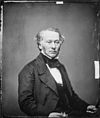
Benjamin Disraeli on Irish people 2 quotes
“Thus you have a starving population, an absentee aristocracy, and an alien Church, and in addition the weakest executive in the world. That is the Irish Question.”

Quotes About Benjamin Disraeli
Gain deeper perspective through quotes about Benjamin Disraeli from others.
Lord Acton on Benjamin Disraeli
“He was quite remarkable enough to fill a volume of Éloge. Someone wrote to me yesterday that no Jew for 1800 years has played so great a part in the world. That would be no Jew since St. Paul; and it is very startling.”
Stanley Baldwin on Benjamin Disraeli
“Toryism, as we know it, was illuminated, expounded, and made a gospel for a large portion of this country by the genius of Benjamin Disraeli. Most of us who have worked for our great party have founded our beliefs on, and derived our inspiration from that statesman.”
Robert Blake on Benjamin Disraeli 4 quotes
“Time and time again the stories we read about Disraeli's demeanour, dress and conversation remind us not so much of the grave sedate bourgeois England that he was destined to govern as of the England which flourished ten years after his death – the England of the Yellow Book and Oscar Wilde. Wilde acknowledged his debt. It was no accident that he chose the title of Dorian Gray for one of his most extravagant books, and his own famous epigrams might well, without incongruity, have appeared in the pages of a Disraeli novel.”
John Bright on Benjamin Disraeli 2 quotes
“Now, Mr. Disraeli is a man who does what may be called the conjuring for his party. He is what, amongst a tribe of Red Indians, would be called "the mystery man." He invents phrases for them... Mr. Disraeli is a man of brains, of genius, of great capacity for action, of a wonderful tenacity of purpose, and of a rare courage. He would have been a statesman if his powers had been directed by any noble principle or idea.”









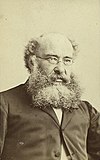

Misattributed Quotes
Quotes mistakenly credited to Benjamin Disraeli
“There are three kinds of lies: Lies, Damn Lies, and Statistics.”
“Moderation has been called a virtue to limit the ambition of great men, and to console undistinguished people for their want of fortune and their lack of merit.”
“The choicest pleasures of life lie within the ring of moderation.”
“John Montagu, 4th Earl of Sandwich: "Foote, I have often wondered what catastrophe would bring you to your end; but I think, that you must either die of the pox, or the halter."
Samuel Foote: "My lord, that will depend upon one of two contingencies; -- whether I embrace your lordship's mistress, or your lordship's principles."”
Samuel Foote: "My lord, that will depend upon one of two contingencies; -- whether I embrace your lordship's mistress, or your lordship's principles."”
“Under this roof are the heads of the family of Rothschild a name famous in every capital of Europe and every division of the globe. If you like, we shall divide the United States into two parts, one for you, James, and one for you, Lionel. Napoleon will do exactly and all that I shall advise him to do; and to Bismark will be suggested such an intoxicating programme as to make him our abject slave.”
“Every production of genius must be the production of enthusiasm.”
“Mediocrity can talk; but it is for genius to observe.”
“Plagiarists, at least, have the merit of preservation.”
“The wisdom of the wise, and the experience of ages, may be preserved by quotation.
• Variant: The wisdom of the wise and the experience of the ages are perpetuated by quotations.”
• Variant: The wisdom of the wise and the experience of the ages are perpetuated by quotations.”
About Benjamin Disraeli
Benjamin Disraeli, 1st Earl of Beaconsfield (21 December 1804 – 19 April 1881) was a British politician, novelist, and essayist, serving twice as Prime Minister of the United Kingdom. The anniversary of his death on 19 April is known as Primrose Day.