Link Copied!
Barbara Hepworth Quotes (1903-1975)
Artist, King


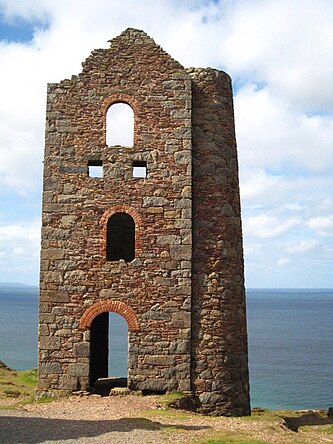
About Barbara Hepworth
Jocelyn Barbara Hepworth DBE (10 January 1903 – 20 May 1975) was a major British sculptor and artist of the twentieth century.
Best Barbara Hepworth Quotes
Shortest
Earliest
Explore our curated collection of the most famous and impactful Barbara Hepworth quotes.

“[the 1960's began] with a feeling of tremendous liberation, because I at last had space and money and time to work on a much bigger scale.”
“He [Giovanni Ardini, Italian master-carver] opened up a new vista for me of the quality of form, light, and colour contained in the Mediterranean conception of carving.”
“Light and space ... are the sculptor's materials as much as wood or stone ... I feel that I can relate my work more easily, in the open air, to the climate and the landscape.”
“Ascended Kynthos alone, the cave of Apollo – half-way magnificent and majestic. A pool with fine fig trees nearby full of giant (sacred?) toads – leaping and barking. Also green frogs.”
“It is easy now to communicate with people through abstraction, and particularly so in sculpture. Since the whole body reacts to its presence, people become themselves a living part of the whole.”
“Whenever I am embraced by land and seascape I draw ideas for new sculptures; new forms to touch and walk around, new people to embrace, with an exactitude of form that those without sight can hold and realize.. ..It is essentially practical and passionate.”
“The Acropolis – the spaces between the columns – the depth of flutings to touch – the breadth, weight and volume – the magnificence of a single marble bole up-ended -. The passionate warm colour of the marble and all-pervading philosophic proportion and space.”
“Saw a magnificent Koros – tall, fierce and passionate bigger than life size – in the Museum. A heavenly work – the backs and buttocks in relation to the hip and waist – an inspiration. I thought the fragment of leg and calf (attached below the knee) was falsely attributed.”
“I've found opposition to my teaching because I said it's not the strength which does it, it's a rhythm. You don't need huge muscles great strength. In fact, if you have that and misuse it, you're going to damage the material. It's absurd. It's a rhythmical flow of an idea, whichever sex you are.”
“A constructive work is an embodiment of freedom itself, and is unconsciously perceived, even by those who are consciously against it. The desire to live is the strongest universal emotion, it springs from the depths of our unconscious sensibility – and the desire to give life is our most potent, constructive, conscious expression of this intuition.”
“Before I start carving the idea must be almost complete. I say 'almost' because the really important thing seems to be the sculptor's ability to let his intuition guide him over the gap between conception and realization without compromising the integrity of the original idea; the point being that the material has vitality – it resists and makes demands..”
“My left hand is my thinking hand. The right is only a motor hand. This holds the hammer. The left hand, the thinking hand, must be relaxed, sensitive. The rhythms of thought pass through the fingers and grip of this hand into the stone. It is also a listening hand. It listens for basic weaknesses or flaws in the stone; for the possibility or imminence of fractures.”

“Carving is interrelated masses conveying an emotion; a perfect relationship between the mind and the colour, light and weight which is the stone, made by the hand which feels. It must be so essentially sculpture that it can exist in no other way, something completely the right size but which has growth, something still and yet having movement, so very quiet and yet with a real vitality.”
“I cannot write anything about landscape without writing about the human figure and the human spirit inhabiting the landscape, for me, the whole art sculpture is a fusion of these two element – the balance of sensation and the evocation of man in his universe. Every work in sculpture is either a figure I see, or a sensation I have, whether in Yorkshire, Cornwall or Greece, or the Mediterranean.”

“It's [the art-magazine 'Circle'] been reprinted and it's now referred to as classic. Well it is. But Ben Nicholson, Sir Leslie Martin, Gabo and Leslie Martin's wife, Sadie Speaight, and I did that. We were sitting round the fire and we said, 'Why shouldn't we do a book?'. And so we started and now it's a classic and referred to as such.”
“I loved the family and everything to do with them. I loved the environment and the cooking. I used to cook and go in my studio. I had to have methods of working. If I was in the middle of a work and the oven burned or the children called for me, I used to make an arrangement with music, records, or poetry, so that when I went back to the studio, I picked up where I left off. I enjoyed it, you see; it was part of me.”
“At no point do I wish to be in conflict with any man or masculine thought. It doesn't enter my consciousness. I think art is anonymous. It's not competitive with men. It's a complementary contribution. I've said that and I do believe it, that one does contribute to art and that's nothing to do with being male or female.. .I don't think a good work of art can just be said to be feminine or masculine.. ..art's either good or isn't.”
“I have to dedicate myself. Do you understand? I don't feel conflict in myself because if I do, my work doesn't go well. If there's conflict I have to sit down or go to sleep to solve it. And the only way to solve the problem is to produce really affirmative work which can only come – I can't make it come. I can't conjure it up. I can only go to sleep and hope it happens.. .You have to digest it and if you digest you can contribute.”
“Sculpture is, in the twentieth century, a wide field of experience, with many facets of symbol and material and individual calligraphy. But in all these varied and exciting extensions of our experience we always come back tot the fact that we are human beings of such and such a size, biologically the same as primitive man, and that it is through drawing and observing, or observing and drawing, that we equate our bodies with our landscape.”

“I have gained very great inspiration from the Cornish land- and seascape, the horizontal line of the sea and the quality of light and colour which reminds me of the Mediterranean light and colour which so excites one’s sense of form; and first and last there is the human figure which in the country becomes a free and moving part of a greater whole. This relationship between figure and landscape is vitally important to me. I cannot feel it in a city.”

“One of the mysteries is how the human mind can hear a piece of music, a symphony from the beginning to the end, before beginning; or see a sculpture finished all the way round, when it doesn't exist. Now these faculties are the sort faculties which are needed in sciences, math, and medicine and all kind of things. But if one has them, one has to learn to use them.. .You can't start with a block and say: 'Now it's going to dictate me'. You [the artist] dictate to it.”
“I do not want to make a stone horse that is trying to and cannot smell the air. How lovely is the horse’s sensitive nose, the dogs moving ears and deep eyes; but to me these are not stone forms and the love of them and the emotion can only be expressed in more abstract terms. I do not want to make a machine that cannot fulfil its essential purpose; but to make exactly the right relation of masses, a living thing in stone, to express my awareness and thought of these things.”
“'Circle' was published at last [constructivist manifesto, in 1937 - with Naum Gabo, Ben Nicholson a.o.]. Mondrian has made his studio opposite so very beautiful, and his company was always inspiring, as it had been in Paris when we used to visit him. After a while he really seemed to our domestic scene. His studio and Ben’s [the sculptor Ben Nicholson; Barbara was his wife then] were most austere, but my studio was a jumble of children, rocks, sculptures, trees, importunate flowers and washing.”
Barbara Hepworth Quotes by Topic
Find exactly what you are looking for by browsing this categorized list of Barbara Hepworth quotes by topic.
Barbara Hepworth on Abstract art 2 quotes
“Working in the abstract way seems to release one's personality and sharpen the perceptions so that in the observation of humanity or landscape it is the wholeness of inner intention which moves one so profoundly. The components fall into place and one is no longer aware of the detail except as the necessary significance of wholeness and unity.. ..a rhythm of form which has its roots in earth but reaches outwards towards the unknown experiences of the future. The thought underlying this form is, for me, the delicate balance the spirit of man maintains between his knowledge and the laws of the universe.”

Barbara Hepworth on Cornwall
“I have gained very great inspiration from the Cornish land- and seascape, the horizontal line of the sea and the quality of light and colour which reminds me of the Mediterranean light and colour which so excites one’s sense of form; and first and last there is the human figure which in the country becomes a free and moving part of a greater whole. This relationship between figure and landscape is vitally important to me. I cannot feel it in a city.”
Quotes About Barbara Hepworth
Gain deeper perspective through quotes about Barbara Hepworth from others.
Quote of Henry Moore on Barbara Hepworth
“When the Surrealist exhibition [in London, 1936] was held Barbara was by then married to [the sculptor] Ben Nicholson, they were strongly against it [ Surrealism ], though I felt, and feel, that there needn't be the sort of division in art that sprang up then. And Ben had also been much influenced by Mondrian. He was devoted to abstract art and she became much more interested in the abstract form. But for me, the essence of sculpture has always been the human figure. Still, of course, one kept in touch and one met and one’s paths crossed.”
nl:Bram Hammacher on Barbara Hepworth
“Hepworth's work truly resides in abstract forms. Her sculptures throughout her life maintained a primordial, almost prehistoric Brancusian egg-reference, with the near constant presence of the hole. Hepworth was quoted as saying, 'The pierced hole allows bodily entry and re-entry'.”
Quote on Barbara Hepworth
“She had her first child in the summer of 1929, and her triplets in the autumn of 1934, and shortly afterwards began to make her first really abstract work. It is through her 'Mother & Child' carvings [she started c. 1935], that Barbara Hepworth began to work out her tendency to pierce the stone and to group pieces in relation to each other. In many ways the removal of stone at the center of the figure.. ..seem integrally bound up with the development of the hole in modern sculpture.”
Quote of Lori Brookhart-Schervish on Barbara Hepworth
“The comparisons and contrasts between these two artists [ Henry Moore and Barbara Hepworth] are astounding. They went to the same schools, were part of the same artist movements like the 'Seven and Five Society' and 'Unit One', they spent summer holidays together - Henry Moore even lived in one of Barbara Hepworth’s old houses after she had moved to the country. The influence between the two, whether conscious or subconscious, cannot be denied. The discrepancies of who did what first [ piercing the stone / making a hole] feels insignificant when you consider all they have done in reflection of each other.”
About Barbara Hepworth
Jocelyn Barbara Hepworth DBE (10 January 1903 – 20 May 1975) was a major British sculptor and artist of the twentieth century.
QuotesCosmos Cross-Civilizational Archive
Explore Related Wisdom Pillars, Worldviews & Canonical Works
Discover how humanity's greatest philosophers, sacred scriptures, and literary masterpieces address the core questions of existence.
30 Wisdom Pillars
22 Worldviews & Traditions
Canonical Books & Scriptures