Link Copied!
Arturo Alfonso Schomburg Quotes (1874-1938)
Writer, Painter, Activist
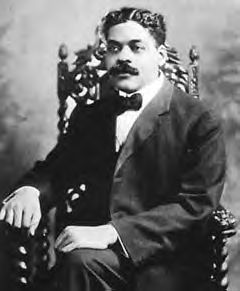


About Arturo Alfonso Schomburg
Arturo Alfonso Schomburg (January 24, 1874 – June 10, 1938), was a historian, writer, collector, and activist for equal rights. Schomburg was a Puerto Rican of African and German descent. He moved to the United States in 1891, where he researched and raised awareness of the contributions that Afro-Latin Americans and African Americans have made to society. He was an important intellectual figure in the Harlem Renaissance. Over the years, he collected literature, art, slave narratives, and other materials of African history, which were purchased to become the basis of the Schomburg Center for Research in Black Culture, named in his honor, at the New York Public Library (NYPL) branch in Harlem.
Best Arturo Alfonso Schomburg Quotes
Shortest
Earliest
Explore our curated collection of the most famous and impactful Arturo Alfonso Schomburg quotes.

“With such crucial truths to document and establish, an ounce of fact is worth a pound of controversy”
“José Martí always stated that the republic would have been impossible without the brawn and muscle of all races.”

“What of it if the darker races are getting consciousness, isn't the world large enough for the people of all bloods to dwell therein?”

“The works of José Julián Acosta and Salvador Brau have been my first inspiration to a further and intense study of the Negro in America.”
“The Negro has been throughout the centuries of controversy an active collaborator, and often a pioneer, in the struggle for his own freedom and advancement.”
“Vindicating evidences of individual achievement have as a matter of fact been gathered and treasured for over a century: Abbé Gregoire's liberal-minded book on Negro notables in 1808 was the pioneer effort”

“By virtue of their being regarded as something "exceptional," even by friends and well-wishers, Negroes of attainment and genius have been unfairly disassociated from the group and group credit lost accordingly.”
“Already the Negro sees himself against a reclaimed background, in a perspective that will give pride and self-respect ample scope, and make history yield for him the same values that the treasured past of any people affords.”
“Almost keeping pace with the work of scholarship has been the effort to popularize the results, and to place before Negro youth in the schools the true story of race vicissitude, struggle and accomplishment. So that quite largely now the ambition of Negro youth can be nourished on its own milk.”

“There is a sad and tragic chapter in the history of Cuba under Spanish rule, that seems to circle with pathetic recollections the dreadful wrongs done to innocent men....A calm generally precedes these conditions and I will attempt to carry you through the events as they were ushered into existence by the break of day.”
“The modern school with its many books, but without systematic lectures, turns out many graduates who are lacking in retentiveness and no sooner than the sound of the words has left their teachers' lips, the subject been forgotten; and if they are called upon to explain the theme, it is reduced to an incomprehensible mass of meaningless words.”

“Many Cuban Negroes curse the dawn of the Republic. Negroes were welcomed in the time of oppression, in the time of hardship, during the days of revolution, but in the days of peace and of white immigration they are deprived of positions, ostracized and made political outcasts. The Negro has done much for Cuba; Cuba has done nothing for the Negro.”
“In Europe we have had the historian Hume who said in one of his essays that "there are Negro slaves dispersed all over Europe, of whom none ever discovered any symptoms of ingenuity.... In Jamaica, indeed, they talk of one Negro as a man of parts and learning; but it is likely he is admired for slender accomplishments, like a parrot who speaks a few words plainly."”

“The African brought to America among his patrimony musical instruments...The African fetiches with their religious dancing has had its counterpart in the Voodoo ceremonies in Haiti and the Nanigoz societies of Cuba, known to exist in those islands as late as 1890. It is quite true that the Church, not knowing the true interpretation of music and dancing carried on by the African has dubbed it with the term savagery.”
“The bigotry of civilization which is the taproot of intellectual prejudice begins far back and must be corrected at its source. Fundamentally it has come about from that depreciation of Africa which has sprung up from ignorance of her true rôle and position in human history and the early development of culture. The Negro has been a man without a history because he has been considered a man without a worthy culture.”

“The blatant Caucasian racialist with his theories and assumptions of race superiority and dominance has in turn bred his Ethiopian counterpart-the rash and rabid amateur who has glibly tried to prove half of the world's geniuses to have been Negroes and to trace the pedigree of nineteenth century Americans from the Queen of Sheba. But fortunately to-day there is on both sides of a really common cause less of the sand of controversy and more of the dust of digging.”
“We have been instructed to look at the Negro as "idle, worthless, indolent and disloyal," but a careful examination of the West Indies and South America does not show this to be true. Many instances of advancement by hard industry can be noted in any of the many spots of the New World. There is not a single field of industrial activity in which the descendants of the African have not contributed their mite toward an improvement of conditions which the gold seekers and pleasure hunters were wont to overlook.”
“Imagine a boy living in the city of his birth and not knowing who was the most noted native painter! It is true the fact was recorded on a marble tablet duly inscribed and placed on the wall of a building where it could easily be read. However, the inhabitants of San Juan knew but little of the man thus honored. The white Spaniards who knew, spoke not of the man's antecedents. A conspiracy of silence had been handed down through many decades and like a veil covered the canvases of this talented Puerto Rican. Today we understand the silence and know the meaning of it all.”
“Though it is orthodox to think of America as the one country where it is unnecessary to have a past, what is a luxury for the nation as a whole becomes a prime social necessity for the Negro. For him, a group tradition must supply compensation for persecution, and pride of race the antidote for prejudice. History must restore what slavery took away, for it is the social damage of slavery that the present generations must repair and offset. So among the rising democratic millions we find the Negro thinking more collectively, more retrospectively than the rest, and apt out of the very pressure of the present to become the most enthusiastic antiquarian of them all.”

“The remark attributed to John C. Calhoun,' "that the Negro race was so inferior it could not produce a single individual who could conjugate a Greek verb," was accepted half a century ago in this country as the last word on the subject of the inferiority of the Negro. Thomas Jefferson, one of the fathers of the revolution, and a friend of the Negro race, who was not so dogmatic as Calhoun, said: "I think one (Negro) could scarcely be found capable of tracing and comprehending the investigations of Euclid: and that in imagination they are dull, tasteless and anomalous.... Never yet could I find that a black had uttered a thought above the level of plain narration; never saw even an elementary trait of painting or sculpture. ... Religion indeed, has produced a Phyllis Wheatley, but it could not produce a poet." So much for the American statesmen.”
“After this great era of public interest and discussion, it was Alexander Crummell, who, with the reaction already setting in, first organized Negro brains defensively through the founding of the American Negro Academy in 1897 at Washington. A New York boy whose zeal for education had suffered a rude shock when refused admission to the Episcopal Seminary by Bishop Onderdonk, he had been befriended by John Jay and sent to Cambridge University, England, for his education and ordination. On his return, he was beset with the idea of promoting race scholarship, and the Academy was the final result. It has continued ever since to be one of the bulwarks of our intellectual life, though unfortunately its members have had to spend too much of their energy and effort answering detractors and disproving popular fallacies. Only gradually have the men of this group been able to work toward pure scholarship.”

“We have chairs of almost everything, and believe we lack nothing, but we sadly need a chair of Negro history. The white institutions have their chair of history; it is the history of their people, and whenever the Negro is mentioned in the text-books it dwindles down to a footnote. The white scholar's mind and heart are fired because in the temple of learning he is told how on March 5, 1770, the Americans were able to beat the English; but to find Crispus Attucks it is necessary to go deep into special books. In the orations delivered at Bunker's Hill, Daniel Webster never mentioned the Negroes having done anything, and is silent about Peter Salem. In the account of the battle of Long Island City and around New York under Major-General Nathaniel Greene, no mention is made of the eight hundred Negro soldiers who imperiled their lives in the Revolutionary War. Cases can be shown right and left of such palpable omissions.”
“But even this latter groups who came within the limelight of national and international notice, and thus into open comparison with the best minds of their generation, the public too often regards as a group of inspired illiterates, eloquent echoes of their Abolitionist sponsors. For a true estimate of their ability and scholarship, however, one must go with the antiquarian to the files of the Anglo-African Magazine, where page by page comparisons be made. Their writings show Douglass, McCune Smith, Wells Brown, Delany, Wilmot Blyden and Alexander Crummell to have been as scholarly and versatile as any of the noted publicists with whom they were associated. All of them labored internationally in the cause of their fellows; to Scotland, England, France, Germany and Africa, they carried their brilliant offensive of debate and propaganda, and with this came instance upon instance of signal foreign recognition, from academic, scientific, public and official sources.”
“Reinforcing these were still rarer items of Africana and foreign Negro interest, the volumes of Juan Latino,7 the best Latinist of Spain in the reign of Philip V, incumbent of the chair of Poetry at the University of Granada, and author of Poems printed there in 1573 and a book on the Escorials published 1576; the Latin and Dutch treatises of Jacobus Eliza Capitein, a native of West Coast Africa and graduate of the University of Leyden, Gustavus Vassa's celebrated autobiography that supplied so much of the evidence in 1796 for Granville Sharpe's attack on slavery in the British colonies, Julien Raymond's Paris exposé of the disabilities of the free people of color in the then (1791) French colony of Hayti, and Baron de Vastey's Cry of the Fatherland, the famous polemic by the secretary of Christophe that precipitated the Haytian struggle for independence. The cumulative effect of such evidences of scholarship and moral prowess is too weighty to be dismissed as exceptional.”
What Arturo Alfonso Schomburg Said About Others
Discover personal opinions Arturo Alfonso Schomburg shared regarding contemporaries.
Arturo Alfonso Schomburg on José Martí
“José Martí always stated that the republic would have been impossible without the brawn and muscle of all races.”

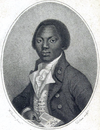
Arturo Alfonso Schomburg on Olaudah Equiano
“Reinforcing these were still rarer items of Africana and foreign Negro interest, the volumes of...Gustavus Vassa's celebrated autobiography that supplied so much of the evidence in 1796 for Granville Sharpe's attack on slavery in the British colonies...The cumulative effect of such evidences of scholarship and moral prowess is too weighty to be dismissed as exceptional.”
Quotes About Arturo Alfonso Schomburg
Gain deeper perspective through quotes about Arturo Alfonso Schomburg from others.
Melissa Castillo-Garsow on Arturo Alfonso Schomburg 2 quotes
“Within the still incipient study of Afro-Lati*literature, where the Afro-Lati*is somewhat known in prose through insightful accounts such as Black Cuban, Black American (Evelio Grillo 2000) and Down These Mean Streets (Piri Thomas 1967), as well as through the figure of Arturo Schomburg, the creativity and diversity that results from the multiple dimensions of the Afro-Lati*poet can only be found in the present ¡Manteca! Inspired by Grillo, Thomas and Schomburg, then, at the foundation of this anthology is also a recognition of the close relationships between African Americans and Afro-Lati* (who are also African Americans); these relationships have been significant for both groups from collaborating in politics to working together in the arts for the past one hundred years.”
Elinor DesVerney Sinnette on Arturo Alfonso Schomburg
“For Arthur Schomburg, the Harlem Renaissance proved to be an excellent environment for conducting his bibliophilic research and an ideal opportunity to promote interest in black history and culture. Responding to the urgent desire of black writers and artists to use "black themes, Schomburg supplied information both from his encyclopedic knowledge and from his private collection. The Harlem Renaissance also stimulated Schomburg himself to write more for publication, and this proved to be his most prolific period.”
Jesús Colón on Arturo Alfonso Schomburg
“We also missed in the branch library news for February dedicated to Puerto Rico any mention of the Schomburg Collection, at 135th Street and Lenox Avenue. Though the collection itself is dedicated to the Negro people and their history, there is a great deal of material on prominent Negro Puerto Ricans in its files. Besides, Arturo Schomburg, a great figure in the life of the 19th century Puerto Rican in New York was himself a Puerto Rican, born in San Juan, the capital of Puerto Rico. Its seems to be that one of the main divisions in the New York Public Library system-bearing the name of a great Negro Puerto Rican should at least have been mentioned in a library publication purporting to compile the most important books dealing with the cultural developments and contributions of Puerto Rico and Puerto Ricans in New York.”
Lisa Sánchez González on Arturo Alfonso Schomburg
“more research needs to be done on Schomburg, who claimed his Black identity very publicly, but who also simultaneously claimed his Puerto Rican identity, a combination he did not consider inconsonant. In forging my biographical perspective introducing both Belpré and Schomburg, I have found it necessary to emphasize what they accomplished, rather than speculate on their inner racial consciousness, in order to further research and discussion of their legacies. Both were bibliophiles, both were successful professionals, both were brilliant and quite public cultural intellectuals, both were writers, both hid details about their lives in Puerto Rico before moving to the states, and those secrets-and their reasons for keeping those secrets-may never be known for certain.”
Adalaine Holton quoted on Arturo Alfonso Schomburg
“By building and popularizing a counter-archive of Afrodiasporic history, Schomburg made a radical intervention in the production of historiographic knowledge. His collection and his essays effectively refuted the dominant ideology of white supremacy and the popular and official forms of historiographic knowledge in which this discourse was embedded.”
Miriam Jiménez Román on Arturo Alfonso Schomburg
“Afro-Latinos serve as bridges. The most obvious example would be Arturo Alfonso Schomburg. The Schomburg Center for Black Culture [Harlem, New York, USA] is probably the premiere institution for any type of serious scholarship and research on Africans and their descendants. Schomburg was a Black Puerto Rican who came to the United States from Puerto Rico in 1891 at 17. He became an integral part of the Black community – African American and Caribbean; most definitely he served as a bridge. Most of his writings were about Black Latinos, whether in Spain, the Caribbean or South America.”
Lisa Sánchez González quoted on Arturo Alfonso Schomburg
“His goals in this archival project are to identify and celebrate Black contributions to transamerican civilization, and he was particularly (though not exclusively) prone to research concerning men of African descent. In these lifelong pursuits, Schomburg was extremely successful; the papers and artifacts he gathered became the world's first major collection of transamerican and transatlantic Africana, which is today the African diaspora's largest combined archives.”
Mayra Santos-Febres on Arturo Alfonso Schomburg
“He grew up on the island, moved to New York when he was 17 years old, and became one of the most important bibliophiles and researchers on Africana Studies. His international views on race and the history of people of African descent is heavily influenced on the fact that he spoke Spanish, French, and English, and grew up outside of the U.S. Our program is inspired by the legacy of Arturo Schomburg”
Sharifa Rhodes-Pitts quoted on Arturo Alfonso Schomburg
“Schomburg belonged to a circle of "race men" who were also book fiends, sharing and trading recent acquisitions. Before there was such a thing as the New Negro movement, he had cofounded the Negro Society for Historical Research, was a member of the Negro Book Collectors Exchange, and had served as president of the American Negro Academy.... The desire of these men to uncover the forgotten history of black people was matched by a desire to protect and steward that knowledge.”
About Arturo Alfonso Schomburg
Arturo Alfonso Schomburg (January 24, 1874 – June 10, 1938), was a historian, writer, collector, and activist for equal rights. Schomburg was a Puerto Rican of African and German descent. He moved to the United States in 1891, where he researched and raised awareness of the contributions that Afro-Latin Americans and African Americans have made to society. He was an important intellectual figure in the Harlem Renaissance. Over the years, he collected literature, art, slave narratives, and other materials of African history, which were purchased to become the basis of the Schomburg Center for Research in Black Culture, named in his honor, at the New York Public Library (NYPL) branch in Harlem.