“
Almost keeping pace with the work of scholarship has been the effort to popularize the results, and to place before Negro youth in the schools the true story of race vicissitude, struggle and accomplishment. So that quite largely now the ambition of Negro youth can be nourished on its own milk.
— Arturo Alfonso Schomburg
What It Means
This is a placeholder explanation generated by the low-overhead model. It interprets "Almost keeping pace with the work of scholarship has been the effort to popularize the results, and to place before Negro youth in the schools the true story of race vicissitude, struggle and accomplishment. So that quite largely now the ambition of Negro youth can be nourished on its own milk." in the context of "" to mean that wisdom is timeless.

Source:
The 'What it means' explanation text was generated by Google Gemini Flash (accessed January 19, 2026). https://gemini.google.com/app
Tags
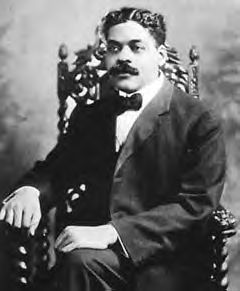
About Arturo Alfonso Schomburg
Arturo Alfonso Schomburg (January 24, 1874 – June 10, 1938), was a historian, writer, collector, and activist for equal rights. Schomburg was a Puerto Rican of African and German descent. He moved to the United States in 1891, where he researched and raised awareness of the contributions that Afro-Latin Americans and African Americans have made to society. He was an important intellectual figure in the Harlem Renaissance. Over the years, he collected literature, art, slave narratives, and other materials of African history, which were purchased to become the basis of the Schomburg Center for Research in Black Culture, named in his honor, at the New York Public Library (NYPL) branch in Harlem.
View all quotes →