Link Copied!
Arthur G. Bedeian Quotes (1946-)
Author
About Arthur G. Bedeian
Arthur G. Bedeian (born December 22, 1946) is an American business theorist and Emeritus Professor of Management at Louisiana State University, known from his book coauthored with Daniel A. Wren,titled "The evolution of management thought."
Best Arthur G. Bedeian Quotes
Shortest
Earliest
Explore our curated collection of the most famous and impactful Arthur G. Bedeian quotes.
“Management as an activity has always existed to make people’s desires through organized effort. Management facilitates the efforts of people in organized groups and arises when people seek to cooperate to achieve goals.”

“Th[e] uniqueness [of the role of dean] stems from an absence of objective and immediate measures of performance combined with arcane governance procedures that may permit some deans to hold office for years without being confronted by those who disagree with their judgments...”

“Organizations have been viewed from many perspectives. Depending upon the background and interests of the investigators, the dimensions and characteristics of organizations that are emphasized vary greatly. However, there does appear to be some agreement about the fact that organizations generally develop as instruments for attaining specific goals, and that they are likely to emerge in situations where people recognize a common or complementary advantage that can best be served through collective, as opposed to individual, action.”
“While numerous studies have dealt with the nature of organization-environment relations, the first major attempt to identify the types of organizational structure and managerial practice that are appropriate for different environmental conditions was conducted by Burns and Stalker, who studied twenty manufacturing firms in England and Scotland. Of these, fifteen were in the electronics industry, four were in research and development, and one was a major manufacturer. The particular environmental conditions examined were the rates of change in the scientific technology and the relevant product markets of the firms being studied.”
“Several features or attributes of organizations can therefore be recognized
# Organizations are social institutions (entities) composed of sets of persons with established patterns of interaction.
# Organizations develop to achieve specific goals. Therefore, organizations are social creations that require order and cooperation.
# Organizations are social instruments possessing relatively identifiable boundaries and existing on a relatively permanent basis. While this final point is perhaps less clear than were those that precede it, the identification of fixed boundaries (for instance, the distinction between members and nonmembers) and continuity (that is, existence and identity over time) provide a conceptual framework for the study of organizational activity.”
What Arthur G. Bedeian Said About Others
Discover personal opinions Arthur G. Bedeian shared regarding contemporaries.
Arthur G. Bedeian on Tom Burns 2 quotes
“The Management of Innovation (1961) [is]... the first major attempt to deal with the nature of organization-environment relations and identify the types of organizational structure and managerial practices that are appropriate for different environmental condition. Introduced the mechanistic-organic polarity (never a dichotomy) to the management lexicon.”
Arthur G. Bedeian on James D. Thompson
“Organizations in Action (1964) [was] a masterpiece on the behavior of organizations, incorporating an open-systems perspective to explain the influence of technology on the matter in which work systems are structured for task accomplishment.”
Arthur G. Bedeian on Louis A. Allen
“The early nineteen-fifties saw the first widespread emergence of business dictionaries in the United States. The first management vocabulary, however, was not published until the year 1958. It was entitled, Common Vocabulary of Professional Management (COMVOC), and was prepared the direction of Louis A. Allen, President of Louis A. Allen Associates, Incorporated.
Through the three editions (1958, 1963, 1968) of COMVOC, its coverage has expanded from 49 to 149 basic management terms. Its adopters include numerous companies throughout the world, the majority of which have been clients of Allen Associates. Earlier editions of COMVOC are reproduced in two of Allen's earlier publications, Management and organization and The Management Profession.
Using COMVOC, the reader will quickly note that it follows a functional approach to management. Planning, organizing, leading and controlling are listed as the four functions of management...”
Arthur G. Bedeian on Henry R. Towne
“Improvements in the prevailing methods of work and organization during this era were principally initiated by men actively engaged in industrial enterprises. The person most often referred to as the first to propose a rational and systematic science of management (and hence organization) was Henry R. Towne (1844-1924), president of the Yale and Towne Manufacturing Company, who in 1886 presented a paper titled "The Engineer as Economist." His comments, delivered at a meeting of the American Society of Mechanical Engineers (ASME), stressed the importance of management as a field of independent study, equal to that of engineering. Noting the almost complete lack of management literature, the virtual absence of a medium for the exchange of administrative ideas and experience, and the total absence of management associations, Towne urged that ASME serve as a center for the development and study of industrial management. Such a suggestion was considered nothing less than revolutionary.”
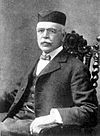
About Arthur G. Bedeian
Arthur G. Bedeian (born December 22, 1946) is an American business theorist and Emeritus Professor of Management at Louisiana State University, known from his book coauthored with Daniel A. Wren,titled "The evolution of management thought."
QuotesCosmos Cross-Civilizational Archive
Explore Related Wisdom Pillars, Worldviews & Canonical Works
Discover how humanity's greatest philosophers, sacred scriptures, and literary masterpieces address the core questions of existence.
30 Wisdom Pillars
22 Worldviews & Traditions
Canonical Books & Scriptures