Link Copied!
Arnold Tustin Quotes (1899-1994)
About Arnold Tustin
Arnold Tustin (July 16, 1899 – January 9, 1994) was a British engineer, and Professor of Engineering at the University of Birmingham and at Imperial College London, who made important contributions to the development of control engineering and its application to electrical machines.
Best Arnold Tustin Quotes
Shortest
Earliest
Explore our curated collection of the most famous and impactful Arnold Tustin quotes.
“He is transported to that curious world of decibels and negative frequencies where filter experts live.”
“Actual economic systems are constantly subjected to change and disturbances, which would result in irregularity.”
“Methods by which engineers stabilise their mechanisms suggest analogous possibilities for stabilising economic systems.”
“When beliefs need some modification, We make it with much trepidation, For our world is then new, And things seem all askew, 'til we're used to the new formulation.”
“Feedback: It is the fundamental principle that underlies all self-regulating systems, not only machines but also the processes of life and the tides of human affairs.”
“Consideration of a further possibility, namely that of constructing physical systems that are analogues of the economic system, and of observing and recording their behaviour.”

“The analysis of engineering systems and the understanding of economic structure have advanced since then, and the time is now more ripe to bring these topics into a potentially fruitful marriage.”

“Already well known to engineers all over the world as a pioneer in the development of automatic control, it may well turn out that Gordon Brown will make a still deeper mark on the engineering development of this century.”
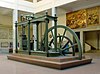
“The topic that I have attempted to explore is the usefulness of these notions of the engineer, about feeds-back, harmonic components and the like, in application to the analogous problems of economic fluctuation and economic regulation.”
“The ‘theory of control systems’ in engineering is now a well-developed subject, making use of some remarkably powerful concepts and methods of analysis, especially in relation to problems of stabilization and the prevention of unwanted oscillations.”

“The separate excitation of the dynamo corresponds with the independently determined investment in the economic model, and the total excitation with income. Perhaps in this electrical age, the conventional metaphor of ‘priming the pump’ might be dropped in favour of ‘exciting the dynamo’.”
“The striking parallel between the economic models that are currently under discussion and some engineering systems suggests the hope that in some way the rapid progress in the development of the theory and practice of automatic control in the world of engineering may contribute to the solution of the economic problems.”
“Once a full-employment policy has been adopted... the economic ’system’ just on that account is significantly different. Its equilibrium position has been shifted to a rising curve of trend close to and following the employment ceiling. The conditions of stability about this new level are radically different because the region of operation is now within the less flexible and sharply non-linear range of employment saturation”
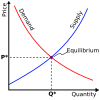
“The nature of the instability of an unregulated free-enterprise system is only now beginning to be clearly understood. Perhaps the degree of understanding already attained ensures that the grosser shortcomings have gone for ever, and to that extent the conflict between Capitalism and Communism is about issues that belong to the past. It may now be too late. The gods must smile to note how different the state of the world might have been if the progress of economic thought of the last twenty years had been advanced by even ten years.
The possibility of a stable economic life with full utilization of our resources is still not sufficiently assured, and it is extremely important that it should be so assured, and that the whole world should accept this as a fact. The work that is being done in econometrics is massive, and undaunted by mathematical difficulties, but it appears, at any rate as viewed from outside, to be unclear as to its aim.”
The possibility of a stable economic life with full utilization of our resources is still not sufficiently assured, and it is extremely important that it should be so assured, and that the whole world should accept this as a fact. The work that is being done in econometrics is massive, and undaunted by mathematical difficulties, but it appears, at any rate as viewed from outside, to be unclear as to its aim.”

“The writer, who as an engineer has spent most of his life in factories, is inclined to look at the basis for investment from a technological point of view... Consider … the class of industrial investments only... The situation is one of entrepreneurs and boards of directors considering, from time to time, various ’possibilities of investment’, such as extra lathes or looms, an extension to a factory, a venture in some completely new product, and so on. It is helpful to think of these ’opportunities for investment’ as existing, in a given situation, in great number and variety, whether they are at that moment under active consideration or not. When any such possibility is considered it is assessed in respect of ’expected profitability’. One may conveniently think of all possibilities of investment as ’quanta’ that can be placed in a schedule of small ranges of expected profitability according to these assessments. The placement of a given ’opportunity for investment’ on this schedule has some ’margin of uncertainty’ (a curious analogy with the case of the quanta of physics).”
“Simulators set up the required system of interdependences, usually between electrical potentials or voltages as variables, by means of valve-amplifiers and electrical networks. Since the voltage across a capacitance is proportional to the integral of a current, that across an inductance to the first derivative of a current, and that across a resistor to the current itself, it is possible to arrange a network of electrical elements, with amplifiers and feeds-back where necessary, so that a given linear differential equation is caused to relate an ’output’ voltage to an ’input’ voltage. Thus a given linear system of interdependences can be simulated, either directly or in any convenient transformation. If non-linear relationships are required there is no universally applicable simple device, but there do exist a great variety of non-linear elements with non-linear characteristics that are known and to some extent; adjustable. These include non-linear resistors... and the characteristic curves of thermionic valves, of rectifiers and discharge vessels and of magnetic materials. Limits may be set by the use of neon tubes that become conducting when a certain voltage is exceeded, or by relays, and so on”
“It is possible that the major collaboration between economists and engineers is still to come, in the greater use of physical analogues and computers of the analogue type to avoid the difficulties of calculation. Apart from their major use as possible tools for economic regulation, physical analogues have a subsidiary use, for there are students of economics, as there are many students of engineering, who can better understand the significance of the somewhat formidable mathematics that tends to be used in this field, if they can first acquaint themselves with the types of behaviour in question as exhibited by physical objects that can be seen, felt, handled and experimented with. It may also be suggested that economists may find that what they have to say about economic policy will be very readily assimilated by one group of attentive pupils, namely the scientists, engineers and technicians of industry, if explanatory notions can be drawn from the theory of automatic control, which is now part of a normal engineering education. The aim of this essay has been to give explanations of system behaviour, and some approaches to its analysis, using geometrical construction and physical analogy where possible to clarify the implications of the more usual formal algebraic approach.”
Arnold Tustin Quotes by Topic
Find exactly what you are looking for by browsing this categorized list of Arnold Tustin quotes by topic.
Arnold Tustin on Economic system 2 quotes
“Methods by which engineers stabilise their mechanisms suggest analogous possibilities for stabilising economic systems.”

Arnold Tustin on Economic model
“The striking parallel between the economic models that are currently under discussion and some engineering systems suggests the hope that in some way the rapid progress in the development of the theory and practice of automatic control in the world of engineering may contribute to the solution of the economic problems.”
Arnold Tustin on Econometrics
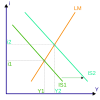
“The possibility of a stable economic life with full utilization of our resources is still not sufficiently assured, and it is extremely important that it should be so assured, and that the whole world should accept this as a fact. The work that is being done in econometrics is massive, and undaunted by mathematical difficulties, but it appears, at any rate as viewed from outside, to be unclear as to its aim.”
Arnold Tustin on Investment
“The writer, who as an engineer has spent most of his life in factories, is inclined to look at the basis for investment from a technological point of view... Consider … the class of industrial investments only... The situation is one of entrepreneurs and boards of directors considering, from time to time, various ’possibilities of investment’, such as extra lathes or looms, an extension to a factory, a venture in some completely new product, and so on. It is helpful to think of these ’opportunities for investment’ as existing, in a given situation, in great number and variety, whether they are at that moment under active consideration or not. When any such possibility is considered it is assessed in respect of ’expected profitability’. One may conveniently think of all possibilities of investment as ’quanta’ that can be placed in a schedule of small ranges of expected profitability according to these assessments. The placement of a given ’opportunity for investment’ on this schedule has some ’margin of uncertainty’ (a curious analogy with the case of the quanta of physics).”
Arnold Tustin on Director (business)
“The writer, who as an engineer has spent most of his life in factories, is inclined to look at the basis for investment from a technological point of view... Consider … the class of industrial investments only... The situation is one of entrepreneurs and boards of directors considering, from time to time, various ’possibilities of investment’, such as extra lathes or looms, an extension to a factory, a venture in some completely new product, and so on. It is helpful to think of these ’opportunities for investment’ as existing, in a given situation, in great number and variety, whether they are at that moment under active consideration or not. When any such possibility is considered it is assessed in respect of ’expected profitability’. One may conveniently think of all possibilities of investment as ’quanta’ that can be placed in a schedule of small ranges of expected profitability according to these assessments. The placement of a given ’opportunity for investment’ on this schedule has some ’margin of uncertainty’ (a curious analogy with the case of the quanta of physics).”

Arnold Tustin on Differential equation
“Simulators set up the required system of interdependences, usually between electrical potentials or voltages as variables, by means of valve-amplifiers and electrical networks. Since the voltage across a capacitance is proportional to the integral of a current, that across an inductance to the first derivative of a current, and that across a resistor to the current itself, it is possible to arrange a network of electrical elements, with amplifiers and feeds-back where necessary, so that a given linear differential equation is caused to relate an ’output’ voltage to an ’input’ voltage. Thus a given linear system of interdependences can be simulated, either directly or in any convenient transformation. If non-linear relationships are required there is no universally applicable simple device, but there do exist a great variety of non-linear elements with non-linear characteristics that are known and to some extent; adjustable. These include non-linear resistors... and the characteristic curves of thermionic valves, of rectifiers and discharge vessels and of magnetic materials. Limits may be set by the use of neon tubes that become conducting when a certain voltage is exceeded, or by relays, and so on”

Quotes About Arnold Tustin
Gain deeper perspective through quotes about Arnold Tustin from others.
A.W. Phillips on Arnold Tustin
“There are certain formal similarities between the problems of devising policies for economic stabilisation and those of designing automatic control systems. Methods have recently been developed by engineers for analysing the dynamic properties of quite complex models... [which] can also be used for the analysis of dynamic process models in economics... Professor Tustin’s book contains material of fundamental importance for all who are engaged in either theoretical or empirical studies of dynamic processes in economics. It throws new light on the possibilities and the difficulties of quantitative research in this field.”
American Society of Mechanical Engineers on Arnold Tustin
“Interest in the human-operator problem was stimulated by Prof. Arnold Tustin of the University of Birmingham, England, who suggested the application of the delay-line synthesizer to the study of some tracking records which he had brought with him from England. His experimental setup from which data were obtained consisted of a movable handle unit whose output was integrated once and then made to position a mechanical pointer. A second pointer, located next to the handle-driven pointer, was given an input motion consisting of a number of sinusoidal components of a nature sufficiently involved to prevent anticipation by an operator. The operator, upon noticing an error or difference between the two pointers, was required to move the handle in such a way as to reduce this error to a minimum value...”
P. De Latil on Arnold Tustin
“Two kinds of self-controlling machines exist: the regulators whose effect has a fixed value and the Servo-mechanisms whose effect has a value depending on the value of a variable which is the “control.” The idea is simple and reveals itself to be accurate. We have found it confirmed by the technical authority, Prof. Arnold Tustin, of the University of Birmingham, who during the war elaborated a system for the movement of gun turrets and naval guns. According to him, if a machine were entrusted with driving a car, it would be a regulator on a straight road and a servo on a winding one.”
Henk G. Stassen et al. on Arnold Tustin
“During the early phase of World War II, Britain was challenged to refine the understanding of human control of tanks and aircraft. The first engineering-oriented manual control models were probably those of Prof. Arnold Tustin in the United Kingdom applied to tank-control, followed closely by models by J.P. North of Boulton- Paul Aircraft Co.”
Shlomo Engelberg on Arnold Tustin
“Arnold Tustin (1899–1994) introduced the bilinear transform that bears his name to the control community to relate discrete-time and continuous-time systems.”
Peter Wellstead on Arnold Tustin
“Arnold Tustin is best known for his contributions to control theory and its application to electrical machines. However, his interests were much wider than electrical engineering, for he was a polymath who brought a systems approach to each of the many areas that he investigated. In the modern jargon he thought ‘outside the box’ and in doing so championed the use of control systems theory beyond its traditional limits. His impact was such that, in addition to his engineering contributions, he is well known for his systems treatment of economics and to a lesser extent... biology.”
About Arnold Tustin
Arnold Tustin (July 16, 1899 – January 9, 1994) was a British engineer, and Professor of Engineering at the University of Birmingham and at Imperial College London, who made important contributions to the development of control engineering and its application to electrical machines.
QuotesCosmos Cross-Civilizational Archive
Explore Related Wisdom Pillars, Worldviews & Canonical Works
Discover how humanity's greatest philosophers, sacred scriptures, and literary masterpieces address the core questions of existence.
30 Wisdom Pillars
22 Worldviews & Traditions
Canonical Books & Scriptures