Link Copied!
Arjo Klamer Quotes (1953-)



About Arjo Klamer
Arjo Klamer (born July 31, 1953) is a Dutch economist and professor in the economics of art and culture at the Faculty Erasmus School of History, Culture and Communication at the Erasmus University Rotterdam, especially known for his 1983 work Conversations with Economists.
Best Arjo Klamer Quotes
Shortest
Earliest
Explore our curated collection of the most famous and impactful Arjo Klamer quotes.
“Reciprocity is the basis of each relationship as long as the values to be exchanged are left open to interpretation. Measurement is enforced only when relationships break up. Just think of divorce proceedings. Accordingly, measurement cannot only devalue the goods measured, but also a relationship.”

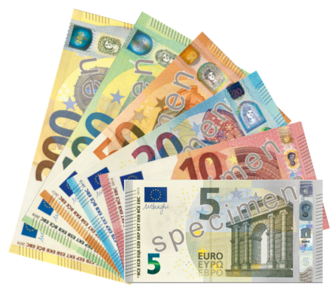
“The euro is bad for Europe. The euro is bad for the Netherlands, it’s especially bad because it is a stimulus for politicians to kill the Welfare State. I look forward to a European economy using multiple currencies. In the end that will be much better: it will make us more resistant to shocks and makes us less vulnerable to what is happening now.”

“When I tried to sort out the pernicious disagreements between new classical and new Keynesian economists, I conducted a series of conversations with the protagonists (Klamer 1983). The personal differences were revealing. The viva cious Robert Solow (with a taste for the quick quip), the serious Robert Lucas (never less than self-composed), the chatty Franco Modigliani (not shy of self promotion), and the unassuming James Tobin (wanting an interview at least as long as Lucas’s) quickly taught me how trenchant the rhetorical differences were.”
“The other economic camp made for quite a different story. James Tobin (an east-coast Ivy League policy advisor) had already won the Nobel Prize when I spoke with him. A true gentleman, he spoke softly about his life and his Keynesian approach to economics. With due respect, I worried after a time that the interview sounded so automatic, so “done” before, that it would add little to the book. Then I brought up Lucas’s criticism. Tobin began to speak much louder and faster (on transcribing the tape I actually had to adjust the volume). He remained reasonable and gentlemanly but his voice betrayed his indignation toward Lucas and his camp, about how they were misleading sensible Keynesian economic thought.”
“A gift is the transfer of a good without an explicit specification of a quid pro quo. The good can be a tangible thing or money, but it also can be intangible, as in the form of time, attention, information or knowledge. A present is a gift and so may be the attention that one person ‘gives’ another, or the time that a person donates to an art institute as a volunteer. Usually a gift entails reciprocity: the giver expects something in return for the gift given. Friends expect friendly gestures in return for their friendly gestures; donors expect some form of appreciation or another; and those who give presents at Christmas expect to receive presents in return. The key to understanding the phenomenon of the gift is the nature of the reciprocity involved.”
“Money talk tends to be confusing. When people talk money, they usually think “wealth”, “costs”, “profit”, “income”, “gold”, “greed”, “time” (as in “time is money”), or something like that. In everyday discourse money symbolises capitalism, for better or worse: money as the life or evil force of the economy. As Liza Minnelli sings to us in the classical musical Cabaret: “Money makes the world go round… ”. The tune resonates when people exclaim “money” in response to the question what they are after in life, or when they say that everything people do ultimately revolves around money. All this talk is clear enough. The confusion enters when we observe the very same people who are so enthused about money, stubbornly suppress any reference to money when it comes to goods like the love for their partner, parents and children, friendship, science (truth!) and art (beauty!).”

Arjo Klamer Quotes by Topic
Find exactly what you are looking for by browsing this categorized list of Arjo Klamer quotes by topic.
Arjo Klamer on Reciprocity 2 quotes
“Reciprocity is the basis of each relationship as long as the values to be exchanged are left open to interpretation. Measurement is enforced only when relationships break up. Just think of divorce proceedings. Accordingly, measurement cannot only devalue the goods measured, but also a relationship.”
Arjo Klamer on Euro
“The euro is bad for Europe. The euro is bad for the Netherlands, it’s especially bad because it is a stimulus for politicians to kill the Welfare State. I look forward to a European economy using multiple currencies. In the end that will be much better: it will make us more resistant to shocks and makes us less vulnerable to what is happening now.”
Arjo Klamer on Gift economy
“A gift is the transfer of a good without an explicit specification of a quid pro quo. The good can be a tangible thing or money, but it also can be intangible, as in the form of time, attention, information or knowledge. A present is a gift and so may be the attention that one person ‘gives’ another, or the time that a person donates to an art institute as a volunteer. Usually a gift entails reciprocity: the giver expects something in return for the gift given. Friends expect friendly gestures in return for their friendly gestures; donors expect some form of appreciation or another; and those who give presents at Christmas expect to receive presents in return. The key to understanding the phenomenon of the gift is the nature of the reciprocity involved”

What Arjo Klamer Said About Others
Discover personal opinions Arjo Klamer shared regarding contemporaries.
Arjo Klamer on James Tobin 2 quotes
“When I tried to sort out the pernicious disagreements between new classical and new Keynesian economists, I conducted a series of conversations with the protagonists (Klamer 1983). The personal differences were revealing. The viva cious Robert Solow (with a taste for the quick quip), the serious Robert Lucas (never less than self-composed), the chatty Franco Modigliani (not shy of self promotion), and the unassuming James Tobin (wanting an interview at least as long as Lucas’s) quickly taught me how trenchant the rhetorical differences were.”

Quotes About Arjo Klamer
Gain deeper perspective through quotes about Arjo Klamer from others.
Hans von der Brelie on Arjo Klamer
“Arjo Klamer, a left wing professor has a rather ominous nickname, “Europe’s Mister Doom” for him, the implosion of the eurozone would be no great surprise.”
About Arjo Klamer
Arjo Klamer (born July 31, 1953) is a Dutch economist and professor in the economics of art and culture at the Faculty Erasmus School of History, Culture and Communication at the Erasmus University Rotterdam, especially known for his 1983 work Conversations with Economists.
QuotesCosmos Cross-Civilizational Archive
Explore Related Wisdom Pillars, Worldviews & Canonical Works
Discover how humanity's greatest philosophers, sacred scriptures, and literary masterpieces address the core questions of existence.
30 Wisdom Pillars
22 Worldviews & Traditions
Canonical Books & Scriptures