Link Copied!
Andrew Ure Quotes (1778-1857)


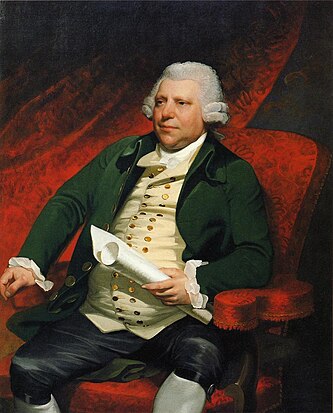

About Andrew Ure
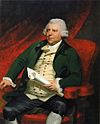
Andrew Ure FRS (18 May 1778 – 2 January 1857) was a Scottish doctor, scholar, chemist, Scriptural geologist and early business theorist.
Best Andrew Ure Quotes
Shortest
Earliest
Explore our curated collection of the most famous and impactful Andrew Ure quotes.
“The final tin-dip is useful to remove the marks of the brush, and to make the surface uniformly bright.”
“The present volume, introductory to a series of works in more ample detail, is submitted to the public as a specimen of the manner in which the author conceives technological subjects should be discussed.”
“It is in a cotton mill, however, that the perfection of automatic industry is to be seen; it is there that the elemental powers have been made to animate millions of complex organs, infusing into forms of wood, iron, and brass an intelligent agency.”

“Great Britain may certainly continue to uphold her envied supremacy, sustained by her coal, iron, capital, and skill, if, acting on the Baconian axiom, " Knowledge is Power," she shall diligently promote moral and professional culture among all ranks of her productive population.”

“Manufacture is a word, which, in the vicissitude of language, has come to signify the reverse of its intrinsic meaning, for it now denotes every extensive product of art, which is made by machinery, with little or no aid of the human hand; so that the most perfect manufacture is that which dispenses entirely with manual labour.”
“There are only two ores of tin: the peroxide, tin-stone, or Cassiterite; and tin pyrites, sulphide of tin, or Stannine: the former of which alone has been found in sufficient abundance for metallurgical purposes.”
“Being advised by his medical friends to try the effects of travelling, with light intellectual exercise, he left London in the latter end of last summer, and spent several months in wandering through the factory districts of Lancashire, Cheshire, Derbyshire, &c., with the happiest results to his health; having everywhere experienced the utmost kindness and liberality from the mill-proprietors.”

“A mechanical manufacture being commonly occupied with one substance, which it conducts through metamorphoses in regular succession^ may be made nearly automatic; whereas a chemical manufacture depends on the play of delicate affinities between two or more substances, which it has to subject to heat and mixture under circumstances somewhat uncertain, and must therefore remain, to a corresponding extent, a manual operation.”
“The processes that may be employed, to give to portions of inert matter, precise movements resembling those of organized beings, are innumerable, as they consist of an indefinite number and variety of cords pulleys, toothed-wheels, nails, screws, levers, inclined-planes, as well as agencies of air, water, fire, light, &c., combined in endless modes to produce a desired effect Ingenuity has been long exercised on such combinations, chiefly for public amusement or mystification, without any object of utility.”
“The present is distinguished from every precenn hvjh vding age by an universal ardour of enterprise in arts and manufactures. Nations convinced at length that war is always a losing game, have converted their swords and muskets into factory implements, and now contend with each other in the bloodless but still formidable strife of trade. They no longer send troops to fight on distant fields but fabrics to drive before them those of their old adversaries in arms, and to take possession of a foreign mart. To impair the resources of a rival at home, by underselling his wares abroad, is the new belligerent system, in pursuance of which every nerve and sinew of the people are put upon the strain.”
“The difficulties which Arkwright encountered in organizing his factory system, were much greater than is commonly imagined. In the first place, he had to train his work-people to a precision in assiduity altogether unknown before, against which their listless and restive habits rose in continual rebellion; in the second place, he had to form a body of accurate mechanics, very different from the rude hands which then satisfied the manufacturer; in the third, he had to seek a market for his yarns; and in the fourth, he had to resist competition in its most odious forms. From the concurrence of these circumstances, we find that so late as the year 1779, ten years after the date of his first patent, his enterprise was regarded by many as a doubtful novelty.”
“of the body was immediately agitated with convulsive movements resembling a violent shuddering from cold. ... On moving the second rod from hip to heel, the knee being previously bent, the leg was thrown out with such violence as nearly to overturn one of the assistants, who in vain tried to prevent its extension. The body was also made to perform the movements of breathing by stimulating the phrenic nerve and the diaphragm. When the supraorbital nerve was excited 'every muscle in his countenance was simultaneously thrown into fearful action; rage, horror, despair, anguish, and ghastly smiles, united their hideous expressions in the murderer's face, surpassing far the wildest representations of Fuseli or a Kean. At this period several of the spectators were forced to leave the apartment from terror or sickness, and one gentleman fainted.'”
“One event has been adduced in evidence of the uncertainty of his condition, which ought to excite interest in his behalf. He parted from his wife in 1779, because she would not agree to join him in converting some landed property into money, for the sale of which her consent was required by law. The property was worth, it is said, little more than four hundred pounds. Mrs. Arkwright entertained a high esteem for her husband, and always spoke of him with respect; yet she preferred separating from him, to the chance of being beggared by placing her dowry in so precarious a concern as she then thought the water-spinning frame to be. For some years after this event she lived altogether upon her own means. Mr. Arkwright was justly indignant at this want of sympathy in one so nearly related to him, and in consequence allowed her only thirty pounds a year, out of his own pocket, even when he had realized great opulence. These particulars are given by Mr. Guest on the authority of Sir Richard Arkwright’s niece, probably a disappointed and prejudiced person”

Andrew Ure Quotes by Topic
Find exactly what you are looking for by browsing this categorized list of Andrew Ure quotes by topic.
Andrew Ure on Tin 3 quotes
“The final tin-dip is useful to remove the marks of the brush, and to make the surface uniformly bright.”
Andrew Ure on Metallurgy

Andrew Ure on History of technology
“The term Factory, in technology, designates the combined operation of many orders of work-people, adult and young, in tending with assiduous skill a system of productive machines continuously impelled by a central power. This definition includes such organizations as cotton-mills, flax-mills, silk-mills, woollen-mills, and certain engineering works; but it excludes those in which the mechanisms do not form a connected series, nor are dependent on one prime mover. Of the latter class, examples occur in iron-works, dye-works, soap-works, brass-foundries, &c. Some authors, indeed, have comprehended under the title factory, all extensive establishments wherein a number of people co-operate towards a common purpose of art; and would therefore rank breweries, distilleries, as well as the workshops of carpenters, turners, coopers, &c., under the factory system. But I conceive that this title, in its strictest sense, involves the idea of a vast automaton, composed of various mechanical and intellectual organs, acting in uninterrupted concert for the production of a common object, all of them being subordinated to a self-regulated moving force.”

What Andrew Ure Said About Others
Discover personal opinions Andrew Ure shared regarding contemporaries.
Andrew Ure on Richard Arkwright
“The difficulties which Arkwright encountered in organizing his factory system, were much greater than is commonly imagined. In the first place, he had to train his work-people to a precision in assiduity altogether unknown before, against which their listless and restive habits rose in continual rebellion; in the second place, he had to form a body of accurate mechanics, very different from the rude hands which then satisfied the manufacturer; in the third, he had to seek a market for his yarns; and in the fourth, he had to resist competition in its most odious forms. From the concurrence of these circumstances, we find that so late as the year 1779, ten years after the date of his first patent, his enterprise was regarded by many as a doubtful novelty.”
Quotes About Andrew Ure
Gain deeper perspective through quotes about Andrew Ure from others.
William H. Starbuck on Andrew Ure
“Another forerunner of modern organization theorists was Andrew Ure, a professor of chemistry. An enthusiastic proponent of “the factory system,” Ure (1835) took a step beyond Adam Smith. Whereas Smith’s pin factory was solely an example of division of labor, Ure pointed out that a factory poses organizational challenges. He asserted that every factory incorporates “three principles of action, or three organic systems”: (a) a “mechanical” system that integrates production processes, (b) a “moral” system that motivates and satisfies the needs of workers, and (c) a “commercial” system that seeks to sustain the firm through financial management and marketing. Harmonizing these three systems, said Ure, was the responsibility of managers.”

Daniel A. Wren on Andrew Ure
“Of the early management pioneers, history has provided us with the best records for four men: Robert Owen, Charles Babbage, Andrew Ure, and Charles Dupin... Ure knew the French engineer and management writer Charles Dupin, and when Dupin visited Great Britain in 1816–1818, Ure escorted him around the Glasgow factories. Dupin commented that many of the managers of these factories were Ure’s own students.”
About Andrew Ure
Andrew Ure FRS (18 May 1778 – 2 January 1857) was a Scottish doctor, scholar, chemist, Scriptural geologist and early business theorist.
QuotesCosmos Cross-Civilizational Archive
Explore Related Wisdom Pillars, Worldviews & Canonical Works
Discover how humanity's greatest philosophers, sacred scriptures, and literary masterpieces address the core questions of existence.
30 Wisdom Pillars
22 Worldviews & Traditions
Canonical Books & Scriptures