Link Copied!
Amrita Sher-Gil Quotes (1913-1941)
Painter
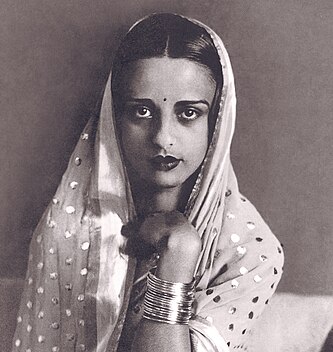
About Amrita Sher-Gil
Amrita Sher-Gil (January 30, 1913 – December 5, 1941), an eminent Indian painter, was the daughter of Sardar Umrao Singh Shergil and Antoinette, a Hungarian lady. Her first notable work was "Young Girls", which made her an Associate of the Grand Salon in Paris in 1933; she was the youngest ever Asian to receive this recognition. Her quest for the rediscovery of the traditions of Indian art began at an young age but was cut short by her death at a prime age of 28. Mughal school of painting and Pahari schools of painting and the cave paintings at Ajanta greatly influenced her paintings. She was considered a prominent woman painter of 20th century India. Her legacy is comparable to that of the Masters of Bengal Renaissance. The Government of India has declared her works as National Art Treasures. She was sometimes called as India's Frida Kahlo.
Best Amrita Sher-Gil Quotes
Shortest
Earliest
Explore our curated collection of the most famous and impactful Amrita Sher-Gil quotes.
“Amrita Sher-Gill: Art and Life: A Reader (page xvii)”
“...was to interpret the life of Indians and particularly the poor Indians, pictorially.”
“These little compositions are the expression of my happiness and that is why perhaps I am particularly fond of them.”

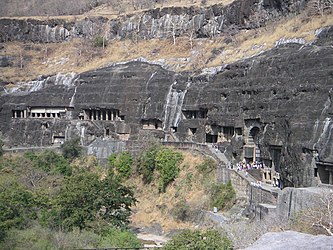
“Revelations. Ellora magnificent. Ajanta curiously subtle and fascinating-I have for the first time since my return to India learnt something from somebody else's work.”
“Towards the end of 1933 I began to be haunted by an intense longing to return to India, feeling in some strange inexplicable way that there lay my destiny as a painter.”
“I was positively stunned and have straight away become a votary of Mathura art to the exclusion of all the other and later schools.”
“The life of Indians, particularly the poor, pictorially....with a new technique, my own technique...and this technique though not technically Indian, in the traditional sense of the word, will yet be fundamentally Indian in spirit.”
“Traditions that were once vital, sincere and splendid and which are now merely empty formulae, [nor to imitate fifth rate western art slavishly] break away from both and produce something vital, connected with the soil, something essentially Indian.”
“Modern art has led me to the comprehension and appreciation of Indian painting and sculpture. It seems paradoxical but I know for certain that had we not come away to Europe, I should perhaps never have realised that a fresco from Ajanta or a small piece of sculpture in the Musee Guimet is worth more than a whole Renaissance.'”

“The Brahmacharis as the most difficult thing she had ever done....don't you think I have learnt something from Indian painting?...I don't know whether it is a passing phase or a durable change in my outlook but I see in a more detached manner, more ironically than I have ever done.”
“It is dreadful to think of Paris in German hands but what preoccupies me still more is what is going to happen to modern French art and the younger artists.”
“I shall in future be obliged to resign myself to exhibiting them (her paintings) merely at the Grand Salon, Paris, of which I happen to be an Associate and the Salon de Tuileries known all over the world as the representative exhibition of Modern Art, and to which I have been invited to participate in the past, a distinction I may add that few can boast of.”
“She was very fair and there was an expression of weariness in the lovely liquid dark eyes. Her little finely curved and red hued lips seemed like drooping rosebuds and were sealed as if it were in silence eternal....she seemed as if she guessed the cruel fate which had been meted out for her by the Rani and Rajah and her other rich but distant relations in whose hands she seemed a helpless toy.”
“In "Toward a Development of a Cosmopolitan Aesthetic"
"I am an individualist, evolving a new technique, which, through not necessarily Indian in the traditional sense of the word, will yet be fundamentally Indian in spirit. With the eternal significance of form and color I interpret India and, principally, the life of the Indian poor on the plane that transcends the plane of mere sentimental interest."”
“I was positively stunned and have straightaway become a votary of Mathura art to the exclusion of all the other and later schools. I had some of the things in reproductions but never dreamt they were so magnificent. With the possible exception of Mahabalipuram I don’t think I have seen anything in Indian sculpture that I liked so much.”
Amrita Sher-Gil Quotes by Topic
Find exactly what you are looking for by browsing this categorized list of Amrita Sher-Gil quotes by topic.
Amrita Sher-Gil on Ajanta Caves 2 quotes
“Revelations. Ellora magnificent. Ajanta curiously subtle and fascinating-I have for the first time since my return to India learnt something from somebody else's work.”
Quotes About Amrita Sher-Gil
Gain deeper perspective through quotes about Amrita Sher-Gil from others.
Source on Amrita Sher-Gil 2 quotes
“The self-portraits display the artist moving from girl to woman to artist as she explored a sensuality that ranges from the heavy-handed to the subtle. Sher-Gil casts herself in a serious light in her Self-Portrait with Easel (1930), moving deliberately from the domestic and the intimate context of the nineteenth-century woman artist to the monumental and majestic poses recalling those of Rembrandt and later Van Gogh. Indira dressed as a European gentleman with Amrita dressed as her female partner.”
Above two quotes by art historian Rakhee Balaram on Amrita Sher-Gil
“At stake was not only a serious and viable artistic career as a woman, but the development of a subjectivity that was being defined through the self-portrait. conscious of being both muse and maker, Sher-Gil took on the position of artist and object with a double consciousness of being both.””
Ruby Von Leiden on Amrita Sher-Gil
“Art in India was never the same after her comet like appearance. There are only a few moments in the history of art which pinpoint a new departure, a new direction. Such a moment in the history of modern Indian art was the appearance in the mid-thirties of Amrita Sher-Gil with whose paintings contemporary paintnig in India took shape and demonstrated the possibility of a contemporary style and expression that were, at the same time, of the soil and in direct continuation of the great national past.”
Yashodhara Dalmia on the artistic attitude of Sher-Gil on Amrita Sher-Gil
“She [Sher-Gil] melded the Western and Indian idioms and did not, like many other artists of her time, attempt to find an authentic ‘Indian’ mode or weave together a nationalist agenda.”
Above two quotes by on Amrita Sher-Gil
“Amrita's life was more colourful than the bright colours she used in her paintings—this is a good look at it.”
Comment by on Amrita Sher-Gil
“that she was really a virgin because she'd never experienced the spiritual equivalent of copulation: she had many lovers but they'd left no scar. I'll leave a scar.”
Maic Casey on Amrita Sher-Gil
“An Indian with a measure of European blood, she returned to India to shed her acquired skin....She saw her country with new vision and has left a legacy of pictures simple and grand...as a tribute to the Indian countryside and its people.”
Malcolm Muggeridge who had an serious affair with her on Amrita Sher-Gil
“Rose water and raw spirit...weird amalgam of the bearded star gazer and the red haired pianist pounding away at her keyboard.”
About Amrita Sher-Gil
Amrita Sher-Gil (January 30, 1913 – December 5, 1941), an eminent Indian painter, was the daughter of Sardar Umrao Singh Shergil and Antoinette, a Hungarian lady. Her first notable work was "Young Girls", which made her an Associate of the Grand Salon in Paris in 1933; she was the youngest ever Asian to receive this recognition. Her quest for the rediscovery of the traditions of Indian art began at an young age but was cut short by her death at a prime age of 28. Mughal school of painting and Pahari schools of painting and the cave paintings at Ajanta greatly influenced her paintings. She was considered a prominent woman painter of 20th century India. Her legacy is comparable to that of the Masters of Bengal Renaissance. The Government of India has declared her works as National Art Treasures. She was sometimes called as India's Frida Kahlo.
QuotesCosmos Cross-Civilizational Archive
Explore Related Wisdom Pillars, Worldviews & Canonical Works
Discover how humanity's greatest philosophers, sacred scriptures, and literary masterpieces address the core questions of existence.
30 Wisdom Pillars
22 Worldviews & Traditions
Canonical Books & Scriptures