Link Copied!
Amir Khusrow Quotes (1253-1325)
Poet, Musician, King
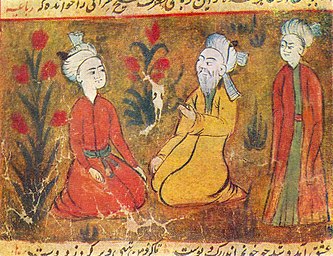






About Amir Khusrow
Ab'ul Hasan Yamīn ud-Dīn Khusrau (1253 – 1325), better known as Amīr Khusrow Dehlavī, was a Sufi musician, poet and scholar from the Indian subcontinent.
Best Amir Khusrow Quotes
Shortest
Earliest
Explore our curated collection of the most famous and impactful Amir Khusrow quotes.

“The king of the kingdoms of messengerdom,
The tughra of the page of Majesty.
”
The tughra of the page of Majesty.
”
“My home was the Dome of Islam.
It was the qibla for kings of the seven climes.
Delhi is the twin of pure paradise,
a prototype of the heavenly throne on an earthly scroll.”
It was the qibla for kings of the seven climes.
Delhi is the twin of pure paradise,
a prototype of the heavenly throne on an earthly scroll.”
““But see the mercy with which he regarded the brokenhearted, for, after seizing the rai, he set him free again. He destroyed the temples of the idolaters, and erected pulpits and arches for mosques.”67”
““They have four books in that language (Sanskrit), which they are constantly in the habit of repeating. Their name is Bed (Vedas). They contain stories of their gods, but little advantage can be derived from their perusal.””
“If a Khurasani, Greek or Arab comes here,
he will not face any problems,
for the people will treat him kindly, as their own,
making him feel happy and at ease.
And if they jest with him,
they do so with blooming smiles.”
he will not face any problems,
for the people will treat him kindly, as their own,
making him feel happy and at ease.
And if they jest with him,
they do so with blooming smiles.”
“Amir Khusrau writes that under Jalauddin Khalji (1290-96), after a battle, “whatever live Hindu fell into the hands of the victorious king was pounded to bits under the feet of the elephants. The Musalman captives had their lives spared”.”

““They pursued the enemy to the gates and set everything on fire. They burnt down all those gardens and groves. That paradise of idol-worshippers became like hell. The fire-worshippers of Bud were in alarm and flocked round their idols…””

“Praise be to God!, that he (the sultan) so ordered the massacre of all the chiefs of Hindustan out of the pale of Islam, by his infidel-smiting sword, that if in this time it should by chance happen that a schismatic should claim his right, the pure Sunnis would swear in the name of this Khalifa of God, that heterodoxy has no right.”

““During the attack, the catapults were busily plied on both sides… ‘Praise be to God for his exaltation of the religion of Muhammad. It is not to be doubted that stones are worshipped by Gabrs,74 but as the stones did no service to them, they only bore to heaven the futility of that worship, and at the same time prostrated their devotees upon earth’…””
“[Then in a single campaign Ranthambhor was conquered and] ‘ by the decree of God the land of infidelity became the land of Islam’. [In Amir Khusrau’s words,] ‘ When the sky-rubbing canopy of the Shadow of God cast its shade over the hill of Ranthambhor, the conqueror of the world, like the sun, stood over the unfortunate in his heat, and cast the days of their lives into decline.’”

““When he advanced from the capital of Karra, the Hindus, in alarm, descended into the earth like ants. He departed towards the garden of Behar to dye that soil with blood as red as tulip. He cleared the road to Ujjain of vile wretches, and created consternation in Bhilsan. When he effected his conquests in that country, he drew out of the river the idols which had been concealed in it.”66”
““After five days, the royal canopy moved from Birdhul on Thursday, the 17th of Zi-l Ka’da, and arrived at Kham, and five days afterwards they arrived at the city of Mathra (Madura), the dwelling place of the brother of the Rai Sundar Pandya. They found the city empty, for the Rai had fled with the Ranis, but had left two or three elephants in the temple of Jagnar (Jagganath). The elephants were captured and the temple burnt.””

““On Tuesday, the 3rd of Ziqad in AH 700 (10 July, 1301), the strong fort [of Ranthambhor] was conquered. Jhain which was the abode of the infidels, became a new city for Musalmans. The temple of Bahirdev was the first to be destroyed. Subsequently, all other abodes of idolatry were destroyed. Many strong temples which would have remained unshaken even by the trumpet blown on the Day of Judgment, were levelled with the ground when swept by the wind of Islam.””
““When the blessed canopy had been fixed about a mile from the gate of Arangal, the tents around the fort were pitched together so closely that the head of a needle could not go between them… Orders were issued that every man should erect behind his own tent a kathgar, that is wooden defence. The trees were cut with axes and felled, notwithstanding their groans; and the Hindus, who worship trees, could not at that time come to the rescue of their idols, so that every cursed tree which was in that capital of idolatry was cut down to the roots…”

““He started his building programme with the Jami‘ Hazrat mosque… Thereafter he decided to build a second minar opposite to the lofty minar of the Jami‘ Masjid, which minar is unparalleled in the world…68 He ordered the circumference of the new minar to be double that of the old one. People were sent out in all directions in search of stones. Some of them broke the hills into pieces. Some others proved sharper than steel in breaking the temples of the infidels. Wherever these temples were bent in prayers, they were made to do prostration.””

“[After that, ‘Ala’ al-din’s army turned its attention to the citadel of Mandi and to the conquest of Malwa.] When the spearmen of the victorious army had with their spears put antimony into the eyes of the rais many great zamindars who were more sharp sighted threw aside their boldness and impudence from fear of the stone-splitting arrows of the Turks and came with open eyes to the sublime threshold and turned that threshold into antimony by rubbing their black pupils upon it. They thus saved their bones from becoming antimony boxes for the dust.””
““On Wednesday, the 20th of Jamadi-ul Awwal in AH 698 (23 February, 1299), the Sultan sent an order to the manager of the armed forces for despatching the army of Islam to Gujarat so that the temple of Somnat on its shore could be destroyed. Ulugh Khan was put in charge of the expedition. When the royal army reached that province, it won a victory after great slaughter. Thereafter the Khan-i-‘Ãzam went with his army to the sea-shore and besieged Somnat which was a place of worship for the Hindus. The army of Islam broke the idols and the biggest idol was sent to the court of the Sultan.”70”

“«« Allusions to water animals.” ‘The crocodiles of the water in their armies were waiting in ambush for the armour-backed fish. When they came upon them, with blows of their sharp arrows they caught them in fish trap. With the blows from the enemies’ maces and clubs on their tortoise-like armoured horses, they drew in their heads; the heads of the Hindus rolled like crocodiles’ eggs on the fish-backed earth. In an instant all those mermen had been drowned in blood and had fallen in the manner of fish already ritually pure. Those half killed by the spears or the arrows cried out like frogs when bitten by snakes.””

““The Sultan reached Jhain in the afternoon of the third day and stayed in the palace of the Raya… He greatly enjoyed his stay for some time. Coming out, he took a round of the gardens and temples. The idols he saw amazed him… Next day he got those idols of gold smashed with stones. The pillars of wood were burnt down by his order… A cry rose from the temples as if a second Mahmud had taken birth. Two idols were made of brass, one of which weighed nearly a thousand mans. He got both of them broken, and the pieces were distributed among his people so that they may throw them at the door of the Masjid on their return [to Delhi]…””
““There was another rai in those parts, whose rule extended over sea and land, a Brahmin named Pandya Guru. He had many cities in his possession, and his capital was Fatan, where there was a temple with an idol in it laden with jewels… The rai, when the army of the Sultan arrived at Fatan, fled away, and what can an army do without its leader? The Musalmans in his service sought protection from the king’s army, and they were made happy with the kind of reception they met. 500 elephants were taken. They then struck the idol with an iron hatchet, and opened its head. Although it was the very Kibla of the accursed gabrs, it kissed the earth and filled the holy treasury.””
“Allusions to various colours.” On the day that the yellow faced rais, from fear of the green swords, sought refuge in the red court which is marked by victory, the Sanjar of the kingdom—may he always be on the cushion of success and his fame as a warrior remain evergreen—was still crimson with rage. When he saw the green, herbage-eating rais trembling with fear like the trampled and withered grass under the royal tent, although the rai was a rebel, yet the silver of his royal manners did not allow any hot wind to blow upon him. All the sultry wind of his wrath was vented against the other rebels and he ordered that wherever a black Hindu was found he should be cut down like dry grass.’”

Amir Khusrow Quotes by Topic
Find exactly what you are looking for by browsing this categorized list of Amir Khusrow quotes by topic.
Amir Khusrow on Iconoclasm 2 quotes
“Many strong temples which would have remained unshaken even by the trumpet blown on the Day of Judgment, were levelled with the ground when swept by the wind of Islam.”
Amir Khusrow on Forests 2 quotes
“They pursued the enemy to the gates and set everything on fire. They burnt down all those gardens and groves. That paradise of idol-worshippers became like hell. The fire-worshippers of Bud were in alarm and flocked round their idols…”

Amir Khusrow on Scorched earth 2 quotes
“They pursued the enemy to the gates and set everything on fire. They burnt down all those gardens and groves. That paradise of idol-worshippers became like hell. The fire-worshippers of Bud were in alarm and flocked round their idols…”

Amir Khusrow on Ranthambore Fort 2 quotes
“[Then in a single campaign Ranthambhor was conquered and] ‘ by the decree of God the land of infidelity became the land of Islam’. [In Amir Khusrau’s words,] ‘ When the sky-rubbing canopy of the Shadow of God cast its shade over the hill of Ranthambhor, the conqueror of the world, like the sun, stood over the unfortunate in his heat, and cast the days of their lives into decline.’”

Amir Khusrow on Malik Kafur's invasion of the Pandya kingdom 2 quotes
“After five days, the royal canopy moved from Birdhul on Thursday, the 17th of Zi-l Ka’da, and arrived at Kham, and five days afterwards they arrived at the city of Mathra (Madura), the dwelling place of the brother of the Rai Sundar Pandya. They found the city empty, for the Rai had fled with the Ranis, but had left two or three elephants in the temple of Jagnar (Jagganath). The elephants were captured and the temple burnt.”
Amir Khusrow on Alauddin Khalji's conquest of Gujarat 2 quotes
““On Wednesday, the 20th of Jamadi-ul Awwal in AH 698 (23 February, 1299), the Sultan sent an order to the manager of the armed forces for despatching the army of Islam to Gujarat so that the temple of Somnat on its shore could be destroyed. Ulugh Khan was put in charge of the expedition. When the royal army reached that province, it won a victory after great slaughter. Thereafter the Khan-i-‘Ãzam went with his army to the sea-shore and besieged Somnat which was a place of worship for the Hindus. The army of Islam broke the idols and the biggest idol was sent to the court of the Sultan.”70”
Amir Khusrow on Hindu
“The Hindu happens to be a (wretched) slave in all respects.”

Amir Khusrow on Delhi
Amir Khusrow on Sacred groves of India
“They pursued the enemy to the gates and set everything on fire. They burnt down all those gardens and groves. That paradise of idol-worshippers became like hell. The fire-worshippers of Bud were in alarm and flocked round their idols…”

Amir Khusrow on Brahmin
“In short, it was the holy place of the Hindus, which the Malik dug up from its foundations with the greatest care… and heads of the Brahmans and idolaters danced from their necks and fell to the ground at their feet,’ and blood flowed in torrents.”
Amir Khusrow on Anti-Brahminism
“In short, it was the holy place of the Hindus, which the Malik dug up from its foundations with the greatest care… and heads of the Brahmans and idolaters danced from their necks and fell to the ground at their feet,’ and blood flowed in torrents.”

Quotes About Amir Khusrow
Gain deeper perspective through quotes about Amir Khusrow from others.
Lal on Amir Khusrow 2 quotes
“His genius, if not character, helped him spend “the whole of his life in spinning yarn” (or writing many untruths).”
S.R. Goel on Amir Khusrow
“We find the Muslim historians going into raptures as they describe scenes of desecration and destruction. For Amîr Khusrû it was always an occasion to show off the power of his poetic imagination. When Jalãlu’d-Dîn Khaljî wrought havoc at Jhain, “A cry rose from the temples as if a second Mahmûd had taken birth”. The temples in the environs of Delhi were “bent in prayers” and “made to do prostration”, by Alãu’d-Dîn Khaljî. When the temple of Somnath was destroyed and its debris thrown into the sea towards the west, the poet rose to his full height. “So the temple of Somnãth,” he wrote, “was made to bow towards the Holy Mecca, and the temple lowered its head and jumped into the sea, so you may say that the building first said its prayers and then had a bath.” ... One wonders whether the poet of Islam is being honoured or slandered when he is presented in our own times as the pioneer of Secularism.”
Elliot on Amir Khusrow
“There is little doubt about Amir Khasrau’s achievements in music and poetry. But when it came to the fallen infidels and their religion, his bigoted Islamic zeal was very much evident. In describing Muslim victories against the Hindu kings, he mocks their religious traditions, such as "tree" and "stone-idol" worship. Mocking the stone-idols, destroyed by Muslim warriors, he wrote: ‘Praise be to God for his exaltation of the religion of Muhammad. It is not to be doubted that stones are worshipped by the Gabrs (derogatory slang for idolaters), but as stones did no service to them, they only bore to heaven the futility of that worship.’ Amir Khasrau showed delight in describing the barbaric slaughter of Hindu captives by Muslim warriors. Describing Khizr Khan’s order to massacre 30,000 Hindus in the conquest of Chittor in 1303, he gloated: ‘Praise be to God! That he so ordered the massacre of all chiefs of Hind out of the pale of Islam, by his infidel-smiting swords... in the name of this Khalifa of God, that heterodoxy has no rights (in India).’ He took poetic delight in describing Malik Kafur’s destruction of a famous Hindu temple in South India and the grisly slaughter of the Hindus and their priests therein. In describing the slaughter, he wrote, ‘...the heads of brahmans and idolaters danced from their necks and fell to the ground at their feet, and blood flowed in torrents.’”
Jadunath Sarkar on Amir Khusrow
“The intellectual decline of the Muslims was hastened by the peculiar position of the faithful in India: They had made India their permanent home; many of them were Indians by race; and all had become so in their personal appearance, thoughts, manners and customs. And yet their religious teachers urged them to look back to ancient Arabia and draw their mental sustenance from the far-off age of the Prophet. The language of their religion must be Arabic, which not one in a hundred fully understood ; their cultural language was Persian, which a few more learnt with difficulty and used with an impurity that excited the laughter and acorn of the Persian born. The greatest Indo-Persian poet was Amir Khusrau, but even he was ranked with third-class poets among the natives of Persia. Faizi, our second best, was held to be still inferior. Witness the scorn poured by Babur and Shaikh Ali Hazin alike on the Persian style of the Indian Muslims.”

About Amir Khusrow
Ab'ul Hasan Yamīn ud-Dīn Khusrau (1253 – 1325), better known as Amīr Khusrow Dehlavī, was a Sufi musician, poet and scholar from the Indian subcontinent.
QuotesCosmos Cross-Civilizational Archive
Explore Related Wisdom Pillars, Worldviews & Canonical Works
Discover how humanity's greatest philosophers, sacred scriptures, and literary masterpieces address the core questions of existence.
30 Wisdom Pillars
22 Worldviews & Traditions
Canonical Books & Scriptures