Amartya Sen on Adam Smith
← Back to Amartya Sen Profile
“Smith had no illusion that this would be easy to do, nor did he suffer from the delusion that such an exercise would, in any sense, be perfect. But he did have the conviction that the exercise could still be very useful, and the best should not be made into an enemy of the good.”
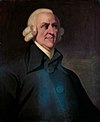
“Smith distinguishes with great sophistication the different kinds of reasons people have in taking an interest in the lives of others, separating out sympathy, generosity, public spirit and other motivations. Even though he acknowledged the role of mental attitudes and predispositions, he went on to discuss how reasoning, which is at the heart of rationality, must have a big role in preventing us from being – consciously or unconsciously – too self-centred, or thoughtlessly uncaring.”
“The global reach of Smith's moral and political reasoning is quite a distinctive feature of his thought, but it is strongly supplemented by his belief that all human beings are born with similar potential and, most importantly for policymaking, that the inequalities in the world reflect socially generated, rather than natural, disparities. There is a vision here that has a remarkably current ring. The continuing global relevance of Smith's ideas is quite astonishing, and it is a tribute to the power of his mind that this global vision is so forcefully presented by someone who, a quarter of a millennium ago, lived most of his life in considerable seclusion in a tiny coastal Scottish town. Smith's analyses and explorations are of critical importance for any society in the world in which issues of morals, politics and economics receive attention. The Theory of Moral Sentiments is a global manifesto of profound significance to the interdependent world in which we live.”
QuotesCosmos Cross-Civilizational Archive
Explore Related Wisdom Pillars, Worldviews & Canonical Works
Discover how humanity's greatest philosophers, sacred scriptures, and literary masterpieces address the core questions of existence.
30 Wisdom Pillars
22 Worldviews & Traditions
Canonical Books & Scriptures