Link Copied!
Alois Anton Führer Quotes (1853-1930)

About Alois Anton Führer
Alois Anton Führer (26 November 1853 – 5 November 1930) was a German Indologist who worked for the Archaeological Survey of India. He is known for his archaeological excavations, which he believed proved that Gautama Buddha was born in Lumbini, Nepal. Führer's archaeological career ended in disgrace as "a forger and dealer in fake antiquities", and he had to resign from his position in 1898.
Best Alois Anton Führer Quotes
Shortest
Earliest
Explore our curated collection of the most famous and impactful Alois Anton Führer quotes.
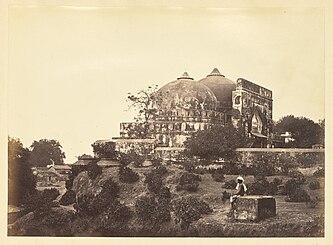
“Bābar‘s Masjid at Ayodhyā was built in A.H. 930, or A.D. 1523, by Mīr Khān, on the very spot where the old temple Janmāsthānam of Rāmachandra was standing.”
“This stone was originally brought and appropriated by Aurangzeb in building his masjid known as Treta ki (sic) Thakur. ... [It was] rescued from the ruins of Aurangzeb's Masjid, known as Treta-ka-Thakur, and is now in the Faizabad Museum.”

“It is locally affirmed that at the Musalman conquest there were three important Hindu temples at Ayodhya: these were the Janma-sthanam, the Svargadvaram, and the Treta-ka-Thakur. On the first of these Mir Khan built a Masjid, in A.H. 930 during the reign of Babar, which still bears his name.”
“It is dated Samvat 1241 or A.D. 1184, in the time of Jaychchandra of Kanauj, whose praises it records for erecting a Vaishnava temple, from whence this stone was originally brought and appropriated by Aurangzeb in building his masjid known as Treta-ki-Thakur. The original slab was discovered in the ruins of this Masjid.”
“The old temple of Ramachandra at Janmasthanam must have been a very fine one, for many of its columns have been used by the Musalmans in the construction of Babar's masjid. These are of strong, close-grained, dark-coloured or black stone, called by the natives knsnuti, 'touch-stone slate,' and carved with different devices. They are from seven to eight feet long, square at the base, centre and capital, and round or octagonal intermediately”
“Inscription No. XLIV is written in twenty incomplete lines on a white sandstone, broken off at either end, and split in two parts in the middle. It is dated Saṁvat 1241, or A.D. 1184, in the time of Jayachchhandra of Kanauj, whose praises it records for erecting a Vaishṇava temple, from whence this stone was originally brought and appropriated by Aurangzīb in building his masjid known as Tretā-kī-Thākur. The original slab was discovered in the ruins of this Masjid, and is now in the Faizābād Local Museum.”
“The Atala Masjid was the work of Ibrahim Shiih during the early part of his reign. It was built on the site of the Hindu temple of Atala Devi, which is said to have been erected by Jayachchhandra Deva (1175 — 1193), the last Rathor prince of Kanauj. Of all the masjids remaining at Jaunpur, the Atala Masjid is the most ornate and the most beautiful. .... As is proved by nine inscriptions found in the Atala Masjid, Firuz Shah commenced the appropriation of the Ataladevi temple in A.D. 1376 and Ibrahim Shah finished the Atala Masjid in A.D. 1408.”
Alois Anton Führer Quotes by Topic
Find exactly what you are looking for by browsing this categorized list of Alois Anton Führer quotes by topic.
Alois Anton Führer on Jaunpur, Uttar Pradesh 3 quotes
“The oldest building in Jaunpur is the masjid of Ibrahim Naih Barhak in the fort ; it is a long narrow building of the early Bengali type, that is, a simple arcade supported on carved Hindu pillars, with three low domes in the middle.”
Alois Anton Führer on Babri Masjid
“The old temple of Ramachandra at Janmasthanam must have been a very fine one, for many of its columns have been used by the Musalmans in the construction of Babar's masjid. These are of strong, close-grained, dark-coloured or black stone, called by the natives knsnuti, 'touch-stone slate,' and carved with different devices. They are from seven to eight feet long, square at the base, centre and capital, and round or octagonal intermediately”

About Alois Anton Führer
Alois Anton Führer (26 November 1853 – 5 November 1930) was a German Indologist who worked for the Archaeological Survey of India. He is known for his archaeological excavations, which he believed proved that Gautama Buddha was born in Lumbini, Nepal. Führer's archaeological career ended in disgrace as "a forger and dealer in fake antiquities", and he had to resign from his position in 1898.
QuotesCosmos Cross-Civilizational Archive
Explore Related Wisdom Pillars, Worldviews & Canonical Works
Discover how humanity's greatest philosophers, sacred scriptures, and literary masterpieces address the core questions of existence.
30 Wisdom Pillars
22 Worldviews & Traditions
Canonical Books & Scriptures