Link Copied!
Alexander Pope Quotes (1688-1744)
Poet, Artist












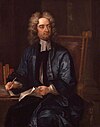








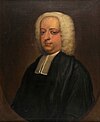

















































































































































About Alexander Pope
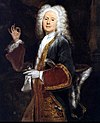
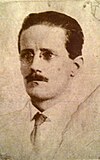
Alexander Pope (21 May 1688 – 30 May 1744) was a poet and satirist of the Augustan period and one of its greatest artistic exponents. Considered the foremost English poet of the early 18th century and a master of the heroic couplet, he is best known for satirical and discursive poetry.
Best Alexander Pope Quotes
Shortest
Earliest
Explore our curated collection of the most famous and impactful Alexander Pope quotes.
“Ignobly vain, and impotently great.”
“This is the Jew
That Shakespeare drew.”
That Shakespeare drew.”


“Passions...are the gales of life...”

“Luxurious lobster-nights, farewell,
For sober, studious days!”
For sober, studious days!”
“Each finding like a friend
Something to blame, and something to commend.”
Something to blame, and something to commend.”


“Of Manners gentle, of Affections mild;
In Wit, a Man; Simplicity, a Child.”
In Wit, a Man; Simplicity, a Child.”

“Ye Gods! annihilate but space and time,
And make two lovers happy.”
And make two lovers happy.”
“Who ne'er knew joy but friendship might divide,
Or gave his father grief but when he died.”
Or gave his father grief but when he died.”

“To endeavour to work upon the vulgar with fine sense, is like attempting to hew blocks with a razor.”
“Unblemish'd let me live, or die unknown;
O grant an honest fame, or grant me none!”
O grant an honest fame, or grant me none!”


“I never knew any man in my life who could not bear another's misfortunes perfectly like a Christian.”
“Some people will never learn anything, for this reason, because they understand everything too soon.”

“Our passions are like convulsion-fits, which, though they make us stronger for the time, leave us the weaker ever after.”

“True politeness consists in the being easy one-self, and making every body about one as easy as we can.”
“He who tells a lie, is not sensible how great a task he undertakes; for he must be forced to invent twenty more to maintain that one.”
“It is with narrow-souled people as with narrow necked bottles: the less they have in them, the more noise they make in pouring it out.”
“There, take (says Justice), take ye each a shell:
We thrive at Westminster on fools like you;
'T was a fat oyster,—live in peace,—adieu.”
We thrive at Westminster on fools like you;
'T was a fat oyster,—live in peace,—adieu.”
“Thus let me live, unseen, unknown;
Thus unlamented let me die;
Steal from the world, and not a stone
Tell where I lie.”
Thus unlamented let me die;
Steal from the world, and not a stone
Tell where I lie.”
“Dear, damned, distracting town, farewell!
Thy fools no more I'll tease:
This year in peace, ye critics, dwell,
Ye harlots, sleep at ease!”
Thy fools no more I'll tease:
This year in peace, ye critics, dwell,
Ye harlots, sleep at ease!”

“Thou Great First Cause, least understood
Who all my sense confined
To know but this, that Thou art good
And that myself am blind.”
Who all my sense confined
To know but this, that Thou art good
And that myself am blind.”
“A little Learning is a dang'rous Thing;
Drink deep, or taste not the Pierian Spring:
There shallow Draughts intoxicate the Brain,
And drinking largely sobers us again.”
Drink deep, or taste not the Pierian Spring:
There shallow Draughts intoxicate the Brain,
And drinking largely sobers us again.”
“Let me tell you I am better acquainted with you for a long Absence, as men are with themselves for a long affliction: Absence does but hold off a friend, to make one see him the truer.”
“Not chaos-like together crush'd and bruis'd,
But as the world, harmoniously confus'd,
Where order in variety we see,
And where, though all things differ, all agree.”
But as the world, harmoniously confus'd,
Where order in variety we see,
And where, though all things differ, all agree.”
“Well, if our author in the wife offends
He has a husband that will make amends;
He draws him gentle, tender, and forgiving,
And sure such kind good creatures may be living.”
He has a husband that will make amends;
He draws him gentle, tender, and forgiving,
And sure such kind good creatures may be living.”
“A brave man struggling in the storms of fate,
And greatly falling with a falling state.
While Cato gives his little senate laws,
What bosom beats not in his country's cause?”
And greatly falling with a falling state.
While Cato gives his little senate laws,
What bosom beats not in his country's cause?”
“Some old men, by continually praising the time of their youth, would almost persuade us that there were no fools in those days; but unluckily they are left themselves for examples.”


“So unaffected, so compos'd a mind;
So firm, yet soft; so strong, yet so refin'd;
Heav'n, as its purest gold, by tortures try'd;
The saint sustain'd it, but the woman died.”
So firm, yet soft; so strong, yet so refin'd;
Heav'n, as its purest gold, by tortures try'd;
The saint sustain'd it, but the woman died.”
“I think it was a generous thought, and one that fow'd from an exalted mind, that it was not improbable but God might be delighted with the various methods of worshipping him, which divided the whole world.”
“"Blessed is the man who expects nothing, for he shall never be disappointed" was the ninth Beatitude which a man of wit (who, like a man of wit, was a long time in gaol) added to the eighth.”

“I find myself just in the same situation of mind you describe as your own, heartily wishing the good, that is the quiet of my country, and hoping a total end of all the unhappy divisions of mankind by party-spirit, which at best is but the madness of many for the gain of a few.”
“Therefore they who say our thoughts are not our own because they resemble the Ancients, may as well say our faces are not our own, because they are like our Fathers: And indeed it is very unreasonable, that people should expect us to be Scholars, and yet be angry to find us so.”
“Here hills and vales, the woodland and the plain,
Here earth and water seem to strive again,
Not chaos-like together crushed and bruised,
But, as the world, harmoniously confused:
Where order in variety we see,
And where, though all things differ, all agree.”
Here earth and water seem to strive again,
Not chaos-like together crushed and bruised,
But, as the world, harmoniously confused:
Where order in variety we see,
And where, though all things differ, all agree.”
“Nothing can be more shocking and horrid than one of our kitchens sprinkled with blood, and abounding with the cries of expiring victims, or with the limbs of dead animals scattered or hung up here and there. It gives one the image of a giant's den in a romance, bestrewed with scattered heads and mangled limbs.”
“I would not be like those Authors, who forgive themselves some particular lines for the sake of a whole Poem, and vice versa a whole Poem for the sake of some particular lines. I believe no one qualification is so likely to make a good writer, as the power of rejecting his own thoughts.”

“Lo these were they, whose souls the Furies steel'd,
And curs'd with hearts unknowing how to yield.
Thus unlamented pass the proud away,
The gaze of fools, and pageant of a day!
So perish all, whose breast ne'er learn'd to glow
For others' good, or melt at others' woe.”
And curs'd with hearts unknowing how to yield.
Thus unlamented pass the proud away,
The gaze of fools, and pageant of a day!
So perish all, whose breast ne'er learn'd to glow
For others' good, or melt at others' woe.”
“I think a good deal may be said to extenuate the fault of bad Poets. What we call a Genius, is hard to be distinguish'd by a man himself, from a strong inclination: and if his genius be ever so great, he can not at first discover it any other way, than by giving way to that prevalent propensity which renders him the more liable to be mistaken.”
“There various news I heard of love and strife,
Of peace and war, health, sickness, death, and life,
Of loss and gain, of famine and of store,
Of storms at sea, and travels on the shore,
Of prodigies, and portents seen in air,
Of fires and plagues, and stars with blazing hair,
Of turns of fortune, changes in the state,
The fall of favourites, projects of the great,
Of aid mismanagements, taxations new:
All neither wholly false, nor wholly true.”
“What terrible moments does one feel after one has engaged for a large work! In the beginning of my translating the Iliad, I wished any body would hang me a hundred times. It sat so heavily on my mind at first, that I often used to dream of it; and do so sometimes still. When I fell into the method of translating 30 or 40 verses before I got up, and piddled with it the rest of the morning, it went on easily enough; and when I was thoroughly got into the way of it, I did the rest with pleasure.”
“The Iliad took me up six years, and during that time, and particularly the first part of it, I was often under great pain and apprehensions. Though I conquered the thoughts of it in the day, they would frighten me in the night. I dreamed often of being engaged in a long journey, and that I should never get to the end of it. This made so strong an impression upon me, that I sometimes dream of it still; of being engaged in that translation, of having got about half way through it, and being embarrassed, and under dread of never completing it.”
“Methinks God has punish'd the Avaritious as he often punishes sinners, in their own way, in the ver sin itself: the thrist of gain was their crime, that thrist continued became their punishment and ruin. As for the few who have the good fortune to remain with half of what they imagined they had (among whom is your humble servantl, I would have them sensible of their felicity, and convinced of the truth of old Hesiod's maxim, who, after half his estate was swallowed by the Directors of those days, resolv'd, that half to be more than the whole.”
“For he lives twice who can at once employ
The present well, and e'en the past enjoy.
• Imitation of Martial, reported in Mr. Pope's Literary Correspondence (1737), Vol. V, p. 232; The Poems of Alexander Pope, ed. John Butt, sixth edition (Yale University Press, 1970), p. 117. Compare: "Ampliat ætatis spatium sibi vir bonus; hoc est Vivere bis vita posse priore frui" (Translated: "The good man prolongs his life; to be able to enjoy one's past life is to live twice"), Martial, X, 237.; "Thus would I double my life's fading space; For he that runs it well, runs twice his race", Abraham Cowley, Discourse XI, Of Myself, stanza xi.”
“I am growing fit, I hope, for a better world, of which light of the sun is but a shadow: for I doubt not but God's works here, are what comes nearest to his works there; and that a true relish of the beauties of nature is the most easy preparation and gentlest transition to an enjoyment of those of heaven; as on the contrary a true town life of hurry, confusion, noise, slander, and dissension, is a fort of apprenticeship to hell and its furies... The separation of my soul and body is what I could think of with less pain; for I sm very sure he that made it will take care of it, and in whatever state he pleases it shall be, that state must be right; but I cannot think without tears of beingseparated from my friends, when their condition is so douubtful, that they may want even such assistance as mine”

“The famous Lord Hallifax (though so much talked of) was rather a pretender to taste, than really possessed of it.—When I had finished the two or three first books of my translation of the Iliad, that lord, "desired to have the pleasure of hearing them read at his house." Addison, Congreve, and Garth, were there at the reading.—In four or five places, Lord Hallifax stopped me very civilly; and with a speech, each time of much the same kind: "I beg your pardon, Mr. Pope, but there is something in that passage that does not quite please me.—Be so good as to mark the place, and consider it a little at your leisure.—I am sure you can give it a little turn."—I returned from Lord Hallifax's with Dr. Garth, in his chariot; and as we were going along, was saying to the doctor, that my lord had laid me under a good deal of difficulty, by such loose and general observations; that I had been thinking over the passages almost ever since, and could not guess at what it was that offended his lordship in either of them.—Garth laughed heartily at my embarrassment; said, I had not been long enough acquainted with Lord Hallifax, to know his way yet: that I need not puzzle myself in looking those places over and over when I got home. "All you need do, (said he) is to leave them just as they are; call on Lord Hallifax two or three months hence, thank him for his kind observations on those passages; and then read them to him as altered. I have known him much longer than you have, and will be answerable for the event."—I followed his advice; waited on Lord Hallifax some time after: said, I hoped he would find his objections to those passages removed[;] read them to him exactly as they were at first; and his lordship was extremely pleased with them, and cried out, "Ay now, Mr. Pope, they are perfectly right! nothing can be better."”
Alexander Pope Quotes by Topic
Find exactly what you are looking for by browsing this categorized list of Alexander Pope quotes by topic.
Alexander Pope on Love 12 quotes
View all 12 quotes on Love →Alexander Pope on Poetry about love 12 quotes
View all 12 quotes on Poetry about love →Alexander Pope on Foolishness 9 quotes
View all 9 quotes on Foolishness →Alexander Pope on Death 9 quotes
View all 9 quotes on Death →Alexander Pope on Fame 9 quotes
View all 9 quotes on Fame →What Alexander Pope Said About Others
Discover personal opinions Alexander Pope shared regarding contemporaries.
Alexander Pope on Women 12 quotes
“Most women have no characters at all.”

Alexander Pope on William Shakespeare 4 quotes
“He is not so much an imitator, as an instrument, of nature; and 'tis not so just to say that he speaks from her as that she speaks through him.”

Alexander Pope on Statius 3 quotes
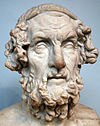
View all 3 quotes on Statius →Alexander Pope on Homer 3 quotes
“But when to examine every part he came, Nature and Homer were, he found, the same.”
Alexander Pope on Wives 3 quotes
“All other goods by fortune's hand are given, A wife is the peculiar gift of heaven.”

Quotes About Alexander Pope
Gain deeper perspective through quotes about Alexander Pope from others.
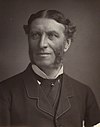
Matthew Arnold on Alexander Pope
“We are to regard Dryden as the puissant and glorious founder, Pope as the splendid high-priest, of our age of prose and reason, of our excellent and indispensable eighteenth century. For the purposes of their mission and destiny their poetry, like their prose, is admirable... Though they may write in verse, though they may in a certain sense be masters of the art of versification, Dryden and Pope are not classics of our poetry, they are classics of our prose.”
Lord Byron on Alexander Pope 2 quotes
View all 2 quotes on Lord Byron →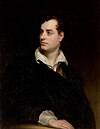
William Cobbett on Alexander Pope

William Cowper on Alexander Pope

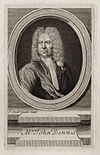
John Dennis on Alexander Pope 2 quotes
“A young, squab, short gentleman, whose outward form, though it should be that of downright monkey, would not differ so much from human shape as his unthinking immaterial part does from human understanding. ... As there is no creature in nature so venomous, there is nothing so stupid and so impotent as a hunch-back'd toad. ... This little author may extol the ancients as much and as long as he pleases, but he has reason to thank the good gods that he was born a modern. For had he been born of Grecian parents, and his father by consequence had by law the absolute disposal of him, his life had been no longer than that of one of his poems,—the life of half a day.”



Misattributed Quotes
Quotes mistakenly credited to Alexander Pope
“A god without dominion, providence, and final causes, is nothing else but Fate and Nature.”
“Never find fault with the absent.
• Sextus Propertius, Elegies, II, xix, 32, also translated: "Let no one be willing to speak ill of the absent".”
• Sextus Propertius, Elegies, II, xix, 32, also translated: "Let no one be willing to speak ill of the absent".”
“The sick in body call for aid: the sick
In mind are covetous of more disease;
And when at worst, they dream themselves quite well.
To know ourselves diseased, is half our cure.”
In mind are covetous of more disease;
And when at worst, they dream themselves quite well.
To know ourselves diseased, is half our cure.”
About Alexander Pope
Alexander Pope (21 May 1688 – 30 May 1744) was a poet and satirist of the Augustan period and one of its greatest artistic exponents. Considered the foremost English poet of the early 18th century and a master of the heroic couplet, he is best known for satirical and discursive poetry.