Link Copied!
Albert Jay Nock Quotes (1870-1945)
Author

About Albert Jay Nock
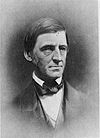
Albert Jay Nock (13 October 1870 – 19 August 1945) was an American author, educational theorist, libertarian, social critic of the early and middle 20th century, and a philosophical founder of the modern, libertarian conservative movement later embraced by Barry Goldwater, Ronald Reagan, and Ron Paul.
Best Albert Jay Nock Quotes
Shortest
Earliest
Explore our curated collection of the most famous and impactful Albert Jay Nock quotes.
“Personal publicity of every kind is utterly distasteful to me, and I have made greater efforts to escape it than most people make to get it.”

“The mentality of an army on the march is merely so much delayed adolescence; it remains persistently, incorrigibly and notoriously infantile.”
“The positive testimony of history is that the State invariably had its origin in conquest and confiscation. No primitive State known to history originated in any other manner.”

“The glossary of politics is so full of euphemistic words and phrases — as in the nature of things it must be — that one would suppose politicians must sometimes strain their wits to coin them.”

“Above all things the mass-mind is most bitterly resentful of superiority. It will not tolerate the thought of an elite; and under a political system of universal suffrage, the mass-mind is enabled to make its antipathies prevail.”
“The practical reason for freedom is that freedom seems to be the only condition under which any kind of substantial moral fiber can be developed — we have tried law, compulsion and authoritarianism of various kinds, and the result is nothing to be proud of.”

“It is certainly true that whatever a man may do or say, the most significant thing about him is what he thinks; and significant also is how he came to think it, why he continued to think it, or, if he did not continue, what the influences were which caused him to change his mind.”
“It would seem that in Paine's view the code of government should be that of the legendary King Pausole, who prescribed but two laws for his subjects, the first being,''' Hurt no man, and the second, ''Then do as you please.'''''”

“The State always moves slowly and grudgingly towards any purpose that accrues to society's advantage, but moves rapidly and with alacrity towards one that accrues to its own advantage; nor does it ever move towards social purposes on its own initiative, but only under heavy pressure, while its motion towards anti-social purposes is self-sprung.”
“Get up in one of our industrial centres today and say that two and two make four, and if there is any financial interest concerned in maintaining that two and two make five, the police will bash your head in. Then what choice have you, save to degenerate either into a fool or into a hypocrite? And who wants to live in a land of fools and hypocrites?”
“As Dr. Sigmund Freud has observed, it can not even be said that the State has ever shown any disposition to suppress crime, but only to safeguard its own monopoly of crime. … Taking the State wherever found, striking into its history at any point, one sees no way to differentiate the activities of its founders, administrators and beneficiaries from those of a professional-criminal class.”

“Considering mankind's indifference to freedom, their easy gullibility and their facile response to conditioning, one might very plausibly argue that collectivism is the political mode best suited to their disposition and their capacities. Under its regime, the citizen, like the soldier, is relieved of the burden of initiative and is divested of all responsibility, save for doing as he is told.”

“Granting this premise, the anarchist position appeared logical to me, as it did to Prince Kropotkin and Bakunin. Putting it roughly, if all men are human, if all bipeds classifiable as homo sapiens are human beings, social harmony and a general progress in civilization will be far better brought about by methods of free agreement and voluntary association than by constraint, whether directly under force, or under the menace of force which is always implicit in obedience to law.”

“We have two distinct types of political organization to take into account; and clearly, too, when their origins are considered, it is impossible to make out that the one is a mere perversion of the other. Therefore when we include both types under a general term like government, we get into logical difficulties; difficulties of which most writers on the subject have been more or less vaguely aware, but which, until within the last half-century, none of them has tried to resolve.”
“The picture which Isaiah presents of the Judean masses is most unfavorable. In his view, the mass-man — be he high or be he lowly, rich or poor, prince or pauper — gets off very badly. He appears as not only weak-minded and weak-willed, but as by consequence knavish, arrogant, grasping, dissipated, unprincipled, unscrupulous. The mass-woman also gets off badly, as sharing all the mass-man’s untoward qualities, and contributing a few of her own in the way of vanity and laziness, extravagance and foible.”
“"Democratic" State practice is nothing more or less than State practice. It does not differ from Marxist State practice, Fascist State practice, or any other. Here is the Golden Rule of sound citizenship, the first and greatest lesson in the study of politics: you get the same order of criminality from any State to which you give power to exercise it; and whatever power you give the State to do things for you carries with it the equivalent power to do things to you. ”
“On the positive side, my anarchism came mainly as a corollary to the estimate of human capacity for self-improvement which I had picked up from Mr. Jefferson. His fundamental idea appeared to be that everyone answering to the zoological classification of homo sapiens is a human being, and therefore is indefinitely improvable. The essence of it is that homo sapiens in his natural state really wishes and means to be as decent towards his fellow-beings as he can, and under favorable conditions will progress in decency.”
“If the modern spirit, whatever that may be, is disinclined towards taking the Lord’s word at its face value (as I hear is the case), we may observe that Isaiah’s testimony to the character of the masses has strong collateral support from respectable Gentile authority. Plato lived into the administration of Eubulus, when Athens was at the peak of its jazz-and-paper era, and he speaks of the Athenian masses with all Isaiah’s fervency, even comparing them to a herd of ravenous wild beasts.”
“I may mention one or two characteristic traits as having no virtue whatever, because they are mine by birth, not by acquisition. I have always been singularly free of envy, jealousy, covetousness; I but vaguely understand them. Having no ambition, I have always preferred the success of others to my own, and had more pleasure in it. I never had the least desire for place or prominence, least of all for power; and this was fortunate for me because the true individualist must regard power over others as preeminently something to be loathed and shunned.”
“Everyone knows that the State claims and exercises the monopoly of crime… It forbids private murder, but itself organizes murder on a colossal scale. It punishes private theft, but itself lays unscrupulous hands on anything it wants, weather the property of citizen or of alien. There is, for example, no human right, natural or Constitutional, that we have not seen nullified by the United States Government. Of all the crimes that are committed for gain or revenge, there is not one that we have not seen it commit—murder, mayhem, arson, robbery, fraud, criminal collusion and connivance.”
“If you can tough the fancy of the masses, and have the sagacity to keep always one jump ahead of their vagaries and vacillations, you can get good returns in money from serving the masses, and good returns also in a mouth-to-ear type of notoriety … Taking care of the Remnant, on the contrary, holds little promise of any such rewards. A prophet of the Remnant will not grow purse-proud on the financial returns from his work, nor is it likely that he will get any great renown out of it. Isaiah’s case was exceptional to this second rule, and there are others, but not many.”
“According to my observations, mankind are among the most easily tamable and domesticable of all creatures in the animal world. They are readily reducible to submission, so readily conditionable (to coin a word) as to exhibit an almost incredibly enduring patience under restraint and oppression of the most flagrant character. So far are they from displaying any overweening love of freedom that they show a singular contentment with a condition of servitorship, often showing a curious canine pride in it, and again often simply unaware that they are existing in that condition.”
“To know oneself as well as one can; to avoid self-deception and foster no illusions; to learn what one can about the plain natural truth of things, and make one's valuations accordingly; to waste no time in speculating upon vain subtleties, upon "things which are not and work not"; — this perhaps is hardly the aim of an academic philosophy, but it is what a practical philosophy keeps steadily in view. Because the Meditations of Marcus Aurelius so consistently does keep just this in view, it still remains, and for those who can take it will probably always remain, the best of handbooks to the art of living.”

Albert Jay Nock Quotes by Topic
Find exactly what you are looking for by browsing this categorized list of Albert Jay Nock quotes by topic.
Albert Jay Nock on Publicity
“Personal publicity of every kind is utterly distasteful to me, and I have made greater efforts to escape it than most people make to get it.”
Albert Jay Nock on Conservatism
“The conservative is a person who considers very closely every chance, even the longest, of "throwing out the baby with the bath-water," as the German proverb puts it, and who determines his conduct accordingly.”

Albert Jay Nock on Statism
“Taking the State wherever found, striking into its history at any point, one sees no way to differentiate the activities of its founders, administrators, and beneficiaries from those of a professional-criminal class.”
Albert Jay Nock on Fascism
“The superficial distinctions of Fascism, Bolshevism, Hitlerism, are the concern of journalists and publicists; the serious student sees in them only one root-idea of a complete conversion of social power into State power.”

Albert Jay Nock on Social power
“The superficial distinctions of Fascism, Bolshevism, Hitlerism, are the concern of journalists and publicists; the serious student sees in them only one root-idea of a complete conversion of social power into State power.”

Albert Jay Nock on Intelligibility
“The special reason has to do with the fact that in every civilization, however generally prosaic, however addicted to the short-time point there are certain alien spirits who, while outwardly conforming to the requirements of the civilization around them, still keep a disinterested regard for the plain intelligible law of things, irrespective of any practical end. They have an intellectual curiosity, sometimes touched with emotion.”

Albert Jay Nock on Pauperism
“The picture which Isaiah presents of the Judean masses is most unfavorable. In his view, the mass-man be he high or be he lowly, rich or poor, prince or pauper gets off very badly. He appears as not only weak-minded and weak-willed, but as by consequence knavish, arrogant, grasping, dissipated, unprincipled, unscrupulous. The mass-woman also gets off badly, as sharing all the mass-man’s untoward qualities, and contributing a few of her own in the way of vanity and laziness, extravagance and foible.”

Albert Jay Nock on Enlightenment (spiritual)
“When I got around to read Plato, I found that he reinforced and copper-fastened the notion which experience had already rather forcibly suggested, that direct attempts to overcome and enlighten ignorance are a doubtful venture; the notion that it is impossible, as one of my friends puts it, to tell anybody anything which in a very real sense he does not already know. It seemed extraordinary that this should be so. Nevertheless, there it was; and apparently no one could give, — certainly no one, not even Plato, did give, — any more intelligent and satisfying reason why it should be so than I could give; and I could give none at all.”

Albert Jay Nock on Economism
“I had before me the product of two mutually exclusive philosophies. Economism would insist that having made the perfect pencil, Thoreau should make more pencils and sell them for money with which to buy more material to make still more pencils to sell for money to buy still more material, and so on, because the making and selling of pencils is the whole content of life. Thoreau did not believe it is the whole content of life. It was clear that economism's philosophy was the only one which my companion was capable of accepting. Detach him from his particular specialised practice of it, and existence would have no further meaning for him; and in this he was representative of the great bulk of society in this present age.”
Albert Jay Nock on Necessity
“A person may be as radical as you please, and still may make an extremely conservative estimate of the force of necessity exhibited by a given set of conditions. A radical, for example, may think we should get on a great deal better if we had an entirely different system of government, and yet, at this time and under conditions now existing, he may take a strongly conservative view of the necessity for pitching out our system, neck and crop, and replacing it with another. He may think our fiscal system is iniquitous in theory and monstrous in practice, and be ever so sure he could propose a better one, but if on consideration of all the circumstances he finds that it is not necessary to change that system, he is capable of maintaining stoutly that it is necessary not to change it.”
Albert Jay Nock on Intention
“It may now be easily seen how great the difference is between the institution of government, as understood by Paine and the Declaration of Independence, and the institution of the State. … The nature and intention of government … are social. Based on the idea of natural rights, government secures those rights to the individual by strictly negative intervention, making justice costless and easy of access; and beyond that it does not go. The State, on the other hand, both in its genesis and by its primary intention, is purely anti-social. It is not based on the idea of natural rights, but on the idea that the individual has no rights except those that the State may provisionally grant him. It has always made justice costly and difficult of access, and has invariably held itself above justice and common morality whenever it could advantage itself by so doing.”
Albert Jay Nock on Groupthink
“Once, I remember, I ran across the case of a boy who had been sentenced to prison, a poor, scared little brat, who had intended something no worse than mischief, and it turned out to be a crime. The judge said he disliked to sentence the lad; it seemed the wrong thing to do; but the law left him no option. I was struck by this. The judge, then, was doing something as an official that he would not dream of doing as a man; and he could do it without any sense of responsibility, or discomfort, simply because he was acting as an official and not as a man. On this principle of action, it seemed to me that one could commit almost any kind of crime without getting into trouble with one's conscience. Clearly, a great crime had been committed against this boy; yet nobody who had had a hand in it — the judge, the jury, the prosecutor, the complaining witness, the policemen and jailers — felt any responsibility about it, because they were not acting as men, but as officials. Clearly, too, the public did not regard them as criminals, but rather as upright and conscientious men. The idea came to me then, vaguely but unmistakably, that if the primary intention of government was not to abolish crime but merely to monopolize crime, no better device could be found for doing it than the inculcation of precisely this frame of mind in the officials and in the public; for the effect of this was to exempt both from any allegiance to those sanctions of humanity or decency which anyone of either class, acting as an individual, would have felt himself bound to respect — nay, would have wished to respect. This idea was vague at the moment, as I say, and I did not work it out for some years, but I think I never quite lost track of it from that time.”

Albert Jay Nock on King Lear
“Plain language sounds purely objective. On the one hand, it has not the accent of mere vituperation, it is thoroughly dignified; and on the other, it is not the language of a person who is mainly concerned with wangling somebody into believing something. When Mr. Jefferson wrote that one of his associates in Washington's cabinet was "a fool and a blabber," his words, taken in their context, make exactly the same impression of calm, disinterested and objective appraisal as if he had remarked that the man had black hair and brown eyes. Or again, while we are about it, let us examine the most extreme example of this sort of thing that I have so far found in English literature, which is Kent's opinion of Oswald, in King Lear:
Kent. Fellow, I know thee.
Osw. What dost thou know me for?
Kent. A knave; a rascal; an eater of broken meats; a base, proud, shallow, beggarly, three-suited, hundred-pound, filthy, worsted-stocking knave; a lily-livered, action-taking whoreson, glass-gazing, & super-servicable, finical rogue; onetrunk-inheriting slave; one that wouldst be a bawd, in way of good service, and art nothing but the composition of a knave, beggar, coward, pandar, and the son and heir of a mongrel bitch.
Now, considering Kent's character and conduct, as shown throughout the play, I doubt very much that those lines should be taken as merely so much indecent blackguarding.... an actor who ranted through them in the tone and accent of sheer violent diatribe would ruin his part. Frank Warrin cited those lines the other day, when he was telling me how much he would enjoy a revival of Lear, with our gifted friend Bill Parke cast for the part of Kent. He said, "Can't you hear Bill's voice growing quieter and quieter, colder and colder, deadlier and deadlier, all the way through that passage?" Angry as Kent is, and plain as his language is, his tone and manner must carry a strong suggestion of objectivity in order to keep fully up to the dramatist's conception of his role. Kent is not abusing Oswald; he is merely, as we say, "telling him."”
What Albert Jay Nock Said About Others
Discover personal opinions Albert Jay Nock shared regarding contemporaries.
Albert Jay Nock on Sigmund Freud 2 quotes
“As Dr. Sigmund Freud has observed, it can not even be said that the State has ever shown any disposition to suppress crime, but only to safeguard its own monopoly of crime.”

Albert Jay Nock on Adolf Hitler 2 quotes
“[W]hen Hitler says that "the State dominates the nation because it alone represents it," he is only putting into loose popular language the formula of Hegel, that "the State is the general substance, whereof individuals are but accidents."”

Albert Jay Nock on Isaiah 2 quotes
“The picture which Isaiah presents of the Judean masses is most unfavorable. In his view, the mass-man — be he high or be he lowly, rich or poor, prince or pauper — gets off very badly. He appears as not only weak-minded and weak-willed, but as by consequence knavish, arrogant, grasping, dissipated, unprincipled, unscrupulous. The mass-woman also gets off badly, as sharing all the mass-man’s untoward qualities, and contributing a few of her own in the way of vanity and laziness, extravagance and foible.”
Albert Jay Nock on Franklin D. Roosevelt
“We really ought to do some celebrating because Franklin's demise is the biggest public improvement that America has experienced since the passage of the Bill of Rights.”

Albert Jay Nock on Max Eastman
“Mr. Eastman, like all good doctrinaire Marxians, was somewhat taken aback at seeing how quickly, easily, and apparently naturally the Marxian system in Russia slid off into an autocratic regime of outrageous tyranny.”

Albert Jay Nock on Alfred the Great
“I could see how "democracy" might do very well in a society of saints and sages led by an Alfred or an Antoninus Pius. Short of that, I was unable to see how it could come to anything but an ochlocracy of mass-men led by a sagacious knave.”

Albert Jay Nock on Georg Wilhelm Friedrich Hegel
“[W]hen Hitler says that “the State dominates the nation because it alone represents it,” he is only putting into loose popular language the formula of Hegel, that “the State is the general substance, whereof individuals are but accidents.””

Albert Jay Nock on Thomas Jefferson
“When Mr. Jefferson wrote that one of his associates in Washington's cabinet was "a fool and a blabber," his words, taken in their context, make exactly the same impression of calm, disinterested and objective appraisal as if he had remarked that the man had black hair and brown eyes.”

Albert Jay Nock on Jean-Jacques Rousseau
“I remember once lately discussing with a friend the instance of some one we knew who had become bored with existence and had taken his own way out of it. I said I could not object to suicide on the ethical or religious grounds ordinarily alleged, and I saw nothing but uncommonly far-fetched absurdity in Rousseau's plea that suicide is a robbery committed against society.”

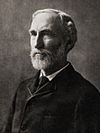
Albert Jay Nock on Josiah Willard Gibbs
“In the last generation, this country produced one of the most eminent men of science in the whole world. His name was quite unknown among us while he lived, and it is still unknown. Yet I may say without too great exaggeration that when I heard it mentioned in a professional assembly in the Netherlands two years ago, everybody got down under the table and touched their foreheads to the floor. His name was Josiah Willard Gibbs.”
Albert Jay Nock on François Rabelais
“It must be laid down once and for all, that the chief purpose of reading a classic like Rabelais is to prop and stay the spirit, especially in moments of weakness and enervation, against the stress of life, to elevate it above the reach of commonplace annoyances and degradations, and to purge it of despondency and cynicism.... Rabelais is dynamogenous and illuminating; he lights up the humane life with the light of great joy, so that it shows itself as something lovely and infinitely desirable, by the side of which all other attainments fall automatically into their proper place as cheap, poor, and trivial. One closes with it gladly, joyfully, perceiving that for the sake of it all else that is lost is well lost.”

Albert Jay Nock on Plato
“[I]n my early manhood I learned to respect ignorance, to regard ignorance as an object of legitimate interest and reflection; and as I say, a sort of unconsidered preparation for this attitude of mind appears to have run back almost to my infancy. Moreover, when I got around to read Plato, I found that he reinforced and copper-fastened the notion which experience had already rather forcibly suggested, that direct attempts to overcome and enlighten ignorance are a doubtful venture; the notion that it is impossible, as one of my friends puts it, to tell anybody anything which in a very real sense he does not already know. It seemed extraordinary that this should be so. Nevertheless, there it was; and apparently no one could give,—certainly no one, not even Plato, did give,—any more intelligent and satisfying reason why it should be so than I could give; and I could give none at all.”

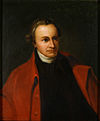
Albert Jay Nock on Patrick Henry
“Patrick Henry was an inveterate and voracious engrosser of land lying beyond the deadline set by the British State [i.e., the Royal Proclamation of 1763 which prohibited English colonists from settling west of the Appalachian Mountains]; later he was heavily involved in the affairs of one of the notorious Yazoo companies, operating in Georgia. He seems to have been most unscrupulous. His company's holdings in Georgia, amounting to more than ten million acres, were to be paid for in Georgia scrip, which was much depreciated. Henry bought up all these certificates that he could get his hands on, at ten cents on the dollar, and made a great profit on them by their rise in value when Hamilton put through his measure for having the central government assume the debts they represented. Undoubtedly it was this trait of unrestrained avarice which earned him the dislike of Mr. Jefferson, who said, rather contemptuously, that he was "insatiable in money."”
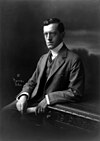
Albert Jay Nock on Ralph Adams Cram
“Mr. Cram’s thesis is that we do not behave like human beings because the great majority of us, the masses of mankind, are not human beings. We have all along assumed that the zoological classification of man is also a competent psychical classification; that all creatures having the physical attributes which put them in the category Homo sapiens also have the psychical attributes which put them in the category of human beings; and this, Mr. Cram says, is wholly unwarranted and an error of the first magnitude. Consequently we have all along been putting expectation upon the masses of Homo sapiens which they are utterly incapable of meeting. … My change of philosophical base had one curious and wholly unforeseen effect, though it followed logically enough. Since then I have found myself quite unable either to hate anybody or to lose patience with anybody. … My change of base brought me into a much more philosophical temper. … One can hate human beings, at least I could,—I hated a lot of them when that is what I thought they were,—but one can’t hate the sub-human creatures or be contemptuous of them, wish them ill, regard them unkindly. If an animal is treacherous, you avoid him but can’t hate him, for that is the way he is. … The mass-men who are princes, presidents, politicians, legislators, can no more transcend their psychical capacities than any wolf, fox or polecat in the land.”
Quotes About Albert Jay Nock
Gain deeper perspective through quotes about Albert Jay Nock from others.
Henry Regnery on Albert Jay Nock
“I had read some of Nock's essays, in Harper's or the Atlantic Monthly, while still in school, but it was his Memoirs of a Superfluous Man, which I read soon after it came out in 1944, that made me a confirmed Nockian and was probably one of the influences that led to my publishing books. The first of our two works by him was a journal from the years 1934 and 1935, the only unpublished manuscript, except some letters, that Nock did not destroy before his death in 1945. … Nock was a shrewd, keen observer, well aware of what was going on. Roosevelt and Hitler, for neither of whom Nock had any use whatever, had come into power the year before the journal begins; Mussolini was preparing for his Ethiopian adventure; and the politicians were helplessly wrestling with economic and social problems completely beyond their power of understanding, with armaments and war in the background as the simple and inevitable solution. Nock comments on it all with his usual directness and realism, and always in his clear classic English...”
Suzanne La Follette on Albert Jay Nock
“So little was there of the propagandist in him that he never seemed much interested in the fate of his work. He once wrote me a remarkable letter of advice in which he expressed succinctly his idea of a writer's duty to himself: "Write what you want to write, as well as you can, and then forget it." … But he wrote that little "as well as he could," and that was well indeed; so well that while there are still a few who love freedom, wisdom, excellence of thought and style, those few will be his readers. And they are the only readers he would want.”
About Albert Jay Nock
Albert Jay Nock (13 October 1870 – 19 August 1945) was an American author, educational theorist, libertarian, social critic of the early and middle 20th century, and a philosophical founder of the modern, libertarian conservative movement later embraced by Barry Goldwater, Ronald Reagan, and Ron Paul.