Link Copied!
Alasdair MacIntyre Quotes (1929-2025)
Philosopher, Revolutionary

About Alasdair MacIntyre
Alasdair Chalmers MacIntyre (12 January 1929 – 21 May 2025) was a Scottish-American philosopher primarily known for his contribution to moral and political philosophy but known also for his work in the history of philosophy and theology.
Best Alasdair MacIntyre Quotes
Shortest
Earliest
Explore our curated collection of the most famous and impactful Alasdair MacIntyre quotes.
“A striking feature of moral and political argument in the modern world is the extent to which it is innovators, radicals, and revolutionaries who revive old doctrines, while their conservative and reactionary opponents are the inventors of new ones.”

“I have confronted theoretical positions whose protagonists claim that what I take to be historically produced characteristics of what is specifically modern are in fact the timelessly necessary characteristics of all and any moral judgment, of all and any selfhood.”
“Virtues are dispositions not only to act in particular ways, but also to feel in particular ways. To act virtuously is not, as Kant was later to think, to act against inclination; it is to act from inclination formed by the cultivation of the virtues.”

“Imprisoning philosophy within the professionalizations and specializations of an institutionalized curriculum, after the manner of our contemporary European and North American culture, is arguably a good deal more effective in neutralizing its effects than either religious censorship or political terror”
“Raymond Aron ascribes to Weber the view that ‘each man’s conscience is irrefutable.’ … while [Weber] holds that an agent may be more or less rational in acting consistently with his values, the choice of any one particular evaluative stance or commitment can be no more rational than any other. All faiths and all evaluations are equally non-rational...”
“In The Triumph of the Therapeutic (1966) and also in To My Fellow Teachers (1975) Philip Rieff has documented with devastating insight a number of the ways in which truth has been displaced as a value and replaced by psychological effectiveness. The idioms of therapy have invaded all too successfully such spheres as those of education and of religion.”
“There ought not be two histories, one of political and moral action and one of political and moral theorizing, because there were not two pasts, one populated only by actions, the other only by theories. Every action is the bearer and expression of more or less theory-laden beliefs and concepts; every piece of theorizing and every expression of belief is a politcal and moral action.”

“[M]odern society is indeed often, at least in surface appearance, nothing but a collection of strangers, each pursuing his or her own interests under minimal constraints. We still of course, even in modern society, find it difficult to think of families, colleges and other genuine communities in this way; but even our thinking about those is now invaded to an increasing degree by individualist conceptions, especially in the law courts.”

“The manager treats ends as given, as outside his scope; his concern is with technique, with effectiveness … The therapist also treats ends as given, as outside his scope; his concern also is with technique, with effectiveness …Neither manager nor therapist, in their roles as manager and therapist, do or are able to engage in moral debate. They … purport to restrict themselves to the realms in which rational agreement in possible—that is, … to the realm of fact, the realm of means, the realm of measurable effectiveness.”
“The tradition of the virtues is at variance with central features of the modern economic order and more especially its individualism, its acquisitiveness and its elevation of the values of the market to a central social place. It now becomes clear that it also involves a rejection of the modern political order. ...Modern systematic politics, whether liberal, conservative, radical or socialist, simply has to be rejected from a standpoint that owes genuine allegiance to the tradition of the virtues; for modern politics itself expresses in its institutional forms a systematic rejection of that tradition.”
“Our basic moral beliefs have two characteristics, Sidgwick found himself forced to conclude not entirely happily; they do not form any kind of unity, they are irreducibly heterogeneous; and their acceptance is and must be unargued. At the foundation of moral thinking lie beliefs in statements for the truth of which no further reason can be given. To such statements Sidgwick, borrowing the word from Whewell, gives the name intuitions. Sidgwick's disappointment with the outcome of his own enquiry is evident in his announcement that where he had looked for Cosmos, he had in fact found only Chaos.”
“[M]y present point is not [the liberal-universalist one] that patriotism is good or bad as a sentiment, but that the practice of patriotism as a virtue is in advanced societies no longer possible in the way that it once was. In any society where government does not express or represent the moral community of the citizens, but is instead a set of institutional arrangements for imposing a bureaucratized unity on a society which lacks genuine moral consensus, the nature of political obligation becomes systematically unclear. ...Loyalty to my country, to my community - which remains unalterably a central virtue - becomes detached from obedience to the government which happens to rule me.”

“The stock characters acknowledged in the dramas of modern social life embody all too well the concepts and the modes of the moral beliefs and arguments which an Aristotelian and a Nietzschean would have to agree in rejecting. The bureaucratic manager, the consuming aesthete, the therapist, the protester and their numerous kindred occupy almost all the available culturally recognizable roles, the notions of the expertise of the few and of the moral agency of everyone are the presuppositions of the dramas which those characters enact. To cry out that the emperor had no clothes on was at least to pick on one man only to the amusement of everyone else; to declare that almost everyone is dressed in rags is much less likely to be popular.”
“According to Aristotle then excellence of character and intelligence cannot be separated. Here Aristotle expresses a view characteristically at odds with that dominant in the modern world. The modern view is expressed at one level in such banalities as ‘Be good, sweet maid, and let who will be clever’ and at another in such profundities as Kant’s distinction between the good will, the possession of which alone is both necessary and sufficient for moral worth, and what he took to be a quite distinct natural gift, that of knowing how to apply general rules to particular cases, a gift the lack of which is called stupidity. So for Kant one can be both good and stupid; but for Aristotle stupidity of a certain kind precludes goodness.”

“Consider what kind of authority [can be ascribed to] any principle which it open to us to choose to regard as authoritative or not. I may choose for example to observe a regimen of asceticism and fasting … for reasons of health … What authority such principles possess derives from the reasons for my choice. Insofar as they are good reasons, the principles have corresponding authority; insofar as they are not, the principles are to that same extent deprived of authority. It would follow that a principle for the choice of which no reasons could be given would be a principle devoid of authority. I might indeed adopt such a principle from whim or caprice or from some arbitrary purpose … but if I then chose to abandon the principle whenever it suited me, I would be entirely free to do so.”

“[M]odern politics cannot be a matter of genuine moral consensus. And it is not. Modem politics is civil war carried on by other means. ...The truth on this matter was set out by Adam Ferguson: 'We are not to expect that the laws of any country are to be framed as so many lessons of morality . ...Laws, whether civil or political, are expedients of policy to adjust the pretensions of parties. and to secure the peace of society. The expedient is accommodated to special circumstances ...' (Principles of Moral and Political Science ii. 144). The nature of any society therefore is not to be deciphered from its laws alone, but from those understood as an index of its conflicts. What our laws show is the extent and degree to which conflict has to be suppressed.”

“There is no way to understand the character of the taboo rules, except as a survival from some previous more elaborate cultural background. We know also and as a consequence that any theory which makes the taboo rules … intelligible just as they are without any reference to their history is necessarily a false theory... why should we think about [the theories of] analytic moral philosophers such as Moore, Ross, Prichard, Stevenson, Hare and the rest in any different way? … Why should we think about our modern use of good, right and obligatory in any different way from that in which we think about late eighteenth-century Polynesian uses of taboo?”

“My view that tolerance and rationality are intimately connected is not merely an a priori thesis. The transformation of Marxism from a rationally held into an irrationally held body of theory is a transformation which was the result of Marxists cutting themselves off from possibilities of criticism and refutation. The use of state power to defend Marxism as the one set of true beliefs in the Soviet Union produced the atrophy of Marxism and the irrationality of Soviet Marxism. This use of state power was not only repressive in respect of tolerance; it was the instrument of a minority who took up towards the majority an attitude very similar to that which Marcuse advises his minority elite to take up to the majority. The majority was in the Soviet Union the passive object of re-education in the interests of its own liberation. What Marcuse invites us to repeat is part of the experience of Stalinism.”

“The virtues therefore are to be understood as those dispositions which will not only sustain practices and enable us to achieve the goods internal to practices. but which will also sustain us in the relevant kind of quest for the good. by enabling us to overcome the harms. dangers. temptations and distractions which we encounter. and which will furnish us with increasing self-knowledge and increasing knowledge of the good. The catalogue of the virtues will therefore include the virtues required to sustain the kind of households and the kind of political communities in which men and women can seek for the good together and the virtues necessary for philosophical enquiry about the character of the good. We have then arrived at a provisional conclusion about the good life for man: the good life for man is the life spent in seeking for the good life for man, and the virtues necessary for the seeking are those which will enable us to understand what more and what else the good life for man is.”

“Marcuse’s collection of revolutionary forces is a list so familiar in radical circles that we must be careful not to miss its extreme heterogeneity: the student movement in the United States, the black population of the urban slums in the United States, the Chinese cultural revolution, the National Liberation Front in Vietnam, Cuba. There are three elements in this collection: there are first the genuinely aspiring poor of America and peasants in Vietnam and elsewhere, who must not be confused with their self-appointed spokesmen; there are the middle-class whites of the SDS and their counterparts in Britain, Germany, and France, who in their combination of insurrectionism and anarchism exemplify what Lenin diagnosed as leftwing communism, an infantile disease; and there are the representatives of the Communist bureaucracies in China, Cuba, and Vietnam, who represent right-wing communism, an oligarchical disease. These forces have only one thing in common: they are in conflict with the governments of the advanced industrial societies. But, as both Marx and Lenin knew, to be in conflict with the established order is not necessarily to be an agent of liberation.”

“A central thesis then begins to emerge: man is in his actions and practice, as well as in his fictions, essentially a story-telling animal. He is not essentially, but becomes through his history, a teller of stories that aspire to truth. But the key question for men is not about their own authorship; '''I can only answer the question 'What am I to do?' if I can answer the prior question 'Of what story or stories do I find myself a part?'''' We enter human society, that is, with one or more imputed characters - roles into which we have been drafted - and we have to learn what they are in order to be able to understand how others respond to us and how our responses to them are apt to be construed. It is through hearing stories about wicked stepmothers, lost children, good but misguided kings, wolves that suckle twin boys, youngest sons who receive no inheritance but must make their own way in the world and eldest sons who waste their inheritance on riotous living and go into exile to live with the swine, that children learn or mislearn both what a child and what a parent is, what the cast of characters may be in the drama into which they have been born and what the ways of the world are. ...Mythology, in its original sense, is at the heart of things.”

“It is always dangerous to draw too precise parallels between one historical period and another; and among the most misleading of such parallels are those which have been drawn between our own age in Europe and North America and the epoch in which the Roman empire declined into the Dark Ages. Nonetheless certain parallels there are. A crucial turning point in that earlier history occurred when men and women of good will turned aside from the task of shoring up the Roman imperium and ceased to identify the continuation of civility and moral community with the maintenance of that imperium. What they set themselves to achieve instead - often not recognizing fully what they were doing - was the construction of new forms of community within which the moral life could be sustained so that both morality and civility might survive the coming ages of barbarism and darkness. If my account of our moral condition is correct, we ought also to conclude that for some time now we too have reached that turning point. What matters at this stage is the construction of local forms of community within which civility and the intellectual and moral life can be sustained through the dark ages which are already upon us. ...This time, however, the barbarians are not waiting beyond the frontiers; they have already been among us for quite some time. And it is our lack of consciousness of this that constitutes part of our predicament. We are waiting not for Godot, but for another—doubtless very different—St. Benedict.”

Alasdair MacIntyre Quotes by Topic
Find exactly what you are looking for by browsing this categorized list of Alasdair MacIntyre quotes by topic.
Alasdair MacIntyre on Management 2 quotes
“Belief in managerial expertise is then, on the view I have taken,very like what belief in God was thought to be by Carnap and Ayer. It is one more illusion and a peculiarly modern one, the illusion of a power not ourselves that claims to make for righteousness.”

Alasdair MacIntyre on Effectiveness
“The manager treats ends as given, as outside his scope; his concern is with technique, with effectiveness .”
Alasdair MacIntyre on Virtue
“Virtues are dispositions not only to act in particular ways, but also to feel in particular ways. To act virtuously is not, as Kant was later to think, to act against inclination; it is to act from inclination formed by the cultivation of the virtues.”
Alasdair MacIntyre on Manager
“The manager treats ends as given, as outside his scope; his concern is with technique, with effectiveness ... The therapist also treats ends as given, as outside his scope; his concern also is with technique, with effectiveness ... Neither manager nor therapist, in their roles as manager and therapist, do or are able to engage in moral debate. They ... purport to restrict themselves to the realms in which rational agreement in possible—that is, ... to the realm of fact, the realm of means, the realm of measurable effectiveness.”

Alasdair MacIntyre on Taboo
“There is no way to understand the character of the taboo rules, except as a survival from some previous more elaborate cultural background. We know also and as a consequence that any theory which makes the taboo rules … intelligible just as they are without any reference to their history is necessarily a false theory... why should we think about [the theories of] analytic moral philosophers such as Moore, Ross, Prichard, Stevenson, Hare and the rest in any different way? … Why should we think about our modern use of good, right and obligatory in any different way from that in which we think about late eighteenth-century Polynesian uses of taboo?”
Alasdair MacIntyre on Moral agency
“What is it to understand oneself as a moral agent? ... First, I have to understand myself as and to present myself to others as someone with an identity other than the identities of role and office that I assume in each of the roles that I occupy. ... There must therefore be a place in any social order in which the exercise of the powers of moral agency is to be a real possibility. ... These too must be milieus of everyday practice in which the established standards are, when it is appropriate, put to the question, and not just in an abstract and general way. The necessary presupposition of such questioning is some more or less shared conception of what it is to be a good human being that focuses upon qualities which individuals possess or fail to possess qua individuals, independently of their roles, and which are exemplified in part by their capacity or their lack of capacity to stand back from and reconsider their engagement with the established role-structures.”
Alasdair MacIntyre on New Monasticism
“It is always dangerous to draw too precise parallels between one historical period and another; and among the most misleading of such parallels are those which have been drawn between our own age in Europe and North America and the epoch in which the Roman empire declined into the Dark Ages. Nonetheless certain parallels there are. A crucial turning point in that earlier history occurred when men and women of good will turned aside from the task of shoring up the Roman imperium and ceased to identify the continuation of civility and moral community with the maintenance of that imperium. What they set themselves to achieve instead - often not recognizing fully what they were doing - was the construction of new forms of community within which the moral life could be sustained so that both morality and civility might survive the coming ages of barbarism and darkness. If my account of our moral condition is correct, we ought also to conclude that for some time now we too have reached that turning point.”

What Alasdair MacIntyre Said About Others
Discover personal opinions Alasdair MacIntyre shared regarding contemporaries.
Alasdair MacIntyre on Friedrich Nietzsche
“What Nietzsche portrays is aristocratic self-assertion; what Homer and the sagas show are forms of assertion proper to and required by a certain role. The self becomes what it is in heroic societies only through its role; it is a social creation, not an individual one. Hence when Nietzsche projects back on to the archaic past his own nineteenth-century individualism, he reveals that what looked like an historical enquiry was actually an inventive literary construction. Nietzsche replaces the fictions of the Enlightenment individualism, of which he is so contemptuous, with a set of individualist fictions of his own. From this is it does not follow that one could not be an undeceived Nietzschean; and the whole importance of being a Nietzschean does after all lie in the triumph of being finally undeceived, being, as Nietzsche put it, truthful at last. It is simply, one might be tempted to conclude, that any would-be true Nietzschean will after all have to go further than Nietzsche.”

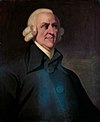
Alasdair MacIntyre on Adam Smith
“While discussing what it is that makes the “pleasures of wealth and greatness ... strike the imagination as something grand and beautiful,” [Adam Smith] remarks that “in the languor of disease and the weariness of old age” we cease to be so impressed, for we then take note of the fact that the acquisition of wealth and greatness leaves their possessors “always as much, and sometimes more exposed than before, to anxiety, to fear, and to sorrow, to diseases, to danger, and to death” (The Theory of Moral Sentiments IV, chapter I). But to allow our attention to dwell on this is, on Smith’s view, misguided. To do so is to embrace a “splenetic philosophy,” the effect of “sickness or low spirits” upon an imagination “which in pain and sorrow seems to be confined,” so that we are no longer “charmed with the beauty of that accommodation which reigns in the palaces and economy of the great.” The imagination of those “in better health or in better humor” fosters what may, Smith concedes, be no more than seductive illusions about the pleasures of wealth and greatness, but they are economically beneficial illusions. “It is this deception which rouses and keeps in continual motion the industry of mankind.” So even someone as perceptive as Smith, when he does pause to recognize the perspectives of ill health and old age, finds reason at once to put them on one side. And in so doing Smith speaks for moral philosophy in general.”
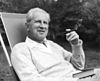
Alasdair MacIntyre on Herbert Marcuse
“In his essay on Repressive Tolerance...Marcuse argues that the tolerance of the advanced industrial democracies is a deceit... Freedom of speech is not an overriding good, for to allow freedom of speech in the present society is to assist in the propagation of error, and "the telos of tolerance is truth." The truth is carried by the revolutionary minorities and their intellectual spokesmen, such as Marcuse, and the majority have to be liberated by being re-educated into the truth by this minority, who are entitled to suppress rival and harmful opinions. This is perhaps the most dangerous of all Marcuse's doctrines, for not only is what he asserts false, but his is a doctrine which if it were widely held would be an effective barrier to any rational progress and liberation... What, then, are the true connections between tolerance, rationality, and liberation? The telos of tolerance is not truth but rationality. Certainly we value rationality because it is by rational methods that we discover truth; but a man may be rational who holds many false beliefs, and a man may have true beliefs and yet be irrational. What is crucial is that the former has the possibility of progressing toward truth, while the second not only has no grounds for asserting what he believes, even though it is true, but is continually liable to acquire false beliefs. What is it to be rational? It is a necessary condition of rationality that a man shall formulate his beliefs in such a way that it is clear what evidence would be evidence against them and that he shall lay himself open to criticism and refutation in the light of any possible extreme. But to foreclose on tolerance is precisely to cut oneself off from such criticism and refutation. It is to gravely endanger one’s own rationality by not admitting one's own fallibility.”
Quotes About Alasdair MacIntyre
Gain deeper perspective through quotes about Alasdair MacIntyre from others.
Jane O'Grady on Alasdair MacIntyre
“By reviving the sort of ethics that identifies “the good” with human flourishing, MacIntyre aimed to lead us out of “the new dark ages”, presumably into a better future. He influenced the resurgence of virtue ethics and communitarianism (he denied espousing either), and the now fashionable distrust of liberalism, individualism and the Enlightenment.”
About Alasdair MacIntyre
Alasdair Chalmers MacIntyre (12 January 1929 – 21 May 2025) was a Scottish-American philosopher primarily known for his contribution to moral and political philosophy but known also for his work in the history of philosophy and theology.
QuotesCosmos Cross-Civilizational Archive
Explore Related Wisdom Pillars, Worldviews & Canonical Works
Discover how humanity's greatest philosophers, sacred scriptures, and literary masterpieces address the core questions of existence.
30 Wisdom Pillars
22 Worldviews & Traditions
Canonical Books & Scriptures