Link Copied!
Al-Tabari Quotes (0-)
Poet
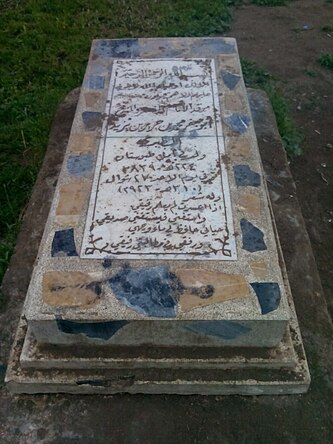

About Al-Tabari
Abū Jaʿfar Muḥammad ibn Jarīr ibn Yazid al-Ṭabarī (/ˈtɑːbəri/; Persian: محمد بن جریر طبری, Arabic: أبو جعفر محمد بن جرير بن يزيد الطبري) (224–310 AH; 839–923 AD) was an influential Persian scholar, historian and exegete of the Qur'an from Amol, Tabaristan (modern Mazandaran Province of Iran), who composed all his works in Arabic. Today, he is most famous for his expertise in Qur'anic exegesis and Islamic jurisprudence but he has been described as "an impressively prolific polymath. He wrote on such subjects as world history, poetry, lexicography, grammar, ethics, mathematics, and medicine." Al-Tabari's madhhab school flourished among Sunni ulama for two centuries after his death before it eventually became extinct. It was usually designated by the name Jariri.
Best Al-Tabari Quotes
Shortest
Earliest
Explore our curated collection of the most famous and impactful Al-Tabari quotes.
“Killing Unbelievers is a small matter to us.”

“I have fabricated things against God and have imputed to Him words which He has not spoken.”

“Muhammad carried arms, helmets, and spears. He led a hundred horses, appointing Bahir to be in charge of the weapons and Maslamah to be in charge of the horses. When the Quraysh received word of this, it frightened them.”

“By the following Friday, Mansur had dealt with thirty thousand Muslims who had been paying the jizyah and eighty thousand polytheists who had been exempted from the jizyah. He imposed the jizyah on the polytheists and removed it from the Muslims.”
“"By God, our religion (din) from which we have departed is better and more correct than that which these people follow. Their religion does not stop them from shedding blood, terrifying the roads, and seizing properties." And they returned to their former religion.”

“We have been dealt a situation from which there is no escape. You have seen what Muhammad has done. Arabs have submitted to him and we do not have the strength to fight. You know that no herd is safe from him. And no one even dares go outside for fear of being terrorized.”
“The Prophet gave orders concerning Kinanah to Zubayr, saying, ‘Torture him until you root out and extract what he has. So Zubayr kindled a fire on Kinanah’s chest, twirling it with his firestick until Kinanah was near death. Then the Messenger gave him to Maslamah, who beheaded him.”
“Nobody seeks my help with a petition or offers an excuse that is more pressing than he, reminding me of a favor I did him so that it would be followed by its sister (i.e, one like it) and so good would be done to its asker because withholding of later things removes gratitude for earlier ones.”
“When Muhammad saw Hamzah he said, ‘If Allah gives me victory over the Quraysh at any time, I shall mutilate thirty of their men!’ When the Muslims saw the rage of the Prophet they said, ‘By Allah, if we are victorious over them, we shall mutilate them in a way which no Arab has ever mutilated anybody.”

“By God! If any of the Arabs other than you were to say that to me, while he was in the same situation as you, I would not leave him without mentioning his mother's being deprived of him. I would say it whoever he might be. But, by God, there is no way for me to mention your mother except by saying the best things possible.”
“If you [Muslims] are under their [infidels] authority, fearing for yourselves, behave loyally to them, with your tongue, while harboring inner animosity for them. Allah has forbidden believers from being friendly or on intimate terms with the infidels in place of believers except when infidels are above them [in authority]. In such a scenario, let them act friendly towards them.”

“A raiding party led by Zayd set out against Umm in Ramadan. During it, Umm suffered a cruel death. Zyad tied her legs with rope and then tied her between two camels until they split her in two. She was a very old woman. Then they brought Umm’s daughter and Abdallah to the Messenger. Umm’s daughter belonged to Salamah who had captured her. Muhammad asked Salamah for her, and Salamah gave her to him.”
“Arabs are the most noble people in lineage, the most prominent, and the best in deeds. We were the first to respond to the call of the Prophet. We are Allah’s helpers and the viziers of His Messenger. We fight people until they believe in Allah. He who believes in Allah and His Messenger has protected his life and possessions from us. As for one who disbelieves, we will fight him forever in Allah’s Cause. Killing him is a small matter to us.”
“I have not been ordered to fight you. I have only been ordered not to leave you until I bring you to al-Kufah. If you refuse to do that, then take any road that will neither brng you into al-Kufah nor take you back to Madina, and let that be a compromise between us; I shall write to Ibn Ziyad. You write to Yazīd ibn Mu‘āwiya if you wish to write to him, or to ʿUbayd Allāh ibn Ziyād if you wish. Perhaps God will cause something to happen that will relieve me from beingtroubled in any way by your affair. Therefore, take this road here and bear to the left of the road to al-ʿUdhayb and al-Qādīsiyyāh.”
““He first took Bãmiãn, which he probably reached by way of Herãt, and then marched on Balkh where he ruined (the temple) Naushãd. On his way back from Balkh he attacked Kãbul…
“Starting from Panjhîr, the place he is known to have visited, he must have passed through the capital city of the Hindu Šãhîs to rob the sacred temple - the reputed place of coronation of the Šãhî rulers-of its sculptural wealth…
“The exact details of the spoil collected from the Kãbul valley are lacking. The Tãrîkh [-i-Sistãn] records 50 idols of gold and silver and Mas’udî mentions elephants. The wonder excited in Baghdãd by elephants and pagan idols forwarded to the Caliph by Ya’qûb also speaks for their high value.
“The best of our authorities put the date of this event in 257 (870-71). Tabarî is more precise and says that the idols sent by Ya’qûb reached Baghdãd in Rabî’ al-Ãkhar, 257 (Feb.-March, 871). Thus the date of the actual invasion may be placed at the end of AD 870.””
“Starting from Panjhîr, the place he is known to have visited, he must have passed through the capital city of the Hindu Šãhîs to rob the sacred temple - the reputed place of coronation of the Šãhî rulers-of its sculptural wealth…
“The exact details of the spoil collected from the Kãbul valley are lacking. The Tãrîkh [-i-Sistãn] records 50 idols of gold and silver and Mas’udî mentions elephants. The wonder excited in Baghdãd by elephants and pagan idols forwarded to the Caliph by Ya’qûb also speaks for their high value.
“The best of our authorities put the date of this event in 257 (870-71). Tabarî is more precise and says that the idols sent by Ya’qûb reached Baghdãd in Rabî’ al-Ãkhar, 257 (Feb.-March, 871). Thus the date of the actual invasion may be placed at the end of AD 870.””

““The ultimate capture of Beykund (in AD 706) rewarded him with an incalculable booty; even more than had hitherto fallen into the hands of the Mahommedans by the conquest of the entire province of Khorassaun; and the unfortunate merchants of the town, having been absent on a trading excursion while their country was assailed by the enemy, and finding their habitations desolate on their return contributed further to enrich the invaders, by the ransom which they paid for the recovery of their wives and children. The ornaments alone, of which these women had been plundered, being melted down, produced, in gold, one hundred and fifty thousand meskals; of a dram and a half each. Among the articles of the booty, is also described an image of gold, of fifty thousand meskals, of which the eyes were two pearls, the exquisite beauty and magnitude of which excited the surprise and admiration of Kateibah. They were transmitted by him, with a fifth of the spoil to Hejauje, together with a request that he might be permitted to distribute, to the troops, the arms which had been found in the place in great profusion.””
“Now then, O people, you have a right over your wives and they have a right over you. You have [the right] that they should not cause anyone of whom you dislike to tread on your beds; and that they should not commit any open indecency (fāḥishah). If they do, then God permits you to forsake them in bed and to beat them, but not severely. If they abstain from [evil], they have the right to their food and clothing in accordance with custom (bi’l-ma‘rūf). Treat women well, for they are [like] captives ('awan) with you and do not possess anything for themselves. You have taken them only as a trust from God, and you have made the enjoyment of their persons lawful by the word of God, so understand and listen to my words, O people. I have conveyed the Message, and have left you with something which, if you hold fast to it, you will never go astray: that is, the Book of God and the sunnah of His Prophet. Listen to my words, O people, for I have conveyed the Message and understand [it]. Know for certain that every Muslim is a brother of another Muslim, and that all Muslims are brethren. It is not lawful for a person [to take] from his brother except that which he has given him willingly, so do not wrong yourselves. O God, have I not conveyed the message?”
““A breach was, however, at last effected in the walls of the city in AD 712 by the warlike machines of Kateibah; and some of the most daring of its defenders having fallen by the skill of his archers, the besieged demanded a cessation of arms to the following day, when they promised to capitulate. The request was acceded to by Kateibah; and a treaty was the next day accordingly concluded between him and the prince of Samarkand, by which the latter engaged for the annual payment of ten millions of dirhems, and a supply of three thousand slaves; of whom it was particularly stipulated, that none should either be in a state of infancy, or ineffective from old age and debility. He further contracted that the ministers of his religion should be expelled from their temples and their idols destroyed and burnt; that Kateibah should be allowed to establish a mosque in the place of the principal temple, in which, to discharge the duties of his faith… To all this, Ghurek, with whatever reluctance, was compelled to subscribe, and he proceeded accordingly to prepare for the reception of Kateibah; who at the period agreed upon, entered Samarkand with a retinue of four hundred persons, selected from his own relatives, and the principal commanders of his army. He was met by Ghurek, with a respect bordering on adoration, and conducted to the gate of the principal temple, which he immediately entered; and after performing two rekkauts of the ritual of his faith, directed the images of pagan worship to be brought before him, for the purpose of being committed to the flames. From this some of the Turks or Tartars of Samarkand, endeavouring to dissuade him, by a declaration, that among the images, there was one, which if any person ventured to consume, that person should certainly perish; Kateibah informed them, that he should not shrink from the experiment, and accordingly set fire to the whole collection with his own hands; it was soon consumed to ashes, and fifty thousand meskals of gold and silver, collected from the nails which has been used in the workmanship of the images.””
Al-Tabari Quotes by Topic
Find exactly what you are looking for by browsing this categorized list of Al-Tabari quotes by topic.
Al-Tabari on Jizya 6 quotes
“In this year Muhammad ordered people to pay the zakat tax. It is said that the Prophet commanded them to do this.”

Al-Tabari on Islam and domestic violence 2 quotes
“Allah permits you to shut them in separate rooms and to beat them, but not severely. If they abstain, they have the right to food and clothing. Treat women well for they are like domestic animals and they possess nothing themselves. Allah has made the enjoyment of their bodies lawful in his Qur’an.”

Al-Tabari on Medieval Arab attitudes to Black people 2 quotes
“Ham [Africans] begat all those who are black and curly-haired, while Japheth [Turks] begat all those who are full-faced with small eyes, and Shem [Arabs] begat everyone who is handsome of face with beautiful hair. Noah prayed that the hair of Ham’s descendants would not grow beyond their ears, and that whenever his descendants met Shem’s, the latter would enslave them.”
Al-Tabari on Arabs
“Arabs are the most noble people in lineage, the most prominent, and the best in deeds. We were the first to respond to the call of the Prophet. We are Allah’s helpers and the viziers of His Messenger. We fight people until they believe in Allah. He who believes in Allah and His Messenger has protected his life and possessions from us. As for one who disbelieves, we will fight him forever in Allah’s Cause. Killing him is a small matter to us.”

What Al-Tabari Said About Others
Discover personal opinions Al-Tabari shared regarding contemporaries.
Al-Tabari on Aisha 5 quotes
“When the Prophet married Aisha she very young and not yet ready for consummation.”

Al-Tabari on Khalid ibn al-Walid
Al-Tabari on Women in Islam
“Now then, O people, you have a right over your wives and they have a right over you. You have [the right] that they should not cause anyone of whom you dislike to tread on your beds; and that they should not commit any open indecency (fāḥishah). If they do, then God permits you to forsake them in bed and to beat them, but not severely. If they abstain from [evil], they have the right to their food and clothing in accordance with custom (bi’l-ma‘rūf). Treat women well, for they are [like] captives ('awan) with you and do not possess anything for themselves. You have taken them only as a trust from God, and you have made the enjoyment of their persons lawful by the word of God, so understand and listen to my words, O people. I have conveyed the Message, and have left you with something which, if you hold fast to it, you will never go astray: that is, the Book of God and the sunnah of His Prophet. Listen to my words, O people, for I have conveyed the Message and understand [it]. Know for certain that every Muslim is a brother of another Muslim, and that all Muslims are brethren. It is not lawful for a person [to take] from his brother except that which he has given him willingly, so do not wrong yourselves. O God, have I not conveyed the message?”

About Al-Tabari
Abū Jaʿfar Muḥammad ibn Jarīr ibn Yazid al-Ṭabarī (/ˈtɑːbəri/; Persian: محمد بن جریر طبری, Arabic: أبو جعفر محمد بن جرير بن يزيد الطبري) (224–310 AH; 839–923 AD) was an influential Persian scholar, historian and exegete of the Qur'an from Amol, Tabaristan (modern Mazandaran Province of Iran), who composed all his works in Arabic. Today, he is most famous for his expertise in Qur'anic exegesis and Islamic jurisprudence but he has been described as "an impressively prolific polymath. He wrote on such subjects as world history, poetry, lexicography, grammar, ethics, mathematics, and medicine." Al-Tabari's madhhab school flourished among Sunni ulama for two centuries after his death before it eventually became extinct. It was usually designated by the name Jariri.