al-Kufah. If you refuse to do that, then take any road that will neither brng you into al-Kufah nor take you back to Madina, and let that be a compromise between us; I shall write to Ibn Ziyad. You write to Yazīd ibn Mu‘āwiya if you wish to write to him, or to ʿUbayd Allāh ibn Ziyād if you wish. Perhaps God will cause something to happen that will relieve me from beingtroubled in any way by your affair. Therefore, take this road here and bear to the left of the road to al-ʿUdhayb and al-Qādīsiyyāh." - Meaning and context.">
Replied to Husayn ibn Ali, History of the Prophets and Kings, Vol. 19, p. 95
“

I have not been ordered to fight you. I have only been ordered not to leave you until I bring you to al-Kufah. If you refuse to do that, then take any road that will neither brng you into al-Kufah nor take you back to Madina, and let that be a compromise between us; I shall write to Ibn Ziyad. You write to Yazīd ibn Mu‘āwiya if you wish to write to him, or to ʿUbayd Allāh ibn Ziyād if you wish. Perhaps God will cause something to happen that will relieve me from beingtroubled in any way by your affair. Therefore, take this road here and bear to the left of the road to al-ʿUdhayb and al-Qādīsiyyāh.

— Al-Tabari

What It Means

This is a placeholder explanation generated by the low-overhead model. It interprets "I have not been ordered to fight you. I have only been ordered not to leave you until I bring you to al-Kufah. If you refuse to do that, then take any road that will neither brng you into al-Kufah nor take you back to Madina, and let that be a compromise between us; I shall write to Ibn Ziyad. You write to Yazīd ibn Mu‘āwiya if you wish to write to him, or to ʿUbayd Allāh ibn Ziyād if you wish. Perhaps God will cause something to happen that will relieve me from beingtroubled in any way by your affair. Therefore, take this road here and bear to the left of the road to al-ʿUdhayb and al-Qādīsiyyāh." in the context of "Replied to Husayn ibn Ali, History of the Prophets and Kings, Vol. 19, p. 95" to mean that wisdom is timeless.

Source: Wikiquote: "Al-Tabari" (Quotes) The 'What it means' explanation text was generated by Google Gemini Flash (accessed January 18, 2026). https://gemini.google.com/app
Al-Tabari

About Al-Tabari

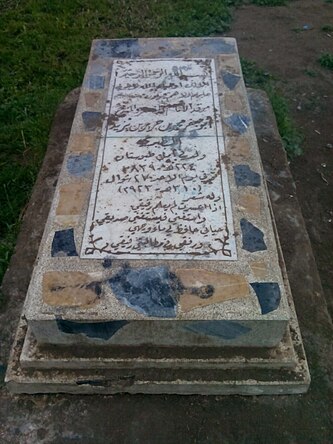
Abū Jaʿfar Muḥammad ibn Jarīr ibn Yazid al-Ṭabarī (/ˈtɑːbəri/; Persian: محمد بن جریر طبری‎, Arabic: أبو جعفر محمد بن جرير بن يزيد الطبري‎) (224–310 AH; 839–923 AD) was an influential Persian scholar, historian and exegete of the Qur'an from Amol, Tabaristan (modern Mazandaran Province of Iran), who composed all his works in Arabic. Today, he is most famous for his expertise in Qur'anic exegesis and Islamic jurisprudence but he has been described as "an impressively prolific polymath. He wrote on such subjects as world history, poetry, lexicography, grammar, ethics, mathematics, and medicine." Al-Tabari's madhhab school flourished among Sunni ulama for two centuries after his death before it eventually became extinct. It was usually designated by the name Jariri.