Link Copied!
Abraham Pais Quotes (1918-2000)
Physicist
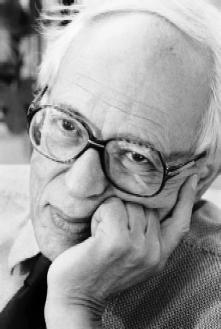
About Abraham Pais
Abraham Pais (May 19, 1918 – July 28, 2000) was a Dutch-born American physicist and science historian. He served as an assistant to Niels Bohr in Denmark and was later a colleague of Albert Einstein at the Princeton Institute for Advanced Study. Pais wrote books documenting the lives of these two great physicists and the contributions they and others made to modern physics.
Best Abraham Pais Quotes
Shortest
Earliest
Explore our curated collection of the most famous and impactful Abraham Pais quotes.
“A number of current theoretical explorations will turn out to be passing fancies...”
“Deliberately or not, every author is of course present in every book he or she writes — even in a scientific text.”
“One of the things I learned, one of the strangest things, is how to think.https://citatis.com/a46/05496/”
“To make a discovery is not necessarily the same as to understand a discovery.https://citatis.com/a46/05496/”
“One of the absolute rules I learned in the war was, don't know anything you don't need to know, because if you ever get caught they will get it out of you.”
“A number of current theoretical explorations will turn out to be passing fancies...https://citatis.com/a46/05496/”
“I knew all the time I was going to get through the war. It was completely irrational, a silly idea, but I was not going to lie down and get myself killed. I was going to get out of it.”
“Deliberately or not, every author is of course present in every book he or she writes - even in a scientific text.https://citatis.com/a46/”
“Of course, relative citation frequencies are no measure of relative importance. Who has not aspired to write a paper so fundamental that very soon it is known to everyone and cited by no one?”
“To make a discovery is not necessarily the same as to understand a discovery. Not only Planck but also other physicists were initially at a loss as to what the proper context of the new postulate really was.”
“I knew all the time I was going to get through the war. It was completely irrational, a silly idea, but I was not going to lie down and get myself killed.https://citatis.com/a46/”
“I spent every night until four in the morning on my dissertation, until I came to the point when I could not write another word, not even the next letter.https://citatis.com/a46/05496/”
“One of the absolute rules I learned in the war was, don't know anything you don't need to know, because if you ever get caught they will get it out of you.https://citatis.com/a46/05496/”
“A new man appears abruptly, the ‘suddenly famous Doctor Einstein.’ He carries the message of a new order in the universe. He is a new Moses come down from the mountain to bring the law and a new Joshua controlling the motion of heavenly bodies...”
“The rule of the game was never assume that anybody, however honorable, would be able to stand up under torture. If Mr. X, who knew where I was, was caught for some reason, I should move.https://citatis.com/a46/”
“Of course, relative citation frequencies are no measure of relative importance. Who has not aspired to write a paper so fundamental that very soon it is known to everyone and cited by no one?https://citatis.com/a46/05496/”
“Once I even took the train to Utrecht, forty miles from Amsterdam, with my yellow star, this star which I still have. Why did I go? I just wanted to visit some friends. I was a little bit crazy, a little bit insanehttps://citatis.com/a46/”
“Progress leads to confusion leads to progress and on and on without respite. Every one of the many major advances … created sooner or later, more often sooner, new problems. These confusions, never twice the same, are not to be deplored. Rather, those who participate experience them as a privilege.”

“I lived altogether in nine different places while in hiding, because whenever something happened, either someone betrayed the place or something happened to someone who knew where I was, I had to move. The rule of the game was never assume that anybody, however honorable, would be able to stand up under torture. If Mr. X, who knew where I was, was caught for some reason, I should move.”
“I was lucky because the same week that I went to prison the Americans crossed the Rhine and cut off the northern part of Holland, so there was no longer any possibility of being shipped out to a concentration camp. The rail lines were cut. So I was in prison in Amsterdam during the very last days of the war. We were sent to the men's prison and the girls were sent to a women's prison in a different place.”
“I made a discovery, perhaps known to others but new to me: I need not put myself center stage but can rather place myself at the side, like a Greek chorus. As the curtain rises, I can walk to the center and can speak as follows: I wish to tell you of happenings in the twentieth century, as I witnessed them and reflected upon them. You will see me return to center stage, but only occasionally. Once that imagery had gotten hold of me, I went back to Ida and said yes, I shall try.”
“The first thing Bohr said to me was that it would only then be profitable to work with him if I understood that he was a dilettante. The only way I knew to react to this unexpected statement was with a polite smile of disbelief. But evidently Bohr was serious. He explained how he had to approach every new question from a starting point of total ignorance. It is perhaps better to say that Bohr's strength lay in his formidable intuition and insight rather than erudition.”
“On the day we were caught, Lion and I had been talking about writing a memorandum on the fate of the Jewish war children living in hiding or among Dutch families … we were the representatives of the Zionist youth organization. … Lion who had been taking notes of the discussion, put these papers in his jacket pocket when he took a break from lunch. When the Germans caught us they discovered his notes. If those papers had been in my pocket I would have never lived to be seventy. I have led a strange life, a set of complete coincidences.”

“One of the things I learned, one of the strangest things, is how to think. There was nothing else to do. I couldn't see people, or go for a walk in the forest. All I had was my head and my books, and I thought a lot. I learned, because there was no interruption. I had access to myself, to my thinking. I wouldn't say that I particularly matured. The thinking was physics thinking. I was just short of twenty-two then.
I was in hiding for two years and two months, something like that. In all that time I went out very, very little, just once in a great while, after dark. Once I even took the train to Utrecht, forty miles from Amsterdam, with my yellow star, this star which I still have. Why did I go? I just wanted to visit some friends. I was a little bit crazy, a little bit insane.”
I was in hiding for two years and two months, something like that. In all that time I went out very, very little, just once in a great while, after dark. Once I even took the train to Utrecht, forty miles from Amsterdam, with my yellow star, this star which I still have. Why did I go? I just wanted to visit some friends. I was a little bit crazy, a little bit insane.”
“Today we live in the midst of upheaval and crisis. We do not know where we are going, nor even where we ought to be going. Awareness is spreading that our future cannot be a straight extension of the past or the present … The century now approaching its end has been one of indiscriminate violence, it has been perhaps the most murderous one in Western history of which we have record. Yet I would think that what will strike people most when, hundreds of years from now, they will look back on our days is that this was the age when the exploration of space began, the microchip was invented, revolutions in transport and communication virtually annihilated time and distance, transforming the world into a "global village," and relativity theory, quantum mechanics, and the structure of the atom were discovered, in brief that this has been the century of science and technology.”
Abraham Pais Quotes by Topic
Find exactly what you are looking for by browsing this categorized list of Abraham Pais quotes by topic.
Abraham Pais on EPR paradox 2 quotes
“Finally, in that period the 'EPR paper' appeared, a collaboration with Nathan Rosen and Boris Podolsky which deals with the foundations of quantum mechanics. There are a number of physicists who consider this a fundamental contribution to that subject. I am not one of those.”
Abraham Pais on Citation
“Of course, relative citation frequencies are no measure of relative importance. Who has not aspired to write a paper so fundamental that very soon it is known to everyone and cited by no one?”
Abraham Pais on Unified field theory
“When Einstein, Weyl, and others began their work on unified field theory, it was natural to assume that this task consisted exclusively of the union of gravitation with electromagnetism. To be sure, the separateness of these two fields posed no conflicts or paradoxes. There were no puzzles such as the Michelson-Morley experiment nor curious coincidences like the equality of the inertial and the gravitational mass. Nevertheless, it seemed physically well-motivated and appealing to ask, Do nature's only two fields of force, both long-range in character, have a common origin?”

Abraham Pais on General relativity
“The number of those actively engaged in research in general relativity ... remain[ed] small in the 1930s, 1940s, and early 1950s. ...Peter Bergmann once said to me, 'You only had to know what your six best friends were doing and you would know what was happening in general relativity.' ...However, in the 1930s a new element... briefly attracted attention, then stayed... quiescent for a quarter of a century. ...J. Robert Oppenheimer and... Robert Serber decided to study the relative influence of nuclear and gravitational influences in neutron stars. ...Their work attracted... Richard Chase Tolman. ...there appeared in 1939, a pair of papers, one by Tolman on the static solution of Einstein's field equations for fluid spheres... and one... by Oppenheimer and George Volkoff... In this paper, the foundations are laid for a general relativistic theory of stellar structure. ...Half a year later, the paper... by Oppenheimer and Hartland Snyder came out... Thus began the physics of black holes...”

What Abraham Pais Said About Others
Discover personal opinions Abraham Pais shared regarding contemporaries.
Abraham Pais on John von Neumann 3 quotes
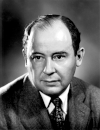
“Von Neumann's reputation and fame have grown steadily since his death. His fantastic brain, and the breadth of his interests and undertakings, have become almost legendary.”
Abraham Pais on Niels Bohr
“The first thing Bohr said to me was that it would only then be profitable to work with him if I understood that he was a dilettante. The only way I knew to react to this unexpected statement was with a polite smile of disbelief. But evidently Bohr was serious. He explained how he had to approach every new question from a starting point of total ignorance. It is perhaps better to say that Bohr's strength lay in his formidable intuition and insight rather than erudition.”

About Abraham Pais
Abraham Pais (May 19, 1918 – July 28, 2000) was a Dutch-born American physicist and science historian. He served as an assistant to Niels Bohr in Denmark and was later a colleague of Albert Einstein at the Princeton Institute for Advanced Study. Pais wrote books documenting the lives of these two great physicists and the contributions they and others made to modern physics.
QuotesCosmos Cross-Civilizational Archive
Explore Related Wisdom Pillars, Worldviews & Canonical Works
Discover how humanity's greatest philosophers, sacred scriptures, and literary masterpieces address the core questions of existence.
30 Wisdom Pillars
22 Worldviews & Traditions
Canonical Books & Scriptures