Link Copied!
A. E. Housman Quotes (1859-1936)
Poet
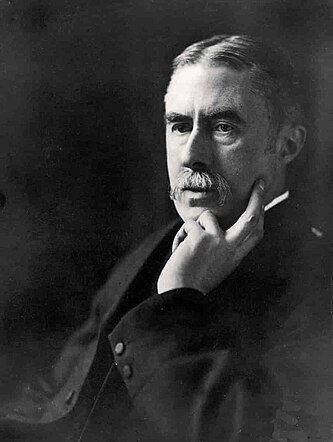




About A. E. Housman
Alfred Edward Housman (26 March 1859 – 30 April 1936), usually known as A.E. Housman, was an English poet and classical scholar, now best known for his cycle of poems A Shropshire Lad.
Best A. E. Housman Quotes
Shortest
Earliest
Explore our curated collection of the most famous and impactful A. E. Housman quotes.


“Hope lies to mortals
And most believe her,
But man's deceiver
Was never mine.”
And most believe her,
But man's deceiver
Was never mine.”
“The house of delusions is cheap to build, but draughty to live in, and ready at any instant to fall.”

“The most important truth which has ever been uttered, and the greatest discovery ever made in the moral world.”
“They carry back bright to the coiner the mintage of man,
The lads that will die in their glory and never be old.”
The lads that will die in their glory and never be old.”

“His folly has not fellow
Beneath the blue of day
That gives to man or woman
His heart and soul away.”
Beneath the blue of day
That gives to man or woman
His heart and soul away.”
“My heart always warms to people who do not come to see me, especially Americans, to whom it seems to be more of an effort.”
“Be still, my soul, be still; the arms you bear are brittle,
Earth and high heaven are fixt of old and founded strong.”
Earth and high heaven are fixt of old and founded strong.”
“Far in a western brookland
That bred me long ago
The poplars stand and tremble
By pools I used to know.”
That bred me long ago
The poplars stand and tremble
By pools I used to know.”

“When I was one-and-twenty
I heard a wise man say,
"Give crowns and pounds and guineas
But not your heart away."”
I heard a wise man say,
"Give crowns and pounds and guineas
But not your heart away."”
“There, by the starlit fences,
The wanderer halts and hears
My soul that lingers sighing
About the glimmering weirs.”
The wanderer halts and hears
My soul that lingers sighing
About the glimmering weirs.”
“And how am I to face the odds
Of man’s bedevilment and God’s?
I, a stranger and afraid
In a world I never made.”
Of man’s bedevilment and God’s?
I, a stranger and afraid
In a world I never made.”
“Oh tarnish late on Wenlock Edge,
Gold that I never see;
Lie long, high snowdrifts in the hedge
That will not shower on me.”
Gold that I never see;
Lie long, high snowdrifts in the hedge
That will not shower on me.”
“Lovers lying two and two
Ask not whom they sleep beside,
And the bridegroom all night through
Never turns him to the bride.”
Ask not whom they sleep beside,
And the bridegroom all night through
Never turns him to the bride.”

A. E. Housman Quotes by Topic
Find exactly what you are looking for by browsing this categorized list of A. E. Housman quotes by topic.
A. E. Housman on Cambridge 2 quotes
View all 2 quotes on Cambridge →A. E. Housman on River Severn 2 quotes
“High the vanes of Shrewsbury gleam Islanded in Severn stream; The bridges from the steepled crest Cross the water east and west.”

A. E. Housman on Larks
A. E. Housman on Bears
A. E. Housman on Wind
A. E. Housman on Poetry
“Even when poetry has a meaning, as it usually has, it may be inadvisable to draw it out … and perfect understanding will sometimes almost extinguish pleasure.”

A. E. Housman on Law
A. E. Housman on Malt
A. E. Housman on Youth
“Into my heart an air that kills From yon far country blows: What are those blue remembered hills, What spires, what farms are those? That is the land of lost content, I see it shining plain, The happy highways where I went And cannot come again.”

A. E. Housman on Roman Britain
“Then, ’twas before my time, the Roman At yonder heaving hill would stare. The blood that warms an English yeoman, The thoughts that hurt him, they were there.There, like the wind through woods in riot, Through him the gale of life blew high; The tree of man was never quiet: Then ’twas the Roman, now ’tis I.The gale, it plies the saplings double, It blows so hard, ’twill soon be gone: To-day the Roman and his trouble Are ashes under Uricon.”

What A. E. Housman Said About Others
Discover personal opinions A. E. Housman shared regarding contemporaries.
A. E. Housman on Algernon Charles Swinburne
“Swinburne was perpetually talking shop: the bookish spirit in which he looked on nature and mankind, with his head full of his own trade, is essentially the same as the spirit in which The Tailor and Cutter annually criticises the portraits in the Royal Academy, interested, not in the artist, not in the subject, but in the cut of the subject's clothes.”

A. E. Housman on William Wordsworth
“The Wordsworthians, as Matthew Arnold told them, were apt to praise their poet for the wrong things. They were most attracted by what may be called his philosophy; they accepted his belief in the morality of the universe and the tendency of events to good; they were even willing to entertain his conception of nature as a living and sentient and benignant being, a conception as purely mythological as the Dryads and the Naiads.”

A. E. Housman on James Frazer
“The Golden Bough, compared by Virgil to the mistletoe but now revealing some affinity to the banyan, has not only waxed a great tree but has spread to a spacious and hospitable forest, whose king receives homage in many tongues from a multitude resorting thither for its fruit or timber or refreshing shade. There they find learning mated with literature, labour disguised in ease, and a museum of dark and uncouth superstitions invested with the charm of a truly sympathetic magic. There you have gathered together, for the admonition of a proud and oblivious race, the scattered and fading relics of its foolish childhood, whether withdrawn from our view among savage folk and in different countries, or lying unnoticed at our doors. The forgotten milestones of the road which man has travelled, the mazes and blind alleys of his appointed progress through time, are illuminated by your art and genius, and the strangest of remote and ancient things are brought near to the minds and hearts of your contemporaries.”

Quotes About A. E. Housman
Gain deeper perspective through quotes about A. E. Housman from others.
A. F. Allison on A. E. Housman
“The emotional nature of his work fulfilled his own ideal. "I think that to transfuse emotion," he wrote in The Name and Nature of Poetry, "to set up in the reader's sense a vibration corresponding to what was felt by the writer—is the peculiar function of poetry." He judged it by the size of the lump it brought to his throat. It is in the light of his own statement that the verses of A Shropshire Lad should be considered. They are less the expression of profound experience than of common emotion intensely felt. The sad and bitter in life stirred him to write. The passing of time and time's revenges, injustice, fickleness of love, beauty's transience, and, over all, the shadow of death—with these he is preoccupied and from them his emotion springs... He cultivated the luxury of sadness, careful never to let it escape him, and he achieved neither more nor less than his ideal.”
John Berryman on A. E. Housman
“Housman is one of my heroes and always has been. He was a detestable and miserable man. Arrogant, unspeakably lonely, cruel, and so on, but an absolutely marvellous minor poet, I think, and a great scholar.”
John Peale Bishop on A. E. Housman 2 quotes
“The way in which Housman's poetry has been published is marked throughout by his passion for distinction, his craving to be famous, his equally strong and perverse dislike of being known.”
Wilfrid Scawen Blunt on A. E. Housman
“I took Housman for a walk and asked him how he had come to write his early verses and whether there was any episode in his life which suggested their gruesome character, but he assured me it was not so. He had lived as a boy in Worcestershire, not in Shropshire, though within sight of the Shropshire hills, and there was nothing gruesome to record. He shows no trace now of anything romantic, being a typical Cambridge Don, prim in his manner, silent and rather shy, conventional in dress and manner, learned, accurate, and well-informed. He is professor there of Latin, talking fairly well, but not brilliantly or with any originality, depressed in tone, and difficult to rouse to any strong expression of opinion... I have a great admiration for his ‘Shropshire Lad,’ on account of its ballad qualities and the wonderful certainty in his choice of exactly the right word. We had much pleasant talk all day, and sat up again till twelve at night telling ghost stories. He takes an interest in these. Housman's personal appearance is one of depression and indifferent health. He does not smoke, drinks little, and would, I think, be quite silent if he were allowed to be.”

Maurice Bowra on A. E. Housman 2 quotes
“A. E. Housman was the greatest Latinist of his age. He excelled at editing difficult Latin texts, which called for the highest degree of knowledge and judgement... Housman was, as A. C. Clark said, "daemonic", and whatever he touched revealed his extraordinary mastery. He was a perfectionist and expected other scholars to maintain the same very high standards as himself.”

Cyril Connolly on A. E. Housman 2 quotes
“There are two themes in Housman, man's mortality, which intensifies for him the beauty of nature, and man's rebellion against his lot. On his treatment of these themes his reputation for classicism subsists. But his presentation of both is hopelessly romantic and sentimental, the sentiment of his poems in fact is that of Omar Khayyam, which perhaps accounts for their popularity; he takes over the pagan concept of death and oblivion as the natural end of life and even as a not inappropriate end of youth, and lards it with a purely Christian self-pity, and a romantic indulgence in the pathetic fallacy.”

Richard Dawkins on A. E. Housman
“My father gave me A Shropshire Lad by A. E. Housman on my 19th birthday (Housman's birthday too, as it happens). I had never visited Shropshire then, but nor had Housman when he wrote the poems so why should it stop me enjoying them? I think it was A Shropshire Lad that first taught me the hypnotic power of words.”

Michael Holroyd on A. E. Housman
“In later years Housman liked to attribute the "morbid secretion" of poetry to illness, but it seems to have been a state of guilt that brought his poems into existence. His father's death revived long-suppressed conflicts between parental duty and the annihilating force of his "nameless and abominable" love. A catalyst in this process...may well have been the Oscar Wilde trial, which must have demonstrated to Housman's painfully conformist mind just how ruthlessly "the laws of God, the laws of man" were interpreted and enforced in Victorian England.”
Henry Maas on A. E. Housman
“In his last year at Oxford Housman shared lodgings with two friends, A. W. Pollard and Moses Jackson. Jackson was a brilliant scientist, certain of a First, tall, well-built, handsome and self-confident. Housman, short, shy and undistinguished in appearance, worshiped him. Too clear-headed and honest to deceive himself about the nature of this absorption, he was also too well trained in conventional morality to accept it with resignation. The evidence of his poetry suggests that he was overwhelmed with shame. His Christian faith had gone at the age of thirteen, when he became a deist; by twenty-one he was an atheist. At heart he defied the world; but outwardly, circumstances and a naturally conformist temper of mind preserved an appearance of rigid propriety. He hid his emotions and for the rest of his life felt the bitterness of the frustration.”
About A. E. Housman
Alfred Edward Housman (26 March 1859 – 30 April 1936), usually known as A.E. Housman, was an English poet and classical scholar, now best known for his cycle of poems A Shropshire Lad.