In his last year at Oxford Housman shared lodgings with two friends, A. W. Pollard and Moses Jackson. Jackson was a brilliant scientist, certain of a First, tall, well-built, handsome and self-confident. Housman, short, shy and undistinguished in appearance, worshiped him. Too clear-headed and honest to deceive himself about the nature of this absorption, he was also too well trained in conventional morality to accept it with resignation. The evidence of his poetry suggests that he was overwhelmed with shame. His Christian faith had gone at the age of thirteen, when he became a deist; by twenty-one he was an atheist. At heart he defied the world; but outwardly, circumstances and a naturally conformist temper of mind preserved an appearance of rigid propriety. He hid his emotions and for the rest of his life felt the bitterness of the frustration.
What It Means
This is a placeholder explanation generated by the low-overhead model. It interprets "In his last year at Oxford Housman shared lodgings with two friends, A. W. Pollard and Moses Jackson. Jackson was a brilliant scientist, certain of a First, tall, well-built, handsome and self-confident. Housman, short, shy and undistinguished in appearance, worshiped him. Too clear-headed and honest to deceive himself about the nature of this absorption, he was also too well trained in conventional morality to accept it with resignation. The evidence of his poetry suggests that he was overwhelmed with shame. His Christian faith had gone at the age of thirteen, when he became a deist; by twenty-one he was an atheist. At heart he defied the world; but outwardly, circumstances and a naturally conformist temper of mind preserved an appearance of rigid propriety. He hid his emotions and for the rest of his life felt the bitterness of the frustration." in the context of "Henry Maas, The Letters of A. E. Housman, ed. Henry Maas (1971), p. 22" to mean that wisdom is timeless.
Tags
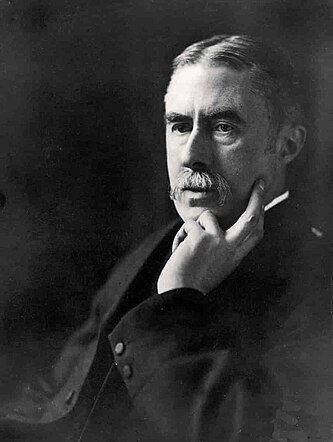
About A. E. Housman