Link Copied!
Erwin Rommel Quotes (1891-1944)


About Erwin Rommel
Erwin Johannes Eugen Rommel (15 November 1891 – 14 October 1944) was a German Field Marshal and commander of the Deutsches Afrika Korps in World War II, widely referred to as The Desert Fox (Der Wüstenfuchs). Linked to a conspiracy to assassinate Adolf Hitler, he was ordered to commit suicide with a cyanide pill, in return for assurances that his family would not be persecuted following his death.
Best Erwin Rommel Quotes
Shortest
Earliest
Explore our curated collection of the most famous and impactful Erwin Rommel quotes.
“Lieber zuviel als zu wenig Spatengebrauch! Diese Arbeit spart Blut.”
“Den Kampf Mann gegen Mann gewinnt bei gleichwertigen Gegnern, wer eine Patrone mehr im Lauf hat.”
“The German soldier has astonished the world; the Italian Bersagliere has astonished the German soldier.”
“One must not judge everyone in the world by his qualities as a soldier: otherwise we should have no civilization.”

“But courage which goes against military expediency is stupidity, or, if it is insisted upon by a commander, irresponsibility.”
“The art of concentrating strength at one point, forcing a breakthrough, rolling up and securing the flanks on either side, and then penetrating like lightning, before the enemy has time to react, deep into his rear.”
“The military career of most of the people who aimed these accusations at us was notable for a consistent absence from the front, on the principle of "weit vom Schuss gibt alte Kreiger" - "far from the battle makes old soldiers."”
“In Tunisia the Americans had to pay a stiff price for their experience, but it brought rich dividends. Even at that time, the American generals showed themselves to be very advanced in the tactical handling of their forces, although we had to wait until the Patton Army in France to see the most astonishing achievements in mobile warfare.”

“Be an example to your men in your duty and in private life. Never spare yourself, and let the troops see that you don't, in your endurance of fatigue and privation. Always be tactful and well-mannered and teach your subordinates to be the same. Avoid excessive sharpness or harshness of voice, which usually indicates the man who has shortcomings of his own to hide.”
“When a commander has won a decisive victory - and Wavell's victory over the Italians was devastating - it is generally wrong for him to be satisfied with too narrow a strategic aim. For that is the time to exploit success. It is during the pursuit, when the beaten enemy is still dispirited and disorganised, that most prisoners are made and most booty captured. Troops who on one day are flying in a wild panic to the rear, may, unless they are continually harried by the pursuer, very soon stand in battle again, freshly organised as fully effective fighting men.”

“The Italian command was, for the most part, not equal to the task of carrying on war in the desert, where the requirement was lightning decision followed by immediate action. The training of the Italian infantryman fell far short of the standard required by modern warfare. ... Particularly harmful was the all pervading differentiation between officer and man. While the men had to make shift without field-kitchens, the officers, or many of them, refused adamantly to forgo their several course meals. Many officers, again, considered it unnecessary to put in an appearance during battle and thus set the men an example. All in all, therefore, it was small wonder that the Italian soldier, who incidentally was extraordinarily modest in his needs, developed a feeling of inferiority which accounted for his occasional failure and moments of crisis. There was no foreseeable hope of a change for the better in any of these matters, although many of the bigger men among the Italian officers were making sincere efforts in that direction.”
Erwin Rommel Quotes by Topic
Find exactly what you are looking for by browsing this categorized list of Erwin Rommel quotes by topic.

What Erwin Rommel Said About Others
Discover personal opinions Erwin Rommel shared regarding contemporaries.
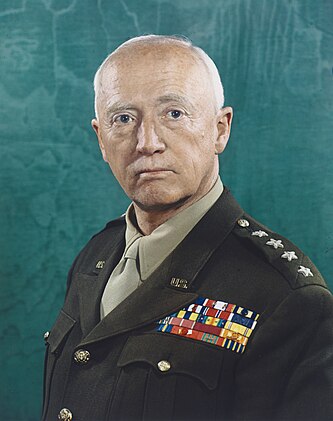
Erwin Rommel on George S. Patton
“In Tunisia the Americans had to pay a stiff price for their experience, but it brought rich dividends. Even at that time, the American generals showed themselves to be very advanced in the tactical handling of their forces, although we had to wait until the Patton Army in France to see the most astonishing achievements in mobile warfare.”
Quotes About Erwin Rommel
Gain deeper perspective through quotes about Erwin Rommel from others.
British General on Erwin Rommel 2 quotes
“He was a tactician of the greatest ability, with a firm grasp of every detail of the employment of armour in action, and very quick to seize the fleeting opportunity and the critical turning point of a mobile battle. I felt certain doubts, however, about his strategic ability, in particular as to whether he fully understood the importance of a sound administrative plan. Happiest while controlling a mobile force directly under his own eyes he was liable to overexploit immediate success without sufficient thought for the future.”
Winston Churchill on Erwin Rommel
“He was a splendid military gambler, dominating the problems of supply and scornful of opposition ... His ardour and daring inflicted grievous disasters upon us, but he deserves the salute which I made him — and not without some reproaches from the public — in the House of Commons in January 1942, when I said of him, "We have a very daring and skilful opponent against us, and, may I say across the havoc of war, a great general." He also deserves our respect because, although a loyal German soldier, he came to hate Hitler and all his works, and took part in the conspiracy of 1944 to rescue Germany by displacing the maniac and tyrant. For this, he paid the forfeit of his life. In the sombre wars of modern democracy chivalry finds no place ... Still, I do not regret or retract the tribute I paid to Rommel, unfashionable though it was judged.”

Sepp Dietrich on Erwin Rommel
“Rommel was jumpy, wanted to do everything at once, then lost interest. Rommel was my superior in command in Normandy. I cannot say Rommel wasn't a good general. When successful, he was good; during reverses, he became depressed.”
Niall Ferguson on Erwin Rommel
“Hitler might have accepted his military leaders' advice (notably that of Admiral Raeder) and focused his attention on winning the war in the Mediterranean in 1941, before invading the Soviet Union. He might, for example, have struck across the Eastern Mediterranean to Cyprus, Lebanon and Syria; or through Turkey (violating her neutrality) towards the Caucasus; or across Egypt to Suez and beyond. Even as it was, the British positions in Malta and Egypt were acutely vulnerable. Rommel might well have been able to drive the British out of Egypt if he had been sent the twenty-nine German divisions that were sitting more or less idle in Western Europe.”

David William Fraser on Erwin Rommel 5 quotes
“Rommel's presence, as ever, acted as a tonic on his troops. Anybody who once came under the spell of his personality, a brother officer wrote, turned into a "real soldier". However tough the strain Rommel seemed inexhaustible, seemed to know exactly how the enemy would probably react. The same officer wrote that Rommel had an exceptional imagination, seemed to know no fear whatsoever, and that his men "idolized him".”
Basil Henry Liddell Hart on Erwin Rommel
“Until I delved into Rommel's own papers I regarded him as a brilliant tactician and great fighting leader, but did not realize how deep a sense of strategy he had — or at any rate, developed in reflection.”
Albert Kesselring on Erwin Rommel
“He was the best leader of fast-moving troops but only up to army level. Above that level it was too much for him. Rommel was given too much responsibility. He was a good commander for a corps of army but he was too moody, too changeable. One moment he would be enthusiastic, next moment depressed.”
Michael J. Lyons on Erwin Rommel
“Born in southern Germany to middle-class parents, Rommel had won acclaim during World War I for his personal heroism as a young officer who specialized in tactics of infiltration behind enemy lines. Hitler's willingness to adopt new and unorthodox military ideas quickly won Rommel's admiration, and Rommel's relatively humble origins endeared him to the Fuehrer, who often felt uncomfortable in the presence of aristocratic generals. Hitler appointed Rommel to command his personal bodyguard in 1938. Until 1939, Rommel had always been an infantry officer, but the success of the Blitzkrieg in Poland made him a true believer in armored warfare. Soon afterward, Hitler helped him obtain command of a panzer division. Despite his lack of previous experience with tanks, Rommel mastered armored operations in a remarkably brief time. Indeed, his division performed with conspicuous success during the 1940 campaign in Western Europe. Like Guderian, he believed in he swiftest possible exploitation of a breakthrough. This continued to be his philosophy when he took over his new command in Libya.”
Steven Pressfield on Erwin Rommel 3 quotes
“Self-restraint, even chivalry... distinguished the combatants on both sides throughout the North Africa campaign... The leading exemplar of this code was Rommel himself. When orders from Hitler mandated the execution of captured British commandos, Rommel tossed the document in the trash. He insisted that the Allied prisoners receive the same rations he was given. He even wrote a book about the conflict called Krieg ohne Haß (War Without Hate). Memoirs of the North Africa campaign attest that, fierce and brutal as much of the fighting was, relations between individual enemies retained a quality of forbearance that seems, today, almost impossible to imagine.”

U.S. General Norman Schwarzkopf on Erwin Rommel
“Rommel had a feel for the battlefield like no other man.”
Disputed Quotes
Quotes attributed to Erwin Rommel that are questionable.
About Erwin Rommel
Erwin Johannes Eugen Rommel (15 November 1891 – 14 October 1944) was a German Field Marshal and commander of the Deutsches Afrika Korps in World War II, widely referred to as The Desert Fox (Der Wüstenfuchs). Linked to a conspiracy to assassinate Adolf Hitler, he was ordered to commit suicide with a cyanide pill, in return for assurances that his family would not be persecuted following his death.