Link Copied!
Proclus Quotes (412-485)
Philosopher


About Proclus
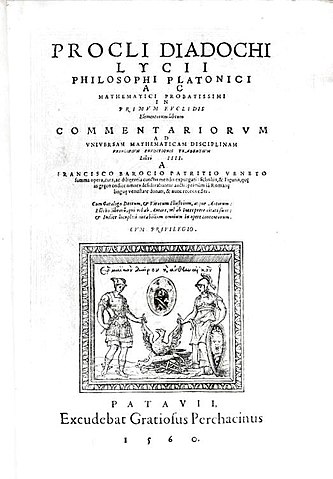
Proclus Lycaeus (8 February 412 – 17 April 485 AD), called the Successor, was a Greek Neoplatonist philosopher. As one of the last major classical philosophers, he set forth an elaborate and fully developed system of Neoplatonism, which had a profound influence upon Western medieval philosophy. His commentary on the first book of Euclid's Elements is one of the most valuable sources we have for the history of ancient mathematics, and its Platonic account of the status of mathematical objects was also influential.
Best Proclus Quotes
Shortest
Earliest
Explore our curated collection of the most famous and impactful Proclus quotes.
“For this, to draw a right line from every point, to every point, follows the definition, which says, that a line is the flux of a point, and a right line an indeclinable and inflexible flow.”
Unsourced — Primary work/page citation not yet verified in the QuotesCosmos archive. Per our Unnamed Sources & Verification Policy, quotes without confirmed primary editions are explicitly marked Unsourced while under editorial review.
“This, therefore, is mathematics: she reminds you of the invisible form of the soul; she gives life to her own discoveries; she awakens the mind and purifies the intellect; she brings light to our intrinsic ideas; she abolishes oblivion and ignorance which are ours by birth.”
Unsourced — Primary work/page citation not yet verified in the QuotesCosmos archive. Per our Unnamed Sources & Verification Policy, quotes without confirmed primary editions are explicitly marked Unsourced while under editorial review.
“The mathematician speculates the causes of a certain sensible effect, without considering its actual existence; for the contemplation of universals excludes the knowledge of particulars; and he whose intellectual eye is fixed on that which is general and comprehensive, will think but little of that which is sensible and singular.”
Unsourced — Primary work/page citation not yet verified in the QuotesCosmos archive. Per our Unnamed Sources & Verification Policy, quotes without confirmed primary editions are explicitly marked Unsourced while under editorial review.
“It is told that those who first brought out the irrationals from concealment into the open perished in shipwreck, to a man. For the unutterable and the formless must needs be concealed. And those who uncovered and touched this image of life were instantaneously destroyed and shall remain forever exposed to the play of the eternal waves.”
Unsourced — Primary work/page citation not yet verified in the QuotesCosmos archive. Per our Unnamed Sources & Verification Policy, quotes without confirmed primary editions are explicitly marked Unsourced while under editorial review.
“But after these, Pythagoras changed that philosophy, which is conversant about geometry itself, into the form of a liberal doctrine, considering its principles in a more exalted manner; and investigating its theorems immaterially and intellectually; who likewise invented a treatise of such things as cannot be explained in geometry, and discovered the constitution of the mundane figures.”
Unsourced — Primary work/page citation not yet verified in the QuotesCosmos archive. Per our Unnamed Sources & Verification Policy, quotes without confirmed primary editions are explicitly marked Unsourced while under editorial review.
“If two right lines cut one another, they will form the angles at the vertex equal. ...
This... is what the present theorem evinces, that when two right lines mutually cut each other, the vertical angles are equal. And it was first invented according to Eudemus by Thales...”
This... is what the present theorem evinces, that when two right lines mutually cut each other, the vertical angles are equal. And it was first invented according to Eudemus by Thales...”
Unsourced — Primary work/page citation not yet verified in the QuotesCosmos archive. Per our Unnamed Sources & Verification Policy, quotes without confirmed primary editions are explicitly marked Unsourced while under editorial review.
“But Eudoxus the Cnidian, who was somewhat junior to Leon, and the companion of Plato, first of all rendered the multitude of those theorems which are called universals more abundant; and to three proportions added three others; and things relative to a section, which received their commencement from Plato, he diffused into a richer multitude, employing also resolutions in the prosecution of these.”

Unsourced — Primary work/page citation not yet verified in the QuotesCosmos archive. Per our Unnamed Sources & Verification Policy, quotes without confirmed primary editions are explicitly marked Unsourced while under editorial review.
“A transition, therefore, is not undeservedly made from sense to consideration, and from this to the nobler energies of intellect. Hence, as the certain knowledge of numbers received its origin among the Phœnicians, on account of merchandise and commerce, so geometry was found out among the Egyptians from the distribution of land. When Thales, therefore, first went into Egypt, he transferred this knowledge from thence into Greece: and he invented many things himself, and communicated to his successors the principles of many. Some of which were, indeed, more universal, but others extended to sensibles.”

Unsourced — Primary work/page citation not yet verified in the QuotesCosmos archive. Per our Unnamed Sources & Verification Policy, quotes without confirmed primary editions are explicitly marked Unsourced while under editorial review.
“But Hermotimus, the Colophonian, rendered more abundant what was formerly published by Eudoxus and Theætetus, and invented a multitude of elements, and wrote concerning some geometrical places. But Philippus the Mendæan, a disciple of Plato, and by him inflamed in the mathematical disciplines, both composed questions, according to the institutions of Plato, and proposed as the object of his enquiry whatever he thought conduced to the Platonic philosophy.”
Unsourced — Primary work/page citation not yet verified in the QuotesCosmos archive. Per our Unnamed Sources & Verification Policy, quotes without confirmed primary editions are explicitly marked Unsourced while under editorial review.
“The Platonic doctrine of Ideas has been, in all ages, the derision of the vulgar, and the admiration of the wife. Indeed, if we consider that ideas are the most sublime objects of speculation, and that their nature is no less bright in itself, than difficult to investigate, this opposition in the conduct of mankind will be natural and necessary; for, from our connection with a material nature, our intellectual eye, previous to the irradiations of science, is as ill adapted to objects the most splendid of all, "as the eyes of bats to the light of day."”

Unsourced — Primary work/page citation not yet verified in the QuotesCosmos archive. Per our Unnamed Sources & Verification Policy, quotes without confirmed primary editions are explicitly marked Unsourced while under editorial review.
“Again, Amyclas the Heracleotean, one of Plato's familiars, and Menæchmus, the disciple, indeed, of Eudoxus, but conversant with Plato, and his brother Dinostratus, rendered the whole of geometry as yet more perfect. But Theudius, the Magnian, appears to have excelled, as well in mathematical disciplines, as in the rest of philosophy. For he constructed elements egregiously, and rendered many particulars more universal. Besides, Cyzicinus the Athenian, flourished at the same period, and became illustrious in other mathematical disciplines, but especially in geometry. These, therefore, resorted by turns to the Academy, and employed themselves in proposing common questions.”
Unsourced — Primary work/page citation not yet verified in the QuotesCosmos archive. Per our Unnamed Sources & Verification Policy, quotes without confirmed primary editions are explicitly marked Unsourced while under editorial review.
“The person who has found him is unable to tell this to others as he has seen it, for the discovery is not made by the soul who makes a statement, but by the soul who is initiated in and lies outstretched towards the divine light, not moving with its own movement, but keeping its own silence as it were. For if it is by nature not able to grasp the essential nature of other realities either by name or by a defining proposition or by scientific knowledge, but by intuitive thought (noêsis) alone, as he himself says in the Letters, how could it discover the essential nature of the Demiurge in any other way than intuitively (noerôs)? How could the soul, having found him in this way, be able to report what it had seen by means of nouns and verbs and convey this to others? After all, because discursive thought proceeds through combination, it is unable to express the nature that is unified and simple. ... If discovery takes place by the soul who keeps silent, how could the flow of language through the mouth be sufficient to bring to light the essential nature of what has been discovered?”
Unsourced — Primary work/page citation not yet verified in the QuotesCosmos archive. Per our Unnamed Sources & Verification Policy, quotes without confirmed primary editions are explicitly marked Unsourced while under editorial review.
“And thus far historians produce the perfection of this science. But Euclid was not much junior to these, who collected elements, and constructed many of those things which were invented by Eudoxus; and perfected many which were discovered by Theætetus. Besides, he reduced to invincible demonstrations, such things as were exhibited by others with a weaker arm. But he lived in the times of the first Ptolemy: for Archimedes mentions Euclid, in his first book, and also in others. Besides, they relate that Euclid was asked by Ptolomy, whether there was any shorter way to the attainment of geometry than by his elementary institution, and that he answered, there was no other royal path which led to geometry. Euclid, therefore, was junior to the familiars of Plato, but more ancient than Eratosthenes and Archimedes (for these lived at one and the same time, according to the tradition of Eratosthenes) but he was of the Platonic sect, and familiar with its philosophy: and from hence he appointed the constitution of those figures which are called Platonic, as the end of his elementary institutions.”

Unsourced — Primary work/page citation not yet verified in the QuotesCosmos archive. Per our Unnamed Sources & Verification Policy, quotes without confirmed primary editions are explicitly marked Unsourced while under editorial review.
“Let us now explain the origin of geometry, as existing in the present age of the world. For the demoniacal Aristotle observes, that the same opinions often subsist among men, according to certain orderly revolutions of the world: and that sciences did not receive their first constitution in our times, nor in those periods which are known to us from historical tradition, but have appeared and vanished again in other revolutions of the universe; nor is it possible to say how often this has happened in past ages, and will again take place in the future circulations of time. But, because the origin of arts and sciences is to be considered according to the present revolution of the universe, we must affirm, in conformity with the most general tradition, that geometry was first invented by the Egyptians, deriving its origin from the mensuration of their fields: since this, indeed, was necessary to them, on account of the inundation of the Nile washing away the boundaries of land belonging to each. Nor ought It to seem wonderful, that the invention of this as well as of other sciences, should receive its commencement from convenience and opportunity. Since whatever is carried in the circle of generation proceeds from the imperfect to the perfect.”
Unsourced — Primary work/page citation not yet verified in the QuotesCosmos archive. Per our Unnamed Sources & Verification Policy, quotes without confirmed primary editions are explicitly marked Unsourced while under editorial review.
“Not much younger than these (sc. Hermotimus of Colophon and Philippus of Mende) is Euclid, who put together the Elements, collecting many of Eudoxus' theorems, perfecting many of Theaetetus', and also bringing to irrefragable demonstration the things which were only somewhat loosely proved by his predecessors. This man lived in the time of the first Ptolemy. For Archimedes, who came immediately after the first (Ptolemy), makes mention of Euclid: and, further, they say that Ptolemy once asked him if there was in geometry any shorter way than that of the elements, and he answered that there was no royal road to geometry. He is then younger than pupils of Plato but older than Eratosthenes and Archimedes; for the latter were contemporary with one another, as Eratosthenes somewhere says.”
Unsourced — Primary work/page citation not yet verified in the QuotesCosmos archive. Per our Unnamed Sources & Verification Policy, quotes without confirmed primary editions are explicitly marked Unsourced while under editorial review.
“To a given right line to apply a parallelogram equal to a given triangle in an angle which is equal to a given right lined angle.
According to the Familiars of Eudemus, the inventions respecting the application, excess, and defect of spaces, is ancient and belongs to the Pythagoric muse. But junior mathematicians receiving names from these, transferred them to the lines which are called conic, because one of these they denominate a parabola, but the other an hyperbola, and the third an ellipsis; since, indeed these ancient and divine men, in the plane description of spaces on a terminated right line, regarded the things indicated by these appellations. For when a right line being proposed, you adapt a given space to the whole right line, then that space is said to be applied, but when you make the longitude of the space greater than that of the right line, then the space is said to exceed; but when less, so that some part of the right line is external to the described space, then the space is said to be deficient. And after this manner, Euclid, in the sixth book, mentions both excess and defect. But in the present problem he requires application...”
According to the Familiars of Eudemus, the inventions respecting the application, excess, and defect of spaces, is ancient and belongs to the Pythagoric muse. But junior mathematicians receiving names from these, transferred them to the lines which are called conic, because one of these they denominate a parabola, but the other an hyperbola, and the third an ellipsis; since, indeed these ancient and divine men, in the plane description of spaces on a terminated right line, regarded the things indicated by these appellations. For when a right line being proposed, you adapt a given space to the whole right line, then that space is said to be applied, but when you make the longitude of the space greater than that of the right line, then the space is said to exceed; but when less, so that some part of the right line is external to the described space, then the space is said to be deficient. And after this manner, Euclid, in the sixth book, mentions both excess and defect. But in the present problem he requires application...”
Unsourced — Primary work/page citation not yet verified in the QuotesCosmos archive. Per our Unnamed Sources & Verification Policy, quotes without confirmed primary editions are explicitly marked Unsourced while under editorial review.
“After Pythagoras, Anaxagoras the Clazomenian succeeded, who undertook many things pertaining to geometry. And Oenopides the Chian, was somewhat junior to Anaxagoras, and whom Plato mentions in his Rivals, as one who obtained mathematical glory. To these succeeded Hippocrates, the Chian, who invented the quadrature of the lunula, and Theodorus the Cyrenean, both of them eminent in geometrical knowledge. For the first of these, Hippocrates composed geometrical elements: but Plato, who was posterior to these, caused as well geometry itself, as the other mathematical disciplines, to receive a remarkable addition, on account of the great study he bestowed in their investigation. This he himself manifests, and his books, replete with mathematical discourses, evince: to which we may add, that he every where excites whatever in them is wonderful, and extends to philosophy. But in his time also lived Leodamas the Thasian, Architas the Tarentine, and Theætetus the Athenian; by whom theorems were increased, and advanced to a more skilful constitution. But Neoclides was junior to Leodamas, and his disciple was Leon; who added many things to those thought of by former geometricians. So that Leon also constructed elements more accurate, both on account of their multitude, and on account of the use which they exhibit: and besides this, he discovered a method of determining when a problem, whose investigation is sought for, is possible, and when it is impossible.”
Unsourced — Primary work/page citation not yet verified in the QuotesCosmos archive. Per our Unnamed Sources & Verification Policy, quotes without confirmed primary editions are explicitly marked Unsourced while under editorial review.
Proclus Quotes by Topic
Find exactly what you are looking for by browsing this categorized list of Proclus quotes by topic.
Proclus on 1 (number) 3 quotes
“Arithmetic is indeed more accurate than Geometry, for its Principles respect Simplicity. Unity implies no Position, a Point does, and a Point requiring Position is the Principle of Geometry, Unity of Arithmetic.”
Unsourced — Primary work/page citation not yet verified in the QuotesCosmos archive. Per our Unnamed Sources & Verification Policy, quotes without confirmed primary editions are explicitly marked Unsourced while under editorial review.
What Proclus Said About Others
Discover personal opinions Proclus shared regarding contemporaries.
Proclus on Eratosthenes
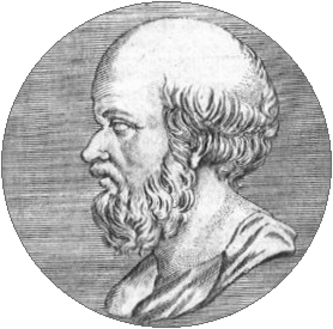
“Eratosthenes declares that it is no longer necessary to inquire as to the cause of the overflow of the Nile, since we know definitely that men have come to the sources of the Nile and have observed the rains there.”
Unsourced — Primary work/page citation not yet verified in the QuotesCosmos archive. Per our Unnamed Sources & Verification Policy, quotes without confirmed primary editions are explicitly marked Unsourced while under editorial review.
Proclus on Pythagoras
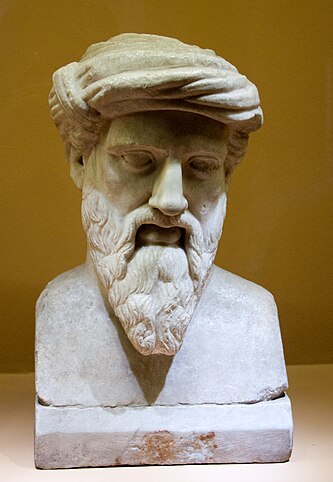
“Pythagoras transformed the study of geometry into a liberal education, examining the principles of the science from the beginning and probing the theorems in an immaterial and intellectual manner: he it was who discovered the theory of irrationals [or 'proportions'] and the construction of the cosmic figures.”
Unsourced — Primary work/page citation not yet verified in the QuotesCosmos archive. Per our Unnamed Sources & Verification Policy, quotes without confirmed primary editions are explicitly marked Unsourced while under editorial review.
Proclus on Thales
“[Thales] first went to Egypt and hence introduced this study [geometry] into Greece. He discovered many propositions himself, and instructed his successors in the principles underlying many others, his method of attack being in some cases more general [i.e. more theoretical or scientific], in others more empirical [...more in the nature of simple inspection or observation].”
Unsourced — Primary work/page citation not yet verified in the QuotesCosmos archive. Per our Unnamed Sources & Verification Policy, quotes without confirmed primary editions are explicitly marked Unsourced while under editorial review.
Quotes About Proclus
Gain deeper perspective through quotes about Proclus from others.
W. W. Rouse Ball on Proclus
“He is verbose and dull, but luckily he has preserved for us quotations from other and better authorities.”
Unsourced — Primary work/page citation not yet verified in the QuotesCosmos archive. Per our Unnamed Sources & Verification Policy, quotes without confirmed primary editions are explicitly marked Unsourced while under editorial review.
Isaac Barrow on Proclus
“What Science can be more accurate than Geometry? What Science can afford Principles more evident, more certain, yea I will add, more simple than Geometrical Axioms, or exercises a more strictly accurate Logic in drawing its Conclusions? But Aristotle and Proclus affirm that Unity (they had more rightly said Numbers) the Principle of Arithmetic, is more simple than a Point which is the Principle of Geometry, or rather of Magnitude. Because a Point implies Position, but Unity does not. A Point, says Aristotle, and Unity are not to be divided, as Quantity: Unity requires no Position, a Point does. But this Comparison of a Point in Geometry with Unity in Arithmetic is of all the most unsufferable, and derives the worst Consequences upon Mathematical Learning.”
Unsourced — Primary work/page citation not yet verified in the QuotesCosmos archive. Per our Unnamed Sources & Verification Policy, quotes without confirmed primary editions are explicitly marked Unsourced while under editorial review.
Sir Thomas Little Heath on Proclus 2 quotes
“It is well known that the commentary of Proclus on Eucl. Book I is one of the two main sources of information as to the history of Greek geometry which we possess, the other being the Collection of Pappus.”
Unsourced — Primary work/page citation not yet verified in the QuotesCosmos archive. Per our Unnamed Sources & Verification Policy, quotes without confirmed primary editions are explicitly marked Unsourced while under editorial review.
Sir on Proclus
“The Porisms. Our only source of information about the nature and contents of the Porisms is Pappus. ...With Pappus's account of Porisms must be compared the passages of Proclus on the same subject. ...Proclus's definition... agees well enough with the first, the 'older', definition of Pappus. A porism occupies a place between a theorem and a problem; it deals with something already existing, as a theorem does, but has to find it (e.g. the centre of a circle) and, as a certain operation is therefore necessary, it partakes to that extent of the nature of a problem, which requires us to construct or produce something not previously existing. ...all the positive information which we have about the nature of a porism and the contents of Euclid's Porisms ...is obscure and leaves great scope for speculation and controversy; naturally, therefore, the problem of restoring the Porisms has had a great fascination for distinguished mathematicians ever since the revival of learning. But it has proved beyond them all.”
Unsourced — Primary work/page citation not yet verified in the QuotesCosmos archive. Per our Unnamed Sources & Verification Policy, quotes without confirmed primary editions are explicitly marked Unsourced while under editorial review.
Morris Kline on Proclus
“Of his surviving works, the Commentary, which treats Book I of Euclid's Elements, is the most valuable. Proclus apparently intended to discuss more of the Elements, but there is no evidence that he ever did so.”
Unsourced — Primary work/page citation not yet verified in the QuotesCosmos archive. Per our Unnamed Sources & Verification Policy, quotes without confirmed primary editions are explicitly marked Unsourced while under editorial review.
About Proclus
Proclus Lycaeus (8 February 412 – 17 April 485 AD), called the Successor, was a Greek Neoplatonist philosopher. As one of the last major classical philosophers, he set forth an elaborate and fully developed system of Neoplatonism, which had a profound influence upon Western medieval philosophy. His commentary on the first book of Euclid's Elements is one of the most valuable sources we have for the history of ancient mathematics, and its Platonic account of the status of mathematical objects was also influential.