Proclus on 1 (number)
← Back to Proclus Profile
“Arithmetic is indeed more accurate than Geometry, for its Principles respect Simplicity. Unity implies no Position, a Point does, and a Point requiring Position is the Principle of Geometry, Unity of Arithmetic.”
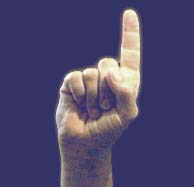
“But let us return to unity itself, asserting that it always remains the same, though all things flow from it as their inexhaustible fountain. In numbers, indeed, while unity abides in the simplicitly of its essence, number producing another is generated according to this abiding one. But the one which is above beings, much more abides in ineffable station. But while it abides, another does not produce beings, according to the nature of one: for it is sufficient of itself to the generation of beings. But as in numbers the form of the first monad is preserved in all numbers, in the first and second degree while each of the following numbers do not equally participate of unity; so in the order of things, every nature subordinate to the first, contains something of the first, as it were his vestige or form in its essence. And in numbers, indeed, the participation of unity produces their quantity. But here the vestige of one gives essence to all the series of divine numbers, so that being itself, is as were the footstep of ineffable unity.”
“But for the present we desire to contemplate, if possible, the nature of the pure and true one, which is not one from another, but from itself alone. It is therefore here requisite, to transfer ourselves on all sides to one itself, without adding any thing to its nature, and to acquiesce entirely in its contemplation; being careful lest we should wander from him in the least, and fall from one into two. But if we are less cautious we shall contemplate two, nor in the two possess the one itself; for they are both posterior to unity. And one will not suffer itself to be numerated with another, nor indeed to be numbered at all: for it is a measure free from all mensuration. Nor is it equal to any others, so as to agree with them in any particular, or it would inherit something in common with its connumerated natures; and thus this common something, would be superior to one though this is utterly impossible. Hence neither essential number, nor number posterior to this, which properly pertains to quantity can be predicated of one: not essential number whose essence always consists in intellection; nor that which regards quantity, since it embraces unity, together with other things different from one. For the nature pertaining to number which is inherent in quantity, imitating the nature essential to prior numbers, and looking back upon true unity, procures its own essence neither dispersing nor dividing unity, but while it becomes the duad, the one remains prior to the duad, and is different from both the unities comprehended by the duad, and from each apart. For why should the duad be unity itself? Or one unity of the duad rather than another, be one itself? If then neither both together, nor each apart is unity itself, certainly unity which is the origin of all number, is different from all these; and while it truly abides, seems after a manner not to abide. But how are those unities different from the one? And how is the duad in a certain respect one? And again, is it the same one, which is preserved in the comprehension of each unity? Perhaps it must be said that both unities, participate of the first unity, but are different from that which they participate: and that the duad so far as it is a certain one participates of one itself, yet not every where after the same manner: for an army, and a house are not similarly one; since these when compared with continued quantity, are not one, either with respect to essence, or quantity. Are then the unities in the pentad, differently related to one, from those in the decad? But is the one contained in the pentad, the same with the one in the decad? Perhaps also if the whole of a small ship, is compared with the whole of a large one, a city to a city, and an army to an army, there will be in these the same one. But if not in the first instance, neither in these. However, if any farther doubts remain, we must leave them to a subsequent discussion.”