Link Copied!
Lucretius Quotes (-99--55)
Philosopher, Poet

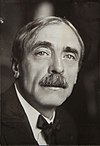

About Lucretius
Titus Lucretius Carus (c. 99 BC – 55 BC) was a Roman poet and philosopher. His major work is De Rerum Natura, On the Nature of Things, which is considered by some to be the greatest masterpiece of Latin verse.
Best Lucretius Quotes
Shortest
Earliest
Explore our curated collection of the most famous and impactful Lucretius quotes.
“Nam cupide conculcatur nimis ante metutum.”
“Omnis cum in tenebris praesertim vita laboret.”
“Saepius illa
religio peperit scelerosa atque impia facta.”
religio peperit scelerosa atque impia facta.”
“Quare religio pedibus subiecta vicissim
opteritur, nos exaequat victoria caelo.”
opteritur, nos exaequat victoria caelo.”
“Dum taxat, rerum magnarum parva potest res
exemplare dare et vestigia notitiae.”
exemplare dare et vestigia notitiae.”
“Nec prorsum vitam ducendo demimus hilum
tempore de mortis nec delibare valemus.”
tempore de mortis nec delibare valemus.”
“Omnia qua propter debent per inane quietum
aeque ponderibus non aequis concita ferri.”
aeque ponderibus non aequis concita ferri.”
“Cur non ut plenus vitae conviva recedis
aequo animoque capis securam, stulte, quietem?”
aequo animoque capis securam, stulte, quietem?”
“Nil igitur mors est ad nos neque pertinet hilum,
quandoquidem natura animi mortalis habetur.”
quandoquidem natura animi mortalis habetur.”
“Circumretit enim vis atque iniuria quemque,
atque, unde exortast, at eum plerumque revertit.”
atque, unde exortast, at eum plerumque revertit.”
“Stilicidi casus lapidem cavat.
• Variant translation: Continual dropping wears away a stone.”
• Variant translation: Continual dropping wears away a stone.”

“Tantum religio potuit suadere malorum.
• H. A. J. Munro's translation:
• W. H. D. Rouse's translation:”
• H. A. J. Munro's translation:
• W. H. D. Rouse's translation:”
“Infidi maris insidis virisque dolumque
ut vitare velint, neve ullo tempore credant
subdola cum ridet placidi pellacia ponti.”
ut vitare velint, neve ullo tempore credant
subdola cum ridet placidi pellacia ponti.”
“Ergo vivida vis animi pervicit et extra
processit longe flammantia moenia mundi
atque omne immensum peragravit mente animoque.”
processit longe flammantia moenia mundi
atque omne immensum peragravit mente animoque.”
“Vitare, plagas in amoris ne iaciamur,
non ita difficile est quam captum retibus ipsis
exire et validos Veneris perrumpere nodos.”
non ita difficile est quam captum retibus ipsis
exire et validos Veneris perrumpere nodos.”
Lucretius Quotes by Topic
Find exactly what you are looking for by browsing this categorized list of Lucretius quotes by topic.
Lucretius on Science in classical antiquity 10 quotes
“By what law all things were made, how bound they are to abide in it, how impotent to annul the strong statutes of time.”

Lucretius on Philosophical pessimism 4 quotes
“So long as the object of our desire is wanting, it seems more important than anything else; but later, when it is ours, we covet some other thing; and so an insatiable thirst for life keeps us always openmouthed.”

Lucretius on Death 2 quotes
“E mediis Orci faucibus ad hunc evasi modum.
From the very jaws of death I have escaped to this condition.”

Lucretius on Life
Lucretius on Rome: Total War
Lucretius on Sea
“It is a pleasure for to sit at ease Upon the land, and safely for to see How other folks are tossed on the seas That with the blustering winds turmoiled be.”

Lucretius on Time
“Time exists not by itself; but simply from the things which happen, the sense apprehends what has been done in time past, as well as what is present, and what is to follow after.”

Lucretius on Spacetime
“Time exists not by itself; but simply from the things which happen, the sense apprehends what has been done in time past, as well as what is present, and what is to follow after.”

Lucretius on Writing style
“His obscure style took with the shallower pates, (Not with the serious Greeks who ask for facts): For nothing captivates your dull man more Than dark, involved, mysterious verbiage.”

Lucretius on Fathers
“No more shall thy family welcome thee home, Nor around thee thy wife and sweet little ones come; All clamouring joyous to snatch the first kiss, Transporting thy bosom with exquisite bliss.”

Lucretius on Fear
“For as children tremble and fear everything in the blind darkness, so we in the light sometimes fear what is no more to be feared than the things children in the dark hold in terror and imagine will come true.”

Lucretius on Antinatalism
“What loss were ours, if we had know not birth? Let living me to longer life aspire, While fond affection binds their hearts to earth But who never hath tasted life's desire, Unborn, impersonal, can feel no dearth.”

Lucretius on Creationism
“Only because the people see
So much in land and sky
For which they do not know the cause,
They think Divinities are working there.
If they could but see that
Nothing can be created from nothing,
Then they would advance one more step
Toward the answer that they seek:
Those eternal elements became
Everything that is,
Without interference from Gods.”

What Lucretius Said About Others
Discover personal opinions Lucretius shared regarding contemporaries.
Lucretius on Paul Valéry 3 quotes
View all 3 quotes on Paul Valéry →Quotes About Lucretius
Gain deeper perspective through quotes about Lucretius from others.
John Aikin on Lucretius
“The poem of Lucretius in six books, entitled "De Rerum Natura," was the first accurate statement of the Epicurean philosophy in the Latin language... no writer has in stronger terms controverted all the popular notions of heathenism, and even those fundamental points in all religions, the existence of a creative power, a providence, and the immortality of the soul. His language and versification partake of the rudeness of an early period of literature; and, in the argumentative parts of his works the poet is frequently scarce discernible. But where the subject admits of elevated sentiment or descriptive beauty, no poet, at least no Roman poet, has taken a loftier flight, or exhibited more spirit and sublimity. Nor is it only in detached passages that he has displayed the genius of a true poet: the same animated strain is supported almost throughout entire books, when he gets free from the trammels of his system.”
From an interview of Silvia Siberini on Lucretius
“Interviewer: What brings Aristotle closer to Lucretius' statement, “Happy is he who can know the causes of things”? Professor Berti: This is a point that has perhaps not yet been adequately explored because Lucretius was known to be an Epicurean, and Epicureans in ancient times were generally hostile to Aristotle and polemical towards him. Most of the anti-Aristotelian anecdotes preserved in history are of Epicurean origin. Nevertheless, Lucretius, the great Epicurean poet and philosopher, while sharing Epicurus' belief that happiness consists in pleasure – what he calls in Latin “'voluptas”', with which he begins his poem “'De Rerum Natura”' – Lucretius himself states that happy is he who has been able to know the causes of things. Therefore, this pleasure, this happiness, which is clearly an intellectual pleasure, includes knowledge of the causes, that is, the ability to explain phenomena and solve the problems that experience presents us with. And this is ultimately a trait shared by all great philosophers, but also – I would say – by all philosophers, all those who love philosophy, that is, the desire to know, the happiness that comes from solving problems and discovering the causes of why things happen.”
Lord Byron on Lucretius

John Dryden on Lucretius
“If I am not mistaken, the distinguishing character of Lucretius (I mean of his soul and genius) is a certain kind of noble pride, and positive assertion of his opinions. He is every where confident of his own reason, and assuming an absolute command, not only over his vulgar reader, but even his patron Memmius. For he is always bidding him attend, as if he had the rod over him, and using a magisterial authority, while he instructs him. [...] He seems to disdain all manner of replies, and is so confident of his cause, that he is beforehand with his antagonists; urging for them whatever he imagined they could say, and leaving them, as he supposes, without an objection for the future; all this too, with so much scorn and indignation, as if he were assured of the triumph, before he entered into the lists. From this sublime and daring genius of his, it must of necessity come to pass, that his thoughts must be masculine, full of argumentation, and that sufficiently warm. From the same fiery temper proceeds the loftiness of his expressions, and the perpetual torrent of his verse, where the barrenness of his subject does not too much constrain the quickness of his fancy. For there is no doubt to be made, but that he could have been every where as poetical, as he is in his descriptions, and in the moral part of his philosophy, if he had not aimed more to instruct, in his system of nature, than to delight.”

Stephen Greenblatt on Lucretius
“On the Nature of Things is not an easy read. Totaling 7,400 lines, it is written in hexameters, the standard unrhymed sixbeat lines in which Latin poets like Virgil and Ovid, imitating Homer's Greek, cast their epic poetry. Divided into six untitled books, the poem yokes together moments of intense lyrical beauty, philosophical meditations on religion, pleasure, and death, and complex theories of the physical world, the evolution of human societies, the perils and joys of sex, and the nature of disease. The language is often knotty and difficult, the syntax complex, and the overall intellectual ambition astoundingly high.”

The poet Titus Lucretius is born. Later on Lucretius
“Titus Lucretius poeta nascitur: qui postea amatorio poculo in furorem versus, cum aliquot libros per intervalla insaniae conscripsisset, quos postea Cicero emendavit, propria se manu interfecit anno aetatis XLIV.”
Shelly Kagan on Lucretius
“[The Roman philosopher Lucretius] thought it a mistake to find the prospect of my death upsetting. Yes, as the deprivation account points out, after death we can't enjoy life's pleasures. But wait a minute, says Lucretius. The time after I die isn't the only period during which I won't exist. What about the period before my birth? If nonexistence is so bad, shouldn't I be upset by the eternity of nonexistence before I was born? But that's silly, right? Nobody is upset about that. So, he concludes, it doesn't make any sense to be upset about the eternity of nonexistence after you die, either.”

Bertrand Russell on Lucretius 2 quotes
“Lucretius, who follows [Epicurus] in denouncing love, sees no harm in sexual intercourse provided it is divorced from passion.”

Blessed is he who has been able on Lucretius
“Felix qui potuit rerum cognoscere causas.”
Joseph Warton on Lucretius
“The noblest descriptive poem extant.”

Misattributed Quotes
Quotes mistakenly credited to Lucretius
“All religions are equally sublime to the ignorant, useful to the politician, and ridiculous to the philosopher.”
About Lucretius
Titus Lucretius Carus (c. 99 BC – 55 BC) was a Roman poet and philosopher. His major work is De Rerum Natura, On the Nature of Things, which is considered by some to be the greatest masterpiece of Latin verse.